

Deep Purple Soldier of Fortune is the most unexpected song the band ever put on a record, and it remains one of the most quietly powerful ballads in all of classic rock.

Affiliate Disclosure: I am an Amazon affiliate and if you purchase through any amazon links on this site i may earn a small commission at no extra charge to you.
What Is Deep Purple Soldier of Fortune?
Deep Purple Soldier of Fortune is a acoustic-driven ballad from the 1974 album Stormbringer.
It sits near the end of the record, arriving after side two has already pushed through harder rock territory.
Nothing about the song sounds like the band that recorded Smoke on the Water.
There are no Hammond organs roaring, no distorted riffs, no Ian Gillan screaming at the ceiling.
What you get instead is a fingerpicked acoustic guitar, a restrained vocal, and a melody that has stayed with people for fifty years.
The Song Itself
The arrangement is stripped to almost nothing.
Ritchie Blackmore plays an acoustic guitar figure that is delicate by any standard, let alone his.
David Coverdale sings over it with a controlled restraint that shows just how much range the Mark III lineup actually had.
Jon Lord adds subtle keyboard color in the background, barely there but essential to the warmth of the track.
Ian Paice plays brushes rather than sticks, keeping the dynamic fragile throughout.
Glenn Hughes does not sing on this one, which gives Coverdale sole ownership of the vocal and lets the song breathe as a single voice against a simple backing.
The lyrics describe a wanderer with no fixed place in the world, someone defined by loss and movement rather than belonging.
It is a genuinely melancholy piece of writing, and it lands differently than anything else in the Deep Purple catalog.
David Coverdale and the Deep Purple Soldier of Fortune Vocal
Coverdale’s performance on Deep Purple Soldier of Fortune is one of the best things he recorded during his time in the band.
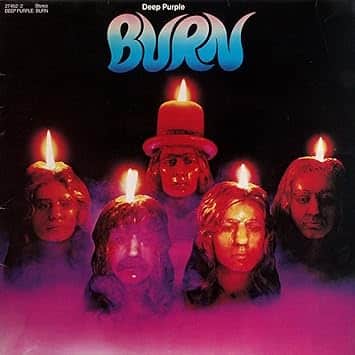
He had proven on Burn that he could handle raw, muscular hard rock.
Here he proves something different: that he could hold a quiet song together with nothing but tone and feel.
The vocal sits low in its register for much of the track, intimate and unforced.
There is no showboating, no attempt to demonstrate range.
He serves the song rather than using it as a platform, and that restraint is what makes it work.
Coverdale has cited this track in interviews as one of his personal favorites from his Deep Purple years.
It pointed directly toward the kind of melodic rock he would build his career on after leaving the band and forming Whitesnake.
Ritchie Blackmore’s Acoustic Side
Most people know Ritchie Blackmore as a hard rock and heavy metal architect.
The riffs, the classical runs, the aggressive stage presence — that is the public image.
Soldier of Fortune reveals the other side.
Blackmore had deep roots in acoustic guitar and had always been drawn to medieval and Renaissance music.
That influence would become central to his later work with Blackmore’s Night, the acoustic Renaissance folk project he launched in the late 1990s.
On Soldier of Fortune you can hear those instincts clearly, years before he acted on them fully.
The fingerpicking pattern is precise and unhurried, built around a chord progression that feels genuinely timeless.
It is a reminder that the greatest rock guitarists are rarely one-dimensional, whatever their reputation suggests.
Where Deep Purple Soldier of Fortune Fits on Stormbringer
The Stormbringer album was already a departure for Deep Purple before Soldier of Fortune arrived.
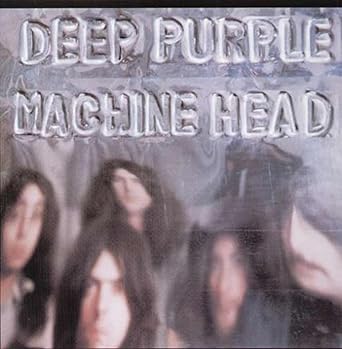
The title track opened the record with funk-inflected hard rock that unsettled fans expecting a Machine Head follow-up.
By the time Soldier of Fortune closes out the album, the band has moved through multiple moods and textures.
The ballad works as a kind of exhale after everything that came before it.
It also underlines how much the Mark III lineup, with Coverdale and Glenn Hughes sharing vocal duties, expanded what Deep Purple was capable of.
The Mark II era had power and precision.
The Mark III era had emotional range.
Soldier of Fortune is the clearest proof of that.
The Legacy of Deep Purple Soldier of Fortune
Deep Purple Soldier of Fortune became one of the most covered and celebrated deep cuts in the band’s catalog.
It has been performed by artists across multiple genres who respond to the song’s simplicity and emotional directness.
Coverdale has returned to it regularly throughout his solo career and in Whitesnake setlists over the decades.
For a certain generation of fans, it is the song that proves Deep Purple were more than a riff machine.
It shows up consistently in fan polls as one of the most beloved tracks from the Stormbringer era, often ranking above harder songs on the same album.
The track also holds a specific place in rock history as an example of a heavy band choosing vulnerability over power at exactly the right moment.
That is harder to pull off than it sounds, and Deep Purple pulled it off completely.
Chart Performance and Single Release
Soldier of Fortune was released as a single in the UK in early 1975.
It reached number 49 on the UK Singles Chart, a modest result but notable given how unlike a commercial single it sounds.
The fact that it charted at all speaks to the emotional pull of the track.
Radio picked it up in several European markets where Deep Purple had a strong following.
It was not a hit by conventional measures, but it introduced a side of the band to listeners who might never have found it otherwise.
The Stormbringer album itself peaked at number six on the UK Albums Chart and number 20 on the Billboard 200 in the United States.
By the time those chart positions were posted, Ritchie Blackmore had already decided to leave the band.
People Also Ask
What album is Deep Purple Soldier of Fortune on?
Soldier of Fortune appears on the Stormbringer album, released in November 1974. It is the closing track on the record and one of the most distinctive songs in the Deep Purple catalog.
Who wrote Deep Purple Soldier of Fortune?
Soldier of Fortune was written by Ritchie Blackmore and David Coverdale. It is one of the few Deep Purple songs from this era built primarily around an acoustic guitar arrangement.
Who sang Soldier of Fortune by Deep Purple?
David Coverdale sang Soldier of Fortune as a solo vocal, which was unusual for the Mark III lineup where he and Glenn Hughes typically shared vocal duties across most tracks.
Was Soldier of Fortune a hit for Deep Purple?
It reached number 49 on the UK Singles Chart when released as a single in 1975. It was not a mainstream hit but became one of the most beloved deep cuts in the Deep Purple catalog over the following decades.
Why is Deep Purple Soldier of Fortune so different from their other songs?
The song is built around an acoustic guitar rather than the electric riffs and Hammond organ that defined most Deep Purple recordings. Blackmore and Coverdale wrote a straightforward ballad that stripped away everything that made the band famous and focused entirely on melody and feeling.
Watch Deep Purple Soldier of Fortune
Shop Deep Purple on Amazon
Affiliate Disclosure: I am an Amazon affiliate and if you purchase through any amazon links on this site i may earn a small commission at no extra charge to you. This helps support classicrockartists.com and allows me to keep providing deep-dive content on the legends of rock. Thank you for your support!
As an Amazon Associate, I earn from qualifying purchases.

Burn
Deep Purple, 1974 — Expanded Edition
The Mark III debut album
Coverdale and Hughes arriving fully formed on their first record together

Deep Purple Mark II Collection
In Rock, Fireball & Machine Head
Three essential albums in one set
The complete Mark II era before Coverdale and Hughes changed everything

Come Taste the Band
Deep Purple, 1975 — 35th Anniversary 2CD
The final Mark III album
Tommy Bolin replaces Blackmore and the band goes deeper into funk and soul

The Very Best of Deep Purple
Compilation CD
Every era, every lineup in one place
The best single-disc introduction to fifty years of Deep Purple
You Might Also Like

Deep Purple Soldier of Fortune endures because it does something rare: it proves that one of rock’s hardest bands could stop, strip everything back, and still hold the room completely.