

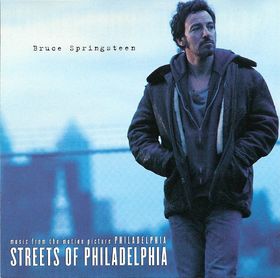
Streets of Philadelphia by Bruce Springsteen earned the Academy Award for Best Original Song in 1994 and stands as one of the most emotionally direct pieces of music ever written for a film.
Written for director Jonathan Demme‘s 1993 film Philadelphia, it gave a human voice to the HIV/AIDS crisis at a moment when mainstream culture still struggled to address the epidemic directly.
Affiliate Disclosure: As an Amazon Associate I earn from qualifying purchases. This helps support the site at no extra cost to you.
| Song | Streets of Philadelphia |
| Artist | Bruce Springsteen |
| Album | Philadelphia: Music From the Motion Picture (1994) |
| Written by | Bruce Springsteen |
| Produced by | Bruce Springsteen, Chuck Plotkin |
| Released | 1994 |
| Genre | Rock, Alternative Rock |
| Awards | Academy Award for Best Original Song; four Grammy Awards including Song of the Year |
Table of Contents
Background and History
Bruce Springsteen built his reputation on working-class storytelling rooted in New Jersey, releasing albums like Born to Run and Nebraska that placed ordinary American lives at the center of rock music.
Jonathan Demme approached Springsteen directly after completing Philadelphia, drawn by Springsteen’s ability to convey emotional weight through spare, unadorned arrangements.
Demme wanted a song for the film’s opening sequence that would establish isolation and fragility before a single line of dialogue was spoken.
Springsteen recorded the track in his home studio with minimal instrumentation, keeping the arrangement intimate to match the subject matter.
Chuck Plotkin, who had worked with Springsteen on several earlier albums, contributed to the production while preserving the song’s deliberate restraint.
The result was a track unlike anything else in Springsteen’s catalog, built on synthesizer and a heartbeat-like drum pulse rather than the guitar-driven sound he was known for.
Streets of Philadelphia and the Film Connection
Streets of Philadelphia plays over the film’s opening sequence as the camera moves through the city at dawn, establishing the emotional frame for everything that follows.
The film starred Tom Hanks as a lawyer diagnosed with AIDS who faces discrimination from his own firm.
Hanks reportedly listened to the song repeatedly while preparing for the role, using it to connect with his character’s internal collapse.
The lyrics place the listener inside the experience of physical and emotional deterioration, using lines like “I was bruised and battered, I couldn’t tell what I felt” without dramatizing the suffering.
That restraint is what separates Streets of Philadelphia from most soundtrack work, which tends toward swell and resolution rather than sustained unease.
The minimalist production strips away everything that could allow the listener to keep emotional distance.
The song connects to the same tradition of social storytelling Springsteen had developed from Thunder Road onward, capturing lives under pressure with unflinching honesty.
Streets of Philadelphia and the Awards
Streets of Philadelphia won the Academy Award for Best Original Song at the 1994 ceremony, marking one of the rare times a rock artist had claimed the Oscar in that category.
At the 1995 Grammy Awards, the song won four awards: Song of the Year, Best Rock Song, Best Male Rock Vocal Performance, and Best Song Written for a Motion Picture, Television, or Other Visual Media.
The music video, also directed by Demme, shows Springsteen walking through Philadelphia’s streets while scenes from the film are intercut throughout.
The combination of the film’s critical and commercial success with the song’s awards visibility brought the HIV/AIDS crisis into mainstream conversation at a scale that few cultural events had achieved before it.
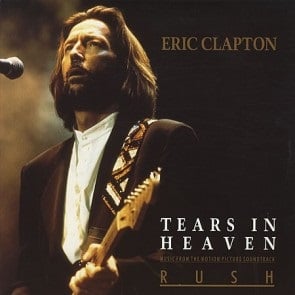
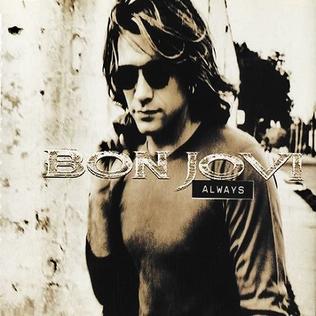
Songs like Tears in Heaven by Eric Clapton and Always by Bon Jovi defined the same mid-90s period when rock was producing its most emotionally direct work.
The wins placed this track at the center of Springsteen’s catalog alongside his most celebrated earlier work.
Lasting Legacy of Streets of Philadelphia
Streets of Philadelphia became an anthem for the AIDS awareness movement and continues to be played at memorials and advocacy events decades after its release.
The song demonstrated that mainstream rock could address political and social crises without losing its emotional core or commercial reach.
It remains one of the most referenced examples of film music that transcended the project it was created for.
Springsteen has performed it at concerts in support of AIDS research and advocacy organizations, keeping the song connected to the cause that inspired it.
Its production approach, built on electronic minimalism rather than guitar-driven rock, showed a dimension of Springsteen’s craft that influenced how singer-songwriters thought about soundtrack work in the years that followed.
Among Springsteen’s entire body of work, Streets of Philadelphia occupies a distinct place as the song that earned him his first Academy Award and his most concentrated burst of major industry recognition in a single year.
Watch the Official Video
Frequently Asked Questions
FAQ
- Who wrote Streets of Philadelphia?
- Bruce Springsteen wrote and performed the song after director Jonathan Demme approached him directly, wanting a piece that could establish the emotional tone of the film before the story began.
- What film was it written for?
- Jonathan Demme’s 1993 film Philadelphia, starring Tom Hanks as a lawyer with AIDS, uses the song over its opening sequence to establish isolation and vulnerability as the film’s emotional foundation.
- What awards did Streets of Philadelphia win?
- The song won the Academy Award for Best Original Song at the 1994 ceremony and four Grammy Awards at the 1995 ceremony, including Song of the Year, Best Rock Song, and Best Male Rock Vocal Performance.
- Why does the production sound so sparse?
- Springsteen deliberately kept the arrangement minimal, using synthesizer and a soft drum pulse rather than guitar, because the subject of physical and emotional deterioration called for restraint rather than amplification.
- How is it used today?
- The song continues to be played at AIDS awareness events and memorials, and remains a reference point for discussions of how popular music addressed the HIV/AIDS crisis during the early 1990s.
You Might Also Like
With its sparse synthesizer arrangement and quietly devastating vocal performance, Streets of Philadelphia remains one of the most direct and humane pieces of music ever written about illness, isolation, and the need for compassion.