

Pour Some Sugar on Me by Def Leppard is the defining anthem of 1980s arena rock, a song written in a single afternoon that became one of the most played records in the history of rock radio.
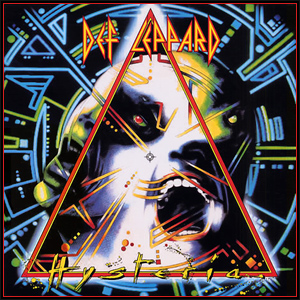
Co-written by the band and producer Robert John “Mutt” Lange, Pour Some Sugar on Me was added late to the Hysteria sessions in 1987 and reached number two on the US Billboard Hot 100, becoming the song most closely identified with the album’s extraordinary commercial success.
Affiliate Disclosure: I am an Amazon affiliate and if you purchase through any amazon links on this site i may earn a small commission at no extra charge to you.
The Hysteria album itself became one of the best-selling rock records of the decade.
Pour Some Sugar on Me remains its most enduring track four decades after its release.
| Song Title | Pour Some Sugar on Me |
| Artist | Def Leppard |
| Album | Hysteria (1987) |
| Released | 1988 (US single) |
| Written By | Joe Elliott, Phil Collen, Rick Allen, Rick Savage, Steve Clark, Robert John Lange |
| Producer | Robert John “Mutt” Lange |
| Label | Mercury Records |
| Chart Peak | #2 US Billboard Hot 100 |
Table of Contents
- What Is Pour Some Sugar on Me About?
- The Vibe: Genre, Mood, and Search Intent
- Behind the Lyrics: The Story of Pour Some Sugar on Me
- Technical Corner: Instruments and Production
- Legacy and Charts: Why This Classic Still Matters
- Listener’s Note: A Personal Take
- Watch: Pour Some Sugar on Me by Def Leppard
- Collector’s Corner: Own a Piece of Rock History
- Frequently Asked Questions About Pour Some Sugar on Me
- You Might Also Like
What Is Pour Some Sugar on Me About?
Pour Some Sugar on Me is a celebration of desire, excitement, and the pure pleasure of being alive.
The lyric operates on multiple levels.
It functions as a seduction, a performance invitation, and a statement of exuberance all at once.
Joe Elliott has said the song was written to be immediate and physical, a piece of music that would make people move before they had processed what the words meant.
The song succeeds at this completely.
It is one of those songs where the sound is the message.
The verse verses set up a tension that the chorus releases with a satisfaction that is almost chemical in its effect on listeners.
The Vibe: Genre, Mood, and Search Intent
The track announces itself with a guitar riff of such brazen confidence that it feels more like a declaration than an introduction.
- Genre: Hard Rock, Glam Metal, Arena Rock
- Mood: Exuberant, Seductive, Euphoric
- Tempo: Midtempo (~123 BPM)
- Best For: 1980s rock playlists, party music, classic rock radio
- Similar To: Def Leppard “Rock of Ages”, Whitesnake “Here I Go Again”, Bon Jovi “Livin’ on a Prayer”
- Fans Also Search: Def Leppard discography, Hysteria album, Mutt Lange production, Rick Allen drums
Behind the Lyrics: The Story of Pour Some Sugar on Me
The song was written at the very end of the Hysteria recording sessions, when the album was already considered complete.
Joe Elliott has recalled that Mutt Lange called him one evening and told him to come to the studio the next day with a new song idea.
Elliott arrived with the basic concept and the two developed it together with remarkable speed.
The Hysteria album itself had taken nearly three years to complete, making the song’s rapid creation one of the more striking stories of the recording process.
Part of the drama surrounding Hysteria was the story of drummer Rick Allen, who lost his left arm in a car accident on New Year’s Eve 1984.
Allen re-learned to play using a custom electronic drum kit triggered partly by foot pedals.
His return to the band and his contributions to Hysteria became one of the most celebrated stories in rock history.
It was released as a US single in 1988, after the album had already been out for several months.
Its success pushed Hysteria back to the top of the Billboard 200.
Few albums have returned to number one on the back of a single released months after the original release date.
Technical Corner: Instruments and Production
The production reflects Mutt Lange’s philosophy of building every element to maximum effect before allowing anything into the final mix.
The guitar tone is thick and compressed.
Phil Collen and Steve Clark’s parts are layered into a wall of sound.
This dense layering was one of the signatures of Lange’s approach.
Rick Allen’s drum performance is deceptively powerful given the circumstances of its recording.
His custom electronic kit gave him rhythmic control that translated directly into the groove that drives the track.
The vocal arrangement features the multi-tracked harmonies that Def Leppard and Lange had developed across several albums together.
Joe Elliott’s lead vocal is bright and forward in the mix, exuding the confidence that the song demanded.
Mutt Lange’s production is dense but never cluttered, a balance that requires exceptional discipline in the mixing stage.
The result is a recording that sounds equally powerful through a car radio and through a stadium PA system.
Legacy and Charts: Why This Classic Still Matters
It reached number two on the US Billboard Hot 100 in 1988.
It became one of the most played rock songs of its decade and has retained that radio presence in the four decades since.
The song’s use in the 1995 film Showgirls introduced it to an entirely new audience.
This cemented its status as a cultural touchstone beyond pure rock music.
Hysteria has sold over 25 million copies worldwide.
The track is consistently cited as most responsible for driving that figure.
Mutt Lange went on to produce records for Shania Twain, AC/DC, and many others.
His work on Hysteria remains among his most celebrated achievements.
The recording endures because it captures the peak of a specific moment in rock when spectacle, craft, and pure commercial instinct were operating at the same level simultaneously.
Listener’s Note: A Personal Take
This is one of those songs that has been played so many times it should feel exhausted.
It does not.
The chorus arrives with the same impact every time.
That consistency is a tribute to how precisely every element was calibrated.
There is no accident in this music.
Every note is exactly where Mutt Lange and Def Leppard wanted it to be.
That is why it still works decades after every other production choice of 1987 has dated.
Watch: Pour Some Sugar on Me by Def Leppard
Collector’s Corner: Own a Piece of Rock History
Def Leppard: Hysteria (1987)
Own the album that gave the world Pour Some Sugar on Me.
Original Mercury Records pressings, remastered editions, and super deluxe box sets available.
Frequently Asked Questions About Pour Some Sugar on Me
Who wrote Pour Some Sugar on Me?
The song was written by all five members of Def Leppard together with producer Mutt Lange.
Joe Elliott and Lange developed the core idea together.
It emerged from a single studio session near the end of the recording process.
What is Pour Some Sugar on Me about?
The track is an expression of desire and exuberance written to be experienced physically rather than intellectually.
The lyric functions as both a seduction and an invitation to a certain kind of joyful abandon.
How high did Pour Some Sugar on Me chart?
It reached number two on the US Billboard Hot 100 in 1988.
Its success helped push Hysteria back to the top of the Billboard 200 album chart several months after its original release.
What album is Pour Some Sugar on Me on?
The song appears on Hysteria, Def Leppard’s fourth studio album, released on Mercury Records in August 1987.
The album has sold over 25 million copies worldwide and is considered one of the best-selling rock albums in history.
Who produced Pour Some Sugar on Me?
Pour Some Sugar on Me was produced by Robert John “Mutt” Lange.
Lange co-produced all of Def Leppard’s major albums from High ‘n’ Dry through to Hysteria.
He was central to developing their multi-layered sound.
What is the story of Rick Allen’s drumming on Hysteria?
Rick Allen lost his left arm in a car accident on New Year’s Eve 1984.
He returned to Def Leppard using a custom electronic drum kit that he had helped design.
Foot pedals triggered many of the parts previously played by his left hand.
His performances throughout Hysteria are considered one of the great acts of determination in rock history.
How was Pour Some Sugar on Me added to the album?
The song was written and recorded after the rest of Hysteria was already considered complete.
Mutt Lange requested a new track.
The song was developed and recorded in a matter of days.
This was remarkable given that the rest of the album had taken nearly three years to finish.
Is Pour Some Sugar on Me still played live?
Yes.
The song is always the centrepiece of Def Leppard live performances and generates the most intense audience response of any song in their catalogue.
You Might Also Like
Aerosmith: Sweet Emotion (1975)
The American hard rock classic that showed what a great rock riff and a great vocal could achieve together.
Sweet Emotion belongs to the same tradition of hard rock excellence that Pour Some Sugar on Me would perfect a decade later.
Foreigner: Hot Blooded (1978)
The hard rock anthem that captured the same high-energy desire that Def Leppard would channel so effectively.
Hot Blooded and Pour Some Sugar on Me make natural companions on any classic rock playlist.
Deep Purple: Smoke on the Water (1972)
The riff that every rock guitarist learns first and that helped establish the culture from which Pour Some Sugar on Me emerged.
Smoke on the Water is essential context for understanding what hard rock became in the 1980s.
Decades on, Pour Some Sugar on Me by Def Leppard endures as one of the greatest songs in classic rock history, a recording that has outlasted trends and generations to remain as vital and exciting as the day it was made.