

Eric Clapton: The Definitive Biography of a Guitar Legend
Eric Clapton is widely regarded as one of the greatest guitarists in the history of rock and blues music.
His career spans more than six decades, marked by extraordinary highs, devastating personal tragedies, and an unrelenting commitment to his craft.
From his teenage years picking up a second-hand guitar in Surrey, England, to stadium tours and a permanent place in the Rock and Roll Hall of Fame, Clapton’s journey is unlike any other in popular music.
He earned the nickname “Slowhand” in his early years, a label that barely scratches the surface of his technical brilliance and emotional depth.
His influence stretches across generations, shaping the playing styles of countless guitarists who came after him.
Whether leading the groundbreaking Cream or delivering soul-crushing solo performances, Eric Clapton has never stopped evolving as an artist.
This biography explores the full arc of a man who turned personal anguish into timeless music and blues tradition into a global phenomenon.
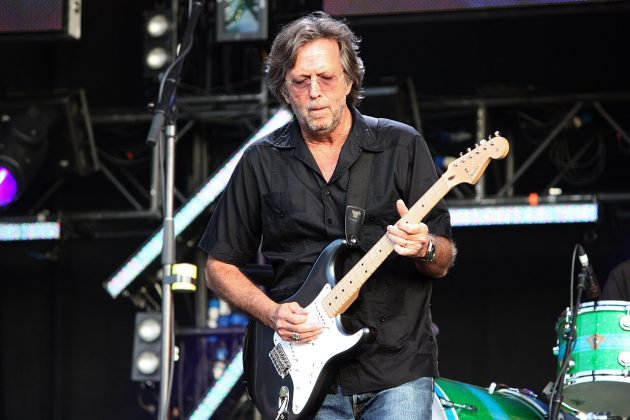
Table of Contents
- Early Life and Musical Awakening
- First Major Bands: The Yardbirds and John Mayall
- Eric Clapton’s Peak Era: Cream and Derek and the Dominos
- Career Challenges and Personal Struggles
- The Revival: Eric Clapton’s Solo Stardom and Later Career
- Recognition, Awards, and Legacy
- Essential Eric Clapton Discography
- Frequently Asked Questions About Eric Clapton
Early Life and Musical Awakening
Eric Patrick Clapton was born on March 30, 1945, in Ripley, Surrey, England.
He was raised primarily by his maternal grandparents, Jack and Rose Clapp, after his teenage mother was unable to care for him.
For much of his childhood, Clapton believed his grandparents were his parents, a revelation that profoundly shaped his sense of identity.
He grew up feeling like an outsider, a feeling he would later channel into the blues music that became his calling.
At the age of thirteen, Clapton received an acoustic guitar as a gift, and his obsession with music began almost immediately.
He was captivated by American blues artists including Robert Johnson, Muddy Waters, and Big Bill Broonzy.
Those early influences gave him a foundation that would define his entire musical philosophy.
He practiced obsessively, teaching himself to replicate the sounds and techniques he heard on scratchy old records.
By his mid-teens, Clapton had developed a playing style that was already turning heads in the local music scene.
He briefly attended the Kingston College of Art but was asked to leave, as his focus was entirely consumed by guitar.
His grandmother supported his passion, and that support gave him the freedom to pursue music with total dedication.
Those formative years in Surrey planted the seeds of one of the most celebrated careers in the history of classic rock.
First Major Bands: The Yardbirds and John Mayall
Eric Clapton joined The Yardbirds in 1963 as their lead guitarist, quickly becoming the most talked-about young player in the British blues scene.
The band had a raw, energetic sound rooted in American blues, which suited Clapton’s purist instincts perfectly.
However, the group shifted toward a more pop-oriented sound as they sought mainstream chart success.
Clapton famously resigned from The Yardbirds in 1965 because he felt the band was betraying its blues roots.
That principled departure said everything about who Eric Clapton was as an artist: integrity came before commercial opportunity.
He immediately joined John Mayall and the Bluesbreakers, a decision that elevated him to near-mythical status in the United Kingdom.
His playing on the 1966 album “Blues Breakers with Eric Clapton,” commonly known as the Beano album, was so extraordinary that fans began writing “Clapton is God” on walls across London.
The Bluesbreakers gave him a platform to explore the full emotional range of blues guitar without compromise.
His tone on that record, achieved through a Les Paul guitar and a cranked Marshall amplifier, became one of the most imitated sounds in rock history.
That combination of technical precision and raw feeling announced to the world that something truly special had arrived.
Eric Clapton’s Peak Era: Cream and Derek and the Dominos
In 1966, Eric Clapton co-founded Cream alongside bassist Jack Bruce and drummer Ginger Baker, and the music world changed forever.
Cream was unlike anything that had existed before in rock music.
The trio fused blues, jazz improvisation, hard rock, and psychedelia into a volatile and thrilling sound.
Their live performances were legendary, featuring extended improvisational passages that could stretch a single song past the twenty-minute mark.
Clapton’s guitar work during this period was absolutely ferocious, blending speed, precision, and emotional authority in equal measure.
Their debut album, “Fresh Cream” (1966), made an immediate impact, but it was the follow-up albums that cemented their immortality.
“Disraeli Gears” (1967) included the iconic track “Sunshine of Your Love,” a song that remains one of the defining riffs in rock history.
Furthermore, “Wheels of Fire” (1968) became the first platinum-certified double album in history, a commercial and artistic landmark.
Cream’s final studio album, “Goodbye” (1969), contained some of their most polished and sophisticated work.
Their brief run of just under three years produced a body of work that influenced virtually every hard rock and heavy metal band that followed.
In contrast to the tightly structured pop of the era, Cream gave guitarists permission to stretch out and take creative risks on a grand scale.
Clapton was at the centre of all of it, his guitar tone unmistakable and his improvisational instincts unmatched.
After Cream disbanded in 1969, Clapton briefly joined the supergroup Blind Faith alongside Steve Winwood, Rick Grech, and Ginger Baker.
Blind Faith released only one self-titled album but it reached number one in both the United States and the United Kingdom.
Significantly, it demonstrated that Clapton’s commercial appeal was not dependent on any single lineup or format.
Following Blind Faith, Clapton took a deliberate step back from the spotlight, preferring to work in a collaborative environment with Delaney and Bonnie.
That experience of playing as a sideman recharged his creative energy and deepened his respect for American roots music.
The lessons he learned during that period fed directly into the formation of Derek and the Dominos in 1970.
That band, assembled informally from musicians he had grown to trust, would produce one of the most celebrated albums in rock history.
“Layla and Other Assorted Love Songs” (1970) is a masterpiece born from heartbreak, specifically Clapton’s consuming, unrequited love for Pattie Boyd, who was then married to his close friend George Harrison.
The album’s title track, “Layla,” opens with one of the most recognizable guitar riffs ever written, co-created by Clapton and Duane Allman.
Allman’s slide guitar contributions throughout the record added a raw Southern texture that perfectly complemented Clapton’s own playing.
The album was not a massive commercial success upon its initial release, but its reputation grew steadily over the following decades.
Today, “Layla and Other Assorted Love Songs” is consistently ranked among the greatest rock albums ever recorded.
The songs on that record captured real emotional pain with a directness and vulnerability that was rare in rock music at the time.
Clapton poured everything he felt, love, obsession, longing, and despair, into those performances.
The result was music that connected with listeners on an unusually deep and personal level.
Derek and the Dominos never completed a second studio album, and the band dissolved in 1971 amid personal tensions and Clapton’s deepening addiction to heroin.
However, the music they made together remains among the most treasured work in the entire classic rock catalogue of the 1970s.
Career Challenges and Personal Struggles
The early 1970s were among the darkest years of Eric Clapton’s life, as a severe heroin addiction effectively removed him from public life for nearly three years.
He became a recluse, rarely leaving his home and cutting off contact with many of his closest friends and collaborators.
Pete Townshend of The Who was instrumental in staging the famous “Rainbow Concert” in 1973 to help bring Clapton back to the stage.
That concert was a turning point, though recovery was not immediate or linear.
Clapton eventually sought treatment and emerged from heroin addiction in the mid-1970s, only to develop a severe dependence on alcohol that would shadow him for another decade.
He was candid about these struggles in later years, crediting his eventual sobriety to a treatment program at Hazelden in Minnesota in 1987.
His personal life brought additional grief, most devastatingly with the accidental death of his four-year-old son Conor in 1991.
Conor fell from a window of a New York City apartment building in a tragedy that shook Clapton to his core.
His response was one of the most moving artistic acts of his career: he wrote “Tears in Heaven,” a gentle, aching song that became one of the biggest hits of his life.
“Tears in Heaven” won three Grammy Awards and introduced Eric Clapton to a new generation of listeners who connected deeply with its emotional honesty.
In 2001, Clapton founded Crossroads Centre in Antigua, a residential addiction treatment facility, as a direct expression of his own hard-won understanding of recovery.
That facility has helped thousands of people, transforming personal tragedy into meaningful and lasting action.
In recent years, Clapton has also spoken openly about the health challenges affecting his playing, as covered in depth in this report on his health struggles impacting his guitar playing.
The Revival: Eric Clapton’s Solo Stardom and Later Career
Eric Clapton’s solo career began in earnest with his 1970 self-titled album, but it was the mid-1970s that saw him emerge as a genuine solo superstar.
“Slowhand” (1977) remains one of his most beloved solo records, featuring hits including “Cocaine” and “Wonderful Tonight.”
Those tracks brought him a new audience that extended well beyond his core blues fanbase.
His 1992 MTV Unplugged performance was a cultural phenomenon, introducing his music to yet another generation of listeners.
“Unplugged” (1992) won six Grammy Awards including Album of the Year and remains one of the best-selling live albums ever made.
Clapton continued to record and tour consistently through the 1990s, releasing acclaimed albums including “From the Cradle” (1994), a deeply personal tribute to the blues artists who inspired him.
His celebrated collaboration with B.B. King, “Riding with the King” (2000), brought together two of the blues world’s most iconic figures and was met with widespread acclaim.
In 2006, Clapton reunited with J.J. Cale to record “The Road to Escondido,” a deeply roots-driven album that won a Grammy Award for Best Contemporary Blues Album.
His 2004 Crossroads Guitar Festival brought together the world’s greatest guitarists for a spectacular benefit concert, with subsequent editions in 2007, 2010, 2013, and 2019.
In contrast to many artists who coast on nostalgia, Clapton continued to challenge himself creatively throughout this period.
His reunion performances with Cream in 2005 at the Royal Albert Hall were met with extraordinary critical acclaim and sold out almost instantly.
He has also performed at prestigious events including the Sandringham concert, demonstrating the remarkable breadth of his cultural standing.
Despite facing health challenges including peripheral neuropathy, Clapton has remained dedicated to touring and recording into his late seventies.
His resilience and continued commitment to live performance is a testament to his identity as a musician first and a celebrity second.
Fans eager to see him live can find full details on his Eric Clapton 2026 tour as Slowhand returns to Europe.
For the latest concert announcements and touring news, visit the ClassicRockArtists.com tours page.
Recognition, Awards, and the Eric Clapton Legacy
Eric Clapton has received recognition at a level that few musicians in history can claim.
He is the only artist to have been inducted into the Rock and Roll Hall of Fame three times: as a member of The Yardbirds in 1992, as a member of Cream in 1993, and as a solo artist in 2000.
That extraordinary achievement reflects the breadth and depth of his contributions across multiple eras and formats.
He has won eighteen Grammy Awards throughout his career, including multiple wins for both studio and live recordings.
Rolling Stone magazine ranked him second on their list of the 100 Greatest Guitarists of all time, placing him behind only Jimi Hendrix.
In 2004, he was awarded a CBE by Queen Elizabeth II for his services to music, a distinction that acknowledged his cultural impact beyond entertainment.
His Crossroads Guitar Festival is recognized not just as a concert event but as a significant contribution to music education and addiction treatment funding.
Clapton’s influence on the development of British blues, hard rock, and electric guitar technique is immeasurable.
He helped bring American blues to a global audience at a time when that music was in danger of fading from mainstream consciousness.
Significantly, he did so with reverence and authenticity, always crediting the African American artists whose music he had studied and loved from boyhood.
His commitment to that tradition has been one of the most consistent threads running through every phase of his long career.
For the latest classic rock news and artist coverage, visit the ClassicRockArtists.com news section.
Essential Eric Clapton Discography
The following albums represent the essential recordings of Eric Clapton’s career, spanning his work with bands and as a solo artist.
Each one is a milestone, and together they tell the full story of one of music’s most remarkable journeys.
Fresh Cream (1966) with Cream: The debut that launched a revolution in hard rock and blues.
Disraeli Gears (1967) with Cream: Features “Sunshine of Your Love,” one of rock’s greatest riffs.
Wheels of Fire (1968) with Cream: The first platinum-certified double album in history.
Blind Faith (1969): The debut and only album from the legendary supergroup, reaching number one on both sides of the Atlantic.
Layla and Other Assorted Love Songs (1970) with Derek and the Dominos: An emotional masterpiece and one of rock’s greatest albums.
461 Ocean Boulevard (1974): His commercial comeback, featuring a number-one cover of Bob Marley’s “I Shot the Sheriff.”
Slowhand (1977): A fan favourite featuring “Cocaine” and “Wonderful Tonight.”
Pilgrim (1998): A deeply personal album featuring orchestral arrangements and introspective songwriting.
Unplugged (1992): A six-Grammy Award-winning live acoustic album and one of the best-selling live records ever made.
From the Cradle (1994): A passionate, full-electric blues tribute to his musical heroes.
Riding with the King (2000) with B.B. King: A Grammy-winning collaboration between two blues legends.
The Road to Escondido (2006) with J.J. Cale: A Grammy Award-winning roots masterpiece.
Explore and add these essential recordings to your collection through the complete Eric Clapton discography on Amazon.
Frequently Asked Questions About Eric Clapton
Why is Eric Clapton called “Slowhand”?
The nickname “Slowhand” was coined during his early days with The Yardbirds.
When Clapton broke a guitar string during live performances, he would calmly change it while the rest of the band played on.
The audience would slow-clap during the wait, leading compere Giorgio Gomelsky to dub him “Slowhand” as an ironic reference.
The name stuck throughout his career, becoming one of the most recognised artist nicknames in all of rock music.
What is Eric Clapton’s greatest album?
Most critics and fans point to “Layla and Other Assorted Love Songs” (1970) as Eric Clapton’s greatest achievement.
The album was recorded with Derek and the Dominos and features Duane Allman on slide guitar throughout many of the tracks.
It captures an intensity of emotion that is rarely matched in rock music, fuelled by Clapton’s unrequited love for Pattie Boyd.
Other strong contenders include “Disraeli Gears” with Cream and the massively successful live record “Unplugged” (1992).
How many times has Eric Clapton been inducted into the Rock and Roll Hall of Fame?
Eric Clapton has been inducted into the Rock and Roll Hall of Fame three separate times.
He was first inducted as a member of The Yardbirds in 1992, then as a member of Cream in 1993.
His third induction came in 2000 as a solo artist.
No other musician has matched this distinction, which reflects the breadth of his impact across multiple bands and eras.
What guitar does Eric Clapton play?
Eric Clapton is most closely associated with the Fender Stratocaster, particularly a battered instrument he nicknamed “Blackie.”
Blackie was assembled from parts of three different Strats purchased in Nashville in the early 1970s and became his primary instrument for much of his solo career.
Fender produced a signature Eric Clapton Stratocaster model that has become one of their best-selling artist signature guitars.
Earlier in his career, he was known for using a Gibson Les Paul, which produced the defining tone on the legendary Bluesbreakers “Beano” album.
Where can I find more information about Eric Clapton?
The official Eric Clapton website is the best source for tour dates, new releases, and updates on the Crossroads Centre.
Connect with his community directly on his official Eric Clapton Facebook page for announcements, videos, and fan engagement.
For comprehensive coverage of classic rock’s greatest artists, the ClassicRockArtists.com artists section is an essential destination.
Eric Clapton remains one of the most documented and celebrated figures in the history of popular music, and his story continues to inspire guitarists and music lovers around the world.