

Eric Clapton From the Cradle: The Blues Album That Proved Everything
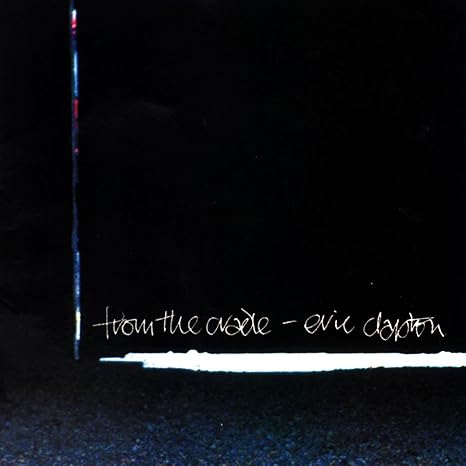
Eric Clapton From the Cradle stands as one of the most committed and emotionally raw recordings of his entire career.
Before this album arrived in 1994, Clapton had spent years navigating pop crossovers, but his Unplugged triumph had reminded the world what he was made of.
Quick Navigation
Quick Navigation
What Is From the Cradle?
Released on September 13, 1994, this album is Clapton’s full-length tribute to the electric Chicago blues masters who shaped him.
He recorded it entirely live off the floor at Olympic Studios in London, with no overdubs and no safety net.
The result sounds like a man settling a debt he has owed since childhood.
Every track is a cover, drawn from the catalogs of Muddy Waters, Willie Dixon, Elmore James, and other blues architects.
For Clapton, this was not nostalgia. It was a homecoming.
If you want to understand where Clapton’s instincts as a guitarist were forged, the Layla sessions with Derek and the Dominos offer another crucial chapter in that story.
The Blues Tradition Behind the Album
Clapton grew up in Surrey absorbing American blues records like scripture.
He learned Freddie King licks note-for-note as a teenager, and that obsession never left him.
By the time he formed Cream in the mid-1960s, his blues vocabulary was already formidable.
From the Cradle is the album where that vocabulary finally gets to speak for itself, without rock production or pop ambitions clouding the signal.
The source material spans the 1940s through the 1960s, from Lowell Fulson’s “Reconsider Baby” to Willie Dixon’s “Hoochie Coochie Man.”
Clapton approached each song with the seriousness of a scholar and the hunger of a fan.
For a deeper look at the album’s blues roots and chart history, the Wikipedia entry on From the Cradle provides thorough documentation.
Eric Clapton From the Cradle Track Highlights
The opening track, “Blues Before Sunrise,” sets the tone immediately with a slow, suffocating groove.
Clapton’s vocal sits low and dry in the mix, which is exactly right for this kind of music.
His version of “I’m Tore Down” crackles with genuine urgency, and the band locks in behind him like they mean it.
“Standin’ Round Crying” may be the most emotionally devastating moment on the record.
The guitar tone on that track alone justifies the entire project.
“Five Long Years” stretches into a slow blues showcase where Clapton bends strings with the patience of someone who has nothing to prove.
If you want to hear what the live versions sounded like during this era, this bootleg recording from The Fillmore West in 1994 captures the same energy in a raw concert setting.
The Guitar Work Dissected
Clapton played through a variety of vintage amps on this record to match each song’s era.
He used a 1956 Fender Champ for some of the lighter passages and a tweed Bassman for the heavier Chicago numbers.
His tone throughout is warm, slightly overdriven, and completely unprocessed.
There are no chorus pedals, no digital reverbs, no modern gloss.
The vibrato work on “Motherless Child” is especially striking, slow and wide in the style of B.B. King.
Those who follow Clapton’s recent comments about his health and his playing will find this album a powerful reminder of what his hands were capable of at full strength.
How It Performed Commercially
From the Cradle debuted at number one on the Billboard 200 in the United States.
It became the first straight blues album to reach number one in America in decades.
The UK reception was equally strong, hitting the top spot there as well.
Critics were largely enthusiastic, recognizing that Clapton had delivered something genuinely committed rather than calculated.
It earned a Grammy Award for Best Traditional Blues Album in 1995.
That Grammy win validated what fans already knew: this was not a vanity project.
For context on where this album fits within his broader output, our full album reviews archive covers Clapton’s discography in depth.
Why From the Cradle Still Matters
In 1994, grunge dominated the airwaves and blues was considered a niche interest by mainstream standards.
Clapton released a 16-track electric blues record anyway, and the public bought it in massive numbers.
That tells you something about the hunger for music with roots and grit.
The album also served as a bridge for younger listeners who knew Clapton only from “Tears in Heaven.”
Those listeners discovered where Clapton had come from, and many of them went back further to discover Muddy Waters and Elmore James on their own.
His Tears in Heaven era had brought mainstream attention, but From the Cradle recalibrated what his audience understood about him.
Clapton has continued performing live deep into his career, and you can follow his current activity through his 2026 European tour announcement.
The album also connects to a long tradition of British blues devotion that stretches from the Rolling Stones through Led Zeppelin.
Clapton simply executed that tradition with more fidelity and more fire than almost anyone else.
Eric Clapton From the Cradle: Final Verdict
This is not a greatest-hits cash-in or a nostalgic side trip.
It is a focused, disciplined, and emotionally honest record from an artist operating at a high level.
The band, which included bassist Dave Bronze and drummer Jim Keltner, plays with remarkable restraint and authority throughout.
Nothing is overplayed. Every note earns its place.
If you have never sat with this album from start to finish, you are missing one of the better listening experiences in Clapton’s entire catalog.
The Slowhand album and the 461 Ocean Boulevard record are essential Clapton, but From the Cradle gets closest to the source of what made him matter in the first place.
Play it loud, play it on decent speakers, and pay attention to what his hands are doing.
You will hear why the blues community embraced Eric Clapton From the Cradle as one of the defining blues records of the 1990s.
Affiliate Disclosure: As an Amazon Associate, I earn from qualifying purchases. This means that if you click on a link to a classic rock album or piece of gear on this site and make a purchase, I may receive a small commission at no extra cost to you. This helps support classicrockartists.com and allows me to keep providing deep-dive content on the legends of rock. Thank you for your support!