

Slow Ride by Foghat is one of the most enduring hard rock singles of the mid-1970s, a track built on a guitar riff of irresistible momentum that reached #20 on the US Billboard Hot 100 and became the band’s highest-charting single.
Affiliate Disclosure: I am an Amazon affiliate and if you purchase through any amazon links on this site i may earn a small commission at no extra charge to you.
Written by vocalist and guitarist Dave Peverett and produced by Nick Jameson, the recording was made at Suntreader Studio in Sharon, Vermont, during a session that included an unexpected three-week power outage that became part of the track’s production history.
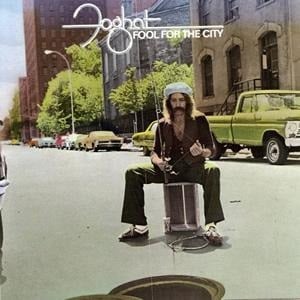
Slow Ride appears on Foghat’s 1975 album Fool for the City, and the original LP version runs to eight minutes and fourteen seconds, with the familiar radio single edit trimmed to under four minutes for commercial release.
VH1 ranked it at #45 on its list of the Best Hard Rock Songs of All Time in 2009, and its appearances in Guitar Hero and countless film and television soundtracks have kept the track in active cultural circulation for five decades.
Few hard rock singles from the era have matched its combination of sheer forward momentum and melodic accessibility, qualities that explain why it has remained a staple of classic rock radio with no sign of diminishing.
| Song Title | Slow Ride |
| Artist | Foghat |
| Album | Fool for the City (1975) |
| Release Year | 1975 |
| Written By | Dave Peverett, Nick Jameson |
| Producer | Nick Jameson |
| Label | Bearsville Records |
| Chart Peak | #20 US Billboard Hot 100, #14 Canada |
Table of Contents
What Is Slow Ride About?
Slow Ride is a song about seduction and physical desire, written with the kind of directness that was characteristic of hard rock’s most honest lyrical tradition.
The title phrase functions as both an instruction and an invitation, suggesting a deliberate, unhurried approach to intimacy that contrasts with the track’s increasingly urgent musical momentum.
Peverett understood that the best rock and roll lyrics operate through implication and energy rather than explicit statement, and the combination of the track’s slow-burning opening and its accelerating climax gives the song a structural shape that mirrors its subject.
The guitar work near the track’s end was designed to build toward release, and the result is one of the more musically sophisticated uses of dynamics in mid-1970s hard rock.
The Vibe: Genre, Mood, and Search Intent
Slow Ride opens with one of the era’s most instantly identifiable guitar figures, a repeated riff that establishes the track’s unhurried but insistent forward motion before the full band enters and the intensity begins to build.
The production by Jameson captures the band with a warmth and presence that gives the recording a live, room-filling quality without sacrificing the radio-friendly clarity needed for commercial success.
- Genre: Hard Rock, Blues Rock, Classic Rock
- Mood: Driving, Seductive, Building
- Tempo: Mid-tempo, building to fast (~118 BPM)
- Best For: Hard rock playlists, 1970s rock driving mixes, classic rock radio classics
- Similar To: Free “All Right Now”, Aerosmith “Sweet Emotion”
- Fans Also Search: Foghat discography, Fool for the City album, Dave Peverett
Behind the Lyrics: The Song’s Story
The recording session for Fool for the City took place at Suntreader Studio in Sharon, Vermont during the late summer and fall of 1974, over a period of approximately one month.
An unexpected power outage mid-session forced a three-week break, and when power was restored, drummer Roger Earl re-entered the drum room, re-established the tempo, and was punched back in by Jameson, creating a distinctive break in the recording that became part of the finished track’s character.
The song itself had developed from a basement jam session at the Long Island home of Earl and guitarist Rod Price, where the central riff and structure emerged through extended improvisation.
According to the Wikipedia entry on Slow Ride, the original LP version ran to over eight minutes, giving the band room to develop the track’s dynamic arc across a timespan that the commercial single could not accommodate.
For listeners exploring the harder end of mid-1970s American rock, the track stands alongside Aerosmith’s Sweet Emotion as an example of the era’s confidence in a certain kind of guitar-driven, blues-rooted rock.
Technical Corner: Gear and Production
Nick Jameson’s production approach on Fool for the City was built around capturing the live energy of a working hard rock band rather than constructing a polished studio product from individual layers.
The guitar sound on the recording reflects the British blues rock heritage that the band’s founding members had brought from their time in the UK, filtered through the harder, more direct approach that American rock audiences expected.
Jameson’s dual role as bassist and producer gave him an intimate understanding of the rhythmic foundation needed to support the track’s extended running time: the bass and drums were recorded with a solidity that allows the longer LP version to sustain its momentum across its full eight-minute duration.
The power outage that interrupted the session paradoxically contributed to the final recording: the three-week break allowed the band to return to the track with fresh energy and perspective, and the mechanical precision of the punch-in gave certain moments of the recording an extra urgency.
Suntreader Studio’s location in rural Vermont, away from the distractions of a major urban recording centre, suited the relaxed but focused approach that the sessions required, and the finished album reflects that environment.
Legacy and Charts: Impact and Endurance
Slow Ride reached #20 on the US Billboard Hot 100 in 1976 and #14 on the Canadian RPM chart, making it Foghat’s highest-charting single and the track that cemented their commercial breakthrough in North America.
The Fool for the City album reached #23 on the Billboard 200 and became the band’s first platinum record, confirming that the commercial success of the single had translated into broader album sales.
VH1’s 2009 ranking of the track at #45 in its Best Hard Rock Songs of All Time list acknowledged what decades of radio play had already demonstrated: that the recording had genuinely earned its place among the classics of the form.
The track’s placement in Guitar Hero introduced it to a generation of younger players who discovered the song through the game before seeking out the original recording, creating a new wave of fans for a track already more than thirty years old.
Slow Ride remains one of the defining recordings of mid-1970s American hard rock, a track whose combination of blues roots and commercial accessibility has given it a durability that most of its contemporaries have not matched.
Listener’s Note: A Personal Take
There is a particular quality to the opening riff that makes it impossible to hear without immediately knowing what the track is: it is one of those rare guitar figures that achieves complete identity within its first few notes.
The slow build of the arrangement is managed with real intelligence: the track earns its climax by making the listener wait for it, and when the full band arrives at the track’s peak, the release has been genuinely prepared rather than simply imposed.
Peverett’s vocal is understated in a way that suits the material perfectly: there is none of the performative excess that sometimes afflicts hard rock singing, just a delivery that communicates exactly the right mood with minimal effort.
The Slow Ride LP version, at over eight minutes, is worth seeking out: it gives the song the space to breathe and develop in ways that the single edit simply cannot, and the full-length experience is significantly different from the radio version most listeners know.
It is a record that rewards volume and commitment from the listener, and anyone who has experienced the full-length version at high volume will understand why the band’s fans consider it one of their greatest recordings.
Watch: The Official Music Video
Collector’s Corner: Own a Piece of Rock History
Foghat: Fool for the City (1975)
Own the platinum album that launched one of hard rock’s most durable anthems.
Original Bearsville pressings, remastered editions, and vinyl available.
Frequently Asked Questions About Slow Ride
Who wrote Slow Ride?
The song was written primarily by Dave Peverett, Foghat’s vocalist and guitarist, with Nick Jameson contributing the bass part, the middle section, and the ending. Jameson also produced the recording at Suntreader Studio in Sharon, Vermont.
What is Slow Ride about?
Slow Ride is about seduction and physical desire, written with the directness typical of hard rock’s lyrical tradition. The title phrase functions as both an instruction and an invitation, and the track’s musical structure mirrors its subject: a slow build that accelerates toward a climactic release. The guitar riffs near the end were deliberately designed to simulate intimacy.
How long is the original version of Slow Ride?
The original LP version runs to eight minutes and fourteen seconds. The commercial single was edited down to approximately three minutes and fifty-six seconds for radio play. Both versions appear on the album Fool for the City, and many fans consider the full-length LP version the definitive listening experience.
What happened during the recording session?
A power outage at Suntreader Studio in Vermont forced a three-week break mid-session. When power was restored, drummer Roger Earl re-established the tempo and was punched back into the recording by producer Nick Jameson, creating a distinctive mechanical precision that became part of the finished track’s character.
How did Slow Ride chart?
The single reached #20 on the US Billboard Hot 100 in 1976, making it Foghat’s highest-charting recording. It also reached #14 on the Canadian RPM chart. The album Fool for the City reached #23 on the Billboard 200 and became the band’s first platinum record.
Has Slow Ride appeared in films or TV?
Yes. The track has appeared in numerous films, television programmes, and video games including Guitar Hero, where its inclusion introduced it to a new generation of listeners. Its use across decades of media confirms its status as a shorthand for 1970s rock energy and nostalgia.
Where did Foghat come from?
Foghat was formed in London, England, in 1971 by former members of Savoy Brown: Dave Peverett (vocals, guitar), Rod Price (guitar), Tony Stevens (bass), and Roger Earl (drums). Despite their British origins, the band achieved their greatest commercial success in the United States, where their blues-influenced hard rock found a large and devoted audience.
What did VH1 say about Slow Ride?
VH1 ranked it at #45 on its list of the Best Hard Rock Songs of All Time in 2009, acknowledging its status as one of the essential recordings in the hard rock canon. The ranking reflected five decades of evidence that the track had genuinely earned its place among the classics of the form.
You Might Also Like
Free: All Right Now (1970)
A British blues rock classic that shares the same economy of means and the same absolute confidence in the power of a great riff to carry an entire recording, five years before Foghat’s breakthrough.
Aerosmith: Sweet Emotion (1975)
A 1975 American hard rock track from the same year and the same tradition, sharing the same blues-rooted guitar intensity and its era’s conviction that hard rock could be both raw and radio-friendly.
Deep Purple: Smoke on the Water (1972)
A British hard rock landmark whose central guitar riff is among the most recognizable in rock history, and whose influence on the direction of guitar-driven rock through the decade is impossible to overstate.
More than fifty years after its release, this recording ‘Slow Ride‘ retains every degree of the momentum and energy that made it a classic rock radio staple, a track whose opening riff remains one of the most immediately identifiable in the hard rock canon.