

Graham Bond Organisation: The Revolutionary Sound of British Rhythm and Blues
The Graham Bond Organisation was a foundational force in the development of British rock and jazz fusion during the mid-1960s.
Formed by the charismatic and innovative organist Graham Bond, the group served as a vital bridge between traditional jazz and the emerging heavy rock sound.
Significantly, the band is often remembered as the ultimate training ground for some of the most influential musicians in rock history.
By blending sophisticated jazz structures with raw rhythm and blues, they created a sonic template that many others would later follow.
Their live performances were legendary for their intensity and technical proficiency, setting a high bar for their contemporaries in the 60s music scene.
Despite their immense talent, the group remained a cult favorite rather than a commercial juggernaut during their brief existence.
However, their impact on the evolution of modern music is undeniable and continues to be studied by historians at Classic Rock Artists today.
The band’s ability to push boundaries ensured that the Graham Bond Organisation would forever be etched into the annals of musical innovation.
As an Amazon affiliate I make a small commission on any purchases made through this link at no extra cost to you.
I thank you in advance.
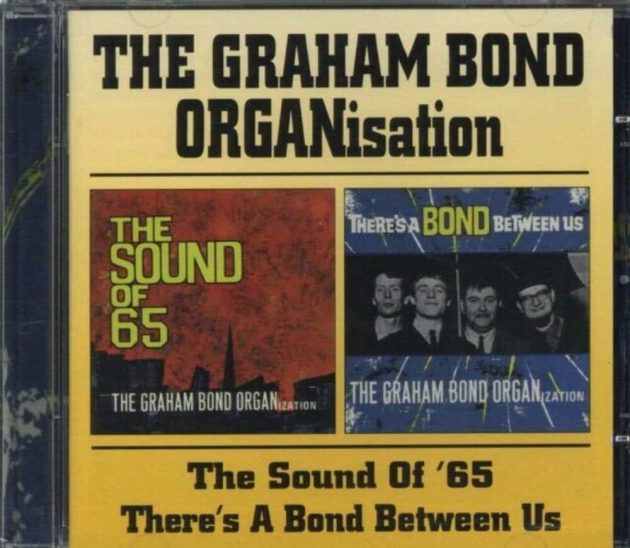
Table of Contents
- Early Life and Influences of Graham Bond
- Forming the Graham Bond Organisation
- The Graham Bond Organisation Peak Era
- Technological Breakthroughs of the Graham Bond Organisation
- Career Challenges and Personal Struggles
- The Later Revival and Solo Years
- The Graham Bond Organisation Legacy and Recognition
- Essential Discography
- Frequently Asked Questions
Early Life and Influences of Graham Bond
Graham Bond was born on October 28, 1937, in Romford, Essex, and was adopted as an infant.
He received a formal education at the Royal Hospital School, where he first began his journey into music.
His initial musical passion was the alto saxophone, an instrument he played with immense technical skill.
Bond was heavily inspired by the bebop movement, specifically the complex playing of Charlie Parker.
During the late 1950s, he immersed himself in the London jazz scene, seeking out mentors who could push his boundaries.
He eventually joined the Don Rendell Quintet, a group that allowed him to showcase his improvisational talents.
Furthermore, Bond’s restless creative energy soon led him to experiment with keyboards and electronics.
He realized that the Hammond organ offered a broader sonic palette than the saxophone alone.
This transition was pivotal, as it set the stage for his emergence as a leader in the British blues boom.
Bond’s deep understanding of jazz theory gave him a unique edge over other musicians of his generation.
Forming the Graham Bond Organisation
The seeds of the group were sown when Bond joined Alexis Korner‘s Blues Incorporated in 1962.
It was within this legendary collective that he met two young and explosive musicians: Jack Bruce and Ginger Baker.
In 1963, Bond decided to strike out on his own and formed the Graham Bond Organisation.
The original lineup included Bond on organ and vocals, Bruce on bass, Baker on drums, and Dick Heckstall-Smith on saxophone.
This quartet possessed a level of musical firepower that was virtually unmatched in London at the time.
Significantly, they eschewed the standard guitar-driven sound of their peers in favor of a brass and keyboard heavy attack.
Their sound was a potent cocktail of American R&B, hard-driving jazz, and soulful gospel influences.
They quickly became a must-see act at venues like the Flamingo Club in Soho.
Consequently, the band earned a reputation for being the loudest and most technically proficient group in the underground circuit.
The chemistry between the members was electric, though it was often tempered by personal volatility.
The Graham Bond Organisation Peak Era
Between 1964 and 1965, the band entered their most productive and influential phase.
They signed with Columbia Records and released their seminal debut album, The Sound of ’65.
This record captured the raw energy of their live sets and featured tracks like “Hoochie Coochie Man” and “Wade in the Water.”
Moreover, the album highlighted Bond’s soulful, grit-inflected vocals which perfectly complemented his aggressive organ style.
The rhythm section of Bruce and Baker was a revelation, providing a polyrhythmic complexity rarely heard in rock music.
Their interplay was so intense that it often pushed the songs into uncharted improvisational territory.
For a brief but significant period, the legendary Eric Clapton joined the ranks of the Graham Bond Organisation.
Clapton’s presence added a blues-rock edge that further expanded their sonic horizons during his short tenure.
However, the internal friction between Bruce and Baker became a defining characteristic of the group’s dynamic.
Baker eventually insisted that Bruce leave the band, leading to a major lineup shift that changed the band’s trajectory.
Despite these changes, the band continued to produce high-quality music that influenced a generation of players.
They were a key inspiration for many members of Cream who saw Bond as a mentor and pioneer.
The band’s dedication to musical excellence was evident in every recording they produced during this golden era.
They were masters of dynamics, capable of moving from a whisper to a roar within a single composition.
Their second album, There’s a Bond Between Us, was equally impressive and showed further growth in their sound.
Specifically, it showcased Bond’s ability to integrate new technology into the rhythm and blues framework.
Many music historians consider this era to be the high-water mark of the British blues movement.
The Graham Bond Organisation was not just a band: it was a laboratory for musical exploration.
You can learn more about this period by visiting the official Graham Bond website for historical archives.
Additionally, a detailed History of the GRAHAM BOND ORGANIZATION is available for those seeking a deep dive.
The legacy of this peak era is still felt today in the technical proficiency required of modern rock musicians.
Every track they recorded during this time serves as a testament to their collective genius and vision.
The impact of their work was such that it transcended the simple boundaries of jazz or rock.
Indeed, the group’s fearless approach to genre-bending paved the way for the progressive rock explosion of the next decade.
Their work remains a vital link in the chain of musical evolution during the twentieth century.
Technological Breakthroughs of the Graham Bond Organisation
Graham Bond was a true visionary when it came to musical equipment and sound engineering.
He was famously the first artist in Great Britain to use a Mellotron on a recording and in live performance.
This early adoption allowed the band to create orchestral textures that were completely foreign to the blues scene.
Furthermore, Bond was a pioneer in the use of the Leslie speaker cabinet with his Hammond organ.
This combination created a swirling, thick sound that became a hallmark of the psychedelic era to follow.
Significantly, his willingness to experiment with feedback and distortion was years ahead of its time.
The Graham Bond Organisation was essentially a technical powerhouse that pushed the limits of mid-60s recording technology.
Their recordings often featured complex layering and innovative microphone techniques that captured their massive sound.
Career Challenges and Personal Struggles
Despite their critical acclaim, the band struggled to achieve the commercial success of their contemporaries.
Their music was perhaps too sophisticated and uncompromising for the pop-dominated charts of the day.
Additionally, the departure of key members like Baker and Bruce left the band in a state of constant flux.
Furthermore, Graham Bond himself began to struggle with severe substance abuse issues during the late 1960s.
His growing interest in the occult also began to alienate some of his musical peers and business associates.
In contrast to his early focused brilliance, Bond’s later behavior became increasingly erratic and unpredictable.
The group eventually disbanded in 1967 as Bond sought a fresh start in the United States.
However, the challenges he faced only served to highlight the fragile nature of his immense talent.
The Later Revival and Solo Years
After the dissolution of the Organisation, Bond continued to pursue a variety of musical projects.
He briefly reunited with his former drummer in the sprawling ensemble known as Ginger Baker’s Air Force.
This period saw a brief revival of his public profile, though his personal struggles continued to haunt him.
His former bassist Jack Bruce also reached new heights with solo works like Songs For A Tailor during the early 70s.
Bruce’s subsequent releases, including Harmony Row, often reflected the musical sophistication he learned from Bond.
Even albums like Out Of The Storm carried the torch of the experimental spirit Bond had championed.
Meanwhile, Ginger Baker explored heavy blues-rock with the Baker Gurvitz Army during the mid-70s.
Tragically, Graham Bond’s life ended prematurely in 1974 at a Finsbury Park station in London.
His death was a profound loss to the music community, yet his influence continued to ripple through the decades.
The Graham Bond Organisation Legacy and Recognition
In the decades since his passing, the Graham Bond Organisation has been recognized as one of the most important bands of their era.
Their work is often cited by keyboardists and jazz-fusion artists as a primary source of inspiration.
Moreover, the band’s influence on the development of hard rock and heavy metal is now widely acknowledged.
They proved that rhythm and blues could be a vehicle for high-level musical exploration and technical mastery.
The group’s story is frequently featured in the news sections of classic rock publications.
They remain a staple of historical retrospectives on the 80s and 90s when many of their live recordings were finally released.
Significantly, their contribution to the British sound is as vital as those of the more famous bands they helped spawn.
The enduring musical legacy of the Graham Bond Organisation will never be forgotten by true students of rock history.
Essential Discography
- The Sound of ’65 (1965): The definitive debut album that established their heavy R&B and jazz fusion sound.
- There’s a Bond Between Us (1965): A follow-up that famously featured the first use of a Mellotron in British rock.
- Live at Klooks Kleek (1988): A posthumous release capturing the raw energy of their legendary club performances.
- The Graham Bond Organisation (Discography Pages): A comprehensive collection of the group’s essential recorded output.
To see how these sounds evolved, check out Fresh Cream for the next step in this musical journey.
You can also find rare insights and archival material on Nostalgia Central.
Check out our latest updates on upcoming classic rock tours and heritage performances.
For the ultimate physical collection of their music, visit the Graham Bond Organisation Amazon store.
Frequently Asked Questions
Who were the members of the Graham Bond Organisation?
The most famous lineup included Graham Bond, Jack Bruce, Ginger Baker, and Dick Heckstall-Smith.
What was Graham Bond’s main instrument?
While he was an accomplished saxophonist, he is most famous for his revolutionary playing on the Hammond organ.
What bands were formed by former members of the Organisation?
Most notably, Bruce and Baker went on to form Cream, recording classics like Disraeli Gears.
Did the band record any live albums during their career?
While they recorded many live sessions, most were released posthumously, including material from Wheels Of Fire era archives.
How did Graham Bond influence the Mellotron’s popularity?
By being the first UK artist to use it on a record, he inspired others to use it on albums like Goodbye and beyond.
Where can I find videos of their performances?
Rare footage is hard to find, but fans often compare their energy to the Cream Stormy Monday video for reference.
What is their most famous song?
“Wade in the Water” and “Hoochie Coochie Man” are widely considered their signature tracks.
Why is the band considered a “launchpad” for other artists?
They provided the musical training for Bruce and Baker before they wrote hits like Sunshine of Your Love.
The pioneering work and restless experimentation of the Graham Bond Organisation remain a cornerstone of modern music history.