

James Young stands as the immovable foundation and the “Godfather” of the legendary rock band Styx.
Known to millions of fans simply as “J.Y.,” his aggressive guitar style and gritty vocals provided the hard-rock edge that balanced the band’s progressive and melodic leanings.
For over five decades, he has remained the only member to perform on every single Styx album and every concert tour.
Significantly, his influence stretches from the psychedelic blues of the late 1960s to the arena rock anthems that defined the 1970s and 80s.
Whether shredding on a Stratocaster or co-writing multi-platinum hits, his presence is the heavy metal soul of the group.
In this comprehensive biography, we explore the life, career, and enduring legacy of James Young.
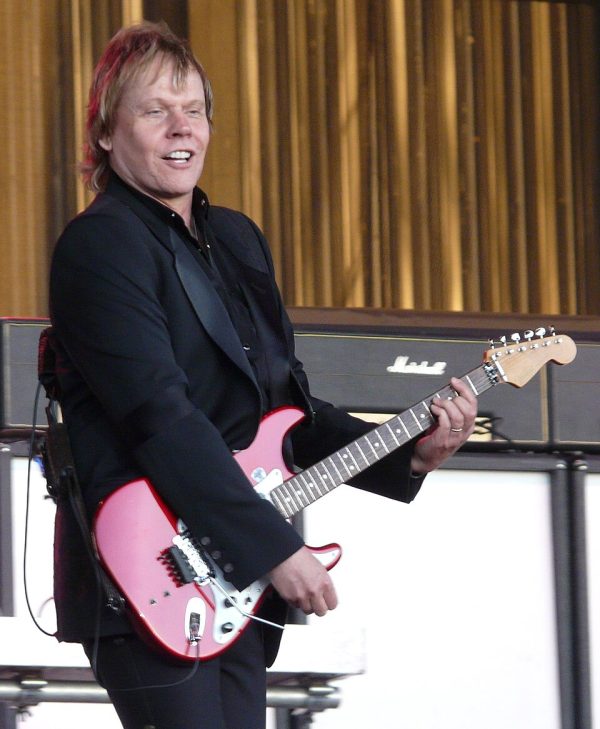
James Young remains the driving rock force behind Styx. Image credit: Wikimedia Commons
Table of Contents
- Section 1: Early Life and Chicago Roots
- Section 2: The First Major Band: TW4
- Section 3: The Peak Era of James Young
- Section 4: Career Challenges and Transitions
- Section 5: The Revival and Current Status
- Section 6: Recognition and Musical Innovations
- Section 7: Essential Discography
- Section 8: James Young FAQ
Early Life and Chicago Roots
James Young was born on November 14, 1949, in Chicago, Illinois, a city that was a massive music hub during his youth.
Growing up in a musical family, he and his four siblings were all encouraged to take piano lessons from a young age.
While his sister became a church organist, J.Y. found his true calling when the blues scene in Chicago began to turn psychedelic.
He was deeply influenced by seeing Jimi Hendrix perform live five times, often from as close as the fifth row.
Furthermore, watching Hendrix “psychedelicize” R&B guitar playing inspired Young to practice his instrument for up to eight hours a day.
These early years in Chicago shaped his preference for the Fender Stratocaster and his desire for a heavier, more powerful sound.
The First Major Band: TW4
Before the world knew them as Styx, James Young joined forces with the Panozzo brothers and Dennis DeYoung in a band called TW4.
This group was the training ground where the signature Styx sound began to coalesce in the late 1960s.
The band played the local Chicago circuit, performing in front of small crowds and honing their live chemistry.
Young brought a necessary “toughness” to the group’s music, contrasting with the more pop-oriented acts of the era.
Significantly, TW4 eventually secured a recording contract with Wooden Nickel Records, leading to their name change to Styx in 1972.
This transition marked the beginning of a professional journey that would eventually lead to global superstardom.
The Peak Era of James Young
The 1970s and early 1980s represented a period of unprecedented success for the James Young era of Styx.
With the release of The Grand Illusion in 1977, the band achieved massive commercial heights, selling over 7 million copies.
Young was a primary architect of the band’s harder sound, co-writing fan favorites and providing powerful vocal performances.
During this peak, he contributed heavily to landmark albums such as Pieces of Eight and Paradise Theatre.
His collaboration with Tommy Shaw and Dennis DeYoung created a unique triple-threat of songwriting and vocal talent.
Furthermore, J.Y. showcased his guitar prowess on tracks like “Miss America,” which became a staple of their high-energy live shows.
He also embraced the concept album format, playing a pivotal role in the ambitious Kilroy Was Here project.
Despite the changing musical landscape of the 80s, his guitar work remained a consistent anchor for the band’s identity.
In contrast to the softer ballads, Young’s tracks ensured the band never lost its rock and roll credibility.
His dedication to the road during this era solidified Styx as one of the premier live acts in the world.
Career Challenges and Transitions
The mid-1980s brought significant challenges for James Young as Styx underwent a period of internal friction and eventual hiatus.
Differences in creative direction led to the band’s temporary dissolution following the Kilroy tour.
During this time, Young explored solo ventures, releasing his debut solo album City Slicker in 1985 with Jan Hammer.
In contrast to the stadium rock of Styx, these solo projects allowed him to dive deeper into hard rock and blues influences.
On a personal level, J.Y. faced heartbreak when his wife, Susie, battled a rare underlying illness for many years.
He remained devoted to her until her passing, even helping start a foundation for Acute Intermittent Porphyria.
Significantly, he balanced these personal hurdles with the responsibility of maintaining the Styx legacy through various reunions.
The Revival and Current Status
The late 1990s marked a major turning point and a revival for James Young and the remaining members of the band.
When Dennis DeYoung departed the group due to health issues and a desire to stop touring, J.Y. and Tommy Shaw took the reins.
They recruited Lawrence Gowan, whose high-energy performance style breathed new life into the band’s live shows.
Young has often noted that this new era allowed the band to return to a more guitar-driven, “rocking” focus.
Today, Styx continues to tour extensively, frequently sharing the stage with acts like Loverboy and REO Speedwagon.
The band’s recent output, including the album Crash of the Crown, proves that James Young is still a creative force.
Recognition and Musical Innovations
Throughout his career, James Young has been recognized for his technical skill and his role in pioneering arena rock.
His use of the “Yoshinerator,” a custom distortion box built by a college friend, gave him a unique tonal edge.
While many of his peers moved toward digital modeling, J.Y. remained a champion of the authentic Fender Stratocaster sound.
Furthermore, his ability to blend heavy metal riffs with progressive rock structures influenced a generation of guitarists.
He has been a steadfast figure in the rock history books, maintaining the spirit of 70s rock for modern audiences.
Significantly, his longevity in the industry is a testament to his work ethic and passion for live performance.
Essential Discography
To truly understand the impact of James Young, one must explore these essential albums:
- The Grand Illusion (1977): The definitive Styx masterpiece featuring J.Y.’s hard-rocking contributions. Buy on Amazon
- Pieces of Eight (1978): A guitar-heavy fan favorite that showcases the band’s progressive side. Buy on Amazon
- Paradise Theatre (1981): The band’s only #1 album and a pinnacle of the arena rock era. Buy on Amazon
- City Slicker (1985): Young’s essential solo debut for fans of his heavier style. View Review
James Young FAQ
Q: Is James Young the only original member still in Styx?
A: Yes, James Young is the only member who has appeared on every album and participated in every tour since the band’s inception.
Q: What kind of guitar does James Young play?
A: He is primarily known for playing Fender Stratocasters, a preference influenced by his admiration for Jimi Hendrix.
Q: Did James Young have a solo career?
A: Yes, he released solo albums including City Slicker and Raised by Wolves during Styx’s hiatuses.
James Young continues to be the heart of classic rock for fans around the world.