

Breaking the Law by Judas Priest is one of the most immediately recognisable songs in heavy metal history.
In two and a half minutes, it captured the frustration of an entire generation and turned it into a chorus that has never stopped being sung.
Affiliate Disclosure: I am an Amazon affiliate and if you purchase through any amazon links on this site i may earn a small commission at no extra charge to you.
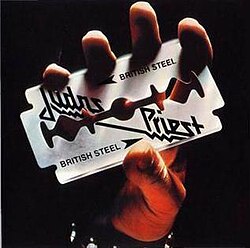
Written by Rob Halford, K.K. Downing, and Glenn Tipton, Breaking the Law was released as a single from Judas Priest’s sixth studio album, British Steel, in 1980.
It became one of the band’s signature tracks and one of the defining anthems of heavy metal.
Produced by Tom Allom, British Steel reached the top five in the United Kingdom and established Judas Priest as one of the most important acts in heavy metal.
It remains the album most closely associated with the band’s commercial breakthrough.
| Song Title | Breaking the Law |
| Artist | Judas Priest |
| Album | British Steel (1980) |
| Released | 1980 (single) |
| Written By | Rob Halford, K.K. Downing, Glenn Tipton |
| Producer | Tom Allom |
| Label | CBS Records |
| Chart Peak | #12 UK Singles Chart |
Table of Contents
- What Is Breaking the Law About?
- The Vibe: Genre, Mood, and Search Intent
- Behind the Lyrics: The Story of Breaking the Law
- Technical Corner: Instruments and Production
- Legacy and Charts: Why This Classic Still Matters
- Listener’s Note: A Personal Take
- Watch: Breaking the Law by Judas Priest
- Collector’s Corner: Own a Piece of Rock History
- Frequently Asked Questions About Breaking the Law
- You Might Also Like
What Is Breaking the Law About?
The lyric opens with a man who is out of work and out of options.
The golden future everyone promised has not arrived.
He cannot even start.
What follows is not a manifesto or a political argument.
It is a statement of desperation delivered as a rallying cry.
Breaking the Law does not advocate for crime.
It gives voice to the feeling that when society offers nothing, the rules of that society lose their hold.
Rob Halford described the song as almost nursery rhyme-like in its simplicity, but that simplicity is the point.
Anger this direct does not require complexity.
The chorus functions as a release valve.
Anyone who has felt trapped by circumstances recognises what Breaking the Law is expressing, even if they have never articulated it the same way.
The Vibe: Genre, Mood, and Search Intent
The guitar riff arrives in the first second and does not let go.
- Genre: Heavy Metal, Hard Rock
- Mood: Rebellious, Frustrated, Defiant
- Tempo: Uptempo (~148 BPM)
- Best For: Heavy metal playlists, NWOBHM classics, rebellion anthems, Judas Priest collections
- Similar To: Judas Priest “Victim of Changes”, AC/DC “Back in Black”, Iron Maiden “Run to the Hills”
- Fans Also Search: Judas Priest discography, British Steel album, Rob Halford vocals, 1980 heavy metal
Behind the Lyrics: The Story of Breaking the Law
Rob Halford, K.K. Downing, and Glenn Tipton wrote Breaking the Law during the British Steel sessions in late 1979 and early 1980.
Britain at that time was in the grip of serious economic difficulty.
Unemployment had risen sharply under the Thatcher government’s restructuring of the economy.
Youth unemployment in particular was severe.
Communities built around manufacturing and mining were under acute pressure.
The mood of frustration and disillusionment that Breaking the Law channels was not invented for the song.
It was already present in the streets.
The guitar riff itself was developed during a studio jam session rather than composed in advance.
Tom Allom recorded it immediately when it emerged.
The band recognised what they had.
The music video, filmed to accompany the single, depicted Judas Priest staging a fictional bank robbery using guitars as weapons.
It became one of the most memorable clips of the early MTV era.
Technical Corner: Instruments and Production
The production on Breaking the Law is built around directness.
Nothing is ornamental.
The guitar riff is the foundation of the entire recording, and K.K. Downing and Glenn Tipton play it with a precision that gives it a mechanical quality perfectly suited to the subject matter.
Dave Holland‘s drumming is forceful and relentless throughout.
He drives the track forward without offering any rhythmic relief.
Rob Halford’s vocal sits aggressively in the mix.
His delivery on the opening verses is controlled, almost conversational, before the chorus releases everything.
Tom Allom’s production keeps the arrangement tight and the guitar prominent.
At two minutes and thirty-four seconds, Breaking the Law delivers its message with a precision that longer songs rarely achieve.
The brevity is a production decision as much as a compositional one.
Legacy and Charts: Why This Classic Still Matters
Breaking the Law reached number twelve on the UK Singles Chart in 1980.
It helped drive British Steel into the UK top five, cementing Judas Priest’s commercial breakthrough.
The song has appeared in films, television programmes, and commercials for over four decades.
Its music video remains one of the most iconic clips associated with heavy metal.
The track is a staple of Judas Priest’s live performances and one of the most reliable crowd-participation moments in heavy metal concert history.
Its influence on subsequent generations of metal bands has been substantial.
The combination of simple, direct lyricism and a guitar riff built to be played at full volume established a template that countless bands have followed.
Breaking the Law appears regularly on lists of the greatest heavy metal songs ever recorded.
Listener’s Note: A Personal Take
The riff is the reason this recording has lasted.
Lyrics about rebellion and frustration are common in rock music.
A guitar riff that communicates rebellion without a single word is much rarer.
The opening four notes of Breaking the Law do that work before Halford has sung anything.
Everything that follows is confirmation of what the riff already established.
Watch: Breaking the Law by Judas Priest
Collector’s Corner: Own a Piece of Rock History
Judas Priest: British Steel (1980)
Own the album that gave the world Breaking the Law.
Original CBS Records pressings and remastered editions available.
Frequently Asked Questions About Breaking the Law
Who wrote Breaking the Law?
It was written by Rob Halford, K.K. Downing, and Glenn Tipton.
All three share writing credits on the majority of Judas Priest’s catalogue.
What is the song about?
Breaking the Law is about the frustration of economic hardship and social exclusion.
The lyric voices the perspective of someone who is unemployed and disillusioned with a society that has offered them nothing.
What album is it on?
It appears on British Steel, Judas Priest’s sixth studio album, released in 1980 on CBS Records.
British Steel reached the top five of the UK Albums Chart.
Who produced Breaking the Law?
It was produced by Tom Allom, who produced the majority of Judas Priest’s classic studio albums through the 1980s.
Allom had previously worked as an engineer on Black Sabbath recordings before moving into production.
How long is the song?
Breaking the Law runs for two minutes and thirty-four seconds.
Rob Halford described it as almost nursery rhyme-like in its directness, and the short runtime reflects that.
What is the music video about?
The music video depicts Judas Priest staging a fictional bank robbery, using guitars and amplifiers as their weapons.
It became one of the most recognisable heavy metal videos of the MTV era.
Where did the guitar riff come from?
The riff emerged during a jam session in the studio.
Tom Allom captured it immediately, and the band recognised it as the foundation for a complete song.
Is Breaking the Law still performed live?
Yes.
The song is a permanent fixture in Judas Priest’s live set and one of the most dependable crowd-participation moments in heavy metal.
You Might Also Like
Judas Priest: Victim of Changes (1976)
The earlier Judas Priest recording that showcased Rob Halford’s extraordinary vocal range and established the band’s technical credentials years before British Steel.
Hearing both recordings together shows how far Judas Priest travelled in four years.
AC/DC: Back in Black (1980)
The other great guitar-riff record of 1980, released in the same year and equally reliant on the power of a single hook delivered with complete conviction.
Both recordings from 1980 demonstrate why that year was one of the most important in hard rock history.
Foreigner: I Want to Know What Love Is (1984)
The power ballad from the same era that demonstrated how different 1980s rock could sound when emotional vulnerability replaced defiance.
Both recordings are from artists who defined their decade on their own terms.
Decades on, Breaking the Law by Judas Priest endures as one of the most effective and honest songs in heavy metal history, a recording that said exactly what it needed to say in two and a half minutes and has never needed another word.