

What happened to the members of Foghat after five decades of blues-rock domination?
From their formation in 1971 to today’s touring powerhouse, the story of the members of Foghat spans triumph, tragedy, and an unwavering commitment to keeping the boogie alive.
Whether you’re tracking down the original lineup, understanding the member changes that shaped their sound, or discovering where these classic rock artists are today, this complete guide reveals every chapter of Foghat’s remarkable journey through rock history.
The band that gave us “Slow Ride” has weathered lineup changes, personal loss, and the evolution of rock itself while never abandoning their blues-rock roots.
Ready to explore the full story behind one of the 1970s most enduring classic rock bands?
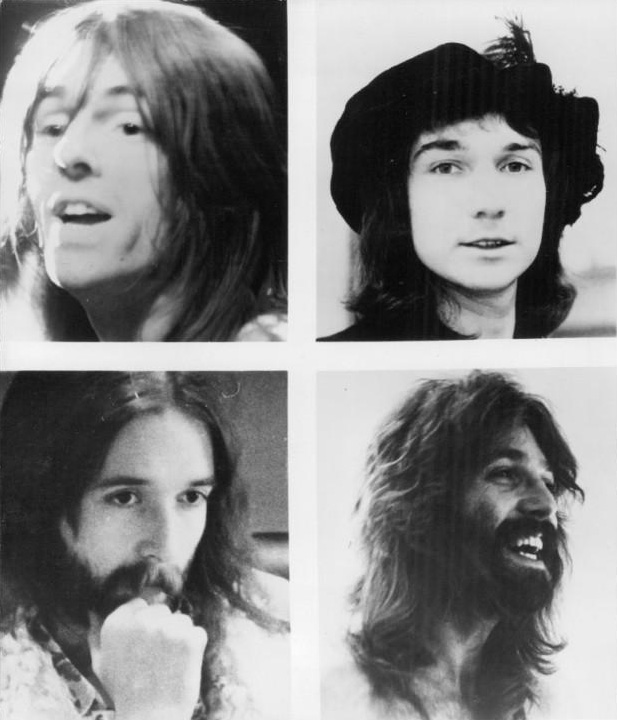
Image credit: Bearsville Records, via Wikimedia Commons (Public Domain)
This 1975 promotional photograph shows the members of Foghat during the peak of their commercial success. The image features the band’s classic lineup with guitarist and vocalist Dave Peverett (top left), drummer Roger Earl (top right), guitarist Rod Price (bottom left), and bassist Tony Stevens (bottom right).
📋 Table of Contents [+]
💡 Did You Know?
The name “Foghat” came from a nonsense word Dave Peverett made up as a child while playing Scrabble with his brother. He later used it to create an imaginary childhood friend called Junior Foghat, which evolved into his “Lonesome Dave” stage persona.
The Original Members of Foghat
The members of Foghat trace their roots to one of Britain’s most influential blues-rock outfits, Savoy Brown.
In December 1970, three members of Savoy Brown made a bold decision that would reshape rock history.
Dave Peverett (vocals and rhythm guitar), Roger Earl (drums), and Tony Stevens (bass) left their established band to forge their own path.
The trio recruited Rod Price on lead guitar and slide guitar after he departed from Black Cat Bones, completing the original lineup.
In January 1971, Foghat was officially born, named after Peverett’s childhood Scrabble invention.
This quartet would create a sound that defined blues-rock for an entire generation, blending British blues traditions with American boogie sensibilities.
How Foghat Formed from Savoy Brown
The departure from Savoy Brown wasn’t a spontaneous decision for the members of Foghat.
While touring America extensively with Savoy Brown in the late 1960s, Peverett, Earl, and Stevens developed a vision for a more rock-oriented sound than what guitarist Kim Simmonds wanted to pursue.
They craved more creative control and a harder-edged boogie-rock direction.
After leaving Savoy Brown, the three musicians initially struggled to find label interest.
Earl later recalled that after recording five or six demo songs, “we couldn’t get arrested” and “nobody wanted us.”
The addition of Rod Price proved crucial, as his slide guitar wizardry would become Foghat’s signature sound.
Manager Albert Grossman (who famously managed Bob Dylan and Janis Joplin) signed the band to Bearsville Records in 1971, giving them the platform they needed.
Early Musical Background of Key Members
Each founding member brought unique experience to Foghat’s blues-rock foundation.
Dave Peverett had been performing since the early 1960s, starting with a London pub band called the Nocturnes before briefly touring with Swiss blues band Les Questions (where he adopted the “Lonesome Dave” nickname).
He joined Savoy Brown as rhythm guitarist in 1967 and eventually became their lead vocalist, appearing on five albums before the Foghat split.
Roger Earl developed his drumming style during his tenure with Savoy Brown, where he learned the art of driving blues-rock rhythms that would become essential to Foghat’s boogie sound.
Tony Stevens provided the solid bass foundation that grounded Foghat’s early recordings, though he would depart after just four years.
Rod Price earned the nickname “The Magician of Slide” for his exceptional guitar technique, particularly his slide guitar work that became synonymous with songs like “Slow Ride”.
Foghat Lineup Changes Through the Years
The members of Foghat went through numerous transformations across five decades, with the bass position proving particularly volatile.
Understanding these lineup changes reveals how the band evolved while maintaining their core identity.
From the original quartet through periods of dual Foghats and eventual reunification, the personnel shifts tell a story of creative tensions, personal tragedies, and rock and roll resilience.
The 1970s: Bassists Come and Go
The first major lineup change occurred in 1974 when original bassist Tony Stevens left the band to pursue other interests.
Nick Jameson stepped in briefly, playing on and producing the pivotal album Fool for the City (1975), which spawned “Slow Ride” and became the band’s first platinum record.
However, Jameson departed after the album’s tour to pursue a solo career that would eventually lead him to voice acting (he later voiced Emperor Palpatine in Star Wars: Clone Wars).
In 1976, Craig MacGregor joined as bassist, bringing a harder-driving approach that perfectly suited Foghat’s increasingly aggressive boogie-rock direction.
MacGregor’s arrival coincided with the band’s greatest commercial success: the album Night Shift (1976) and the multi-platinum Foghat Live (1977), which sold over two million copies.
The classic lineup of Peverett, Earl, Price, and MacGregor remained stable through 1980, recording several gold albums including Stone Blue (1978).
💡 Did You Know?
Foghat Live (1977) was recorded at a show in New York and became one of the best-selling live albums of the 1970s. The album spent over 100 weeks on the Billboard charts and helped cement Foghat’s reputation as one of rock’s premier live acts.
The 1980s: Near Dissolution
Rod Price left the band in 1980, marking the end of Foghat’s golden era.
Guitarist Erik Cartwright replaced Price and stayed through the early 1980s, contributing to albums like “Girls to Chat & Boys to Bounce” (1981) and “In the Mood for Something Rude” (1982).
These albums saw the band experimenting with a more new wave, radio-friendly sound that alienated their core fanbase.
The bass position became a revolving door during this period.
Craig MacGregor quit in 1982, and Nick Jameson returned briefly before being replaced by Kenny Aaronson in 1983, who left for medical reasons after a short tenure.
Rob Alter took over but also departed for health reasons in 1984.
By 1984, commercial fortunes had declined drastically, with “Zig-Zag Walk” (1983) barely charting at #192 on the Billboard Hot 200.
Lonesome Dave Peverett retired to England in 1985 after 16 years of constant touring, effectively ending the original band.
Roger Earl, Erik Cartwright, and Craig MacGregor (who had returned) continued touring under the Foghat name through the late 1980s with various musicians.
The 1993 Reunion and Beyond
In 1990, Dave Peverett formed his own version called “Lonesome Dave’s Foghat” featuring future member Bryan Bassett on guitar.
For three years, two versions of Foghat toured America separately until producer Rick Rubin intervened in 1993.
Rubin encouraged the original members to “bury the hatchet” and reunite, which they did.
The members of Foghat’s original lineup (Peverett, Earl, Stevens, and Price) recorded “Return of the Boogie Men” (1994), marking their first studio album in over a decade.
This reunion lineup remained stable until 1999, when Rod Price decided to retire from touring for good.
Bryan Bassett, who had impressed everyone during his time with Lonesome Dave’s Foghat, replaced Price on lead and slide guitar.
Tragedy struck on February 7, 2000, when Dave Peverett died from complications related to kidney cancer at age 56.
Before his death, Peverett had personally chosen Charlie Huhn (formerly of Humble Pie and Ted Nugent) to replace him.
Rod Price died on March 22, 2005, at age 57 from injuries sustained in a fall caused by a heart attack.
Tony Stevens departed in early 2005, with Craig MacGregor returning to the bass position.
🎵 Experience Foghat’s Evolution 🎵
From studio classics to legendary live performances
Discover Their Albums 🛒Where Are the Members of Foghat Today?
Today’s members of Foghat continue to honor the band’s legacy while creating new music that remains true to their blues-rock roots.
The current lineup represents both continuity and evolution, with founding member Roger Earl still driving the band forward at age 81.
Roger Earl: The Last Original Member
Roger Earl remains the only original member still performing with Foghat, serving as the band’s heartbeat and guardian of their legacy.
Born in 1946, Earl has been the band’s drummer since day one in 1971, making him one of rock’s most enduring performers.
Earl lives on a houseboat in Long Island, New York, where he famously jokes about “terrorizing the fish.”
Despite health challenges (including a temporary replacement in summer 2010 while recovering, and again in January 2025 when Blue Oyster Cult drummer Jules Radino substituted until May), Earl continues to tour extensively.
Earl’s philosophy has always been “it’s all about the music,” a mantra that has kept Foghat alive through every tragedy and lineup change.
He was instrumental in ensuring the band continued after Dave Peverett’s death, honoring his friend’s wishes to “keep on rockin'” and never give up.
The 2025 Lineup
The current members of Foghat in 2025 include Roger Earl on drums, Bryan Bassett on lead and slide guitar, Rodney O’Quinn on bass and vocals, and Scott Holt on lead vocals and guitar.
Bryan Bassett joined in 1999, bringing experience from Molly Hatchet and Wild Cherry.
His slide guitar work has successfully carried forward Rod Price’s legacy, and he also serves as the band’s engineer and producer.
Rodney O’Quinn, formerly of the Pat Travers Band, filled in for Craig MacGregor when MacGregor’s lung cancer diagnosis in 2015 prevented him from performing.
MacGregor passed away on February 9, 2018, at age 68 after a courageous battle with the disease.
Scott Holt became the permanent lead vocalist and guitarist in January 2022 after Charlie Huhn retired.
Holt spent over a decade as Buddy Guy’s guitarist and had been collaborating with Foghat since 2014 through the side project “Earl & the Agitators.”
His blues pedigree and songwriting contributions have brought the band full circle to their Savoy Brown blues roots.
In November 2023, this lineup released Sonic Mojo, which debuted at #1 on the Billboard Blues Charts and remained in the Top 10 for over 30 weeks, proving Foghat’s continued relevance.
The band announced their 2026 Twang and Bang Tour in December 2025, continuing their tradition of relentless touring that has defined them for 54 years.
💡 Did You Know?
Foghat returned to the UK in 2025 for the first time in 50 years, playing at Shepherd’s Bush Empire. The emotional homecoming showed that despite being based in America since 1971, British fans never forgot their blues-rock pioneers.
The Founding Members of Foghat
The original members of Foghat each brought distinct talents that created the band’s signature sound.
Understanding their individual contributions reveals how this particular combination of musicians achieved something special.
Lonesome Dave Peverett: The Voice and Vision
David Jack Peverett (April 16, 1943 – February 7, 2000), known universally as “Lonesome Dave,” was the heart and soul of Foghat.
Born in Dulwich, England, and raised in South London, Peverett developed his love for American blues and rock and roll in the pre-Beatles era.
His distinctive raspy voice became one of the most recognizable in 1970s rock, equally capable of soulful blues delivery and hard-charging rock vocals.
As primary songwriter, Peverett penned most of Foghat’s hits including “Slow Ride,” “Fool for the City,” and “Drivin’ Wheel.”
His songwriting captured the spirit of road-worn rock and roll, celebrating the touring life that defined the band.
Peverett was diagnosed with kidney cancer in 1998 but continued performing through intensive chemotherapy and radiation treatments.
Even on his final tour, bandmates recall him giving “110%” every night despite his illness.
He died in an Orlando, Florida hospital on February 7, 2000, surrounded by his wife Linda and their three children.
Before his death, he personally selected Charlie Huhn to carry on Foghat’s legacy, telling the band to continue because “it’s all about the music anyway.”
His influence remains central to Foghat’s identity, with current members playing in reverence to his memory and vision.
Rod Price: The Magician of Slide
Rod Price earned his nickname “The Magician of Slide” through sheer mastery of slide guitar technique.
His slide work on songs like “Slow Ride” became iconic, combining blues tradition with rock power.
Price developed a signature sound immediately recognizable from the opening notes, creating what every guitarist dreams of: a distinctive voice on the instrument.
After joining Foghat from Black Cat Bones in 1971, Price remained with the band through their most successful period until 1980.
His departure marked a turning point, as his slide guitar had been so integral to Foghat’s sound that replacing him proved nearly impossible.
Price rejoined for the 1993 reunion, performing with the original lineup until 1999 when he decided to retire from touring permanently.
On March 22, 2005, Price died at age 57 after suffering a heart attack that caused him to fall down a stairway.
The tragic accident took one of rock’s most gifted guitarists, whose influence continues through every slide guitarist who followed.
Bryan Bassett has honored Price’s legacy by maintaining the slide guitar tradition while adding his own voice to the role.
Tony Stevens: Original Bassist
Tony Stevens provided the solid bass foundation during Foghat’s formative years from 1971 to 1974.
As one of the three Savoy Brown members who left to form Foghat, Stevens was instrumental in the band’s early direction.
He played on Foghat’s first five albums, including their self-titled debut (1972), “Energized” (1974), and “Rock and Roll Outlaws” (1974).
Stevens left the band in 1974 to pursue other musical interests, missing the commercial explosion that came with “Fool for the City” and “Foghat Live.”
He returned for the 1993 reunion, playing with the original lineup through 2005 before departing again.
Stevens’ bass work helped establish the band’s blues-boogie groove, creating a rhythmic foundation that gave Peverett and Price room to shine.
Though less celebrated than his bandmates, Stevens’ contribution to Foghat’s formation and early success remains significant.
Notable Members Through the Decades
Beyond the founding members, several musicians made lasting impacts on Foghat’s sound and legacy.
Craig MacGregor (1951-2018)
Craig MacGregor’s hard-driving bass approach defined Foghat’s sound during their peak commercial years.
Joining in 1976, MacGregor played on “Night Shift,” “Foghat Live,” and “Stone Blue,” three of the band’s most successful albums.
His aggressive playing style perfectly matched the band’s increasing emphasis on powerful boogie-rock.
MacGregor remained with Foghat through the early 1980s, departed during the band’s struggles, then returned multiple times over the decades.
He was diagnosed with stage IV lung cancer in 2015, though the cancer had been detected earlier in 2012 but MacGregor wasn’t informed until 2015.
This delayed notification led MacGregor to become an advocate for legislation requiring physicians to promptly communicate test results to patients.
Though chemotherapy prevented him from performing, he remained officially part of the band until his death on February 9, 2018, at age 68.
Rodney O’Quinn continues to honor MacGregor’s memory while bringing his own Pat Travers Band experience to the bass role.
Charlie Huhn (2000-2022)
Charlie Huhn faced the impossible task of replacing Lonesome Dave Peverett, one of rock’s most distinctive voices.
Handpicked by Peverett before his death, Huhn (formerly of Humble Pie, Ted Nugent, and Victory) brought credibility and his own rock pedigree to the role.
From 2000 to 2022, Huhn served as Foghat’s lead vocalist and guitarist, recording “Family Joules” (2003), “Last Train Home” (2010), “Under the Influence” (2016), and other releases.
He successfully maintained Foghat’s touring schedule and kept the band relevant to both longtime fans and new audiences.
Huhn retired in January 2022 after two decades of service, handing the microphone to Scott Holt in a transition that has proven seamless.
His 22-year tenure ranks as one of the longest in Foghat history, testament to his abilities and dedication.
Bryan Bassett (1999-Present)
Bryan Bassett has been Foghat’s lead and slide guitarist for over 25 years, the longest tenure of any guitarist except Rod Price.
Before joining Foghat, Bassett played with Wild Cherry (of “Play That Funky Music” fame) and Molly Hatchet.
He initially joined Lonesome Dave’s Foghat in the late 1980s, impressing everyone with his skills.
When Rod Price retired in 1999, Bassett was the natural choice to take over lead and slide guitar duties.
Bassett has successfully carried forward Rod Price’s slide guitar legacy while developing his own voice.
He also serves as the band’s engineer and producer, recording and producing recent albums including “Sonic Mojo.”
His partnership with Scott Holt has created a dynamic guitar interplay that brings new energy to Foghat’s classic sound.
Critics have praised Bassett’s slide work as worthy of Price’s “Magician of Slide” legacy, high praise in the blues-rock world.
💡 Did You Know?
Foghat released a special 50th anniversary edition of “Fool for the City” in September 2025, featuring a previously unreleased concert from 1975. The expanded edition allows fans to hear the original lineup at their peak performance level.
Musical Legacy of Foghat Members
The members of Foghat created a legacy that extends far beyond their commercial success.
Their influence on blues-rock and boogie-rock remains audible in countless bands that followed.
Foghat earned eight Gold Records, one Platinum Record, and one Double Platinum Record, commercial success that validated their approach.
More importantly, they maintained artistic integrity throughout, never abandoning their blues-rock roots despite changing musical trends.
Songs like “Slow Ride,” “Fool for the City,” and “I Just Want to Make Love to You” became classic rock radio staples, introducing new generations to Foghat’s music.
Their appearance in the video game Guitar Hero III brought “Slow Ride” to millions of young gamers who might never have discovered them otherwise.
The inclusion of “Slow Ride” in Top Gun: Maverick (2023) demonstrated the song’s enduring cultural relevance 48 years after its release.
Foghat’s commitment to touring helped define the road warrior ethos of rock music, proving that great bands must earn their reputation night after night.
Their 1977 album “Foghat Live” set a standard for live albums, capturing genuine performance energy rather than studio-perfected tracks.
The band’s multi-generational appeal brings together Baby Boomers who saw the original lineup, Gen X fans who discovered them through classic rock radio, and Millennials who found them through modern media.
Current members continue expanding the legacy with new music like Sonic Mojo (2023), proving Foghat remains a creative force, not just a nostalgia act.
Their blues-rock approach influenced the southern rock movement and countless hard rock bands seeking to blend blues authenticity with rock power.
🎸 ESSENTIAL FOGHAT COLLECTION 🎸
Build your blues-rock library with these legendary albums

🎵 Foghat Live
The Double-Platinum Live Classic
Released in 1977, this double-platinum album captures Foghat at their absolute peak.
Recorded live in New York, this album spent over 100 weeks on the Billboard charts.
Features extended versions of “Slow Ride,” “Fool for the City,” and “I Just Want to Make Love to You.”
This is essential listening for understanding why Foghat became one of the 1970s’ premier live acts.

🎵 Fool for the City
The Album That Made “Slow Ride” Immortal
Foghat’s first platinum album from 1975 changed everything for the band.
Home to “Slow Ride,” which reached #20 on the charts and became a classic rock anthem.
Also features the title track and “My Babe,” showcasing the band’s blues-rock mastery.
This album represents the perfect balance of blues authenticity and rock power that defined Foghat’s sound.
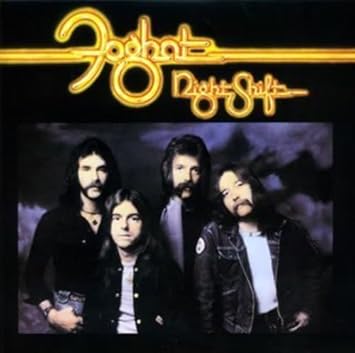
🎵 Night Shift
Gold-Certified Blues-Rock Power
Released in 1976 with new bassist Craig MacGregor driving the rhythm section.
Features the hit singles “Drivin’ Wheel” (#34) and “I’ll Be Standing By” (#67).
Produced by ex-Edgar Winter Group member Dan Hartman, who helped craft a more commercial sound.
This gold album shows Foghat expanding their sonic palette while maintaining their boogie-rock foundation.
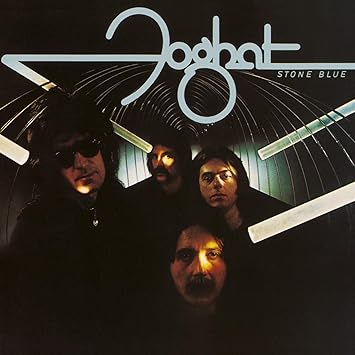
🎵 Stone Blue
Another Gold Album from the Peak Era
Released in 1978 during Foghat’s incredible commercial run of consecutive gold albums.
Features the title track “Stone Blue” and showcases the classic lineup firing on all cylinders.
Captures the raw energy and blues-rock authenticity that made Foghat arena headliners.
Essential for any serious Foghat collection, representing their late-70s peak.
🎸 Support Classic Rock Artists 🎸
When you purchase through these links, you help support the site and allow us to continue bringing you in-depth classic rock content and artist profiles. All album recommendations are based on their musical merit and historical significance.
Essential Foghat Albums Featuring Different Lineups
The members of Foghat recorded 17 studio albums across their career, each reflecting different eras and lineups.
Foghat (1972): The self-titled debut featuring the original lineup of Peverett, Earl, Stevens, and Price. Produced by Dave Edmunds and Todd Rundgren, this album established their blues-rock credentials with covers of Willie Dixon’s “I Just Want to Make Love to You” that became a surprise hit.
Energized (1974): The first of two albums released in 1974, showcasing the original lineup’s growing confidence and tighter arrangements.
Rock and Roll Outlaws (1974): The second 1974 release that went gold, proving Foghat’s prolific creative period and work ethic.
Fool for the City (1975): The platinum breakthrough featuring Nick Jameson on bass instead of Tony Stevens. This album’s success with “Slow Ride” changed Foghat’s trajectory forever.
Night Shift (1976): Craig MacGregor’s first album with the band, showing his harder-driving bass approach that shaped their late-70s sound.
Foghat Live (1977): The double-platinum live album that remains their biggest seller and defined them as a premier live act. Features the classic lineup of Peverett, Earl, MacGregor, and Price.
Stone Blue (1978): Another gold album from the peak years, capturing the band at their commercial and creative height.
Return of the Boogie Men (1994): The 1993 reunion album featuring all four original members back together for the first time since 1975.
Road Cases (1998): Live album from the reunion era with Bryan Bassett replacing Rod Price, capturing the transitional lineup.
Family Joules (2003): First studio album after Dave Peverett’s death, featuring Charlie Huhn’s debut as vocalist alongside Earl, Stevens, and Bassett.
Last Train Home (2010): Blues-focused album featuring the Huhn-era lineup returning to the band’s roots with covers and originals.
Under the Influence (2016): Fan-funded album through PledgeMusic that debuted at #17 on Billboard’s Hard Rock Albums chart.
Sonic Mojo (2023): The latest studio album with Scott Holt on vocals, debuting at #1 on the Billboard Blues Charts and proving the current lineup’s creative vitality.
Frequently Asked Questions About Foghat Members
Who were the original members of Foghat?
The original members of Foghat were Dave “Lonesome Dave” Peverett (vocals and rhythm guitar), Roger Earl (drums), Tony Stevens (bass), and Rod Price (lead guitar and slide guitar). Three of them (Peverett, Earl, and Stevens) left Savoy Brown together in December 1970, then recruited Price from Black Cat Bones in 1971.
Are any original members of Foghat still alive?
Yes, Roger Earl is the only surviving original member and continues to perform with Foghat today at age 81. Dave Peverett died in 2000 from kidney cancer, Rod Price died in 2005 from injuries sustained in a fall, and Tony Stevens left the band permanently in 2005 (his current status is not publicly documented).
What are the current members of Foghat doing now?
The current members of Foghat are actively touring and recording. Roger Earl continues as drummer and founding member, Bryan Bassett handles lead and slide guitar, Rodney O’Quinn plays bass and vocals, and Scott Holt serves as lead vocalist and guitarist. The band released “Sonic Mojo” in 2023, which debuted at #1 on the Billboard Blues Charts, and they’re touring throughout 2025 and 2026.
Why did Rod Price leave Foghat?
Rod Price left Foghat in 1980 during a period of declining commercial fortunes and creative tensions. He pursued solo work for over a decade before rejoining for the 1993 reunion. Price left again in 1999 because he decided to retire from touring permanently, citing his desire to stop the constant road schedule that had defined his career.
How many members has Foghat had throughout their history?
Foghat has had over 20 different members throughout their 54-year history. The bass position has been particularly volatile, with at least 10 different bassists including Tony Stevens, Nick Jameson, Craig MacGregor, Kenny Aaronson, Rob Alter, and Rodney O’Quinn. The guitar position has been more stable, with Rod Price, Erik Cartwright, and Bryan Bassett serving the longest tenures.
Who replaced Dave Peverett in Foghat?
Charlie Huhn replaced Dave Peverett as lead vocalist and guitarist in 2000. Peverett personally selected Huhn (formerly of Humble Pie and Ted Nugent) before his death from cancer. Huhn served in this role for 22 years until his retirement in January 2022, when Scott Holt (formerly Buddy Guy’s guitarist) took over.
What happened to Craig MacGregor?
Craig MacGregor was diagnosed with stage IV lung cancer in 2015, though the cancer had been detected earlier in 2012 but he wasn’t informed until 2015. This delayed notification made MacGregor an advocate for legislation requiring prompt physician communication of test results. The effects of chemotherapy prevented him from performing, and he died on February 9, 2018, at age 68. Rodney O’Quinn had already taken over bass duties in 2015.
Want to Dive Deeper into Classic Rock History?
Explore our complete collection of band member profiles and discover the stories behind your favorite classic rock artists.
Explore More Band MembersOther Classic Rock Band Members
Affiliate Disclosure: This article contains affiliate links to Amazon. As an Amazon Associate, I earn from qualifying purchases at no additional cost to you. This helps support the site and allows me to continue bringing you classic rock content. All album recommendations are based on their musical merit and historical significance.
Sources:
- Foghat – Wikipedia
- List of Foghat Members – Wikipedia
- Official Foghat Website
- Dave Peverett – Wikipedia
- Rod Price – Wikipedia
- The Story of Foghat – Louder Sound
- Complete List of Foghat Band Members – Classic Rock History
Last updated: December 4, 2025
Tags:
#MembersOfFoghat #FoghatMembers #ClassicRock #RockHistory #Foghat #RockLegends #ClassicRockArtists #RockBands #MusicHistory #VintageRock #RockStars #1970sMusic #RockBiography #ClassicRockBands #MusicLegends #RockIcon #SlowRide #BluesRock #BoogieRock