

Ever wondered what happened to the members of King Crimson after their legendary run? From 1968 to today, the story of King Crimson’s members reads like a progressive rock odyssey filled with groundbreaking innovation, revolving-door lineups, and musical reinvention that spans over five decades. Whether you’re curious about the original lineup, the member changes that shaped their ever-evolving sound, or where these classic rock artists ended up, this complete guide reveals the full story behind one of music’s most influential and enigmatic classic rock bands.
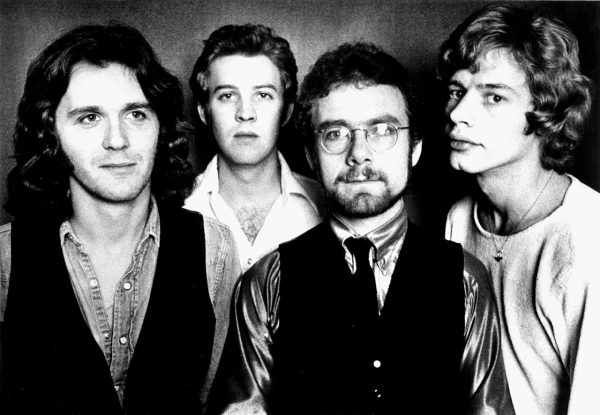
Image credit: Wikimedia Commons
📋 Table of Contents [+]
🎸 Own the Music That Changed Progressive Rock Forever 🎸
🕸 EXPLORE ESSENTIAL KING CRIMSON ALBUMSThe Original Members of King Crimson
The original members of King Crimson came together in London in late 1968, emerging from the ashes of a quirky experimental trio called Giles, Giles and Fripp. The founding lineup consisted of five remarkably talented musicians who would change the face of rock music forever. Robert Fripp brought his innovative guitar techniques and uncompromising vision. Michael Giles provided thunderous, jazz-influenced drumming that few could match. Greg Lake contributed his powerful, emotive vocals and commanding bass playing. Ian McDonald added a dazzling array of instruments including saxophone, flute, keyboards, and Mellotron. Peter Sinfield served as the band’s lyricist and visual mastermind, crafting the surreal, poetic words that defined their early sound.
This original configuration was officially formed on January 13, 1969, and they wasted no time making an impact. By July 5, 1969, just months after their first gig, King Crimson opened for the Rolling Stones at the legendary free concert in Hyde Park before an estimated 500,000 people. The Guardian reported that while the Stones’ performance was “indifferent,” King Crimson were absolutely “sensational.” It was a triumphant debut that announced a new force in rock music.
Robert Fripp’s Role in Formation
Robert Fripp has remained the only constant member throughout King Crimson’s entire history, making him the band’s de facto leader and creative architect. Born in Wimborne Minster, Dorset, in 1946, Fripp was not the typical rock guitarist. He approached his instrument with an almost academic rigor, developing techniques that would influence generations of players. When brothers Michael and Peter Giles advertised for a “singing organist” in 1967, Fripp responded despite being a guitarist who neither played organ nor sang. His unique approach and sheer talent convinced the brothers to adapt their plans.
After the failure of Giles, Giles and Fripp’s debut album The Cheerful Insanity of Giles, Giles and Fripp in 1968, Fripp and Michael Giles began recruiting new members. When Greg Lake, Ian McDonald, and Peter Sinfield joined, the chemistry was immediate and explosive. Fripp’s vision for King Crimson was clear from the start: this would be no ordinary rock band, but rather a vehicle for constant musical evolution and experimentation.
💡 Did You Know?
The name “King Crimson” was created by Peter Sinfield as a synonym for Beelzebub, prince of demons. Sinfield later clarified that it was intended to evoke “something scary and slightly evil” but also majestic. The band never officially confirmed any single meaning, adding to their mystique.
Early Musical Background of Key Members
The members of King Crimson brought remarkably diverse musical backgrounds to the table. Ian McDonald had served in the British Army as a bandsman, where he developed his jazz sensibilities and multi-instrumental prowess. His army composition “Three Score and Four” would later be transformed into the ferocious middle section of “21st Century Schizoid Man.” Greg Lake had known Robert Fripp since childhood in Bournemouth, and the two had played together in various local bands before their paths crossed again in King Crimson. Michael Giles brought his experience from numerous working bands, while Peter Sinfield’s background in computers and poetry gave him a unique perspective on both the technical and artistic aspects of the music industry.
This combination of jazz training, classical influences, poetry, and raw rock energy created something the world had never heard before. When In the Court of the Crimson King was released in October 1969, it announced the arrival of progressive rock as a legitimate art form. Pete Townshend of The Who called it “an uncanny masterpiece.” The album remains their most commercially successful and influential release to this day.
King Crimson Lineup Changes Through the Years
No band in rock history has experienced more dramatic lineup changes than King Crimson. Over five decades, more than 20 different musicians have passed through the band’s ranks, with only Robert Fripp remaining as the constant thread. This revolving door of talent was not a weakness but rather a deliberate feature of Fripp’s vision. Each incarnation of King Crimson brought fresh perspectives and sounds, preventing the band from ever becoming stale or predictable.
The band can be roughly divided into eight distinct eras, each with its own characteristic sound and personnel. From the symphonic grandeur of the original lineup to the metallic crunch of the mid-1970s trio, from the new wave-influenced 1980s quartet to the “Double Trio” experiment of the 1990s, King Crimson constantly reinvented themselves while maintaining their commitment to uncompromising artistry.
The Departure of Ian McDonald and Michael Giles
The success of In the Court of the Crimson King was immediately followed by turmoil. By December 1969, just months after their triumphant debut, both Ian McDonald and Michael Giles announced their departure. The rigors of touring and creative differences had taken their toll. Robert Fripp later said he was “heartbroken” when they left, viewing it as a betrayal of everything they had built together. McDonald and Giles went on to record one album together as McDonald and Giles before pursuing separate careers.
Greg Lake also departed in 1970 to form Emerson, Lake and Palmer with Keith Emerson and Carl Palmer. This left Fripp and Sinfield as the only remaining original members. The next album, In the Wake of Poseidon, featured a patchwork of musicians and was criticized by some as being too similar to the debut. It marked the beginning of what would become a pattern: Fripp rebuilding King Crimson from the ground up, time and time again.
New Blood: Later Members Who Joined
The early 1970s saw a parade of talented musicians pass through King Crimson. Mel Collins joined as saxophonist and flautist in 1970, bringing a smooth jazz sensibility to albums like Lizard and Islands. Gordon Haskell briefly served as vocalist and bassist, while Ian Wallace took over the drum kit. Boz Burrell, who would later co-found Bad Company, joined as vocalist and taught himself bass at Fripp’s insistence.
The most celebrated later lineup emerged in 1972 when Fripp recruited Bill Bruford from Yes, John Wetton from Family, violinist David Cross, and free-jazz percussionist Jamie Muir. This lineup created some of King Crimson’s most intense and challenging music on Larks’ Tongues in Aspic, Starless and Bible Black, and Red. The Wetton-Bruford rhythm section was described by Fripp as “terrifying” in its power and precision.
💡 Did You Know?
When Bill Bruford left Yes to join King Crimson in 1972, he took a significant pay cut and gave up his royalties from Close to the Edge to buy out his contract. He later explained that “if you’ve turned in the best album you’re going to do with an ensemble, it’s your obligation to move on.” King Crimson offered him the creative challenge he craved.
After disbanding in 1974, King Crimson reformed in 1981 with a radically different sound and lineup. Adrian Belew joined as vocalist and second guitarist, bringing his experience with David Bowie and Frank Zappa. Tony Levin came aboard on bass and Chapman Stick, having previously worked with Fripp on his solo projects and with Peter Gabriel. This quartet, with Bruford returning on drums, created the Discipline trilogy of albums that incorporated new wave, world music, and gamelan influences into the King Crimson sound.
The 1990s brought the “Double Trio” concept, with Bruford, Pat Mastelotto, and later Trey Gunn creating the THRAK era. The final touring lineup from 2013-2021 featured three drummers: Mastelotto, Gavin Harrison, and either Bill Rieflin or Jeremy Stacey. Jakko Jakszyk took over as lead vocalist and second guitarist, while Mel Collins returned after a 42-year absence. This configuration became the longest-running stable lineup in King Crimson history.
🎵 Experience King Crimson’s Musical Evolution 🎵
🕸 SHOP THE ESSENTIAL ALBUMSWhere Are the Members of King Crimson Today?
The story of the members of King Crimson continues to unfold in fascinating ways. While the band’s live performances concluded in December 2021, many members remain active in music and related pursuits. Sadly, several key figures have passed away, including founding members Greg Lake (2016) and Ian McDonald (2022), as well as John Wetton (2017) and Bill Rieflin (2020). However, the legacy lives on through the surviving members’ ongoing projects and the possibility of new recorded material.
Robert Fripp: Sunday Lunch and Recent Health News
At 78, Robert Fripp remains remarkably active and visible, largely thanks to his hugely popular “Sunday Lunch” video series with his wife, singer Toyah Willcox. The couple began posting irreverent cover versions during the COVID-19 lockdowns, and the videos became viral sensations. They have since taken the concept on tour, performing their playful takes on rock classics to enthusiastic audiences across the UK and beyond.
In May 2025, Fripp revealed that he had suffered a heart attack while traveling to Italy for a Guitar Craft event. He underwent two heart surgeries and has been recovering well, characteristically commenting that “rumours of my impending uselessness are much exaggerated.” Despite this health scare, Fripp has indicated that work continues on new King Crimson material. In July 2025, Jakko Jakszyk confirmed that the band is recording studio versions of songs performed during their 2014-2021 tours, though manager David Singleton has cautioned fans against getting too excited too soon.
Fripp continues to oversee King Crimson’s extensive archive through his Discipline Global Mobile label, ensuring that the band’s legacy is properly documented and available to fans. Recent releases have included expanded editions of classic albums and previously unreleased live recordings. For the latest news on Robert Fripp and King Crimson, check the official DGM website.
Tony Levin, Adrian Belew, and the BEAT Supergroup
Perhaps the most exciting recent development for fans of the members of King Crimson has been the formation of BEAT, a supergroup celebrating the band’s 1980s era. In 2024, Adrian Belew and Tony Levin teamed up with guitar virtuoso Steve Vai and Tool drummer Danny Carey to perform material from Discipline, Beat, and Three of a Perfect Pair. The tour was a massive success, playing 65 North American dates due to overwhelming demand. Robert Fripp gave his blessing to the project, even suggesting the name, and stated that Steve Vai was “the only guitarist who could play my parts.” Following the North American triumph, BEAT will tour Europe in Summer 2026, bringing the music of King Crimson’s 1980s era to international audiences eager to experience these classic albums performed live by world-class musicians.
Tony Levin, now 78, continues to be one of the most in-demand bass players in the world. Beyond BEAT, he maintains his long-running Stick Men project and continues to tour with Peter Gabriel. His innovative use of the Chapman Stick and his distinctive “funk fingers” technique have influenced countless bassists. Adrian Belew, 75, remains active as both a touring artist and collaborator, continuing to push musical boundaries through his various solo and group projects.
Bill Bruford retired from professional drumming in 2009 but ended his retirement in 2022 to join the Pete Roth Trio, a jazz group. Now 75, he holds a PhD in Music from the University of Surrey and has published two acclaimed books about drumming and creativity. His 2024 box set The Best of Bill Bruford: The Winterfold and Summerfold Years showcases his post-King Crimson work. Mel Collins, 77, returned to King Crimson in 2013 after a 42-year absence and performed with the band through their final shows in 2021. He continues to work as a session musician and performer.
💡 Did You Know?
Ian McDonald went on to co-found Foreigner in 1976, where he played on massive hits like “Feels Like the First Time,” “Cold as Ice,” and “Hot Blooded.” Four of his albums with either King Crimson or Foreigner rank among the best-selling records of the 1970s, making him one of the decade’s most commercially successful musicians.
Musical Legacy of King Crimson Members
The influence of the members of King Crimson extends far beyond progressive rock. They essentially invented the genre with their 1969 debut, inspiring contemporaries like Yes and Genesis to pursue their own ambitious musical visions. But their impact reaches into metal, alternative rock, new wave, and electronic music as well. Kurt Cobain cited Red as a major influence on Nirvana’s In Utero, while Tool’s Maynard James Keenan has joked on tour, “Now you know who we ripped off.”
The band’s willingness to constantly evolve set a template for artistic integrity in rock music. While many of their peers became nostalgia acts, King Crimson refused to simply recreate past glories. Each new lineup brought fresh ideas and sounds, from the orchestral grandeur of the late 1960s to the industrial intensity of the 2000s. This commitment to progression over repetition has earned them a devoted cult following that continues to grow.
Songwriting Contributions by Each Member
The songwriting contributions of the members of King Crimson varied dramatically across different eras. In the original lineup, Ian McDonald was actually the primary composer alongside Fripp, with the two sharing credit on virtually every track of In the Court of the Crimson King. McDonald later admitted that the album was “as much his as Fripp’s, moreso even” in terms of composition. Peter Sinfield’s lyrics gave the early albums their distinctive poetic quality, with songs like “The Court of the Crimson King” and “Epitaph” showcasing his gift for surreal, evocative imagery.
During the Wetton-Bruford era, John Wetton emerged as a key compositional force. He and Fripp developed a unique collaborative method, each composing segments independently and fitting together those that proved compatible. Wetton’s ballad that opens “Starless” is considered one of the finest moments in progressive rock. Richard Palmer-James replaced Sinfield as lyricist, though unlike Sinfield, he worked remotely and had no input on musical or visual decisions.
In the 1980s lineup, Adrian Belew brought a completely different approach to vocals and lyrics, incorporating wordplay, humor, and social commentary. His songwriting partnership with Fripp produced classics like “Elephant Talk,” “Frame by Frame,” and “Discipline.” The collaborative spirit continued through later incarnations, with Jakko Jakszyk contributing both songs and production expertise to the final touring band.
Post-Band Success Stories
Many members of King Crimson went on to remarkable success outside the band. Greg Lake co-founded Emerson, Lake and Palmer, one of the biggest-selling progressive rock acts of the 1970s. Ian McDonald co-founded Foreigner, achieving massive commercial success with hits that still dominate classic rock radio today. John Wetton co-founded both U.K. and Asia, with Asia’s self-titled debut becoming Billboard’s number one album of 1982. Bill Bruford became a founding member of Yes and later Anderson Bruford Wakeman Howe, while also building a distinguished career in jazz with his Earthworks ensemble.
Boz Burrell went on to co-found Bad Company with Paul Rodgers, achieving major success in the arena rock scene of the 1970s. Tony Levin became one of the most sought-after session bassists in the world, working with Peter Gabriel, John Lennon, Pink Floyd, and countless others. Adrian Belew has collaborated with David Bowie, Talking Heads, Nine Inch Nails, and many more, while maintaining an inventive solo career. Even those who spent shorter periods in King Crimson often credit the experience as transformative for their musical development.
For more stories about the members of classic rock bands and their fascinating careers, explore our complete coverage of rock history’s most influential musicians.
Essential King Crimson Albums Featuring Different Lineups
Understanding the members of King Crimson requires exploring the albums that defined each era. These eight essential releases showcase the band’s remarkable evolution and the contributions of different lineups. Each album represents a distinct chapter in King Crimson’s story, from their groundbreaking debut to their final studio work. Explore our complete King Crimson album reviews for deeper analysis of their recorded legacy.
🎸 Essential King Crimson Albums 🎵

In The Court Of The Crimson King
(200G/Remix/Ltd) Vinyl
The album that launched progressive rock.
Features the original 1969 lineup at their creative peak.
Includes “21st Century Schizoid Man” and the epic title track.

In The Wake Of Poseidon
All New 2025 Mixes – CD+Blu-ray
The turbulent follow-up to their classic debut.
Features Greg Lake’s final vocal performances with the band.
Newly remixed for 2025 with stunning audio quality.

Lizard
All New 2025 Mixes – CD+Blu-ray
Their most jazz-influenced album.
Features Yes vocalist Jon Anderson on the epic title suite.
Mel Collins’ first appearance with the band.

Larks’ Tongues in Aspic
1973 Classic
The beginning of the Wetton-Bruford era.
Features the “terrifying” rhythm section that redefined heavy prog.
Includes Jamie Muir’s wild percussion experiments.
Red
1974 Masterpiece
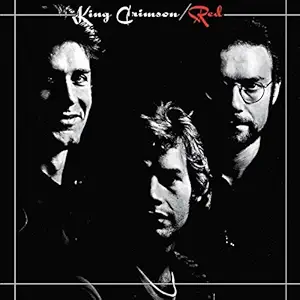
The heaviest King Crimson album.
Recorded as a trio with returning guests Ian McDonald and Mel Collins.
Cited by Kurt Cobain as a major influence on Nirvana.

Discipline
1981 Rebirth
The radical 1980s reinvention.
Introduces Adrian Belew and Tony Levin to the Crimson sound.
Blends new wave, gamelan, and African polyrhythms.

Three Of A Perfect Pair
30th Anniversary Edition
The final 1980s era album.
Features the classic Belew-Fripp-Levin-Bruford quartet.
Currently being celebrated by the BEAT supergroup.

Absent Lovers
Live in Montreal 1984
Captures the 1980s lineup at their live peak.
Essential document of the Discipline-era band in concert.
Features extended improvisations and tight ensemble playing.
🔗 Every purchase through these links helps support Classic Rock Artists.
Thank you for keeping classic rock alive!
Affiliate Disclosure: This section contains affiliate links to Amazon. As an Amazon Associate, I earn from qualifying purchases at no additional cost to you. This helps support the site and allows me to continue bringing you classic rock content. All album recommendations are based on their musical merit and historical significance.
Frequently Asked Questions About King Crimson Members
Here are answers to the most commonly searched questions about the members of King Crimson and the band’s history.
Who were the original members of King Crimson?
The original members of King Crimson, formed in January 1969, were Robert Fripp (guitar), Michael Giles (drums), Greg Lake (bass and vocals), Ian McDonald (keyboards, woodwinds, Mellotron), and Peter Sinfield (lyrics and visual design). This lineup recorded the groundbreaking debut album In the Court of the Crimson King before fragmenting by the end of 1969.
Are any members of King Crimson still alive?
Yes, many members of King Crimson are still alive as of 2025. Robert Fripp (78), Tony Levin (78), Adrian Belew (75), Bill Bruford (75), Mel Collins (77), Pat Mastelotto (69), Gavin Harrison (62), Jakko Jakszyk (66), Trey Gunn (64), and David Cross are all living. Sadly, Greg Lake died in 2016, John Wetton in 2017, Ian McDonald in 2022, and Bill Rieflin in 2020.
What are the members of King Crimson doing now?
Robert Fripp continues his “Sunday Lunch” video series and is working on new King Crimson recordings despite recent health issues. Tony Levin and Adrian Belew toured extensively in 2024 with the BEAT supergroup alongside Steve Vai and Danny Carey. Bill Bruford came out of retirement in 2022 to play jazz with the Pete Roth Trio. Mel Collins, Pat Mastelotto, Gavin Harrison, and Jakko Jakszyk are all contributing to the reported new King Crimson studio album.
Why did Ian McDonald leave King Crimson?
Ian McDonald left King Crimson in December 1969 due to the exhausting touring schedule and creative friction. He later expressed regret about leaving so soon but acknowledged that the decision led to other wonderful opportunities, including co-founding Foreigner. Before his death in 2022, McDonald apologized to Robert Fripp for his departure, and the two had reconciled years earlier.
How many members did King Crimson have?
Over their 50+ year history, more than 20 different musicians have been official members of King Crimson. Robert Fripp is the only member who has appeared in every incarnation of the band. The largest lineup was the final touring band (2016-2021), which featured eight members including three drummers. This constant evolution is a defining characteristic of King Crimson’s approach to music.
Is King Crimson still together?
King Crimson’s live touring concluded in December 2021, with Robert Fripp stating the band had “moved from sound to silence.” However, in July 2025, Jakko Jakszyk confirmed that the final lineup is recording studio versions of material from their last tours. Whether this will result in an official new album remains uncertain, but the band has not officially disbanded.
💡 Did You Know?
King Crimson famously kept their music off streaming services until June 2019, when their entire catalog finally appeared on Spotify to celebrate their 50th anniversary. Robert Fripp had long been critical of streaming economics, but ultimately decided that accessibility to new generations of fans outweighed his concerns.
Conclusion: The Enduring Legacy of King Crimson’s Members
The story of the members of King Crimson is ultimately a story about the transformative power of music and the courage to constantly evolve. From their explosive debut in 1969 to their final tours in 2021, King Crimson defied expectations and refused to become a nostalgia act. Each lineup brought fresh perspectives, and each era produced music that challenged and rewarded listeners willing to take the journey.
As we look at where these remarkable musicians are today, it’s clear that the King Crimson spirit lives on. Robert Fripp continues to explore new creative frontiers with Toyah Willcox. Tony Levin and Adrian Belew are bringing the 1980s material to new audiences through BEAT. Bill Bruford has returned to performing after years of academic study. And the possibility of new recorded material from the final lineup keeps fans hopeful for more chapters in this incredible saga.
🎶 Build Your King Crimson Collection Today 🎶
🕸 GET THE ESSENTIAL ALBUMSWant to dive deeper into classic rock history? Explore our complete band member guides and discover the albums that made these rock legends immortal. From Deep Purple to The Doors, Fleetwood Mac to Guns N’ Roses, we’ve got the complete stories of rock’s greatest bands.
Affiliate Disclosure: This article contains affiliate links to Amazon. As an Amazon Associate, I earn from qualifying purchases at no additional cost to you. This helps support the site and allows me to continue bringing you classic rock content. All album recommendations are based on their musical merit and historical significance.
Other Members of Rock Music Bands
Explore more fascinating stories about the members behind your favorite classic rock bands:
- Members of Black Sabbath
- Members of The Rolling Stones
- Members of Cream
- Members of Jefferson Airplane
- Members of Styx
- Members of Alice in Chains
Sources
King Crimson – Wikipedia
List of King Crimson Members – Wikipedia
DGM Live – Official King Crimson Website
Rolling Stone – Mel Collins Interview
Britannica – King Crimson
Rock Cellar Magazine – Robert Fripp Health Update 2025
Last updated: January 2026
#Tags: #MembersOfKingCrimson #KingCrimsonMembers #ClassicRock #RockHistory #KingCrimson #RockLegends #ClassicRockArtists #RockBands #MusicHistory #ProgressiveRock #RobertFripp #1960sMusic #1970sMusic #RockBiography #ClassicRockBands #ProgRock