

Phil Campbell: Motörhead’s Lead Guitarist and Heavy Metal Legend
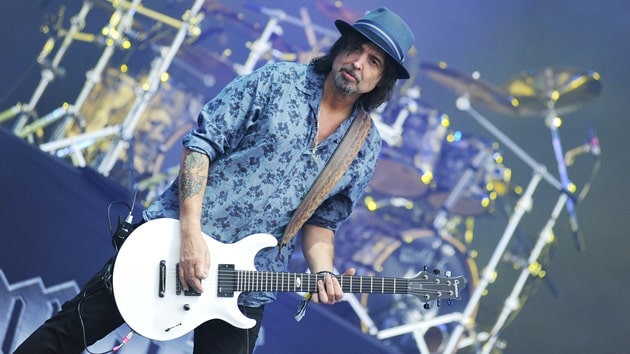
Phil Campbell is one of the most enduring and respected guitarists in the entire history of heavy metal, defined above all by his 31 years as the lead guitarist of Motörhead.
Born on May 7, 1961, in Pontypridd, Wales, he developed a playing style that fused raw aggression with real melodic intelligence, making him the ideal sonic partner for the legendary Lemmy Kilmister.
From his arrival in the band in 1984 to the final Motörhead recordings in 2015, Phil Campbell played on more of the group’s albums than any other guitarist in its history.
His guitar work powered some of the most iconic recordings in heavy rock, from the crushing density of Orgasmatron to the ferocious closing statement of Bad Magic.
When Motörhead disbanded in December 2015 following the passing of frontman Lemmy Kilmister, Campbell refused to walk away from music.
He launched Phil Campbell and the Bastard Sons, a band built around his three sons, and has continued to perform and record with genuine commitment ever since.
This is the definitive biography, available here on ClassicRockArtists.com, covering every significant chapter of his remarkable life and career in full.
Whether you are a lifelong Motörhead devotee or discovering his work for the first time, this guide leaves nothing important untold.
☰ Table of Contents (Click to Expand)
Early Life in Wales
Philip Anthony Campbell was born on May 7, 1961, in Pontypridd, a town in South Wales defined by its coal mining heritage and a strong, tight-knit working-class community.
Growing up in that environment gave Campbell the directness and tenacity that would later become hallmarks of his professional character.
He picked up the electric guitar as a teenager, immediately gravitating toward the louder and more aggressive end of the musical spectrum available to him.
The foundational rock sounds of the 1960s gave him his first guitar heroes, demonstrating what the instrument could do in the hands of players willing to push it to its absolute limits.
By the time the hard rock surge of the 1970s arrived, Campbell was already immersed in the genre with real purpose.
Bands like Black Sabbath, Deep Purple, and Led Zeppelin were major early touchstones, showing him what heavy, amplified music could achieve.
He spent his formative years practicing relentlessly and performing in local bands around South Wales, treating every gig as both a learning experience and a professional proving ground.
By the early 1980s, his skills had developed to a level that attracted attention well beyond his immediate local circuit, setting up the next major step in his musical journey.
Persian Risk and the Road to Motörhead
Phil Campbell’s first significant professional platform came through the UK hard rock band Persian Risk, a group aligned with the New Wave of British Heavy Metal movement that was reshaping British rock.
The NWOBHM produced acts like Iron Maiden and Def Leppard, setting a new standard for speed and aggression in guitar-based music.
Persian Risk gave Campbell the chance to develop his live performing craft before real audiences on real stages, an education that no rehearsal room could replicate.
The British heavy metal scene of the early 1980s was intensely competitive, and the musicians who survived in it needed genuine ability combined with resilience under difficult conditions.
Campbell demonstrated both qualities, steadily building a reputation as a guitarist capable of delivering at the highest level night after night.
The opportunity that would define his career arose when Motörhead’s guitarist Brian Robertson departed following just one album with the group, leaving a vacancy the band needed to fill urgently.
Campbell auditioned, earned the position, and joined Motörhead in 1984, beginning a professional relationship that would span over three decades of relentless music-making.
Phil Campbell and Motörhead: 31 Years of Metal Mastery
The relationship between Phil Campbell and Motörhead stands as one of the most sustained and creatively productive guitarist-band partnerships in the entire history of hard rock.
By the time Campbell arrived, the band had already built an extraordinary reputation, with landmark records and the live album No Sleep ’til Hammersmith behind them.
Campbell joined at a moment of rebuilding, arriving alongside fellow new recruit Würzel to form a twin-guitar configuration that would remain in place for over a decade.
The pairing of Campbell and Würzel gave Motörhead a different sonic character from their classic three-piece days, with two distinct guitar voices working alongside Philthy Animal Taylor‘s drumming and Lemmy’s bass-and-vocal assault.
Joining Motörhead in 1984
The full Motörhead lineup history makes clear just how important Campbell’s arrival was for the band’s long-term stability and identity.
Before his joining, the guitarist position had changed multiple times, creating an instability that threatened the group’s momentum and creative consistency.
His arrival helped anchor the band, and his consistency over the following 31 years gave Lemmy a reliable creative partner through every challenge the group encountered.
His first recorded work with Motörhead appeared on the 1984 compilation No Remorse, which included new studio material alongside fan-favorite classics and formally introduced the revamped lineup.
The first full studio album to feature Campbell was Orgasmatron in 1986, widely regarded by fans and critics as one of the finest records in the entire Motörhead catalog.
Produced by Bill Laswell, Orgasmatron delivered a darker and more crushing production style that gave Campbell’s guitar an even more dominant presence than the band’s earlier work.
Rock ‘n’ Roll followed in 1987, demonstrating the band’s ability to inject groove and swagger into their heavy metal framework without diluting any of its core intensity.
The tour cycle supporting these albums was relentless, reflecting the band’s unwavering commitment to live performance as the purest expression of what Motörhead represented.
The 1916 album in 1991 is widely considered a peak of the Campbell era, featuring the profoundly moving title track and a broader musical ambition than anything the band had previously attempted.
March or Die followed in 1992 and Bastards in 1993, with both records finding the band in strong creative form despite the turbulent music industry landscape of the early 1990s.
Phil Campbell’s Guitar Style and Signature Sound
Phil Campbell’s playing is defined by a unique combination of rhythmic aggression, melodic intelligence, and the kind of physical energy that made him one of the most compelling live guitarists in hard rock.
His right-hand technique is notably percussive, generating an attack-heavy tone that locked powerfully with the rhythm section and ensured his guitar always cut through even the densest mix.
He deployed the whammy bar with considerable expressiveness, adding a raw, pitch-shifting character to his lead lines that perfectly suited the band’s maximalist aesthetic.
During the Würzel era, Campbell primarily focused on melodic and lead guitar duties, constructing solos that brought shape and emotional direction to the band’s relentlessly heavy material.
When Würzel left in 1995, Campbell absorbed the entire guitar workload and proved equal to the expanded role from the very first album he recorded as sole guitarist.
The Sacrifice album in 1995 began a decisive new phase for Motörhead’s core membership, with Campbell, Lemmy, and drummer Mikkey Dee forming the three-piece lineup that would carry the band through to its end.
The trio delivered some of the band’s most celebrated later work, with Overnight Sensation in 1996 and Snake Bite Love in 1998 standing as highlights of the hard rock catalog of the 1990s.
Campbell’s ability to adapt to different producers and recording environments without losing the essential character of his playing was one of the most impressive qualities of his long tenure.
Inferno in 2004 and Kiss of Death in 2006 were particularly praised by critics, who noted that Campbell’s guitar work sounded as fierce and inventive as it had in the band’s earliest recordings.
See Phil Campbell’s live guitar mastery captured on film in this live performance video, which conveys the power and precision he delivered on stage throughout his entire career.
Aftershock in 2013 and Bad Magic in 2015 served as the final two studio chapters of the Motörhead story, and both records stand as proof the band remained creatively vital right to the very end.
Bad Magic, released in August 2015, was a ferocious and fully realized statement that made Motörhead’s eventual dissolution all the more difficult to accept.
Across all 17 studio albums recorded during his tenure, Phil Campbell produced a body of guitar work that stands as one of the most consistent and influential in the entire history of hard rock.
Career Challenges and Personal Loss
A career spanning 31 years in one of rock’s most demanding bands inevitably brought with it significant personal and professional pressures along the way.
Motörhead’s touring schedule was famously relentless, driven by Lemmy Kilmister’s personal philosophy that stopping was simply not something the band did voluntarily.
This meant Campbell spent the better part of three decades living on the road, a reality that required enormous physical and emotional resilience to sustain year after year.
The constant demands of maintaining a professional band across shifting commercial landscapes, personnel changes, and the physical toll of endless touring tested every member at different points.
Campbell navigated those challenges with the quiet consistency that defined his entire approach to the music, always showing up and always delivering without seeking unnecessary attention.
The most devastating chapter of his Motörhead years came in the final months of 2015, as Lemmy Kilmister’s health declined sharply and it became increasingly clear the end was approaching.
Lemmy was diagnosed with an aggressive cancer in late December 2015 and died on December 28 of that year, just four days after his diagnosis was made public.
The loss was devastating for Campbell on every level, as their partnership had lasted longer than many marriages and had produced some of the most significant music of the past four decades.
Motörhead formally disbanded almost immediately, as all surviving members agreed the band could not continue without the person who had created and defined it entirely.
Campbell faced the end of the project that had shaped his entire professional identity for over 30 years, but his response was to move forward with purpose rather than retreat from the thing he had dedicated his life to.
Phil Campbell and the Bastard Sons
Rather than stepping back from music after Motörhead’s dissolution, Phil Campbell threw himself into the creation of Phil Campbell and the Bastard Sons, which became the most personally meaningful project of his post-Motörhead life.
The band was built around his three sons: Tyla Campbell on guitar, Todd Campbell on bass, and Dane Campbell on drums, all of whom had developed into genuine musicians capable of performing at a professional level.
Vocalist Neil Starr completed the lineup, bringing a commanding frontman presence that gave the group its own distinct identity separate from Campbell’s Motörhead legacy.
Phil Campbell and the Bastard Sons released their debut EP in 2017, immediately drawing positive attention from the rock press for its uncompromising energy and the evident chemistry between all five members.
Their debut album, The Age of Absurdity, arrived in 2018 and received warm critical reception from reviewers who recognized it as a genuine creative statement rather than a nostalgia exercise.
The record made clear that Campbell’s songwriting instincts remained sharp, and that having his sons in the band produced a musical intensity and commitment no hired lineup could have replicated.
The band has continued to tour internationally since their formation, performing at major European rock festivals and building a loyal following among both long-standing Motörhead fans and new rock audiences.
In interviews, Campbell has spoken with evident pride about sharing a stage with his sons, describing it as one of the most rewarding experiences of his entire musical life.
Stay current with all news, tour dates, and releases through the latest music news at ClassicRockArtists.com.
Awards, Recognition, and Legacy
The most significant formal recognition in Motörhead’s history came when the band won a Grammy Award for Best Metal Performance at the 2005 ceremony, honoring their work on the Inferno album.
Phil Campbell was a central part of the recording lineup that earned that Grammy, and the recognition gave formal acknowledgment to what fans and critics already knew: that Motörhead remained among the very best in heavy music well into the 2000s.
Beyond the Grammy, Motörhead accumulated consistent recognition from the metal press throughout their career, earning awards and features from publications including Kerrang!, Metal Hammer, and Classic Rock magazine.
Campbell himself was regularly cited in guitarist polls and critical rankings as one of the most important and influential players in the hard rock and heavy metal genres.
His influence spans multiple generations of guitarists, many of whom grew up listening to Motörhead and point to Campbell’s work as a primary reason they picked up the instrument.
The guitar traditions of the 1960s that first inspired Campbell are still audible in his playing even at its most extreme, creating a lineage that runs directly from British blues-rock to modern heavy metal.
For comprehensive coverage of the classic rock artists who shaped the genre across every era, explore the Artists archive at ClassicRockArtists.com.
Campbell’s legacy is ultimately inseparable from Motörhead’s, and the band’s standing as one of the most important acts in rock history only grows more secure with time.
Essential Motörhead Discography
The list below covers the key studio and live albums from Motörhead’s catalog, including the foundational records that predated Phil Campbell’s arrival and the extensive body of work he contributed to from 1984 onward.
For in-depth reviews of these and other classic rock albums, visit the Album Reviews section at ClassicRockArtists.com.
As an Amazon Associate, I earn a small commission on qualifying purchases made through the links below, at no extra cost to you. Thank you in advance for your support.
Studio Albums
- Motörhead (1977) – The raw, uncompromising debut that introduced the world to one of rock’s most relentless acts, featuring the essential title track and a speed that set the template for everything to follow.
- Overkill (1979) – A landmark in the development of speed metal, powered by Fast Eddie Clarke‘s savage guitar and the pioneering double-kick drumming of Philthy Animal Taylor.
- Bomber (1979) – Released in the same year as Overkill, Bomber demonstrated the band’s extraordinary creative pace and cemented their status as leaders of the British heavy metal movement.
- Ace of Spades (1980) – Widely regarded as the definitive Motörhead album, featuring the immortal title track and capturing the band at the absolute peak of their powers before Phil Campbell joined.
- Iron Fist (1982) – A brute-force record maintaining the raw intensity of the classic period, with some of the most direct and unfiltered material in the band’s entire catalog.
- Another Perfect Day (1983) – Brian Robertson’s sole studio contribution to Motörhead, a slightly more melodic departure that nonetheless delivered genuine power throughout its running time.
- Orgasmatron (1986) – Phil Campbell’s first full studio album with the band, broadly regarded as one of Motörhead’s finest records and a defining moment in the group’s artistic evolution.
- Rock ‘n’ Roll (1987) – A groove-driven follow-up that demonstrated the band’s versatility and their ability to inject swagger into a characteristically heavy framework.
- 1916 (1991) – One of the most celebrated albums of the Campbell era, featuring the profoundly moving title track and the most ambitious musical scope the band had shown to that point.
- March or Die (1992) – A powerful mid-career record featuring guest contributions and evidence of an expanding creative ambition during the early 1990s.
- Bastards (1993) – A critically underrated gem from the twin-guitar era, featuring some of the most focused and energized performances Campbell and Lemmy produced together.
- Sacrifice (1995) – The first record to feature Campbell as sole guitarist, marking a decisive new chapter in both his personal development and the evolution of Motörhead’s sound.
- Overnight Sensation (1996) – A fan favorite that proved Motörhead remained vital at a time when many peers were struggling to compete with the alternative rock movement.
- Snake Bite Love (1998) – A sharp and punchy late-1990s record with strong hooks throughout and some of Campbell’s most economical and effective guitar work to that point.
- We Are Motörhead (2000) – A bold statement at the turn of the millennium, confirming the band’s complete refusal to soften their approach as they entered a new era of the industry.
- Hammered (2002) – A consistently strong record that delivers exactly what its title promises, featuring tight, purposeful performances from all three members of the three-piece lineup.
- Inferno (2004) – The Grammy-recognized album that proved Motörhead’s continued relevance in modern heavy music, featuring fierce, inspired playing from Campbell throughout.
- Kiss of Death (2006) – Critically praised on release and a genuine highlight of the band’s later catalog, with Campbell delivering some of his most imaginative guitar performances of the decade.
- Motörizer (2008) – A lean, no-frills heavy rock album that confirmed the three-piece lineup’s continued chemistry and the band’s uncompromising commitment to directness and intensity.
- The World Is Yours (2010) – A confident late-period record demonstrating the band’s continued appetite for quality songwriting more than three decades into their career.
- Aftershock (2013) – A fan-praised late-career highlight featuring energetic performances and strong, focused songwriting from a band that still had plenty left to say.
- Bad Magic (2015) – The final Motörhead studio album, a ferocious and fully realized record that serves as the definitive closing statement of Phil Campbell’s extraordinary studio career with the band.
Selected Live Albums
- No Sleep ’til Hammersmith (1981) – Often cited as one of the greatest live albums in rock history, this document captured the original Motörhead lineup at full destructive force.
- What’s Words Worth? (1983) – An early live recording capturing Motörhead on stage during their peak period, essential for any fan wanting the full picture of the band’s raw live power.
- No Sleep at All (1988) – A key document of the Campbell and Würzel twin-guitar era, capturing the expanded lineup delivering material from the Orgasmatron and Rock ‘n’ Roll period at full throttle.
- Live at Brixton Academy (1999) – A well-produced record of Motörhead during their late-1990s resurgence, capturing the Campbell-Lemmy-Dee lineup in commanding form.
- Stage Fright (2011) – A comprehensive live package from the band’s later period, showcasing the consistent power and seasoned chemistry of the three-piece lineup Campbell helped anchor.
- Better Motörhead than Dead: Live at Hammersmith (2015) – A classic live recording at Hammersmith, capturing the band delivering the full-throttle concert experience that built and sustained their legendary reputation.
- The Wörld Is Ours Vol. 1 (2012) – The first volume of a live series documenting Motörhead’s global touring activities during their remarkable late-career run across multiple continents.
- The Wörld Is Ours Vol. 2 (2012) – Continuing the documentation of the band’s international live output, this second volume captures Motörhead performing with the same urgency they had shown decades earlier.
- Clean Your Clock (2016) – A posthumously released live album recorded in Munich in 2015, serving as the final definitive document of Motörhead performing live with Phil Campbell on guitar.
Browse the complete Motörhead catalog, including compilations and special editions, right here: Full Motörhead Discography on Amazon.
As an Amazon Associate, I earn a small commission on qualifying purchases made through the links on this page, at no extra cost to you. Thank you in advance for your support.
Phil Campbell: Frequently Asked Questions
How long was Phil Campbell in Motörhead?
Phil Campbell served as Motörhead’s lead guitarist for 31 years, joining the band in 1984 and remaining until its dissolution in December 2015 following the death of Lemmy Kilmister.
This makes him the longest-serving guitarist in Motörhead’s history, appearing on every studio album from Orgasmatron in 1986 through Bad Magic in 2015.
What band is Phil Campbell in now?
Phil Campbell currently performs and records with Phil Campbell and the Bastard Sons, the hard rock band he formed alongside his three sons, Tyla, Todd, and Dane, and vocalist Neil Starr.
The band released their debut album The Age of Absurdity in 2018 and has continued to tour internationally, maintaining an active presence across the rock festival and club circuit.
What guitar does Phil Campbell play?
Throughout his career with Motörhead, Phil Campbell was associated with Gibson and ESP guitars, favoring instruments capable of delivering the aggressive, high-gain tone the band’s sound demanded.
He also worked closely with amplifier manufacturers to develop a live rig able to deliver maximum impact and consistency across large stages and arenas night after night.
Did Motörhead win a Grammy Award?
Yes, Motörhead won the Grammy Award for Best Metal Performance at the 2005 ceremony, recognizing their work on the Inferno album.
Phil Campbell was a full member of the recording lineup that earned that award, making the Grammy one of the formal industry highlights of his career alongside Lemmy Kilmister and Mikkey Dee.
What was the first album Phil Campbell recorded with Motörhead?
Campbell’s first recorded work with Motörhead appeared on the 1984 compilation No Remorse, which included new studio material recorded with the then-new expanded lineup.
His first full studio album with the band was Orgasmatron in 1986, a record that still ranks among the finest achievements of Phil Campbell’s landmark career with Motörhead.