

Addicted to Love by Robert Palmer reached number one on the US Billboard Hot 100 in May 1986, giving the Yorkshire-born singer the commercial breakthrough his decade of recordings had been building toward.
The song combined a locked-in rhythmic production, a cool detached vocal, and one of the most iconic music videos of the MTV era into a package that redefined Palmer’s career overnight.
Affiliate Disclosure: As an Amazon Associate I earn from qualifying purchases. This helps support the site at no extra cost to you.
| Song | Addicted to Love |
| Artist | Robert Palmer |
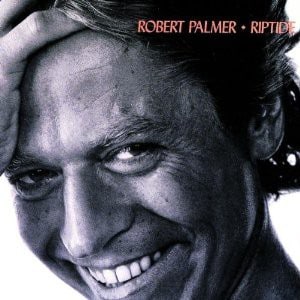
| Album | Riptide (1985) |
| Written by | Robert Palmer |
| Produced by | Bernard Edwards |
| Released | 1986 |
| Genre | Hard Rock, New Wave |
| Record Label | Island Records |
| Chart Peak | #1 US Billboard Hot 100 |
Table of Contents
Background and Meaning
Robert Palmer was born in Batley, Yorkshire, England, and spent much of his early career working across soul, R&B, funk, and new wave before landing the mainstream hit that would define his public image.
His earlier work, including collaborations with Lowell George and the album Sneakin’ Sally Through the Alley, had earned critical respect without the chart success Palmer had always been capable of reaching.
The song was recorded for the album Riptide with producer Bernard Edwards of Chic, who brought a funk-influenced bass-driven approach that gave Addicted to Love its distinctive rhythmic character.
The lyrics use the metaphor of addiction to describe romantic obsession, turning what might have been a straightforward love song into something more darkly compulsive and psychologically precise.
The tension between the subject matter and Palmer’s cool, almost clinical delivery is what separates this track from the hard rock being produced around it at the same time.
Musical Composition of Addicted to Love
The track opens with one of the most immediately recognizable riffs in 1980s rock, a tightly wound guitar figure that locks into the drum pattern and generates forward momentum from the first beat.
Producer Bernard Edwards kept the arrangement deliberately minimal and controlled, building a relentless rhythmic pulse that mirrors the obsessive nature of the song’s lyrics throughout.
Palmer’s vocal is performed with detached confidence, a coolness that contrasts with the emotional intensity the title suggests, and that contrast is precisely where Addicted to Love lives as a record.
The guitar work serves the groove rather than the solo, staying functional and rhythmically locked rather than drawing attention through extended lead playing.
That compression and control make it feel more intense than a looser arrangement would have, a counterintuitive production decision that paid off completely.
Chart Success and Impact
The single reached number one on the US Billboard Hot 100 in May 1986 and remained there for two weeks, reflecting how thoroughly radio had absorbed it into regular rotation.
The song also topped charts in the United Kingdom and several European markets, confirming that Palmer’s commercial breakthrough extended well beyond the American audience.
The music video, directed by Terence Donovan, featured five expressionless models in identical black dresses and red lipstick appearing to play instruments, creating one of the most recognizable visual images MTV ever broadcast.
That video for Addicted to Love won the MTV Video Music Award for Best Male Video in 1986, cementing its place in the canon of defining visual productions from the early years of music television.
The parent album Riptide reached number eight on the Billboard 200 and was certified platinum, delivering the commercial result that Palmer’s decade of varied recordings had been building toward.
Lasting Legacy of Addicted to Love
The song remains one of the most instantly recognizable rock singles of the 1980s, its opening riff requiring only a second of airtime before listeners across generations identify it.
The video’s visual concept has been parodied and referenced across decades of television, advertising, and film, making it one of the most durable images the MTV era produced.
It won the Grammy Award for Best Male Rock Vocal Performance in 1987, a recognition that matched what radio audiences had already confirmed with their listening choices.
Palmer continued recording and performing until his death in 2003, but this record remained the commercial and cultural peak of a career that covered an unusually wide stylistic range.
Precise, controlled, and visually unforgettable, Addicted to Love by Robert Palmer stands as proof that the most effective 1980s rock combined production precision with a vocal performance too self-assured to argue with.
Watch the Official Video
Frequently Asked Questions
FAQ
- Who wrote Addicted to Love?
- Robert Palmer wrote it himself, drawing on his background across soul, funk, and hard rock to create the song’s distinctively locked-in feel and darkly obsessive lyrical tone.
- Who produced this song?
- Bernard Edwards, the bassist and co-founder of Chic, produced the track, bringing a rhythmically precise funk-influenced approach to Palmer’s rock material.
- Did the song reach number one?
- Yes. It reached number one on the US Billboard Hot 100 in May 1986 and held the position for two weeks, giving Palmer his first chart-topping US single.
- Why is the music video so famous?
- Director Terence Donovan placed five identically dressed models appearing to play instruments behind Palmer in a stark, controlled setting that created an immediately iconic image still referenced in popular culture today.
- What album is this from?
- It appears on Riptide, Robert Palmer’s seventh studio album, recorded in 1985 and released on Island Records.
You Might Also Like

Precise, rhythmically locked, and driven by a riff that refuses to be forgotten, Addicted to Love by Robert Palmer remains one of the most self-assured rock performances of the entire decade.