

Stone Temple Pilots Big Empty emerged in 1994 as one of the band’s most haunting and cinematic achievements, a slow-burning meditation on emptiness that defied the grunge era’s typical aggression.
Originally written for the soundtrack to The Crow, the track showcased a more introspective side of the band that had already made waves with Stone Temple Pilots Creep.
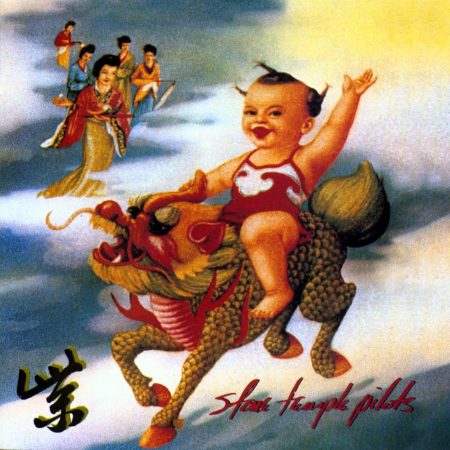
Stone Temple Pilots Big Empty – Available on Amazon
Get Stone Temple Pilots Big Empty (1994) on Amazon
Affiliate Disclosure: I am an Amazon affiliate and if you purchase through any Amazon links on this site I may earn a small commission at no extra charge to you. This helps support classicrockartists.com. Thank you for your support!
Quick Navigation
What is the meaning of Stone Temple Pilots Big Empty?
The song explores themes of emotional hollowness and the search for meaning in a world that feels increasingly vacant and disconnected, reflecting the existential malaise that defined much of 1990s alternative rock culture.
The Vibe: Genre, Mood, and Sound of Stone Temple Pilots Big Empty
This track strips away the harder edges of grunge for something more atmospheric and contemplative.
- Genre: Alternative Rock, Grunge Ballad
- Mood: Melancholic, Introspective, Cinematic
- Tempo: Slow to Mid-tempo (approximately 76 BPM)
- Best For: Late-night drives, reflective moments, film soundtracks
- Similar To: Alice in Chains’ “Down in a Hole,” Soundgarden’s “Fell on Black Days”
Behind the Lyrics: The Story of Stone Temple Pilots Big Empty
The genesis of this track came from an unexpected source: a film soundtrack request.
Director Alex Proyas approached Stone Temple Pilots to contribute to The Crow soundtrack in early 1994.
The film’s dark, gothic atmosphere demanded something different from the band’s typical output.
Scott Weiland crafted lyrics that perfectly captured the film’s themes of loss and vengeance.
The opening lines, “Driving faster in my car, falling farther from just what we are,” establish a sense of disconnection and acceleration away from authenticity.
Weiland later revealed the song also reflected his own struggles with identity and substance abuse during this period.
The band was simultaneously working on their second album, Purple, when they wrote this track.
The song fit so perfectly with the album’s more experimental direction that it was included on Purple as well as The Crow soundtrack.
This dual release strategy gave the track unprecedented exposure across two major releases in 1994.
The chorus refrain, “Time to take her home, her dizzy head is conscience laden,” suggests a caretaker role for someone lost in their own emptiness.
Critics initially dismissed Stone Temple Pilots as Pearl Jam imitators after their 1992 debut Core.
This track helped silence those comparisons by showcasing a more nuanced, atmospheric approach.
The song’s structure defies conventional verse-chorus patterns, building slowly through layered instrumentation.
Weiland’s vocal delivery shifts from whispered vulnerability to soaring desperation as the arrangement intensifies.
The bridge section features one of his most powerful vocal performances, stretching his range to convey raw emotional pain.
Lyrically, the song avoids specific narrative details, instead painting impressionistic scenes of emotional desolation.
This ambiguity allowed listeners to project their own experiences of emptiness onto the track.
The line “Too much walking, shoes worn thin” became particularly resonant for fans dealing with exhaustion and burnout.
The Crow’s tragic backstory, involving the accidental death of star Brandon Lee during filming, added another layer of poignancy to the soundtrack.
The song’s themes of loss and searching for meaning resonated deeply with the film’s grieving fanbase.
More information about the track’s creation can be found at Wikipedia’s detailed entry.
Technical Corner: The Gear Behind Stone Temple Pilots Big Empty
Dean DeLeo Stone Temple Pilots guitarist crafted the song’s signature sound using his Gibson Les Paul through a Marshall amplifier setup.
The clean, shimmering guitar tones in the verses came from a Fender Twin Reverb with subtle chorus effects.
DeLeo employed a talk box effect during certain sections, creating an otherworldly vocal quality for the guitar.
This technique, popularized by Peter Frampton and Joe Walsh, added a human-like expressiveness to the instrumental passages.
Robert DeLeo Stone Temple Pilots bassist provided the song’s melodic foundation with his Music Man StingRay bass.
His bass lines move independently from the guitar, creating countermelodies rather than simply following the root notes.
This approach gives the track a fuller, more complex harmonic texture than typical grunge arrangements.
Eric Kretz Stone Temple Pilots drummer demonstrated remarkable restraint throughout the track.
His Tama kit was tuned for a deep, resonant sound that emphasized space over aggression.
Kretz used brushes and mallets in addition to sticks, creating varied textures across different sections.
The production was handled by Brendan O’Brien, who had already established himself working with Pearl Jam and Rage Against the Machine.
O’Brien recorded the track at Southern Tracks Recording in Atlanta, Georgia.
The studio’s large live room allowed for natural reverb and ambience that enhanced the song’s spacious feel.
O’Brien employed dynamic compression sparingly, preserving the track’s natural dynamics from whisper-quiet verses to explosive choruses.
Weiland’s vocals were recorded through a Neumann U47 microphone, capturing both his delicate phrasing and powerful belting.
Multiple vocal takes were composited to create the final performance, selecting the most emotionally resonant phrases from each pass.
The string arrangements that appear in the latter half were performed by session musicians and subtly mixed beneath the rock instrumentation.
These orchestral elements added cinematic sweep without overwhelming the band’s core sound.
O’Brien’s mixing philosophy emphasized clarity and separation, ensuring each instrument occupied its own sonic space.
The final mix was mastered by Bob Ludwig at Gateway Mastering, adding final polish and radio-ready punch.
Legacy and Charts: Why Stone Temple Pilots Big Empty Still Matters
The track reached number three on the Billboard Mainstream Rock chart in 1994.
It spent 14 weeks in the top ten, demonstrating remarkable staying power for a slower, more atmospheric track.
On the Billboard Modern Rock Tracks chart, it peaked at number seven.
The song also crossed over to the Billboard Hot 100, reaching number 78.
In Canada, the track performed even better, climbing to number two on the RPM Rock chart.
The Crow soundtrack itself went platinum, with this track serving as one of its most recognizable contributions.
The Purple album, which also featured the song, achieved multi-platinum status and debuted at number one on the Billboard 200.
This commercial success helped establish Stone Temple Pilots as one of the decade’s most successful rock acts.
The accompanying music video, directed by Josh Taft, received heavy rotation on MTV.
The video’s desert imagery and surreal visuals perfectly complemented the song’s themes of emptiness and searching.
It earned nominations at the MTV Video Music Awards for Best Rock Video.
The track has been covered by numerous artists across different genres, demonstrating its enduring appeal.
Notable versions include acoustic renditions by various tribute bands and orchestral arrangements.
The song appeared in multiple films and television shows beyond The Crow, including episodes of Supernatural.
Its cinematic quality made it a natural fit for dramatic scenes requiring emotional weight.
Classic rock radio stations continue to program the track regularly, often pairing it with Stone Temple Pilots Interstate Love Song.
Streaming platforms report millions of plays annually, with the song finding new audiences decades after its release.
Music critics have retrospectively praised the track as one of the band’s finest achievements.
It frequently appears on lists of the best alternative rock songs of the 1990s.
The song’s influence can be heard in later alternative rock acts who embraced atmospheric production and dynamic contrast.
Bands like Breaking Benjamin and Shinedown have cited Stone Temple Pilots as a major influence.
The track remains a setlist staple for Stone Temple Pilots, performed by current vocalist Jeff Gutt Stone Temple Pilots.
During the band’s tenure with Chester Bennington Stone Temple Pilots, his powerful interpretation brought new intensity to live performances.
Listener’s Note: A Personal Take on Stone Temple Pilots Big Empty
When I first heard this on vinyl, spinning on my turntable late one autumn night in 1994, the opening guitar shimmer stopped me mid-motion.
I had expected another hard-charging rocker like Stone Temple Pilots Sex Type Thing.
Instead, this track demanded complete attention with its patient, deliberate build.
The moment that always gets me is around the 2:45 mark, when Weiland’s voice cracks slightly on the word “empty.”
That tiny imperfection conveys more genuine emotion than a thousand perfectly polished takes ever could.
On vinyl, the dynamic range is particularly striking.
The quiet verses force you to lean in, then the chorus hits with physical impact through decent speakers.
I’ve played this track for friends who dismissed Stone Temple Pilots as derivative, and it consistently changes their perspective.
There’s nothing derivative about the way Dean DeLeo’s guitar seems to weep during the bridge.
The song works equally well as background ambience or focused listening.
I’ve driven countless miles to this track, watching landscapes blur past as Weiland sings about driving faster and falling farther.
It captures a specific feeling of restless dissatisfaction that defined much of the 1990s zeitgeist.
Yet it never feels dated because emptiness and searching for meaning remain universal human experiences.
The production holds up remarkably well compared to some overproduced 90s rock that sounds thin today.
Brendan O’Brien’s touch is evident in how every element serves the song rather than showing off technical prowess.
I particularly appreciate how the bass and drums create a foundation that’s felt more than heard.
This isn’t a song that announces itself with flashy performances.
Instead, it draws you into its world gradually, rewarding patience with emotional catharsis.
You can experience the full depth of this track by watching the official music video.
Affiliate Disclosure: I am an Amazon affiliate and if you purchase through any Amazon links on this site I may earn a small commission at no extra charge to you. This helps support classicrockartists.com and allows me to keep providing deep-dive content on the legends of rock. Thank you for your support!
Collector’s Corner: Own Stone Temple Pilots Big Empty on Vinyl or CD
The Purple album remains widely available on vinyl, with both original 1994 pressings and modern reissues offering excellent sound quality.
The Crow soundtrack is also worth seeking out for its complete collection of mid-90s alternative rock.
Get Stone Temple Pilots Big Empty (1994) on Amazon
Frequently Asked Questions About Stone Temple Pilots Big Empty
What album is Stone Temple Pilots Big Empty on?
The song appears on both The Crow soundtrack and Stone Temple Pilots’ second studio album, Purple, both released in 1994.
The dual release gave the track exceptional exposure across two major releases.
Purple became the band’s most successful album commercially and critically.
Who wrote Stone Temple Pilots Big Empty?
All four members of Stone Temple Pilots received writing credits: Scott Weiland, Dean DeLeo, Robert DeLeo, and Eric Kretz.
Weiland crafted the lyrics while the DeLeo brothers developed the musical arrangement.
The collaborative writing process was typical of the band’s democratic approach to songwriting.
What is the talk box effect in Stone Temple Pilots Big Empty?
Dean DeLeo used a talk box device that routes the guitar signal through a tube into the player’s mouth.
By shaping mouth movements, the guitarist can make the guitar “speak” or create vowel-like sounds.
This effect appears most prominently during the bridge section, adding an eerie, human quality to the guitar.
The technique requires significant skill to execute musically rather than as a novelty.
Did Stone Temple Pilots Big Empty win any awards?
While the song received MTV Video Music Award nominations, it did not win major industry awards.
However, its commercial success and critical acclaim established it as one of the band’s signature tracks.
The song’s lasting influence on alternative rock arguably matters more than any specific award recognition.
It remains one of the most-played Stone Temple Pilots songs on rock radio decades after release.
You Might Also Like
Stone Temple Pilots Vasoline (1994)
Another Purple album standout that showcases the band’s heavier side with Dean DeLeo’s signature wah-wah guitar work.
Stone Temple Pilots Wicked Garden (1992)
The opening track from Core demonstrates the band’s early sound before they evolved into the more experimental Purple era.
Stone Temple Pilots Interstate Love Song (1994)
The most commercially successful single from Purple, featuring jangly guitars and one of Weiland’s most memorable vocal melodies.
Stone Temple Pilots Big Empty remains an essential track for understanding how 1990s alternative rock could balance commercial appeal with artistic ambition, creating music that resonates emotionally while pushing sonic boundaries.