

Whorehouse Blues: Motorhead’s Acoustic Surprise
Whorehouse Blues is the song that proved Motorhead could put down the distortion and still sound like themselves.
The track closes the 2004 album Inferno, running three minutes and fifty three seconds.
All three members picked up acoustic guitars, with Lemmy Kilmister adding harmonica toward the end.
It stands as one of the strangest, most talked about detours in the band’s entire catalog.
Affiliate Disclosure: I am an Amazon affiliate and if you purchase through any amazon links on this site i may earn a small commission at no extra charge to you.
📋 Table of Contents [+]
⚡ Key Takeaways
- Whorehouse Blues closes Motorhead’s 2004 album Inferno as track twelve, running three minutes and fifty three seconds.
- Lemmy Kilmister, Phil Campbell, and Mikkey Dee all played acoustic guitar on the track, with Lemmy adding harmonica near the end.
- Producer Cameron Webb recorded Inferno across three studios in the Los Angeles area.
- Peter Stringfellow objected to filming the music video in his club because of the song’s title, forcing a last minute venue change to Ealing.
- Inferno peaked at number 95 on the UK Albums Chart and number 7 on the Official Rock and Metal Albums Chart in 2004.
What Is Whorehouse Blues About?
The song tells a country blues style story built around imagery of vice, temptation, and hard living.
The lyrics lean into old blues and outlaw country tradition rather than Motorhead’s usual speed metal storytelling.
Lemmy Kilmister had long cited early blues and rockabilly records as formative influences, and this song lets that side show fully.
It plays almost like a campfire song smuggled onto a heavy metal record.
Who Played on Whorehouse Blues?
Lemmy Kilmister played bass, sang, and added acoustic rhythm guitar and harmonica on Whorehouse Blues.
Phil Campbell switched to acoustic lead guitar for the track.
Drummer Mikkey Dee also picked up acoustic rhythm guitar, a rare instrumental switch for him.
Dee explained that guitars had always been around him, so playing one on record was nothing spectacular in his own eyes.
What Album Is Whorehouse Blues From?
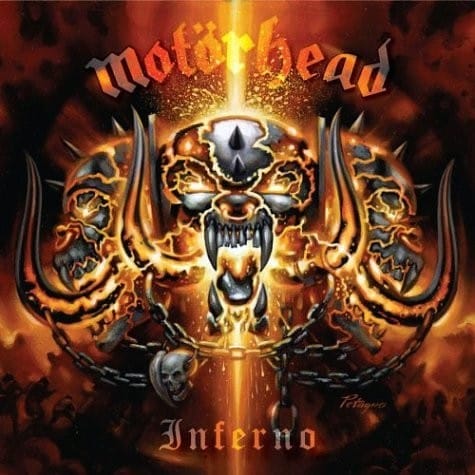
Whorehouse Blues comes from Inferno, Motorhead’s seventeenth studio album, released on 22 June 2004.
Producer Cameron Webb recorded the album across three different studios in the Los Angeles area.
The song closes the record, track twelve of twelve, giving Inferno a quiet, unexpected ending.
That placement makes the acoustic detour feel deliberate rather than like a leftover studio experiment.
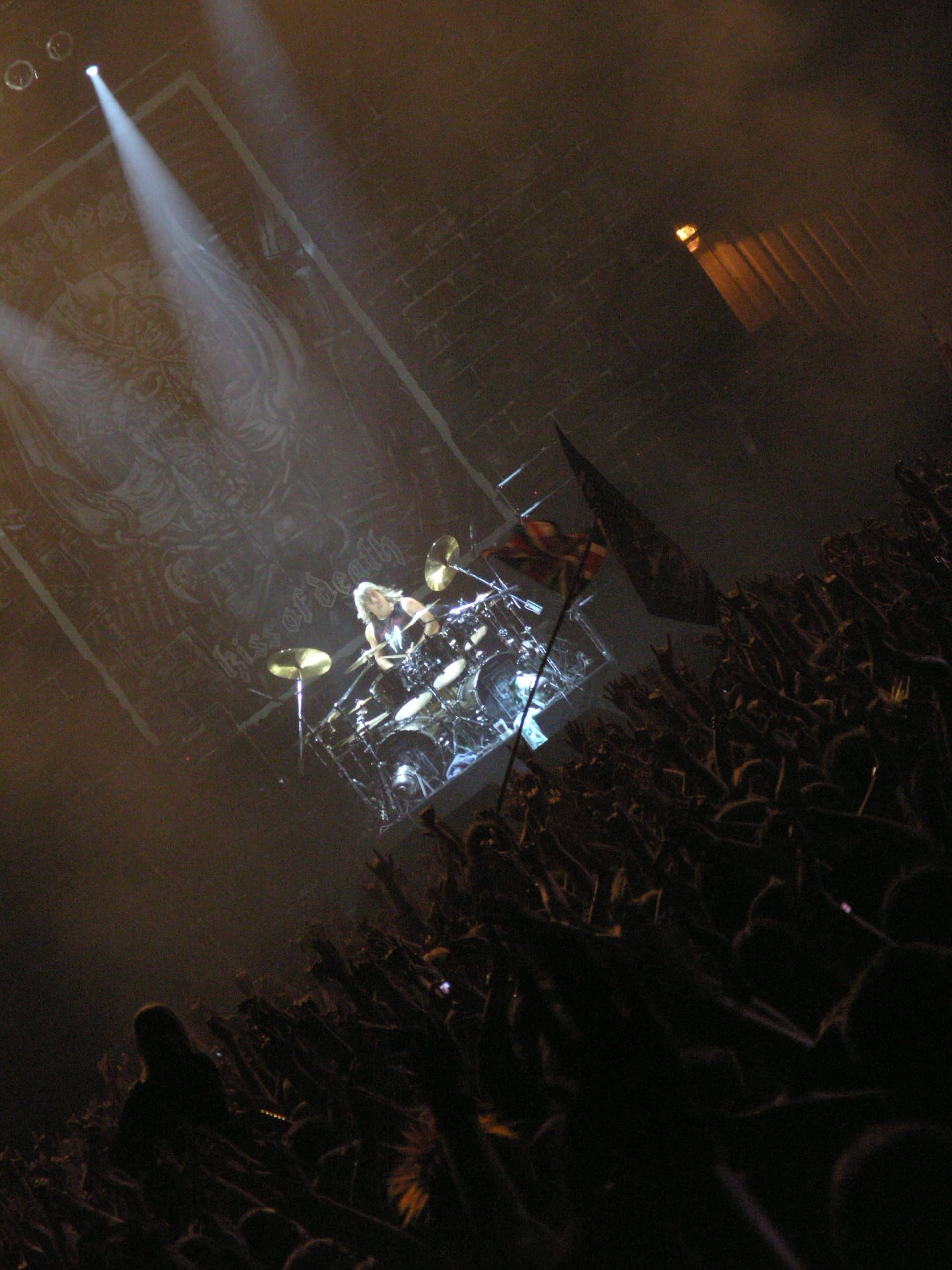
Mikkey Dee traded his drum kit for an acoustic guitar on this stripped down track.
Image Credit: Photo by Kaja Konarska, CC BY-SA 2.5, via Wikimedia Commons
Why Did Peter Stringfellow Object to the Video?
Peter Stringfellow objected to the video shoot because of the song’s title and its associations with his club’s reputation.
The band had originally booked one of Stringfellow’s clubs as the filming location.
With only 24 hours left before the scheduled shoot, the crew found an alternative venue in Ealing.
The finished video was later feared lost for years before being rediscovered and upgraded to 4K.
How Did Inferno Chart in the UK?
Inferno peaked at number 95 on the UK Albums Chart in 2004.
The album performed far better on genre specific charts, reaching number 7 on the Official Rock and Metal Albums Chart.
That stronger showing among rock and metal fans reflected the album’s warm reception within the genre press.
The track became one of the most discussed individual songs from that acclaimed record.
Why Is Whorehouse Blues Such a Departure?
Whorehouse Blues is such a departure because it strips away every trace of the distortion Motorhead built its sound on.
The acoustic arrangement forced all three musicians to play with a completely different kind of restraint.
American Songwriter later listed the track among the songs that best represent Motorhead’s willingness to break from formula.
Few bands with Motorhead’s reputation for volume would close an album on something this quiet.
How Is Whorehouse Blues Remembered Today?
Whorehouse Blues is remembered today as proof that Motorhead had more range than their reputation suggested.
The song still surprises new listeners who only know the band through tracks like Killed by Death.
Its acoustic honesty places it alongside oddball favorites like Louie Louie and Please Don’t Touch in the catalog.
Fans still trade the rediscovered 4K video as one of the band’s most unexpected finds.
That same 2004 Inferno era also produced Motorhead’s Grammy winning Whiplash cover of Metallica.
As of 2026, read the complete lineup history of the members of Motorhead across four decades of the band.
People Also Ask
What is Whorehouse Blues by Motorhead?
Whorehouse Blues is an acoustic country blues track that closes Motorhead’s 2004 album Inferno, featuring all three band members on acoustic guitar plus harmonica from Lemmy Kilmister.
It stands as one of the most unexpected departures in the band’s studio catalog.
What album is Whorehouse Blues on?
Whorehouse Blues is track twelve, the closing song, on Inferno, Motorhead’s seventeenth studio album, released 22 June 2004 and produced by Cameron Webb.
The album peaked at number 95 on the UK Albums Chart and number 7 on the Rock and Metal Albums Chart.
Why is Whorehouse Blues acoustic?
Motorhead recorded Whorehouse Blues as a deliberate country blues style departure, with Lemmy Kilmister, Phil Campbell, and Mikkey Dee all switching to acoustic guitars for the track.
The stripped down arrangement let the band close Inferno on a quieter, more reflective note.
What happened with the Whorehouse Blues music video?
Peter Stringfellow refused to let Motorhead film the video in his club because of the song’s title, forcing the band to find a new venue in Ealing with only 24 hours notice.
The finished video was later feared lost for years before being rediscovered and upgraded to 4K.
Watch Whorehouse Blues and Shop Motorhead Albums
Affiliate Disclosure: I am an Amazon affiliate and if you purchase through any amazon links on this site i may earn a small commission at no extra charge to you. This helps support classicrockartists.com and allows me to keep providing deep-dive content on the legends of rock. Thank you for your support!
As an Amazon Associate, I earn from qualifying purchases.
Inferno
2004, Digipak
The album that closes on the acoustic surprise of Whorehouse Blues.
Reached number 7 on the UK Rock and Metal Albums Chart.
Kiss of Death
2006, Digipak
The album that followed Inferno in the band’s 2000s run.
Same core lineup of Lemmy, Campbell, and Dee.
Motorizer
2008, BMG CD
Another entry in the band’s acclaimed 2000s output.
Straightforward, riff driven Motorhead songwriting.
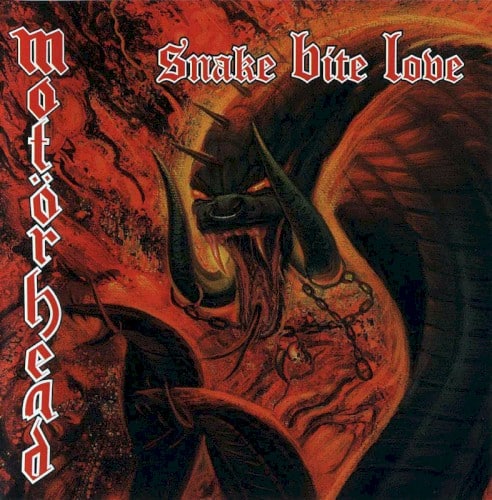
Snake Bite Love
1998, BMG CD
An earlier record that also pushed at the edges of the band’s sound.
Features some of Lemmy’s most personal lyrics.
You Might Also Like
Stone Dead Forever: Motorhead’s Deepest Bomber Cut
Another deep cut favorite fans discover only after digging past the band’s biggest hits.
Jailbait Motorhead: The Most Controversial Ace of Spades Cut
A track that shows the same willingness to court controversy found on this closing song.
Orgasmatron Motorhead: Lemmy’s Best Set of Lyrics
Another song built on Lemmy Kilmister’s sharpest, most unfiltered lyric writing.
Motorhead Song: How Lemmy Named the Band After a Riff
The song that started the whole story, decades before the band dared go acoustic.
The song remains the clearest example of Motorhead stepping outside their own formula and pulling it off.
The acoustic arrangement and the Stringfellow video saga only add to its reputation as one of the band’s most memorable stories.
As of 2026, whorehouse blues still stands as proof that even the loudest band in the world knew when to turn it down.
Last updated: July 15, 2026