

Woman in Chains: The Story Behind Tears for Fears’ Boldest Duet
Woman in Chains is the song where Tears for Fears traded synth-pop hooks for a slow-burning duet.
It leans on real drums, real strings, and a voice nobody outside Kansas City had heard yet.
Released in November 1989 as the second single from The Seeds of Love, it paired Roland Orzabal with a new singing partner.
The band had discovered her performing in a hotel lounge.
The result became one of the most talked-about tracks of the band’s career.
Not for its chart position, but for what it said and who sang it.
Here is the full story behind the song, its writing, its meaning, and the two performers who carried it.
Affiliate Disclosure: I am an Amazon affiliate and if you purchase through any amazon links on this site i may earn a small commission at no extra charge to you.
📋 Table of Contents [+]
⚡ Key Takeaways
- Woman in Chains is a Tears for Fears duet with Oleta Adams, released November 6, 1989, from the album The Seeds of Love.
- Roland Orzabal wrote Woman in Chains, and Tears for Fears produced it with Dave Bascombe.
- Woman in Chains peaked at number 26 in the UK and number 36 on the US Billboard Hot 100.
- Manu Katché and Phil Collins both played drums on the track, splitting the part roughly at the 3:32 mark.
- Woman in Chains became Oleta Adams’ first hit single and led directly to her own solo career.
What Is the Story Behind Woman in Chains?
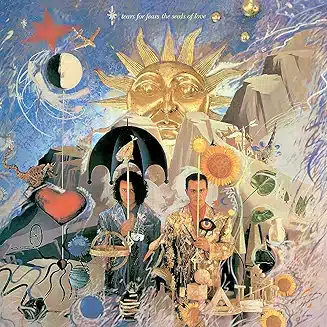
Woman in Chains is the second single from Tears for Fears’ 1989 album The Seeds of Love.
It was released in the UK on November 6, 1989.
By the time the band started work on Seeds of Love, four years had passed since Songs from the Big Chair.
Roland Orzabal and Curt Smith wanted a live, organic feel this time.
They built it around real drums and a full band, not drum machines and sequencers.
That search for a different sound is what led the band to Oleta Adams in the first place.
Orzabal and Smith had heard her performing in a Kansas City hotel lounge on an earlier tour stop.
They invited her to join the Seeds of Love sessions.
The song introduced her to the world.
Who Wrote Woman in Chains?
Roland Orzabal wrote Woman in Chains, with Tears for Fears and Dave Bascombe producing the track.
Orzabal has said he was reading feminist literature while writing material for The Seeds of Love.
He described discovering accounts of non-patriarchal societies.
Those societies struck him as less violent and less driven by greed than the world he knew.
That reading shaped the lyric directly, turning a personal reflection into a song with a much wider target.
The arrangement itself was worked out with the full studio band, including Oleta Adams on piano and vocals.
Who Sings Woman in Chains With Tears for Fears?
Oleta Adams sings Woman in Chains as a duet partner alongside Roland Orzabal.
She trades verses with him and joins in on the chorus.
Adams was not yet a recording artist when Tears for Fears found her.
This track became her first appearance on a hit record.
Her voice carries a gospel and jazz weight that Orzabal’s does not have on its own.
That contrast is the entire point of the arrangement.
The song’s success opened the door for her solo career.
That career produced the 1990 album Circle of One and the hit “Get Here” the following year.

Oleta Adams performing live.
Without that hotel lounge encounter, this song would not exist in the form fans know today.
Why Is Woman in Chains Considered a Feminist Anthem?
Woman in Chains is widely read as a feminist anthem.
Its lyric confronts the oppression of women directly, using the title phrase as a recurring image of entrapment.
Orzabal has explained the song works on more than one level at once.
He has said he is singing about the oppression of women worldwide.
In the same lines, he is also singing about the repressed feminine side of his own character and about his own mother.
When the song reaches its closing plea to “free her,” Orzabal has said he is also singing “free me.”
Years later, Orzabal revealed the song also reflects domestic abuse he witnessed growing up.
That gives the lyric a more personal and painful root than its anthem reputation suggests.
That layered meaning is why this song still gets cited among Tears for Fears’ most substantial songwriting.
Woman in Chains Personnel and Credits
The personnel on Woman in Chains reflects the live, session-heavy sound of The Seeds of Love.
| Role | Performer |
|---|---|
| Lead and duet vocals | Roland Orzabal, Oleta Adams |
| Drums (0:00 to 3:32) | Manu Katché |
| Drums (3:32 to end) | Phil Collins |
| Bass | Pino Palladino |
| Guitar arpeggio | Neil Taylor |
| Percussion | Luis Jardim |
| Backing vocals | Tessa Niles, Carol Kenyon |
| Producers | Tears for Fears, Dave Bascombe |
According to Songfacts, Phil Collins was brought in for one specific job.
The band wanted a huge drum entrance in the style of his own “In the Air Tonight.”
That handoff between Katché’s tighter groove and Collins’ heavier fills is one of the song’s most discussed production details.
How Did Woman in Chains Chart?
Woman in Chains reached number 26 on the UK singles chart in 1989.
In the United States, it climbed to number 36 on the Billboard Hot 100.
| Country | Peak Position |
|---|---|
| United Kingdom | 26 |
| United States (Billboard Hot 100) | 36 |
| Canada | 11 |
| France | 20 |
| Netherlands | 12 |
The single earned a Silver certification in the UK for 200,000 units.
It also went Gold in Brazil for 30,000 units.
A 1992 re-release, backed with a new B-side, charted again in the UK at number 57.
As of 2026, this single remains one of the band’s most streamed deep cuts from the Seeds of Love era.
It trails the two big Songs from the Big Chair singles but stays ahead of most other Seeds of Love tracks.
What Is the Legacy of Woman in Chains?
The legacy of Woman in Chains rests less on its chart peak.
It rests more on what the song launched and what it said.
It gave Oleta Adams her first hit and a platform that carried into a long solo career.
It also stands as one of Orzabal’s clearest statements on record.
That statement covers gender, power, and his own family history.
For a band better known for radio hooks, this song is proof Tears for Fears could write something heavier.
It still worked as a single.
The Tears for Fears members who built this era of the band helped give the song its lush, live-band texture.
That includes keyboardist Ian Stanley, playing on his final studio album with the group.
People Also Ask
Who sings Woman in Chains with Tears for Fears?
Oleta Adams sings Woman in Chains as a duet partner with Roland Orzabal.
Tears for Fears discovered her performing in a Kansas City hotel lounge shortly before recording The Seeds of Love.
The song became her first hit and led to her own solo recording career.
What is Woman in Chains about?
Woman in Chains is about the oppression of women, using a bullying, controlling relationship as its central image.
Roland Orzabal has said the lyric reflects the repressed feminine side of his own personality.
It also reflects his memories of his mother.
He later said the song also draws on domestic abuse he witnessed growing up.
What album is Woman in Chains on?
Woman in Chains is the second single from Tears for Fears’ 1989 album The Seeds of Love.
It was released on November 6, 1989, roughly two months after the parent album.
Did Phil Collins play drums on Woman in Chains?
Yes, Phil Collins played drums on the back half of Woman in Chains.
His part starts around the 3 minute 32 second mark.
Manu Katché played the drum part for the first section of the song.
Collins said Tears for Fears wanted a big drum entrance similar to his own “In the Air Tonight.”
Did Woman in Chains chart?
Yes, Woman in Chains charted in 1989.
It reached number 26 in the UK and number 36 on the US Billboard Hot 100.
It also reached number 11 in Canada and the top 40 in France and the Netherlands.
A 1992 re-release charted again in the UK at number 57.
Watch Tears for Fears Perform Woman in Chains
The official video, directed by Andrew Morahan, intercuts performance footage with imagery built around the song’s central theme.
Tears for Fears Albums Worth Adding to Your Collection

The Seeds of Love
1989
The album that introduced Oleta Adams to the world.
Three years in the making, with a full live band sound.
🛒 Check Price
Songs from the Big Chair
1985
The synth-driven breakthrough the band deliberately moved away from.
Home to “Everybody Wants to Rule the World” and “Shout.”
🛒 Check Price
The Hurting
1983
Tears for Fears’ debut, six years before The Seeds of Love.
A darker, more clinical sound than the Seeds of Love era.
🛒 Check Price
Circle of One
1990, Oleta Adams
The solo debut this duet helped make possible.
Includes her hit “Get Here” from the following year.
🛒 Check PriceYou Might Also Like
Sowing the Seeds of Love: Tears for Fears’ Psychedelic Gem
The lead single from the same album, released a few months earlier in 1989.
Everybody Wants to Rule the World (1985): Tears for Fears
The band’s biggest hit, four years before their sound turned toward heavier themes.
Shout Tears For Fears (1985): The Anthem That Refused to Shut Up
Another Tears for Fears anthem built on a big, universal message rather than a love song.
Mad World by Tears for Fears (1982)
The early single that shows how far the band’s sound traveled by 1989.
This song still holds up as one of the most ambitious releases Tears for Fears ever put out.
It took a genuine risk on subject matter and on a guest vocalist nobody knew.
It also risked a sound built around live musicianship instead of studio polish.
All three risks paid off.
Last updated: September 12, 2026
Few duets among classic rock artists took as many chances as Tears for Fears did with Woman in Chains.