

Jump by Van Halen reached number one on the US Billboard Hot 100 in February 1984 and held the position for five weeks, the band’s first American chart-topper and one of the most recognizable hard rock singles of the decade.
Built around a synthesizer riff rather than the guitar virtuosity that had defined the band since their debut, the track polarized longtime fans while reaching a far broader audience than any previous Van Halen release had managed.
Affiliate Disclosure: As an Amazon Associate I earn from qualifying purchases. This helps support the site at no extra cost to you.
| Song | Jump |
| Artist | Van Halen |
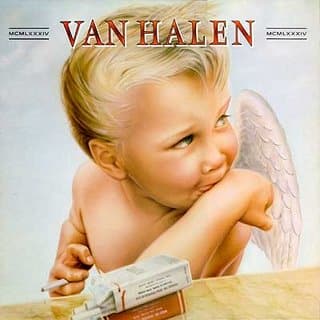
| Album | 1984 (1984) |
| Written by | Eddie Van Halen, David Lee Roth |
| Produced by | Ted Templeman |
| Released | 1984 |
| Genre | Hard Rock, Pop Rock |
| Record Label | Warner Bros. Records |
| Chart Peak | #1 US Billboard Hot 100 (5 weeks) |
Table of Contents
Background and History
Van Halen was formed in Pasadena, California by brothers Eddie Van Halen and Alex Van Halen alongside vocalist David Lee Roth and bassist Michael Anthony.
Eddie’s two-handed tapping technique had redefined electric guitar playing and established the band as one of the most technically ambitious hard rock acts of the late 1970s and early 1980s.
Eddie had developed the synthesizer riff for Jump on an Oberheim OB-Xa years before the album was recorded, but had been convinced that Roth would reject a keyboard-driven track.
Roth was eventually persuaded by the strength of the riff itself, wrote the lyric around a theme of reckless confidence, and the song took a shape that stood apart from everything else in the band’s catalog.
Producer Ted Templeman, who had helmed all five previous Van Halen albums, shaped the arrangement to let the synthesizer carry the song while preserving the live energy that had made the band famous.
Jump and Van Halen’s Signature Sound
Jump opens with Oberheim synthesizer chords that function as both the song’s primary hook and its entire sonic identity, an immediately recognizable phrase that places the track in the listener’s memory within the first few seconds.
Eddie performs the complete keyboard arrangement himself, a demonstration that his musical range extended well beyond the guitar work that had built his reputation.
Roth’s vocal delivery balances arena-rock confidence with the lyric’s undertone of risk and urgency, a performance that gives the song emotional weight underneath its surface energy.
The arrangement’s relative simplicity compared to the band’s earlier guitar-heavy records allows the synthesizer riff to dominate without competing elements crowding it from the mix.
That combination of pop structure and hard rock swagger placed it alongside Livin on a Prayer by Bon Jovi and Eye of the Tiger by Survivor as one of the era’s most enduring stadium-sized rock singles.
Chart Success and Impact
Jump reached number one on the US Billboard Hot 100 in February 1984 and stayed there for five weeks, a chart run that exceeded the performance of any previous Van Halen single.
The 1984 album reached number two on the US Billboard 200 and was certified multiplatinum, the strongest commercial performance the band had achieved in any format up to that point.
The music video, featuring Eddie performing on the Oberheim while Roth executed acrobatic kicks and stagecraft moves, received heavy MTV rotation and gave the track a visual identity that reinforced its pop-accessible character.
The single also charted across Europe, entering the top ten in multiple countries and confirming that the band’s appeal extended well beyond American hard rock radio.
Roth’s departure from Van Halen in 1985 meant that 1984 became the definitive document of the band’s most commercially successful era, a chapter that Sweet Child O’ Mine by Guns N’ Roses would later echo when another guitar band found pop-crossover success in the same decade.
What Makes Jump Timeless
Jump has appeared on virtually every list of essential 1980s rock singles compiled in the decades since its release, a consistency that reflects how thoroughly the track embedded itself in the decade’s musical identity.
The synthesis of hard rock energy and pop production captures a specific moment when the two genres were converging on MTV and radio, and does so with a directness and economy that have kept it from sounding dated.
Eddie Van Halen’s synthesizer performance is as distinctive and skillfully executed as his celebrated guitar work, a reminder that his ability to make an instrument sound like itself was not limited to the electric guitar.
The lyric’s core invitation, a dare to stop hesitating and commit, resonates beyond any single era because its emotional logic is universal rather than period-specific.
Four decades on, this synthesizer-driven rock anthem endures as Van Halen’s most approachable recording and one of the most irresistibly direct singles the hard rock genre has ever produced.
Watch the Official Video
Frequently Asked Questions
FAQ
- Why was Jump considered controversial among Van Halen fans?
Some fans felt it was a commercial compromise because it centered on a synthesizer rather than Eddie Van Halen’s celebrated guitar work, but its five-week run at number one made further debate largely academic.
- What synthesizer does Eddie Van Halen play on the track?
He plays an Oberheim OB-Xa, a polyphonic synthesizer manufactured from 1980 to 1981 that was widely used in pop and rock recordings throughout the early 1980s.
- How long did it stay at number one?
It held the top position on the US Billboard Hot 100 for five weeks beginning in February 1984, the longest chart-topping run of any Van Halen single.
- Was David Lee Roth reluctant to record it?
He was initially hesitant, preferring songs built around Eddie’s guitar playing, but he eventually wrote the vocal melody and lyrics that transformed the keyboard riff into a commercially complete track.
- What album is it from?
It is from 1984, Van Halen’s sixth studio album, released in January 1984 on Warner Bros. Records and produced by Ted Templeman.
You Might Also Like
Powered by a synthesizer riff that cut through the hard rock landscape of 1984 like nothing before it, Jump by Van Halen stands as the moment when one of rock’s most gifted bands proved it could also deliver a timeless pop anthem that four decades of constant radio play have never worn out.