

Every Breath You Take by The Police is one of the most recognisable songs in rock history.
It wraps an unsettling portrait of obsession inside one of the most irresistible melodies of the 1980s.
Written by Sting and released in June 1983, Every Breath You Take was the lead single from the Synchronicity album.
Affiliate Disclosure: I am an Amazon affiliate and if you purchase through any amazon links on this site i may earn a small commission at no extra charge to you.
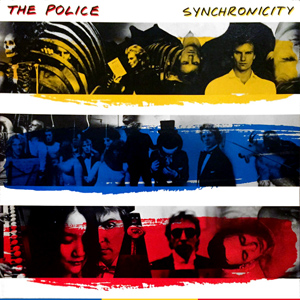
Produced by Hugh Padgham, Synchronicity was The Police’s fifth and final studio album.
Every Breath You Take spent eight weeks at number one on the US Billboard Hot 100 and became one of the best-selling singles of its decade.
| Song Title | Every Breath You Take |
| Artist | The Police |
| Album | Synchronicity (1983) |
| Released | 1983 (single) |
| Written By | Sting |
| Producer | Hugh Padgham |
| Label | A&M Records |
| Chart Peak | #1 US Billboard Hot 100 |
Table of Contents
- What Is Every Breath You Take About?
- The Vibe: Genre, Mood, and Search Intent
- Behind the Lyrics: The Story of Every Breath You Take
- Technical Corner: Instruments and Production
- Legacy and Charts: Why This Classic Still Matters
- Listener’s Note: A Personal Take
- Watch: Every Breath You Take by The Police
- Collector’s Corner: Own a Piece of Rock History
- Frequently Asked Questions About Every Breath You Take
- You Might Also Like
What Is This Song About?
The song is about surveillance and obsession.
Sting has been direct about this for decades.
He described it as a song about jealousy and control, not romantic devotion.
The narrator watches every move the subject makes and claims ownership over her existence.
The lyric lists actions with the possessive intensity of someone who refuses to let go.
Every move, every vow, every smile, every claim is catalogued with unsettling precision.
The genius of this recording is the gap between its sound and its meaning.
The melody is warm and the guitar hypnotic.
The words, when examined closely, describe something much darker.
Sting himself called it a nasty little song and expressed surprise that so many listeners mistook it for a love ballad.
It has been played at weddings more times than its author ever intended.
The Vibe: Genre, Mood, and Search Intent
The song announces itself with a single guitar arpeggio that sets the tone before a word is sung.
- Genre: New Wave, Pop Rock, Post-Punk
- Mood: Haunting, Hypnotic, Tense
- Tempo: Midtempo (~116 BPM)
- Best For: 1980s playlists, new wave collections, classic pop-rock radio
- Similar To: The Police “Roxanne”, David Bowie “Let’s Dance”, Eurythmics “Sweet Dreams (Are Made of This)”
- Fans Also Search: The Police discography, Sting solo career, Synchronicity album, new wave classics
Behind the Lyrics: The Story
Sting wrote it in 1982 at Ian Fleming’s former home, GoldenEye estate, in Jamaica.
He was going through the breakdown of his first marriage at the time.
He has described waking in the night with the bass line already formed in his mind.
The lyric followed quickly, written in under an hour in a state of emotional clarity that often accompanies personal crisis.
The song was recorded for Synchronicity, the album that marked the creative and commercial peak of The Police.
It was released as a single in June 1983 and reached number one on both sides of the Atlantic.
It spent eight consecutive weeks at number one in the United States.
It was the best-charting single of 1983 in the US by weeks at the top.
The recording won the Grammy Award for Record of the Year in 1984.
The Police disbanded shortly after the Synchronicity tour, making this era the final chapter of one of rock’s most successful bands.
Sting went on to a successful solo career, but the song has followed him as the defining achievement of his time with The Police.
Technical Corner: Instruments and Production
The guitar arpeggio that opens the song was played by Andy Summers.
It is one of the most recognised guitar figures in popular music.
Summers based the pattern on a classical technique, applying it to an electric guitar in a way that gave the recording its distinctive texture.
Sting’s bass line drives the song beneath the guitar, providing a rhythmic foundation with a melodic quality that prevents the arrangement from becoming monotonous.
Stewart Copeland‘s drumming is restrained by his usual standards.
He locks into a steady pattern that serves the song’s hypnotic quality without drawing attention to itself.
Hugh Padgham’s production is clean and controlled.
Every element sits precisely in the mix, with nothing competing for space.
The recording has a clinical quality that suits the lyric’s cold observation perfectly.
Padgham had worked with Sting and The Police on Ghost in the Machine before Synchronicity, and his understanding of the band’s sonic requirements allowed him to capture them at their most focused.
Legacy and Charts: Why This Classic Still Matters
Every Breath You Take spent eight weeks at number one in the United States in 1983.
It was the most-played song on US radio for several years following its release.
The recording won the Grammy for Record of the Year at the 1984 ceremony.
In 1997, rapper Puff Daddy sampled it for “I’ll Be Missing You,” a tribute to the late Notorious B.I.G.
That sample introduced the song to an entirely new generation of listeners.
The resulting royalty payments have been substantial for Sting, who owns the publishing.
The song has since been described as one of the most-played songs in the history of American radio.
It endures because its central tension, the beautiful melody against the dark lyric, never resolves.
Each listen surfaces the same discomfort that the song created on first hearing in 1983.
That discomfort is the source of its lasting power.
Listener’s Note: A Personal Take
The first time you really hear it, not just recognise it, is a specific experience.
The melody is so familiar that the words stop registering as words.
When they do register, the song changes entirely.
Sting built a trap with this recording.
He made something that sounds like comfort and buried something disturbing inside it.
That is a more sophisticated artistic achievement than most pop songs attempt.
Watch: Every Breath You Take by The Police
Collector’s Corner: Own a Piece of Rock History
The Police: Synchronicity (1983)
Own the album that gave the world Every Breath You Take.
Original A&M Records pressings and remastered editions available.
Frequently Asked Questions About Every Breath You Take
Who wrote Every Breath You Take?
It was written solely by Sting.
He wrote it at Ian Fleming’s GoldenEye estate in Jamaica in 1982 while going through a personal crisis.
What is Every Breath You Take about?
The song is about obsession and surveillance, not love.
Sting has said the narrator is a controlling figure who watches every move the subject makes.
How long did Every Breath You Take stay at number one?
It spent eight consecutive weeks at number one on the US Billboard Hot 100 in 1983.
It was also number one in the UK, making it one of the most commercially dominant singles of its year.
What album is Every Breath You Take on?
The song appears on Synchronicity, The Police’s fifth studio album.
It was released on A&M Records in June 1983 and became one of the best-selling albums of the decade.
Who produced Every Breath You Take?
It was produced by Hugh Padgham.
Padgham also worked with The Police on Ghost in the Machine and brought a clean, precise approach to the Synchronicity sessions.
Did Every Breath You Take win a Grammy?
Yes.
The song won the Grammy Award for Record of the Year at the 1984 ceremony.
Has Every Breath You Take been sampled?
Yes.
Puff Daddy sampled Every Breath You Take in “I’ll Be Missing You” in 1997, his tribute to the Notorious B.I.G.
The sample extended the song’s reach to a new generation and generated significant royalties for Sting.
Is Every Breath You Take a love song?
Sting has consistently said it is not.
Despite being widely used at weddings, it is a portrait of obsessive control rather than romantic devotion.
You Might Also Like
David Bowie: Let’s Dance (1983)
Released the same year, Let’s Dance was the other defining pop-rock single of 1983.
Both songs demonstrate how the post-punk generation learned to make records that sounded as good on radio as in a stadium.
Dire Straits: Money for Nothing (1985)
A fellow 1980s guitar-driven classic that became a cornerstone of the decade’s rock radio landscape.
Both songs showed what skilled British rock acts could achieve at the height of the MTV era.
The Rolling Stones: Start Me Up (1981)
The Stones’ return to hard rock form in the early 1980s, a record that proved the greatest bands could adapt without losing their identity.
Start Me Up belongs to the same era of confident, arena-ready rock that produced Every Breath You Take.
Decades on, Every Breath You Take by The Police endures as one of the greatest songs in classic rock history, a recording that has outlasted trends and generations to remain as vital and unsettling as the day it was made.