

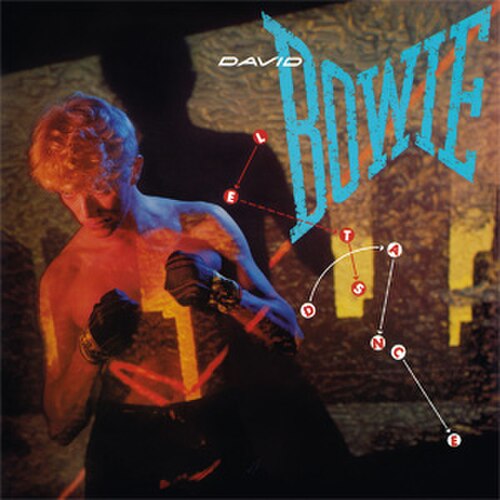
Let’s Dance by David Bowie is the most commercially successful recording of his career.
It took him to number one on both sides of the Atlantic and introduced his music to a generation that had not grown up with his earlier work.
Affiliate Disclosure: I am an Amazon affiliate and if you purchase through any amazon links on this site i may earn a small commission at no extra charge to you.
Written by Bowie and produced by Nile Rodgers, Let’s Dance was released in March 1983.
It reached number one on the US Billboard Hot 100 and the UK Singles Chart.
It featured guitar work by Stevie Ray Vaughan, who was virtually unknown at the time of recording.
The album became Bowie’s best-selling release.
It sold over ten million copies worldwide.
| Song Title | Let’s Dance |
| Artist | David Bowie |
| Album | Let’s Dance (1983) |
| Released | 1983 (single) |
| Written By | David Bowie |
| Producer | Nile Rodgers |
| Label | EMI America Records |
| Chart Peak | #1 US Billboard Hot 100, #1 UK |
Table of Contents
- What Is Let’s Dance About?
- The Vibe: Genre, Mood, and Search Intent
- Behind the Lyrics: The Story of Let’s Dance
- Technical Corner: Instruments and Production
- Legacy and Charts: Why This Classic Still Matters
- Listener’s Note: A Personal Take
- Watch: Let’s Dance by David Bowie
- Collector’s Corner: Own a Piece of Rock History
- Frequently Asked Questions About Let’s Dance
- You Might Also Like
What Is Let’s Dance About?
Let’s Dance is built around a lyric of pure invitation.
The opening lines call on the listener to surrender to music and movement.
Bowie has described it as a celebration of the present moment.
The phrase “put on your red shoes and dance the blues” carries the lyric’s full weight.
It is an instruction to use joy as a response to difficulty.
The red shoes are not literal.
They represent the decision to engage with life rather than withdraw from it.
The song invites you to find release in movement rather than reflection.
That simplicity was a deliberate departure from Bowie’s more demanding earlier work.
The emotional directness of the lyric was what gave the recording its extraordinary reach.
It spoke to people who had never engaged with Bowie before and to those who had followed him for a decade.
The Vibe: Genre, Mood, and Search Intent
The opening guitar riff announces what kind of record Let’s Dance is going to be.
- Genre: Pop, Dance Rock, New Wave
- Mood: Celebratory, Inviting, Joyful
- Tempo: Midtempo (~98 BPM)
- Best For: 1980s pop playlists, dance rock collections, David Bowie essentials
- Similar To: David Bowie “Modern Love”, Nile Rodgers productions, Madonna “Like a Virgin”
- Fans Also Search: David Bowie discography, Let’s Dance album, Stevie Ray Vaughan guitar, Nile Rodgers production
Behind the Lyrics: The Story of Let’s Dance
Bowie brought the song to Nile Rodgers with a clear vision of what he wanted.
He described the album sound to Rodgers as “plastic soul.”
Rodgers brought a dance-oriented production approach that stripped back the complex textures of Bowie’s previous work.
The recording sessions took place at the Power Station in New York in December 1982.
Rodgers brought in Stevie Ray Vaughan on guitar after hearing him perform in New York.
Vaughan was an unknown Texas blues guitarist at the time.
His playing gave the recording a raw guitar presence unlike anything on Bowie’s earlier releases.
The single was released in March 1983 and reached number one quickly on both sides of the Atlantic.
It became Bowie’s first number one single in the United Kingdom.
The album followed and sold over ten million copies worldwide.
Vaughan’s guitar work launched his own career almost immediately after the recording appeared.
It transformed Bowie’s commercial standing more dramatically than any previous release.
Technical Corner: Instruments and Production
The guitar tone at the opening of Let’s Dance is one of the most distinctive in 1980s rock.
Stevie Ray Vaughan played through a Fender Stratocaster and vintage amplifiers.
His tone sits between blues and rock in a way that defines the recording.
Nile Rodgers played rhythm guitar alongside Vaughan throughout the track.
His chord work gives the recording its dance-floor pulse.
The bass and drum arrangement locks in with precision.
It is built for dancing and for radio simultaneously.
Rodgers’ production choices eliminated everything that did not serve the song directly.
The result is a recording of great clarity, with vocal and guitar sharing the foreground.
Bowie’s vocal is confident and unhurried throughout the performance.
He delivers the lyric with the ease of someone who has complete trust in the arrangement around him.
Legacy and Charts: Why This Classic Still Matters
Let’s Dance reached number one on the US Billboard Hot 100 in April 1983.
It was Bowie’s first number one single in the United Kingdom.
The album reached number one in both the United States and the United Kingdom.
It introduced Bowie to an enormous new audience.
Many who discovered him through this recording went on to explore his earlier catalogue.
Stevie Ray Vaughan’s contribution brought him to international attention.
His debut album was released later in 1983, and the recognition he gained from this session helped drive its success.
Nile Rodgers’ production demonstrated his ability to work across genres with equal commercial results.
It remains Bowie’s most commercially successful recording of his career.
Listener’s Note: A Personal Take
The guitar intro opens the recording with total certainty.
There is nothing hesitant in either the playing or the production.
Bowie’s vocal in the chorus carries a warmth that his earlier work rarely offered.
That warmth was not a compromise.
It was what gave the recording its extraordinary accessibility without sacrificing his artistic identity.
Watch: Let’s Dance by David Bowie
Collector’s Corner: Own a Piece of Rock History
David Bowie: Let’s Dance (1983)
Own the album that gave the world Let’s Dance.
Original EMI America Records pressings and remastered editions available.
Frequently Asked Questions About Let’s Dance
Who wrote Let’s Dance?
It was written by David Bowie.
Bowie brought the song to Nile Rodgers with a clear idea of the sound he wanted and Rodgers built the production around that vision.
What is Let’s Dance about?
The song is an invitation to surrender to music and movement rather than withdraw into difficulty.
The lyric uses the image of red shoes as a symbol of the decision to engage with joy rather than retreat from it.
What made it a number one hit?
Nile Rodgers stripped back the complexity of Bowie’s earlier sound and replaced it with a direct dance-rock approach.
The combination of Stevie Ray Vaughan’s guitar, Rodgers’ production, and Bowie’s accessible vocal gave the recording a commercial reach his previous work had not achieved.
What album is it on?
The song appears on the Let’s Dance album, released in April 1983 on EMI America Records.
The album reached number one in both the United States and the United Kingdom.
Who played guitar on it?
Stevie Ray Vaughan played lead guitar on the recording.
He was an unknown Texas blues guitarist at the time, and the session helped bring him to international attention.
Who produced it?
It was produced by Nile Rodgers.
Rodgers had recently produced Diana Ross and Chic records and brought the same dance-floor sensibility to Bowie’s pop commercial crossover.
Was this Bowie’s first number one single?
It was his first number one single in the United Kingdom.
In the United States, it was also his most successful chart performance.
Is it still performed live?
Yes.
The song appeared on every major Bowie tour from 1983 until his final performances and consistently generated the largest audience response of any song he performed.
You Might Also Like
Dire Straits: Money for Nothing (1985)
Also produced by Nile Rodgers, the other great British rock crossover of the mid-1980s that demonstrated the same producer’s gift for combining guitar credibility with commercial precision.
Both recordings show what Rodgers was capable of when given musicians of the highest quality.
Madonna: Like a Virgin (1984)
Another Nile Rodgers production from the same commercial peak, demonstrating the same combination of dance-floor energy and total radio precision.
The two recordings together define Rodgers’ extraordinary eighteen-month run as the most commercially dominant producer in pop music.
The Police: Every Breath You Take (1983)
The other defining British rock number one of 1983, a recording that showed how the decade’s commercial peak could be reached from a completely different creative direction.
Both songs dominated the charts of the same year and have remained equally durable in the decades since.
Decades on, Let’s Dance by David Bowie endures as one of the greatest songs in classic rock history, a recording that has outlasted trends and generations to remain as vital and celebratory as the day it was made.