

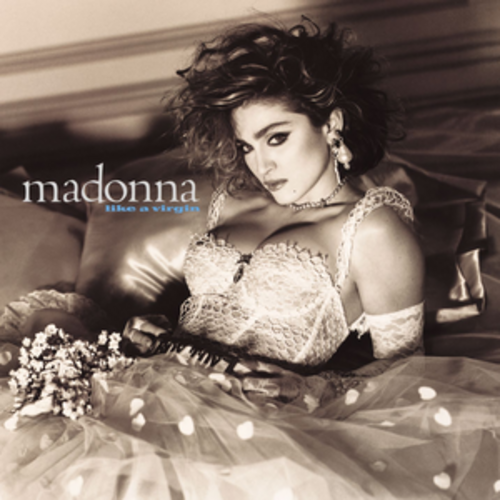
Like a Virgin by Madonna is one of the most commercially dominant pop recordings of the 1980s.
It spent six weeks at number one on the US Billboard Hot 100 in late 1984 and early 1985.
It was her first US chart-topper and made her the dominant female pop presence of the decade.
Written by Billy Steinberg and Tom Kelly, this song was the title track of Madonna’s second studio album.
It established her as an international superstar.
Affiliate Disclosure: I am an Amazon affiliate and if you purchase through any amazon links on this site i may earn a small commission at no extra charge to you.
Produced by Nile Rodgers, the recording combined a funk-influenced rhythm track with a vocal performance of total confidence.
It launched one of the most commercially successful albums of the year.
The record set the direction for pop music across the rest of the decade.
| Song Title | Like a Virgin |
| Artist | Madonna |
| Album | Like a Virgin (1984) |
| Released | 1984 (single) |
| Written By | Billy Steinberg, Tom Kelly |
| Producer | Nile Rodgers |
| Label | Sire Records |
| Chart Peak | #1 US Billboard Hot 100 |
Table of Contents
- What Is Like a Virgin About?
- The Vibe: Genre, Mood, and Search Intent
- Behind the Lyrics: The Story of Like a Virgin
- Technical Corner: Instruments and Production
- Legacy and Charts: Why This Classic Still Matters
- Listener’s Note: A Personal Take
- Watch: Like a Virgin by Madonna
- Collector’s Corner: Own a Piece of Rock History
- Frequently Asked Questions About Like a Virgin
- You Might Also Like
What Is The Song About?
It is about emotional renewal through a new relationship.
Billy Steinberg wrote the lyric from his own experience.
He had been through a difficult period and found himself feeling emotionally fresh again with someone new.
The title phrase captures that sensation precisely.
It is not about physical innocence but about the feeling of starting over.
Steinberg has said it is one of the most personal lyrics he ever wrote.
Madonna’s performance brought a different quality to it.
Where the lyric is reflective, her delivery is confident and playful.
That combination of vulnerable lyric and assertive performance gave the song its distinctive character and much of its cultural impact.
The Vibe: Genre, Mood, and Search Intent
The song opens with a drum machine pattern and a funk-influenced bass line that signal immediately what kind of record this is going to be.
- Genre: Pop, Dance Pop, New Wave
- Mood: Playful, Confident, Celebratory
- Tempo: Midtempo (~112 BPM)
- Best For: 1980s pop playlists, dance music collections, female artist classics
- Similar To: Madonna “Material Girl”, Cyndi Lauper “Girls Just Want to Have Fun”, Whitney Houston “Greatest Love of All”
- Fans Also Search: Madonna discography, Like a Virgin album, Nile Rodgers production, 1980s pop hits
Behind the Lyrics: The Story of Like a Virgin
Billy Steinberg wrote Like a Virgin in the early 1980s while in a reflective state about his own emotional life.
He and his co-writer Tom Kelly pitched it to several artists before it reached Madonna.
Madonna’s management heard it and recognised immediately that it matched both her vocal range and her public persona.
Nile Rodgers was brought in to produce the album after his success with David Bowie’s Let’s Dance in 1983.
He shaped the track around a funk-influenced rhythm section that gave the recording its dance floor energy.
The single was released in October 1984 and entered the Billboard Hot 100 immediately.
It reached number one in November 1984 and stayed there for six weeks into the new year.
The album Like a Virgin sold over 21 million copies worldwide.
Madonna’s performance at the first MTV Video Music Awards in September 1984 became one of the most discussed moments in pop history.
She sang the song in a wedding dress in a performance that no one who saw it forgot.
It set the standard for pop spectacle that her subsequent performances would continue to raise.
Technical Corner: Instruments and Production
Nile Rodgers brought the same rhythmic precision to this recording that he had applied to records by Chic and David Bowie.
The rhythm track is built around a drum machine pattern supported by live bass and guitar.
This combination gave the recording a tightness that purely live arrangements could not achieve at the required tempo.
Rodgers played guitar on the track himself.
His chord work gives the verses a funk texture that contrasts with the more open sound of the chorus.
Madonna’s vocal sits high in the mix and deliberately forward.
Her phrasing breaks the rhythm in ways that give the performance a conversational quality.
Purely metronomic singing would have lacked it.
The production is clean and modern, designed for radio, clubs, and MTV simultaneously.
Rodgers’ ability to create records that worked across all three formats was central to his commercial success in this period.
The result sounds as immediate now as it did in 1984.
Legacy and Charts: Why This Classic Still Matters
It reached number one on the US Billboard Hot 100 in November 1984.
It became Madonna’s first US chart-topper and one of the defining hits of the decade.
The album from which it came spent three weeks at number one on the Billboard 200.
Nile Rodgers’ production work on the record extended his reputation well beyond the disco and funk contexts in which he had first been known.
The song generated controversy that paradoxically increased its commercial reach.
Discussions about its meaning in mainstream media brought it to audiences who might otherwise have ignored it.
The song established the template for Madonna’s career.
Every subsequent album and single built on the same combination of provocative imagery and well-crafted pop songwriting.
The song remains one of the most recognised recordings of its decade.
It is a permanent marker of how pop culture changed in the first half of the 1980s.
Listener’s Note: A Personal Take
The song rewards attention to Madonna’s vocal choices.
There are moments where she drops below the melody line and moments where she pushes above it.
Those deviations are where the personality of the performance lives.
Nile Rodgers gave her a track that was technically perfect.
She gave it something a technically perfect track cannot supply on its own.
Watch: Like a Virgin by Madonna
Collector’s Corner: Own a Piece of Rock History
Madonna: Like a Virgin (1984)
Own the album that defined 1980s pop.
Original Sire Records pressings and remastered editions available.
Frequently Asked Questions
Who wrote Like a Virgin?
It was written by Billy Steinberg and Tom Kelly.
Steinberg wrote the lyric from personal experience and described it as one of the most emotionally honest songs he ever wrote.
What is the track about?
The song describes the feeling of starting over emotionally with someone new.
It is about emotional renewal, not literal physical innocence.
How long did the song stay at number one?
It stayed at number one on the US Billboard Hot 100 for six weeks.
That made her the dominant pop figure of the mid-1980s.
What album is the song on?
It appears on the Like a Virgin album, Madonna’s second studio release.
Released on Sire Records in November 1984, the album sold over 21 million copies worldwide.
Who produced Like a Virgin?
It was produced by Nile Rodgers, who had recently produced David Bowie’s Let’s Dance album.
Rodgers shaped the rhythm track around a funk-influenced drum and bass arrangement that gave the recording its dance floor energy.
What happened at the 1984 MTV Video Music Awards?
Madonna performed the song at the inaugural MTV VMAs in September 1984.
She wore a wedding dress and performed in a manner that generated enormous media attention and became one of the most discussed moments in the early history of pop spectacle.
What made the tune controversial?
The title and the performance style generated controversy over the song’s apparent meaning.
The debate about whether it was appropriate for mainstream radio and television ultimately increased its commercial reach by making it a topic of discussion well beyond its core audience.
Is the song still performed live?
Yes.
Madonna has performed it on virtually every major tour since 1985, typically as a highlight designed to reference her early career.
You Might Also Like
David Bowie: Let’s Dance (1983)
Produced by the same Nile Rodgers, Let’s Dance shows the producer’s gift for combining dance rhythms with rock-influenced songwriting.
The two recordings represent the two sides of Rodgers’ 1983–84 commercial peak.
Eurythmics: Sweet Dreams (Are Made of This) (1983)
The earlier 1980s classic that demonstrated how a strong female presence could define the sound of a decade.
Both recordings showed that pop music in the 1980s was being shaped by women with distinctive artistic identities.
Blondie: Call Me (1980)
The earlier female-fronted classic that helped pave the way for the mainstream pop crossover that Like a Virgin would complete four years later.
Both represent landmark moments in the commercial history of female artists in rock and pop.
Decades on, Like a Virgin by Madonna endures as one of the greatest songs in 1980s pop history, a recording that has outlasted trends and generations to remain as vital and confident as the day it was made.