

Run to the Hills by Iron Maiden is one of the most explosive singles in heavy metal history.
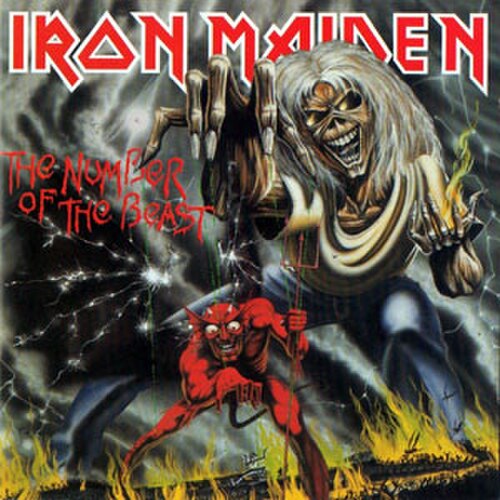
It announced Bruce Dickinson to the world and drove The Number of the Beast to number one in the UK.
Affiliate Disclosure: I am an Amazon affiliate and if you purchase through any amazon links on this site i may earn a small commission at no extra charge to you.
Written by bassist Steve Harris, Run to the Hills was released in February 1982.
It reached number seven on the UK Singles Chart.
It became one of the defining anthems of the New Wave of British Heavy Metal.
Produced by Martin Birch, The Number of the Beast sold over ten million copies worldwide.
It remains one of the most important hard rock albums of its era.
| Song Title | Run to the Hills |
| Artist | Iron Maiden |
| Album | The Number of the Beast (1982) |
| Released | 1982 (single) |
| Written By | Steve Harris |
| Producer | Martin Birch |
| Label | EMI Records |
| Chart Peak | #7 UK Singles Chart |
Table of Contents
- What Is Run to the Hills About?
- The Vibe: Genre, Mood, and Search Intent
- Behind the Lyrics: The Story of Run to the Hills
- Technical Corner: Instruments and Production
- Legacy and Charts: Why This Classic Still Matters
- Listener’s Note: A Personal Take
- Watch: Run to the Hills by Iron Maiden
- Collector’s Corner: Own a Piece of Rock History
- Frequently Asked Questions About Run to the Hills
- You Might Also Like
What Is Run to the Hills About?
Run to the Hills tells the story of the European conquest of Native America from two opposing viewpoints.
The first two verses are written from the Native American perspective.
Soldiers arrive on horseback and destroy a way of life that has existed for generations.
The chorus shifts to the cavalry’s point of view.
They ride hard across the plains, driven by conquest and violence.
That contrast between pursued and pursuer gives the song its dramatic power.
Steve Harris wrote the lyric after reading about American westward expansion.
He wanted to capture both sides of the conflict without choosing either.
The title is an order to flee or to charge, depending on which side you occupy.
Run to the Hills does not resolve the moral tension at its centre.
It holds both viewpoints in place and lets the music carry the weight.
That dual structure was unusual for a metal single of the period.
It gave the recording a narrative depth that elevated it beyond a standard rock anthem.
The Vibe: Genre, Mood, and Search Intent
The opening guitar riff signals immediately what kind of record Run to the Hills is.
- Genre: Heavy Metal, NWOBHM
- Mood: Urgent, Driving, Triumphant
- Tempo: Fast (~170 BPM)
- Best For: Heavy metal playlists, 1980s hard rock, workout music
- Similar To: Iron Maiden “The Trooper”, Judas Priest “Breaking the Law”, Black Sabbath “Iron Man”
- Fans Also Search: Iron Maiden discography, Number of the Beast album, Bruce Dickinson vocals, NWOBHM classics
Behind the Lyrics: The Story of Run to the Hills
Steve Harris wrote Run to the Hills during the sessions for The Number of the Beast in late 1981.
Iron Maiden had been through a significant transition.
Vocalist Paul Di’Anno had left the band after two studio albums.
Dickinson, who had been fronting Samson, was brought in as his replacement.
Run to the Hills was the first single Dickinson recorded with Iron Maiden.
It demonstrated that the band had found a vocalist capable of delivering a major hit.
The sessions took place at Battery Studios in London.
Martin Birch had previously produced records for Deep Purple and Black Sabbath.
He brought a commercial precision to the recording that gave it a wider appeal.
The single was released in February 1982 and climbed to number seven on the UK chart.
The Number of the Beast followed in March 1982 and went straight to number one.
Run to the Hills gave Iron Maiden their first major commercial breakthrough.
Technical Corner: Instruments and Production
The guitar work on Run to the Hills is built around the galloping rhythm technique that has become synonymous with Iron Maiden.
Dave Murray and Adrian Smith share the guitar work throughout the track.
The gallop uses rapid alternating downstrokes to create the sensation of horses moving at speed.
It is one of the most widely imitated techniques in metal guitar playing.
Steve Harris drives the rhythm section with the same galloping pattern on bass.
Clive Burr‘s drumming reinforces the relentless pace throughout.
Dickinson’s upper register is deployed with force in the chorus.
His range gave Iron Maiden a vocal presence they had not previously achieved on record.
Martin Birch’s production keeps every instrument clearly audible.
The mix is dense but controlled, designed for both radio and arena performance.
The result sounds as immediate today as it did in 1982.
Legacy and Charts: Why This Classic Still Matters
Run to the Hills reached number seven on the UK Singles Chart in February 1982.
It was Iron Maiden’s first top-ten single.
The Number of the Beast went to number one in the UK.
It became one of the defining albums of British heavy metal.
The album introduced Iron Maiden to a mainstream audience far beyond the club circuit.
The galloping guitar technique pioneered here became the signature of the band’s sound.
It influenced a generation of metal guitarists who came after them.
The Number of the Beast is consistently placed among the greatest heavy metal albums ever recorded.
It helped establish the New Wave of British Heavy Metal as a commercially significant force.
Run to the Hills remains a permanent fixture of Iron Maiden’s live performances.
It is one of the most requested songs in their catalogue.
Listener’s Note: A Personal Take
The galloping riff opens with a physical urgency that few heavy metal recordings match.
By the time the vocal enters, the energy is already fully established.
Dickinson’s delivery in the chorus is something that needs to be heard at volume.
The brief guitar solo provides a moment of release before the full band returns.
It is a precise lesson in how to build and sustain tension within a three-minute metal single.
Watch: Run to the Hills by Iron Maiden
Collector’s Corner: Own a Piece of Rock History
Iron Maiden: The Number of the Beast (1982)
Own the album that launched Iron Maiden into the mainstream.
Original EMI Records pressings and remastered editions available.
Frequently Asked Questions About Run to the Hills
Who wrote Run to the Hills?
It was written by Steve Harris, Iron Maiden’s founder and bassist.
Harris developed the lyric from his reading of American history and the story of westward expansion.
What is Run to the Hills about?
The song presents the story of the European conquest of Native America from both sides.
The verses present the Native American perspective and the chorus presents the cavalry’s point of view.
How high did Run to the Hills chart?
It reached number seven on the UK Singles Chart in February 1982.
That was Iron Maiden’s first top-ten single and the start of their mainstream commercial career.
What album is it on?
The song appears on The Number of the Beast, Iron Maiden’s third studio album.
Released in March 1982, the album went to number one in the UK.
Who produced it?
It was produced by Martin Birch at Battery Studios in London.
Birch had previously worked with Deep Purple and Black Sabbath before bringing his approach to Iron Maiden.
Was this Bruce Dickinson’s first single with Iron Maiden?
Yes.
Dickinson had replaced Paul Di’Anno as vocalist, and it was his first recorded single with the band.
What is the galloping rhythm technique?
It is a guitar technique using rapid alternating downstrokes to produce a rhythmic pattern resembling galloping horses.
Iron Maiden made it central to their sound and it became one of the most imitated techniques in heavy metal.
Is it still performed live?
Yes.
The song is a consistent centrepiece of Iron Maiden’s live shows and among the most requested in their catalogue.
You Might Also Like
AC/DC: Back in Black (1980)
The defining hard rock album of its era, driven by a riff of comparable force and a band returning from grief with something unstoppable.
Both recordings belong to the same tradition of heavy guitar music that carries weight far beyond its musical form.
Metallica: Master of Puppets (1986)
The heavy metal landmark that showed what the genre could achieve when pushed to its technical limits.
Master of Puppets and The Number of the Beast together mark the two poles of 1980s heavy metal ambition.
Black Sabbath: Paranoid (1970)
The founding document of heavy metal that established the template every hard rock act since has drawn from.
Without the tradition Paranoid started, the music that produced this recording could not have existed in the form it did.
Decades on, Run to the Hills by Iron Maiden endures as one of the greatest songs in classic rock history, a recording that has outlasted trends and generations to remain as vital and urgent as the day it was made.