
Don’t Stop Believin’ by Journey is one of the most enduring rock recordings in American music history.
It has been downloaded over seven million times, making it one of the most purchased songs in the digital era.
Affiliate Disclosure: I am an Amazon affiliate and if you purchase through any amazon links on this site i may earn a small commission at no extra charge to you.
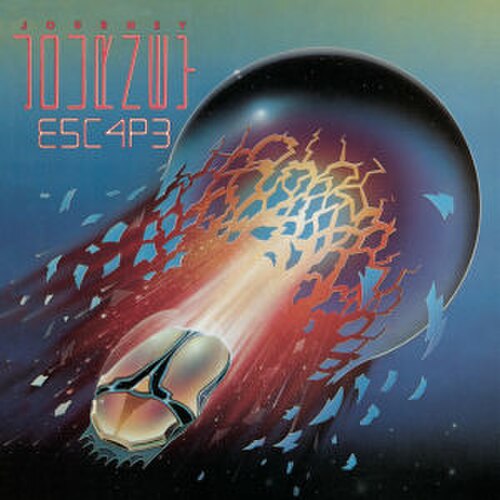
Written by Steve Perry, Neal Schon, and Jonathan Cain, Don’t Stop Believin’ appeared on the Escape album in 1981.
It reached number nine on the US Billboard Hot 100.
It has since grown into one of the most recognised songs in rock history.
Produced by Kevin Elson, Escape reached number one on the US Billboard 200.
It was Journey’s commercial and creative peak.
| Song Title | Don’t Stop Believin’ |
| Artist | Journey |
| Album | Escape (1981) |
| Released | 1981 (single) |
| Written By | Steve Perry, Neal Schon, Jonathan Cain |
| Producer | Kevin Elson |
| Label | Columbia Records |
| Chart Peak | #9 US Billboard Hot 100 |
Table of Contents
- What Is Don’t Stop Believin’ About?
- The Vibe: Genre, Mood, and Search Intent
- Behind the Lyrics: The Story of Don’t Stop Believin’
- Technical Corner: Instruments and Production
- Legacy and Charts: Why This Classic Still Matters
- Listener’s Note: A Personal Take
- Watch: Don’t Stop Believin’ by Journey
- Collector’s Corner: Own a Piece of Rock History
- Frequently Asked Questions About Don’t Stop Believin’
- You Might Also Like
What Is Don’t Stop Believin’ About?
Don’t Stop Believin’ describes two strangers who meet in a city neither calls home.
A small-town girl and a city boy find themselves on a midnight train going anywhere.
The lyric captures the feeling of being young and in motion without a fixed destination.
It is about hope in the absence of certainty.
Steve Perry has said the song came from his own experience of arriving in a new city with nothing but ambition.
Jonathan Cain contributed the piano riff and helped shape the central message.
The title phrase was something Cain’s father told him during a difficult period.
It passed from personal advice into one of the most repeated lines in popular music.
The song builds slowly from its opening piano figure to a full band arrangement.
Don’t Stop Believin’ never quite resolves its central question of whether the strangers’ story leads anywhere.
That openness is what makes it resonate across generations and circumstances.
The Vibe: Genre, Mood, and Search Intent
The piano intro of Don’t Stop Believin’ is one of rock’s most recognisable opening figures.
- Genre: Rock, Arena Rock, AOR
- Mood: Hopeful, Anthemic, Emotional
- Tempo: Midtempo (~120 BPM)
- Best For: 1980s rock playlists, arena rock collections, feel-good anthems
- Similar To: Journey “Open Arms”, Boston “More Than a Feeling”, Foreigner “I Want to Know What Love Is”
- Fans Also Search: Journey discography, Escape album, Steve Perry vocals, AOR classics
Behind the Lyrics: The Story of Don’t Stop Believin’
Steve Perry, Neal Schon, and Jonathan Cain wrote Don’t Stop Believin’ during the Escape sessions in 1981.
Cain had recently joined Journey, replacing Gregg Rolie as keyboardist.
His arrival changed the band’s sound considerably.
He brought a melodic, piano-led approach that opened Journey to a wider audience.
The piano riff that opens the recording was something Cain had been developing independently.
Steve Perry built the vocal melody and lyric around it.
The two strangers in the lyric came from Perry’s own experience of early ambition and displacement.
It was released as a single from Escape in 1981.
It reached number nine on the Billboard Hot 100.
The Escape album went to number one on the Billboard 200 and sold over twelve million copies in the United States.
Don’t Stop Believin’ has since accumulated a second and third life.
A 2007 episode of The Sopranos used it in its final scene and introduced it to an entirely new audience.
A 2009 Glee cast recording brought it to yet another generation of listeners.
Technical Corner: Instruments and Production
Jonathan Cain’s piano opens Don’t Stop Believin’ with an ascending arpeggio pattern in E major.
It establishes the harmonic foundation before any other instrument enters.
Neal Schon’s guitar arrives shortly after, adding a sustained melodic line above the keyboard.
The bass and drums enter together, building the arrangement gradually toward the chorus.
That process of layering instruments over the opening figure is central to the song’s emotional architecture.
Perry’s vocal sits in the upper middle of his range throughout.
His phrasing is relaxed early in the song and pushes harder as the arrangement fills out.
Kevin Elson’s production is clean and designed for radio.
The mix is bright, with the piano and vocal clearly forward.
The guitar solo, played by Schon, arrives in the final third of the recording.
It provides the emotional peak before the song drives toward its conclusion.
The result is a recording of controlled craftsmanship that rewards both casual and attentive listening.
Legacy and Charts: Why This Classic Still Matters
Don’t Stop Believin’ reached number nine on the US Billboard Hot 100 in 1981.
It has outlasted virtually every other song from that chart position that year.
In 2009 it became one of the first older songs to crack the iTunes top ten after its Glee revival.
It has been downloaded more than seven million times in the United States alone.
It is the best-selling digital single by a band from the pre-digital era.
The song has been licensed for film, television, and sporting events more than almost any other recording of its decade.
Its use at the end of The Sopranos added a cultural weight that few rock songs acquire.
Don’t Stop Believin’ is now recognised as one of the essential recordings of American rock.
It endures because its central message is both simple and genuinely felt.
Listener’s Note: A Personal Take
The opening piano figure creates an expectation that the full song consistently exceeds.
Perry’s voice in the final chorus carries a weight that is hard to explain technically.
The song has been heard so many times that it is easy to stop noticing how well crafted it is.
Schon’s guitar solo is brief but perfectly placed.
The whole recording is a lesson in knowing precisely when to add something and when to hold back.
Watch: Don’t Stop Believin’ by Journey
Collector’s Corner: Own a Piece of Rock History
Journey: Escape (1981)
Own the album that gave the world Don’t Stop Believin’.
Original Columbia Records pressings and remastered editions available.
Frequently Asked Questions About Don’t Stop Believin’
Who wrote Don’t Stop Believin’?
It was written by Steve Perry, Neal Schon, and Jonathan Cain.
Cain supplied the piano riff and the central phrase came from advice his father had given him during a difficult time.
What is Don’t Stop Believin’ about?
The song follows two strangers who meet in a city and find themselves on a journey without a clear destination.
It is about holding onto hope and forward motion in the absence of certainty.
How high did Don’t Stop Believin’ chart?
It reached number nine on the US Billboard Hot 100 in 1981.
Its chart position understates its cultural impact, which has grown considerably in the decades since its release.
What album is it on?
The song appears on Escape, Journey’s seventh studio album.
Released in 1981 on Columbia Records, it reached number one on the Billboard 200.
Who produced it?
It was produced by Kevin Elson.
Elson helped give the recording the clean, commercial sound that made it a radio staple.
Why did the song have such a big revival?
Two events brought it back to mainstream attention.
Its use in the 2007 Sopranos finale and a 2009 Glee cast recording introduced it to entirely new audiences.
Is it the best-selling digital rock single of its era?
Yes.
It is the best-selling digital single by any band from the pre-digital era, with over seven million downloads in the United States.
Is it still performed live?
Yes.
It is always the closing song at Journey live performances and the moment most audiences have come specifically to hear.
You Might Also Like
Boston: More Than a Feeling (1976)
The earlier arena rock classic built on layered guitars and a soaring vocal performance of total commitment.
Both songs represent the two poles of what American arena rock was capable of across a five-year span.
Foreigner: Hot Blooded (1978)
The hard-driving Foreigner classic that showed the commercial power of a well-constructed AOR riff.
Hot Blooded and the Escape album belong to the same generation of rock that built its audience through FM radio and live performance.
Styx: Come Sail Away (1977)
The Styx classic that also opens with a piano figure before building to a full arena rock arrangement.
Both songs share the same belief that rock music can be emotionally direct without sacrificing craft.
Decades on, Don’t Stop Believin’ by Journey endures as one of the greatest songs in classic rock history, a recording that has outlasted trends and generations to remain as vital and hopeful as the day it was made.