

Call Me by Blondie is a pulsing disco-rock anthem that dominated the Billboard Hot 100 for six straight weeks in 1980, making it the biggest-selling single of the entire year.
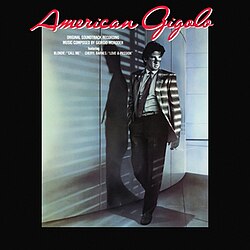
Written for the soundtrack of the Richard Gere film American Gigolo, the track fuses Debbie Harry‘s cool, commanding vocal with the sleek electronic production of Italian disco pioneer Giorgio Moroder.
Affiliate Disclosure: As an Amazon Associate I earn from qualifying purchases. This helps support the site at no extra cost to you.
The track was written by Harry and Moroder together, with Harry shaping the lyrics and melody around a driving synth-rock instrumental Moroder had already developed for the film.
“Call Me” appeared exclusively on the American Gigolo soundtrack in 1980 before being compiled on The Best of Blondie later that year.
Produced by Moroder, the recording was tight and precise — his dance-floor instincts meshed with Blondie’s new wave energy to create something genuinely new.
| Detail | Info |
|---|---|
| Artist | Blondie |
| Song | Call Me |
| Year | 1980 |
| Written by | Debbie Harry, Giorgio Moroder |
| Produced by | Giorgio Moroder |
| Album | American Gigolo (Soundtrack) |
| Peak Chart Position | #1 Billboard Hot 100 |
| Weeks at #1 | 6 weeks |
| Genre | New Wave, Disco-Rock, Post-Punk |
Table of Contents
What Is “Call Me” About?
“Call Me” is written from the perspective of someone offering themselves to a lover without reservation.
The lyric is both seductive and confident — Harry sings “call me on the line, call me, call me any, anytime,” projecting total availability and desire.
On the surface, the song fits the world of American Gigolo, where the protagonist sells intimacy as a profession.
But the chorus strips away that specific context and becomes something universal — an open invitation, an expression of longing, a declaration of want.
Harry’s delivery is never desperate; it’s controlled and assured, which gives the lyric an edge of power rather than need.
The American Gigolo Connection
Director Paul Schrader needed a title song for American Gigolo (1980) and approached Moroder, who had already scored massive film hits with Midnight Express and Flashdance.
Moroder had built a synth-driven instrumental track and brought in Blondie after hearing Harry’s voice on earlier recordings.
Harry wrote the lyrics quickly — a stream-of-consciousness process that matched the urgency of the backing track.
The finished song was threaded through the film’s opening sequence and became inseparable from the movie’s cool, fashion-forward aesthetic.
Richard Gere lip-synced the song in the trailer, and the image of him mouthing Harry’s words while dressed in Armani became one of the definitive marketing images of 1980.
How the Song Was Made
Moroder produced “Call Me” with the same meticulous approach he applied to his Donna Summer records — a foundation of synthesizers, sequenced bass, and electronic drums, then layers of guitar and voice added on top.
The guitar riff that opens the track was performed by a session musician following Moroder’s chord chart, giving the track a harder edge than Blondie’s own recordings at the time.
Harry recorded her vocal in a single extended session, reportedly completing most of it in just a few takes.
The multilingual verses — Harry sings brief lines in French, Italian, and German — were added to broaden the track’s appeal in European markets, where Moroder had a massive following.
Mixing was handled in Moroder’s Munich studio, Musicland, which had also produced major albums for Led Zeppelin, Deep Purple, and the Rolling Stones.
Debbie Harry’s Vocal Performance
Harry’s performance on “Call Me” is often cited as one of her most polished on record.
Her voice sits right at the intersection of new wave cool and disco warmth — detached enough to feel modern, expressive enough to carry genuine emotion.
The way she phrases the chorus — stretching “call me” across unexpected rhythmic accents — became instantly recognizable and widely imitated.
She builds energy through the song without ever raising her voice to the point of strain, maintaining an effortless quality even at the track’s most insistent moments.
The multilingual verses show range: Harry shifts register and tone for each language snippet without breaking the vocal character of the recording.
The Music Video
The music video for “Call Me” was produced to coincide with the film’s release and features footage from American Gigolo intercut with performance clips of the band.
Harry appears in stark, high-contrast lighting that emphasizes the sleek, urban mood of the song.
The video received heavy rotation on early music video programs in Europe before MTV launched, helping break the track in markets where the film had limited release.
Its visual language — minimalist, fashion-conscious, noir-inflected — anticipated the MTV aesthetic that would define the following decade.
Chart Performance and Commercial Success
“Call Me” entered the Billboard Hot 100 in February 1980 and reached number one in March, where it remained for six consecutive weeks.
It was certified platinum by the RIAA and became the best-selling single in the United States for the full calendar year of 1980.
The track also reached number one in the United Kingdom, Canada, Australia, and several European countries, making it one of the most globally successful singles of Blondie’s career.
The success of “Call Me” helped cement Blondie’s status as one of the most commercially viable acts bridging new wave and mainstream pop.
Critical Reception
Critics in 1980 praised the track for its energy and production quality, though some noted that its polished disco-rock sheen was a departure from Blondie’s rawer early work.
In retrospect, “Call Me” is regarded as one of the finest pop singles of the early 1980s — a song that captured the sound of an era in three and a half minutes.
Rolling Stone ranked it among the greatest singles of the 1980s, pointing to the Harry–Moroder collaboration as one of the most productive cross-genre partnerships of the period.
The production has aged better than many of its contemporaries: the synth layers remain crisp, and the guitar riff still has bite.
The Disco-Rock Sound
“Call Me” sits in a specific sonic territory that few artists managed to occupy convincingly — disco’s momentum and new wave’s attitude, held together by rock guitar energy.
Moroder understood that the dance floor needed propulsion, and he built the track’s rhythm section accordingly: mechanical, relentless, driven by eighth-note subdivision.
Over that foundation, Blondie’s rock-band texture — guitars, live feel, Harry’s voice — gave the track an immediacy that pure disco often lacked.
The result was a song that worked at high volume in a club and on a transistor radio at equal intensity.
Influence on Pop Music
“Call Me” demonstrated to the music industry that rock acts could work directly with dance producers without losing their identity.
The model Harry and Moroder established — rock vocalist, electronic production, film placement — was replicated throughout the decade by artists from Pat Benatar to Irene Cara.
Giorgio Moroder went on to produce several more film anthem hits following the track’s success, and the sonic blueprint he used here informed his work on “Flashdance… What a Feeling” and “Take My Breath Away.”
Blondie’s willingness to blur genre lines opened critical and commercial space for the new wave bands that followed them into mainstream radio.
Why the Song Still Resonates
“Call Me” has appeared in dozens of films, television shows, and commercials since 1980, each use reinforcing its connection to a particular strain of early-80s glamour and confidence.
It features in American Hustle, Zoolander, and numerous decade retrospective soundtracks, always carrying with it the feeling of an era when pop music was reinventing itself in real time.
New generations encounter the track and are drawn to its directness — the hook is immediate, the production holds up, and Harry’s vocal sounds as assured as anything recorded since.
The song also benefits from its short runtime and relentless forward motion: it never overstays its welcome, ending before the listener is ready for it to stop.
Frequently Asked Questions
Who wrote “Call Me” by Blondie?
The song was written by Debbie Harry and Giorgio Moroder. Moroder composed the music while Harry wrote the lyrics and melody.
What movie is “Call Me” from?
It was written for the 1980 Richard Gere film American Gigolo and appeared on the film’s soundtrack album.
How long did “Call Me” stay at number one?
Six weeks at number one on the Billboard Hot 100, from March through April 1980.
Who produced “Call Me”?
Giorgio Moroder produced the track at his Musicland studio in Munich, Germany.
What album is “Call Me” on?
It was released on the American Gigolo soundtrack and later included on The Best of Blondie compilation.
You Might Also Like
More than four decades after its release, Call Me by Blondie remains a benchmark of what happens when two distinct musical worlds — rock and electronic dance — meet at the right moment with the right voices driving them forward.