

Hungry Like the Wolf by Duran Duran reached number five on the Billboard Hot 100 in 1982 and became one of the defining recordings of the MTV era.
Its high-concept music video, filmed in Sri Lanka and directed by Russell Mulcahy, was one of the most-played clips on MTV during the channel’s formative years and transformed the band into a global phenomenon.
Affiliate Disclosure: I am an Amazon affiliate and if you purchase through any amazon links on this site i may earn a small commission at no extra charge to you.
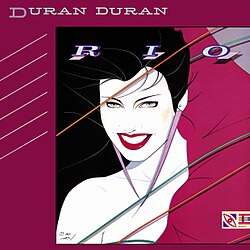
Written by all five members of the band — Simon Le Bon, Nick Rhodes, John Taylor, Roger Taylor, and Andy Taylor — Hungry Like the Wolf was released as a single from their second album, Rio, in 1982.
It reached number five on the US Billboard Hot 100 and number five in the United Kingdom.
Produced by Colin Thurston, Rio became one of the best-selling albums of 1982 and established Duran Duran as one of the most commercially successful acts of the decade.
| Song Title | Hungry Like the Wolf |
| Artist | Duran Duran |
| Album | Rio (1982) |
| Released | 1982 (single) |
| Written By | Simon Le Bon, Nick Rhodes, John Taylor, Roger Taylor, Andy Taylor |
| Producer | Colin Thurston |
| Label | EMI Records |
| Chart Peak | #5 US Billboard Hot 100 |
Table of Contents
- What Is Hungry Like the Wolf About?
- The Vibe: Genre, Mood, and Search Intent
- Behind the Lyrics: The Story of Hungry Like the Wolf
- Technical Corner: Instruments and Production
- Legacy and Charts: Why This Classic Still Matters
- Listener’s Note: A Personal Take
- Watch: Hungry Like the Wolf by Duran Duran
- Collector’s Corner: Own a Piece of Rock History
- Frequently Asked Questions About Hungry Like the Wolf
- You Might Also Like
What Is Hungry Like the Wolf About?
The lyric uses the wolf as a metaphor for relentless, animalistic desire.
Simon Le Bon is in pursuit of something — or someone — and will not stop until he reaches it.
The imagery is exotic and predatory: dark in the city, stalking through the jungle, guided by a scent.
It is not a love song in the conventional sense.
It is a song about the drive itself — the state of wanting something so intensely that it overrides everything else.
Le Bon has described the words as a fairly direct expression of desire, written without much attempt to disguise what they were about.
The directness works because the music matches it.
Hungry Like the Wolf does not settle or resolve.
The groove circles and tightens for the entire track, creating the sensation of a chase that the listener is inside rather than watching from outside.
The Vibe: Genre, Mood, and Search Intent
The synthesizer pulse opens the track and establishes urgency before Le Bon has sung a word.
- Genre: New Wave, Synth Pop, Pop Rock
- Mood: Urgent, Seductive, Exotic
- Tempo: Uptempo (~126 BPM)
- Best For: 1980s new wave playlists, MTV era classics, Duran Duran essentials
- Similar To: Duran Duran “Rio”, INXS “Need You Tonight”, The Cars “Shake It Up”
- Fans Also Search: Duran Duran discography, Rio album, Simon Le Bon, 1982 new wave hits
Behind the Lyrics: The Story of Hungry Like the Wolf
Duran Duran wrote Hungry Like the Wolf during the sessions for Rio at Chalet du Lac studio in Paris in 1982.
The band had arrived at a sound that blended synthesizers with funk-influenced bass lines and rock guitar, and Hungry Like the Wolf pushed that combination into its most commercially effective form.
Colin Thurston, who had produced their debut album, returned for Rio and captured a performance that was tighter and more confident than anything on the first record.
The music video became as important as the recording itself.
Russell Mulcahy directed the video on location in Sri Lanka, and the resulting film — with Le Bon pursuing a mysterious woman through jungles and markets — gave the song a cinematic scale that matched its ambitions.
MTV played the video heavily through 1982 and 1983.
At the first MTV Video Music Awards in 1984, Hungry Like the Wolf won Best New Artist Video.
By that point, the song had become one of the most recognisable recordings of the decade.
Technical Corner: Instruments and Production
Nick Rhodes’s synthesizer work drives the arrangement from the opening bar.
The keyboard parts create both the harmonic foundation and the rhythmic urgency of the track.
John Taylor’s bass guitar provides a funk-influenced pulse beneath the synthesizers, giving the recording a physical momentum that purely electronic arrangements of the period often lacked.
Andy Taylor’s guitar adds texture and energy in the chorus without crowding the synthesizer parts.
Roger Taylor’s drumming is precise and forward in the mix.
Simon Le Bon’s vocal performance suits the lyric: assertive and slightly breathless, as though the pursuit is already underway.
Colin Thurston’s production keeps the arrangement clean and the synthesizer parts prominent without allowing the recording to feel cold.
Legacy and Charts: Why This Classic Still Matters
Hungry Like the Wolf reached number five on the US Billboard Hot 100 in 1982 and spent fifteen weeks on the chart.
In the United Kingdom it also reached number five.
The recording was central to the second British Invasion of American pop and rock radio in the early 1980s, a movement driven largely by MTV’s appetite for visually sophisticated music videos.
The song has appeared in films, television programmes, and advertising campaigns for over four decades.
It remains the recording most people identify first when thinking of Duran Duran.
Its influence on the visual presentation of pop music — the idea that a song and its video should be conceived together as a single work — was substantial and lasting.
Listener’s Note: A Personal Take
The bass line is the recording’s secret.
John Taylor’s playing gives the track a physicality that keeps it from feeling like a purely electronic production.
Strip the synthesizers and the guitar and the bass alone would still carry the song.
That foundation is why the recording has lasted where so much other synth-pop of the period has dated badly.
Watch: Hungry Like the Wolf by Duran Duran
Collector’s Corner: Own a Piece of Rock History
Duran Duran: Rio (1982)
Own the album that gave the world Hungry Like the Wolf.
Original EMI Records pressings and remastered editions available.
Frequently Asked Questions About Hungry Like the Wolf
Who wrote Hungry Like the Wolf?
All five members of Duran Duran share the writing credit: Simon Le Bon, Nick Rhodes, John Taylor, Roger Taylor, and Andy Taylor.
What is the song about?
The lyric uses the wolf as a metaphor for desire and pursuit.
Simon Le Bon described it as a fairly direct expression of wanting something intensely and being driven to pursue it.
What album is it on?
It appears on Rio, Duran Duran’s second studio album, released in 1982 on EMI Records.
Who produced the recording?
It was produced by Colin Thurston, who had also produced the band’s debut album.
Where was the music video filmed?
The video was filmed on location in Sri Lanka and directed by Russell Mulcahy.
The exotic setting gave the song’s predatory lyric a visual equivalent that MTV played extensively through 1982 and 1983.
Did it win any awards?
Yes.
Hungry Like the Wolf won Best New Artist Video at the first MTV Video Music Awards in 1984.
Is it still performed live?
Yes.
The song is a staple of Duran Duran’s live performances and one of the most reliably crowd-pleasing moments in any set they play.
You Might Also Like
INXS: Need You Tonight (1987)
Another number one built on a minimalist guitar riff and a vocal performance that turns desire into something almost tactile.
Both recordings show how the best pop of the 1980s could be simultaneously restrained and overwhelming.
Blondie: Call Me (1980)
The Giorgio Moroder-produced number one that helped define the sound of 1980 and demonstrated how disco energy could be channelled into something harder and more urgent.
Both recordings belong to the moment when pop music was discovering what synthesizers could do in a rock context.
The Cars: Drive (1984)
The other great synth-influenced recording of the early MTV era that proved a quiet, understated arrangement could be just as effective as an urgent one.
Hearing both recordings together shows the full range of what 1980s pop-rock was capable of producing.
Decades on, Hungry Like the Wolf by Duran Duran endures as one of the most perfectly constructed pop records of the 1980s, a song that married a great bass line and a great synthesizer hook to a video that helped define what the MTV era looked like.