

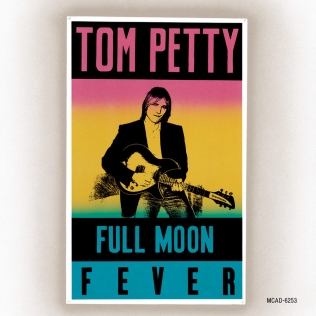
Free Fallin’ by Tom Petty was written at Jeff Lynne’s home studio in roughly thirty minutes in 1988 and became the lead single from Petty’s debut solo album Full Moon Fever, released in 1989.
Petty and Lynne wrote it as an informal warm-up exercise with no intention of releasing it, but the simplicity of what emerged that afternoon turned out to be exactly what made it endure.
Affiliate Disclosure: As an Amazon Associate I earn from qualifying purchases. This helps support the site at no extra cost to you.
The track reached number seven on the Billboard Hot 100 and has since become one of the most recognisable songs in Petty’s catalogue, regularly cited alongside his best work with the Heartbreakers.
Full Moon Fever was co-produced by Lynne, Petty, and guitarist Mike Campbell, and represented Petty’s first major project outside the Heartbreakers, giving him space to work in a more varied and personal style.
| Detail | Info |
|---|---|
| Artist | Tom Petty |
| Song | Free Fallin’ |
| Year | 1989 |
| Written by | Tom Petty, Jeff Lynne |
| Produced by | Jeff Lynne, Tom Petty, Mike Campbell |
| Lead Vocals | Tom Petty |
| Album | Full Moon Fever |
| Peak Chart Position | #7 Billboard Hot 100 |
| Genre | Heartland Rock, Classic Rock |
Table of Contents
What Is “Free Fallin’” About?
The song describes a young man in the San Fernando Valley of Los Angeles, specifically the suburb of Reseda, who is aimless and untethered, in the process of ending a relationship with a good girl he does not deserve.
The lyric moves from the specific geography of the Valley, naming Ventura Boulevard and the streets of Reseda, to the more abstract image of free falling, of being unmoored from commitment and consequence.
Petty has said the song was about a particular type of California rootlessness, the feeling of floating through a landscape that is beautiful and warm but offers no purchase on meaning.
The central character is not particularly sympathetic, but the lyric treats him with a kind of affectionate clarity rather than judgment, which is part of what makes the song feel honest rather than moralistic.
Writing the Song in Thirty Minutes
Petty and Lynne were at Lynne’s home studio in Los Angeles in 1988, warming up before beginning work on more planned material, when Petty started playing a simple chord progression and Lynne began adding words almost as a joke.
The two kept building on it, and within approximately thirty minutes they had a complete song with a finished lyric, a melody, and a structure that required almost no revision.
Petty has recalled being genuinely surprised by how complete the song was, given that neither of them had intended to write anything serious that afternoon.
The experience taught him something he referenced in interviews for the rest of his career: that the songs that arrive effortlessly are often the ones that last.
Jeff Lynne and the Full Moon Fever Sessions
Jeff Lynne, best known as the founder and primary songwriter of Electric Light Orchestra, had developed a production approach centred on dense, layered arrangements with strong melodic clarity.
His collaboration with Petty on Full Moon Fever drew on those instincts while accommodating Petty’s preference for directness over complexity.
The two had developed a working relationship through the Traveling Wilburys supergroup, which also included Bob Dylan, George Harrison, and Roy Orbison, and that comfortable rapport carried over into the solo album sessions.
Lynne co-produced the album with Petty and Mike Campbell, and the three shared a sensibility that kept the record sounding warm and accessible without becoming overproduced.
The Full Moon Fever Album
Full Moon Fever was Tom Petty’s first solo album, released in April 1989, and reached number three on the Billboard 200.
The record includes contributions from several Heartbreakers, including Campbell and drummer Stan Lynch, as well as backing vocals from George Harrison on several tracks.
The album was recorded with a looseness that reflected its origins as a solo project rather than a band record, and that quality gives it a slightly different character from the Heartbreakers’ studio albums.
“Free Fallin’” was the album’s lead single and effectively introduced listeners to the record’s tone before they heard anything else from it.
Chart Performance
“Free Fallin’” was released as a single in July 1989 and reached number seven on the Billboard Hot 100.
The track also performed well on the mainstream rock and adult contemporary charts, giving Petty a broader commercial reach than his earlier work had typically achieved.
Full Moon Fever remained on the Billboard 200 for over a year after its release, sustained by a series of strong singles of which “Free Fallin’” was the commercial cornerstone.
The song re-entered charts in multiple countries following Petty’s death in October 2017, a pattern consistent with what happens to a classic track when listeners reconnect with an artist’s work through grief.
The Music Video
The music video for “Free Fallin’” was directed by Julien Temple and shot in the San Fernando Valley, placing Petty in the landscape the lyric describes.
The video shows Petty driving through Reseda and along Ventura Boulevard, skateboarding, and interacting with the ordinary suburban world of the Valley in a way that gave the song’s geography a tangible visual reality.
The visual approach suited the song’s tone of affectionate observation, neither glamorising nor condescending to the specific corner of Los Angeles it was documenting.
The clip received significant rotation on MTV and helped establish Full Moon Fever as a commercial success in the crucial early weeks of the album’s release.
The Reseda Connection
Reseda, the San Fernando Valley suburb named in the lyric, occupies an unusual position in American popular culture as a place more often referenced in film and music than celebrated.
The use of Reseda in “Free Fallin’” was deliberate: Petty wanted a specific, unglamorous California location that listeners in the Valley would recognise and that listeners elsewhere would understand as standing for a particular kind of ordinary American place.
The Ventura Boulevard reference has the same function: a named street that anchors the lyric in a real geography while remaining accessible to anyone who has driven through suburban America.
Petty’s attention to specific geography, which runs through much of his writing, gave “Free Fallin’” a rootedness that counterbalanced the song’s central image of drifting.
Critical Reception and Legacy
Critics responded positively to “Free Fallin’” on release, noting its deceptive simplicity and Petty’s lyrical precision as the track’s defining strengths.
In subsequent decades, the song has appeared on Rolling Stone’s list of the 500 Greatest Songs of All Time and has been cited by numerous artists as an example of perfect pop-rock songwriting.
It became a fixture at Petty’s live concerts and one of the most requested songs of his career, a position it held for nearly thirty years.
The recording earned a Grammy nomination and remains one of the most studied examples of how to write a hit from a simple idea without overworking the material.
Why “Free Fallin’” Still Matters
The song endures because it captures something true about a specific human experience, the feeling of being between commitments and not entirely sure the people left behind deserved what they got, and it does so with a lightness and specificity of detail that more earnest treatments of the same subject rarely achieve.
Petty and Lynne wrote it in thirty minutes, and the ease of its creation is audible in every note: nothing is forced, nothing is over-explained, and the melody sits exactly where it needs to sit.
More than thirty-five years after it was written on an unremarkable afternoon in a home studio in Los Angeles, “Free Fallin’” by Tom Petty remains one of the most quietly perfect rock songs ever recorded.
Frequently Asked Questions
Who wrote “Free Fallin’”?
Tom Petty and Jeff Lynne wrote the song in roughly thirty minutes at Lynne’s home studio in Los Angeles in 1988.
What album is “Free Fallin’” on?
It appears on Full Moon Fever (1989), Tom Petty’s debut solo album.
How high did “Free Fallin’” chart?
The single reached number seven on the Billboard Hot 100 in 1989.
Where is the song set?
The lyric is set in Reseda and along Ventura Boulevard in the San Fernando Valley of Los Angeles, California.
Did Tom Petty perform it live regularly?
Yes. “Free Fallin’” became one of the most consistently performed songs in Petty’s live setlists from 1989 until his death in 2017.
You Might Also Like

More than three decades after it was written in a single casual afternoon session, Free Fallin’ by Tom Petty stands as one of the most effortless and enduring rock songs of the decade, a masterclass in how to say everything by appearing to say very little.