

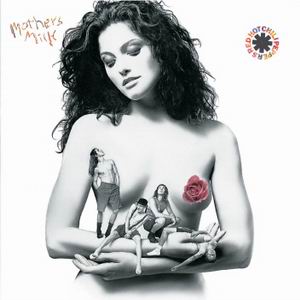
Higher Ground by the Red Hot Chili Peppers is a 1989 cover of Stevie Wonder’s 1973 original, recorded for their album Mother’s Milk and reimagined as a furious blast of funk-rock that became one of the most electrifying songs of the band’s early career.
Where Wonder’s version was a meditative, spiritually-charged soul track, the Peppers’ reading was faster, harder, and anchored by Flea’s slap bass, turning the song into something entirely new while keeping the spirit of its original message.
Affiliate Disclosure: As an Amazon Associate I earn from qualifying purchases. This helps support the site at no extra cost to you.
The recording introduced John Frusciante to the world on his first studio album with the band, and the raw, aggressive energy that producer Michael Beinhorn captured on Mother’s Milk runs through every second of the track.
The song became one of the band’s most recognisable early recordings and helped push their sound into the mainstream at a moment when the band badly needed a commercial breakthrough.
| Detail | Info |
|---|---|
| Artist | Red Hot Chili Peppers |
| Song | Higher Ground |
| Year | 1989 |
| Written by | Stevie Wonder |
| Produced by | Michael Beinhorn |
| Lead Vocals | Anthony Kiedis |
| Album | Mother’s Milk |
| Peak Chart Position | #11 UK Singles Chart |
| Genre | Funk Rock, Alternative Rock |
Table of Contents
The Original: Stevie Wonder’s “Higher Ground”
Stevie Wonder wrote and recorded “Higher Ground” in a single three-hour session in 1973, completing it just days before he was involved in a near-fatal car accident.
The original appeared on his album Innervisions and reached number four on the Billboard Hot 100, becoming one of the most celebrated singles of his celebrated run of early 1970s albums.
Wonder has said the song was written about reincarnation and the idea of returning to life with greater understanding, a spiritual framework that gave the lyric its particular combination of urgency and hope.
The accident that followed the recording deepened the song’s meaning for many listeners, who heard it as a premonition of the ordeal Wonder was about to endure and survive.
Why the Peppers Chose the Song
The Red Hot Chili Peppers had long cited Stevie Wonder as a primary influence, and Flea in particular had built his bass style in part around the rhythm and groove of Wonder’s recordings.
The choice of “Higher Ground” was deliberate: the song’s clavinet-driven funk groove was directly adaptable to the kind of aggressive, rhythmically complex playing the band had developed.
Anthony Kiedis has noted that the lyric’s themes of resilience and second chances also resonated personally for the band at a time when they had just lost guitarist Hillel Slovak to a heroin overdose in 1988.
The decision to cover it was both musical and emotional: a tribute to their influences and a statement of survival.
John Frusciante Joins the Band
Mother’s Milk was the first studio album featuring John Frusciante on guitar, who joined the band aged eighteen after Slovak’s death and original drummer Jack Irons’ departure.
Frusciante brought a new melodic and textural dimension to the band’s guitar work, one that complemented rather than competed with Flea’s bass-forward approach.
On “Higher Ground,” his guitar playing is percussive and locked into the rhythm rather than leading, which gives the track its compressed, coiled energy.
The combination of Frusciante’s guitar and Chad Smith’s drumming gave the band a tighter rhythmic foundation than they had possessed on earlier records.
Flea’s Bass Playing
Flea’s slap bass on “Higher Ground” is arguably the most discussed element of the recording, a performance that took the clavinet groove from Wonder’s original and translated it into a bass line of extraordinary physicality.
The slap technique, which involves striking the strings percussively with the thumb while also plucking them to create a popping sound, was ideally suited to a song built around a mechanical, repeating rhythmic figure.
Flea has cited this performance as one of the most technically demanding he undertook on the album, partly because of the speed at which they recorded it and the precision the groove demanded.
The bass line on the RHCP version became one of the most studied pieces of playing in funk-rock pedagogy, analysed by bass students and covered by musicians more than almost any other recording the band produced.
Michael Beinhorn Produces Mother’s Milk
Michael Beinhorn, who had previously worked with Herbie Hancock and Soul Asylum, brought a deliberately raw and physically powerful production aesthetic to the Mother’s Milk sessions.
His approach prioritised the band’s live energy over polish, keeping the rhythm section loud in the mix and allowing the dynamics of each track to develop from the performance rather than from post-production manipulation.
On “Higher Ground,” this meant a recording that sounds immediate and physical in a way that later Peppers albums, produced with more studio craft, do not always replicate.
Beinhorn and the band completed Mother’s Milk in a relatively short period, which contributed to the urgent quality that defines the record.
Chart Performance
“Higher Ground” was released as a single in the UK in 1989 and reached number eleven on the UK Singles Chart, giving the band their first significant UK chart success.
In the United States, the track was not released as a conventional single but received substantial airplay on alternative rock and college radio formats, building the band’s American audience through live performance and radio rather than chart performance alone.
Mother’s Milk peaked at number fifty-two on the Billboard 200, a more modest position than the band would achieve on subsequent releases but a significant step forward from their earlier commercial standing.
The Music Video
The music video for “Higher Ground” featured the band in a typically energetic and unconventional performance style, capturing the physicality of their live shows in a visual format suited to MTV rotation.
The video emphasised Flea’s bass playing and Kiedis’ vocal presence, presenting the band as a high-energy rock act with a strong visual identity that distinguished them from their contemporaries.
The clip received rotation on MTV and helped establish the band’s image with an audience that was increasingly receptive to alternative rock acts in the late 1980s.
Critical Reception and Legacy
Critics noted the cover as one of the strongest moments on Mother’s Milk, praising the band’s ability to take a Stevie Wonder song and make it entirely their own without losing the original’s emotional content.
In subsequent decades, “Higher Ground” has remained one of the most frequently cited examples of a successful rock cover of a soul or R&B original, studied for the way the band transformed the source material without distorting it.
Stevie Wonder himself has spoken positively about the cover, an acknowledgement that carries considerable weight given how protective many artists are about interpretations of their work.
Why “Higher Ground” Still Matters
The recording matters because it achieved something genuinely difficult: a cover that justified its existence by transforming the source material into something the original never was, while simultaneously honouring what made the original great.
Flea’s bass, Frusciante’s guitar, Smith’s drums, and Kiedis’ vocal all pulled in the same direction, and the result was a track that sounded like nobody else at a moment when the band needed to establish exactly that.
More than three decades later, “Higher Ground” remains one of the best entries in the Red Hot Chili Peppers’ catalogue and one of the finest covers in the history of rock music.
Frequently Asked Questions
Who originally wrote “Higher Ground”?
Stevie Wonder wrote and recorded the original in 1973. It appeared on his album Innervisions and reached number four on the Billboard Hot 100.
What album is the RHCP version on?
It appears on Mother’s Milk (1989), produced by Michael Beinhorn.
Was “Higher Ground” a US single for RHCP?
Not as a conventional US single. It was released in the UK where it reached number eleven, and received heavy college radio play in the United States.
Who is the guitarist on the RHCP version?
John Frusciante, who joined the band aged eighteen on his first studio album with the group.
What makes the RHCP version different?
The tempo is significantly faster, the production is rawer, and Flea’s slap bass replaces Wonder’s clavinet as the central rhythmic element, making the track physically harder and more aggressive while retaining the original’s groove.
You Might Also Like
More than thirty years after its release, Higher Ground by Red Hot Chili Peppers stands as one of the most successful rock covers ever recorded, a performance that transformed a Stevie Wonder classic into something entirely, unmistakably their own.