

Come Sail Away by Styx is one of the most ambitious and emotionally affecting progressive rock songs of the 1970s, a seven-minute journey from hushed piano balladry to full arena rock grandeur that showcases everything the band did best.
Written and produced by Dennis DeYoung, the track appeared on The Grand Illusion in 1977 and reached number 8 on the US Billboard Hot 100, becoming Styx’s breakthrough hit and one of the defining arena rock recordings of its era.
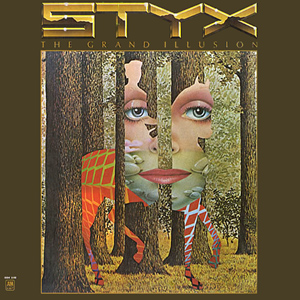
Affiliate Disclosure: I am an Amazon affiliate and if you purchase through any amazon links on this site i may earn a small commission at no extra charge to you.
From its opening piano chords through its orchestral swell and into its explosive rock climax, the song demonstrates an instinct for epic pop construction that few bands have equalled.
| Song Title | Come Sail Away |
| Artist | Styx |
| Album | The Grand Illusion (1977) |
| Released | 1977 (single) |
| Written By | Dennis DeYoung |
| Producer | Dennis DeYoung |
| Label | A&M Records |
| Chart Peak | #8 US Billboard Hot 100 |
Table of Contents
- What Is Come Sail Away About?
- The Vibe: Genre, Mood, and Search Intent
- Behind the Lyrics: The Story of Come Sail Away
- Technical Corner: The Gear Behind Come Sail Away
- Legacy and Charts: Why Come Sail Away Still Matters
- Listener’s Note: A Personal Take on Come Sail Away
- Collector’s Corner: Own a Piece of Rock History
- Frequently Asked Questions About Come Sail Away
What Is The Song About?
It is about the human longing for transcendence, the desire to leave the ordinary world behind and journey toward something vast and unknown.
Dennis DeYoung wrote the lyric as both a personal meditation and a universal statement about the appeal of adventure, freedom, and the mysteries that lie beyond the horizon.
The song builds its narrative from a dream of sailing to an encounter with what may be angels or alien beings, blurring the line between the spiritual and the cosmic in a way that captures the escapist spirit of late 1970s rock perfectly.
The Vibe: Genre, Mood, and Search Intent
The track opens as a gentle, introspective piano ballad and transforms over its seven-minute duration into one of the most powerful arena rock builds ever committed to tape, a song that demands to be heard with the volume turned all the way up.
- Genre: Progressive Rock, Arena Rock, Soft Rock
- Mood: Epic, Yearning, Triumphant
- Tempo: Variable, from slow ballad to uptempo rock (~130 BPM at peak)
- Best For: Progressive rock playlists, driving anthems, late-night epic listening
- Similar To: Styx “Mr. Roboto”, Kansas “Carry On Wayward Son”, Foreigner “Cold as Ice”
- Fans Also Search: Styx discography, Dennis DeYoung solo, The Grand Illusion album
Behind the Lyrics: The Story
Dennis DeYoung developed the composition during the sessions for The Grand Illusion, Styx’s seventh studio album, released on A&M Records in 1977.
The song began as a piano sketch, and DeYoung built the arrangement deliberately from the intimate opening toward the rock climax, treating the structure itself as a narrative arc.
The lyric moves through three distinct emotional stages: a dream of escape, an encounter with celestial figures, and an ecstatic surrender to the journey.
DeYoung has described the song as representing a kind of spiritual longing, the idea that rock and roll itself is a vessel that carries its audience somewhere beyond the ordinary world.
It reached number 8 on the US Billboard Hot 100 in 1977, becoming the biggest hit from The Grand Illusion and launching Styx into the top tier of American arena rock.
The album itself went platinum and established the band as a national touring force capable of filling arenas throughout the United States.
Technical Corner: The Gear Behind the Track
Built around DeYoung’s piano performance, which anchors the entire seven-minute track from its quiet opening to its full-band climax.
The arrangement is layered in stages, beginning with solo piano, adding strings and choir-like keyboards, then introducing the full band for the rock section.
Tommy Shaw’s electric guitar entrance at approximately the three-minute mark is one of the great dynamic moments in 1970s rock, transforming the song from a ballad into something enormous.
The Styx rhythm section of Chuck Panozzo on bass and John Panozzo on drums drives the rock section with a precision that gives the bombastic arrangement its muscle.
DeYoung produced the track himself, a decision that allowed him to control the pacing and the dynamic arc with the kind of patience that an outside producer might not have permitted.
The production is deliberately theatrical, drawing on the tradition of show music and orchestral pop as much as hard rock, which gave Styx a sound that was genuinely distinct from their contemporaries.
Legacy and Charts: Why It Still Matters
The song reached number 8 on the US Billboard Hot 100 in 1977 and became the signature song for Styx across all subsequent eras of the band.
The Grand Illusion album went on to sell over four million copies in the United States, cementing Styx as one of the biggest arena rock acts of the late 1970s.
The song has appeared in dozens of films, television programmes, and commercials over the decades, with its most famous cultural moment being its use as the running joke in South Park, where Cartman famously cannot stop singing it once it starts.
That particular cultural reference, far from diminishing the song, introduced it to an entirely new generation who then sought out the original.
Dennis DeYoung has performed the song as a solo artist throughout his career, and it remains the centrepiece of any Styx set list regardless of lineup.
Come Sail Away is now understood as one of the defining achievements of American progressive rock, a song that successfully married classical song structure with hard rock energy in a way that remains compelling decades later.
Listener’s Note: A Personal Take
There is a moment about two-thirds of the way through when the song shifts from ballad to full rock arrangement, and every time I hear it the effect is still startling.
Dennis DeYoung earns that moment by making you wait for it, building tension through the slower sections until the release feels genuinely earned rather than merely loud.
What I notice most now is how carefully the lyric is calibrated to the music.
The celestial imagery in the final verse matches the orchestral scale of the arrangement so precisely that the song feels like it could not have been written any other way.
This is a rare rock epic that does not outstay its welcome.
Seven minutes pass in what feels like three, which is perhaps the best evidence that DeYoung knew exactly what he was doing.
Watch: Come Sail Away by Styx
Collector’s Corner: Own a Piece of Rock History
Styx: The Grand Illusion (1977)
Own the album that gave the world Come Sail Away. Original A&M pressings and remastered editions available.
Frequently Asked Questions About Come Sail Away
Who wrote Come Sail Away?
This classic was written and produced by Dennis DeYoung of Styx. DeYoung built the song from a piano sketch into its full seven-minute arrangement, treating the structure as a deliberate narrative arc from intimate ballad to arena rock climax.
What is Come Sail Away about?
It is about the longing for transcendence and adventure, the desire to escape the ordinary world and journey toward something vast and unknown. The lyric describes a dream voyage that ends in an encounter with celestial or alien beings.
How high did song chart?
It reached number 8 on the US Billboard Hot 100 in 1977. It was the biggest hit from The Grand Illusion album and established Styx as one of the leading arena rock acts in America.
What album is Come Sail Away on?
This track is on The Grand Illusion, Styx’s seventh studio album released on A&M Records in 1977. The album went platinum in the United States and is considered one of the definitive arena rock recordings of the decade.
Who produced Come Sail Away?
It was produced by Dennis DeYoung, who also wrote the song and played piano on the recording. His decision to self-produce allowed him to control the pacing and dynamic arc of the track.
Has this song appeared in popular culture?
Yes, it is perhaps most famous for its repeated use in South Park, where the character Cartman cannot stop singing the song once it begins. This television appearance introduced the song to a new generation and significantly boosted its streaming numbers.
How long is Come Sail Away?
It runs approximately seven minutes in its album version, beginning as a quiet piano ballad and building to a full rock arrangement. The song’s extended structure was unusual for a single release in 1977.
Is the song still performed live by Styx?
Yes, this tune is a centrepiece of every Styx live performance and has remained a constant in their set list across all lineup changes and decades of touring. It is considered the band’s signature song.
You Might Also Like
Fleetwood Mac: Go Your Own Way (1977)
Released the same year as Come Sail Away, Go Your Own Way is another 1977 rock landmark that demonstrates the extraordinary creative energy of that pivotal year in classic rock.
Foreigner: Cold as Ice (1977)
A fellow 1977 arena rock hit that shares Come Sail Away’s gift for a massive, memorable hook, Cold as Ice is essential listening for anyone exploring the peak of 1970s hard rock.
David Bowie: Heroes (1977)
Another 1977 classic that shares Come Sail Away’s epic ambition and emotional scale, Heroes demonstrates how the best rock music of that year reached for something transcendent.
Decades on, Come Sail Away by Styx endures as one of the greatest songs in classic rock history, a recording that has outlasted trends and generations to remain as vital and exciting as the day it was made.