

Knockin’ on Heaven’s Door by Bob Dylan is one of the most covered songs in rock history, a meditation on death and surrender so simple and so profound that it has resonated with listeners across every generation since its release in 1973.
Affiliate Disclosure: I am an Amazon affiliate and if you purchase through any amazon links on this site i may earn a small commission at no extra charge to you.
Written for Sam Peckinpah’s film Pat Garrett and Billy the Kid, the song features Dylan’s understated vocal over a minimal arrangement, and the result is one of the most affecting pieces of music he ever committed to tape.
Knockin’ on Heaven’s Door reached number 12 on the US Billboard Hot 100 in 1973 and has since been recorded by Eric Clapton, Guns N’ Roses, and dozens of other artists, each finding something new in its deceptively plain structure.
| Song Title | Knockin’ on Heaven’s Door |
| Artist | Bob Dylan |
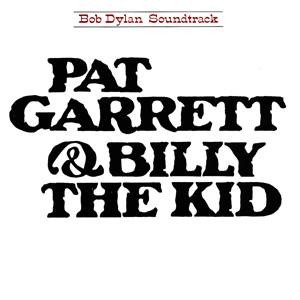
| Album | Pat Garrett & Billy the Kid (1973) |
| Released | 1973 (single) |
| Written By | Bob Dylan |
| Producer | Gordon Carroll |
| Label | Columbia Records |
| Chart Peak | #12 US Billboard Hot 100 |
Table of Contents
- What Is Knockin’ on Heaven’s Door About?
- The Vibe: Genre, Mood, and Search Intent
- Behind the Lyrics: The Story of Knockin’ on Heaven’s Door
- Technical Corner: The Gear Behind Knockin’ on Heaven’s Door
- Legacy and Charts: Why Knockin’ on Heaven’s Door Still Matters
- Listener’s Note: A Personal Take on Knockin’ on Heaven’s Door
- Collector’s Corner: Own a Piece of Rock History
- Frequently Asked Questions About Knockin’ on Heaven’s Door
What Is Knockin on Heaven Door About?
Knockin’ on Heaven’s Door was written from the perspective of a dying lawman, specifically the character of Sheriff Baker in the film Pat Garrett and Billy the Kid, who has been shot and is asking his wife to take off his badge because he can no longer bear to use it.
Dylan wrote the lyric with a directness that transcends its specific cinematic context, turning a scene from a Western into a universal statement about the end of life and the laying down of burdens.
The imagery of knocking on heaven’s door has entered everyday language as a phrase for proximity to death, which speaks to how precisely Dylan captured something fundamental in the human experience with remarkably few words.
The Vibe: Genre, Mood, and Search Intent
Knockin’ on Heaven’s Door moves at a slow, ceremonial pace, its sparse arrangement creating a sense of vast open space around the vocal, like a scene played out against a wide desert sky with no one watching.
- Genre: Folk Rock, Country Rock, Americana
- Mood: Mournful, Accepting, Transcendent
- Tempo: Slow (~60 BPM)
- Best For: Quiet listening, Americana playlists, songs about mortality and acceptance
- Similar To: Neil Young “Heart of Gold”, Cat Stevens “Wild World”, Leonard Cohen “Hallelujah”
- Fans Also Search: Bob Dylan discography, Pat Garrett Billy the Kid film, Knockin on Heavens Door covers
Behind the Lyrics: The Story The Song
Bob Dylan wrote Knockin’ on Heaven’s Door specifically for Sam Peckinpah’s revisionist Western Pat Garrett and Billy the Kid, in which Dylan also appeared as the character Alias.
The film, released in 1973, was a meditation on the end of the frontier and the cost of loyalty in a changing world, themes that Dylan’s song reflected perfectly.
Dylan recorded the track at CBS Studios in Burbank, California in January 1973, completing it quickly with a stripped-down arrangement that suited both the film’s mood and his own instincts.
The song was released as a single in July 1973 and reached number 12 on the US Billboard Hot 100 and number 14 on the UK Singles Chart.
Its straightforward structure and universal lyric made it one of the most covered songs in rock history almost immediately.
The most famous subsequent versions are Eric Clapton’s 1975 recording and Guns N’ Roses’ 1990 remake, the latter of which became a major international hit and introduced Dylan’s song to an entirely new generation.
Technical Corner: The Gear That Made The Song
The recording of Knockin’ on Heaven’s Door is built around a simple three-chord progression played on acoustic guitar, with subtle electric guitar and bass supporting the arrangement without cluttering it.
Roger McGuinn of the Byrds contributed guitar work to the Pat Garrett sessions, and the overall sound reflects the country rock and Americana influence that had been central to Dylan’s music since his move to Nashville in the late 1960s.
Dylan’s vocal on the track is restrained and unadorned, delivered with the kind of plainness that suits a song about acceptance and surrender.
The backup vocals by Donna Weiss and Priscilla Jones add warmth without pushing the arrangement toward anything more than it needs to be.
Producer Gordon Carroll oversaw the film’s soundtrack sessions, and the sparse production approach suited the desolate landscapes of Peckinpah’s film as well as the emotional territory of the song.
The mix places Dylan’s voice slightly forward, with the instruments creating a cushion of sound around it rather than competing for space.
Legacy and Charts:
Knockin’ on Heaven’s Door reached number 12 on the US Billboard Hot 100 in 1973 and has been covered by more artists than almost any other song in rock history.
Eric Clapton recorded a version for his 1975 live album No Reason to Cry, and the song became a staple of his concert performances for years afterward.
Guns N’ Roses recorded the definitive hard rock version for the Days of Thunder soundtrack in 1990, reaching the top five in several countries and introducing the song to an audience that had not yet been born when Dylan wrote it.
The song has appeared in countless films, television programmes, and public ceremonies, including multiple memorial events where its message of peaceful surrender seemed uniquely appropriate.
Rolling Stone ranked Knockin’ on Heaven’s Door among the greatest songs of all time, and its continuing presence in popular culture fifty years after its release demonstrates the enduring power of Dylan’s simplest and most direct writing.
It stands as proof that a song does not need complexity to be profound.
Listener’s Note: A Personal Take on Knockin’ on Heaven’s Door
There are songs you hear for the first time and understand immediately, and Knockin’ on Heaven’s Door is one of them.
Dylan gives you everything in the first verse, the image, the emotion, the meaning, and there is nowhere for the song to go but deeper into itself.
What strikes me most is the courage of the restraint.
A lesser songwriter would have tried to explain the feeling, or dramatise it, or qualify it in some way.
Dylan just says the thing directly and trusts the listener to meet him there.
After fifty years of covers and references and cultural use, the original still sounds like the most honest version of itself.
Watch: Knockin’ on Heaven’s Door
Collector’s Corner: Own a Piece of Rock History
Bob Dylan: Pat Garrett & Billy the Kid (1973)
Own the soundtrack that gave the world Knockin’ on Heaven’s Door. Original Columbia pressings and reissues available.
Frequently Asked Questions
Who wrote Knockin’ on Heaven’s Door?
Knockin’ on Heaven’s Door was written by Bob Dylan for Sam Peckinpah’s 1973 film Pat Garrett and Billy the Kid. Dylan also appeared in the film as the character Alias.
What is Knockin’ on Heaven’s Door about?
The song is written from the perspective of a dying lawman asking his wife to take off his badge. Dylan used this specific cinematic scenario to create a universal meditation on death, acceptance, and the laying down of earthly burdens.
How high did Knockin’ on Heaven’s Door chart?
Knockin’ on Heaven’s Door reached number 12 on the US Billboard Hot 100 and number 14 on the UK Singles Chart in 1973. It has since been covered by dozens of artists, with the Guns N’ Roses version becoming a major international hit in 1990.
What album is Knockin’ on Heaven’s Door on?
Knockin’ on Heaven’s Door appears on the Pat Garrett & Billy the Kid soundtrack album, released on Columbia Records in 1973. The song was written specifically for the Sam Peckinpah film of the same name.
Who has covered Knockin’ on Heaven’s Door?
The most famous covers are by Eric Clapton (1975) and Guns N’ Roses (1990). The Guns N’ Roses version reached the top five in several countries and introduced the song to a new generation. Dozens of other artists have recorded their own versions across multiple genres.
Did Knockin’ on Heaven’s Door appear in a film?
Yes. Knockin’ on Heaven’s Door was written for and first appeared in Sam Peckinpah’s 1973 Western film Pat Garrett and Billy the Kid. It plays over the death scene of Sheriff Baker, the character whose perspective inspires the lyric.
What instruments are on Knockin’ on Heaven’s Door?
The recording features acoustic guitar, electric guitar, bass, and understated percussion, with backing vocals by Donna Weiss and Priscilla Jones. The arrangement is deliberately sparse, creating the open, mournful quality that defines the track.
Why has Knockin’ on Heaven’s Door been covered so many times?
The song’s simple chord progression, universal lyric, and emotional directness make it accessible to artists in virtually any genre. Its subject, the approach of death and the desire for peace, is timeless, and the melody is memorable enough to survive radical reinterpretation.
You Might Also Like
Neil Young: Heart of Gold (1972)
Released a year before Knockin’ on Heaven’s Door, Heart of Gold shares its folk-country simplicity and its meditative quality, making it a natural companion piece for fans of Dylan’s acoustic writing.
Cat Stevens: Wild World (1970)
Like Knockin’ on Heaven’s Door, Wild World demonstrates how a plainly written acoustic song can say something profound and lasting, a model of emotional directness in folk rock songwriting.
Neil Young: Old Man (1972)
Another early 1970s acoustic classic that shares Knockin’ on Heaven’s Door’s gift for finding universal truth in simple, direct language and a minimal arrangement.
Decades on, Knockin’ on Heaven’s Door by Bob Dylan endures as one of the greatest songs in classic rock history, a recording that has outlasted trends and generations to remain as vital and exciting as the day it was made.