

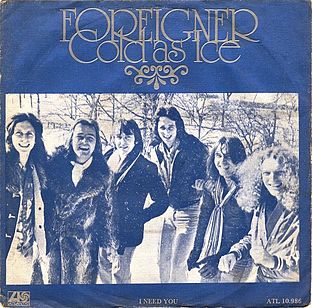
Cold as Ice by Foreigner is a hard rock masterpiece that announced one of the most successful debut albums of 1977.
Affiliate Disclosure: I am an Amazon affiliate and if you purchase through any amazon links on this site i may earn a small commission at no extra charge to you.
Released in June 1977 on Atlantic Records, Cold as Ice reached number 6 on the US Billboard Hot 100.
Written by Mick Jones and Lou Gramm, the song appeared on the band’s self-titled debut album.
Furthermore, the single helped establish Foreigner as one of the defining arena rock acts of the late 1970s.
Few rock songs of the era combine melodic precision with emotional directness quite so effectively.
| Song Title | Cold as Ice |
|---|---|
| Artist | Foreigner |
| Album | Foreigner (1977) |
| Released | June 1977 |
| Genre | Hard Rock, Arena Rock |
| Label | Atlantic Records |
| Writers | Mick Jones, Lou Gramm |
| Producers | John Carter, Gary Lyons |
| Peak Chart | #6 US Billboard Hot 100 / #24 UK |
- What Is the Song About?
- The Vibe: Genre, Mood, and Feel
- Behind the Lyrics
- How It Was Made: The Sound and Production
- Legacy and Charts: Impact and Endurance
- A Listener’s Note
- Watch the Official Video
- Collector’s Corner
- Frequently Asked Questions
What Is the Song About?
Cold as Ice describes a relationship with someone who has chosen ambition and self-interest over emotional connection.
The lyric presents a character so consumed by the pursuit of wealth and status that genuine feeling has been sacrificed entirely.
However, the song is not simply a bitter accusation.
There is a note of warning running through the lyric.
Gramm’s vocal suggests that the person being addressed will eventually pay a price for this emotional coldness.
Notably, the warning is delivered without sentimentality.
The lyric is direct and unsentimental, which gives it lasting impact.
Furthermore, the theme of emotional withdrawal resonated widely with listeners at a time when popular culture was beginning to examine the costs of the decade’s self-focused ethos.
As a result, the song connected beyond the straightforward rock audience and reached listeners who recognized the character being described.
The imagery is sharp and economical throughout.
The Vibe: Genre, Mood, and Feel
Cold as Ice sits firmly in the arena rock tradition that emerged in the mid-1970s.
The keyboard line that opens the track establishes an ominous, glittering atmosphere immediately.
Moreover, the guitar work by Mick Jones provides exactly the right combination of melodic hook and rhythmic drive.
The tempo is steady and purposeful rather than aggressive.
In particular, the chorus carries a sense of inevitability that makes the emotional message more powerful than any louder delivery could achieve.
The mood is cool and controlled, matching the emotional state the lyric describes.
Similarly, Lou Gramm’s vocal performance is restrained in the verses and fully committed in the chorus without ever losing control.
The balance between restraint and release is precisely calculated throughout.
The result is a recording that feels both polished and emotionally genuine at the same time.
Behind the Lyrics
Mick Jones and Lou Gramm wrote Cold as Ice during the sessions for the debut album in 1976.
The pair had developed a strong collaborative process that allowed Jones to build musical frameworks that Gramm could then fill with direct, plainspoken lyrics.
However, the specific emotional scenario in the song drew on observations both writers had made about the social climate of the 1970s.
Material ambition had become a defining force in American culture, and the lyric captured that shift with precision.
Furthermore, the song works as a personal statement and a broader social observation simultaneously.
The character being addressed could be a specific individual or a representative type.
In addition, the warning at the end of the lyric gives the song a moral dimension that elevates it beyond a simple breakup narrative.
Gramm delivers the final lines with enough conviction that they land as genuine counsel rather than empty threat.
Consequently, the lyric has held up well over decades because its emotional logic remains completely intact.
How It Was Made: The Sound and Production
Producers John Carter and Gary Lyons shaped Cold as Ice during recording sessions at Compass Point Studios in Nassau and at Atlantic Studios in New York.
The production philosophy was to let the songs define the sonic approach rather than imposing a formula.
In addition, the keyboard arrangement was built to complement rather than compete with the guitar work.
The result was a layered sound that felt simultaneously accessible and sophisticated.
Additionally, the rhythm section of Dennis Elliott on drums and Ed Gagliardi on bass provided a foundation that was solid without being rigid.
The production team understood that the song’s power came from precision and control rather than from raw volume.
Meanwhile, Al Greenwood’s keyboards were placed prominently in the mix, giving the track its distinctive atmospheric quality.
The recording captures a band that had found its identity immediately and knew exactly how to present it.
Every element of the production serves the song’s emotional purpose without excess.
Legacy and Charts: Impact and Endurance
The single reached number 6 on the US Billboard Hot 100 in 1977 and number 24 on the UK Singles Chart.
It was among the biggest rock hits of that summer and helped drive the debut album to platinum status.
However, chart positions tell only part of the story.
Cold as Ice entered the permanent rotation of classic rock radio almost immediately and has remained there ever since.
Furthermore, the song demonstrated that a new band could arrive fully formed with a signature sound rather than requiring multiple albums to find their footing.
In particular, this debut signaled that arena rock had acquired a new headliner capable of filling the largest venues.
The song has been covered and referenced extensively across popular culture over the following decades.
As a result, it remains one of the most recognizable rock singles of the 1970s for listeners who experienced it on first release and for younger audiences who discovered it through film, television, and radio.
Rolling Stone and other major publications consistently list Foreigner among the most commercially successful rock acts of the era, and this single is central to that reputation.
A Listener’s Note
The keyboard introduction rewards close attention even after many listens.
The way it establishes the emotional temperature of the song before a word is sung is a precise piece of songwriting craft.
Moreover, the transition from verse to chorus contains one of the great melodic lifts in 1970s rock.
The song rewards repeated listening because each element is carefully calibrated to serve the whole.
Watch the Official Video
Watch Foreigner performing Cold as Ice in this official video:
Collector’s Corner
Original Atlantic Records pressings of the Cold as Ice single from 1977 are among the most sought-after Foreigner collectibles.
In particular, US pressings with the original Atlantic label design carry the analog warmth of the original master tape.
Similarly, original vinyl pressings of the debut album Foreigner reward collectors who want to hear the full context of the recording.
You Might Also Like
Cheap Trick’s irresistible hook and Rick Nielsen’s guitar wizardry made this one of the defining power pop singles of the late 1970s, a song that became even bigger in its live Budokan recording.
Rush combined Neil Peart’s philosophical lyric with a gentle acoustic opening that shifts into a powerful statement about the relationship between individual responsibility and social change.
Sweet’s explosive glam rock anthem captured the chaos and energy of the early 1970s concert scene with a kinetic riff and a vocal performance of total commitment.
Frequently Asked Questions
What is Cold as Ice about?
The song describes a person so focused on wealth and self-advancement that genuine emotional connection has been sacrificed. The lyric delivers both an observation and a warning: that the choice to prioritize ambition over feeling will eventually come at a personal cost. Gramm’s vocal performance gives the warning enough conviction that it registers as genuine concern rather than simply a breakup accusation. The emotional directness of the lyric is one of the main reasons the song has retained its power across decades.
Who wrote the song?
Mick Jones and Lou Gramm wrote the song together during the sessions for the Foreigner debut album in 1976. Jones handled the musical framework while Gramm shaped the lyrical content. Their collaborative process produced a series of hit singles throughout the band’s career, with this debut being among their most enduring and widely recognized joint compositions.
What album is the song from?
The song appears on the self-titled debut album Foreigner, released in March 1977 on Atlantic Records. The album was produced by John Carter and Gary Lyons and went on to achieve platinum status in the United States. The debut remains one of the most commercially successful first albums in the history of hard rock, and this single was central to its success.
How did it chart?
The single reached number 6 on the US Billboard Hot 100 in 1977 and peaked at number 24 on the UK Singles Chart. It was one of the biggest rock hits of summer 1977 and helped establish Foreigner as a major commercial force immediately on their debut. The song entered classic rock radio rotation almost instantly and has remained a permanent fixture across several decades of broadcasting.
Who produced the recording?
The debut album was produced by John Carter and Gary Lyons, with recording taking place at Compass Point Studios in Nassau and Atlantic Studios in New York. The production team crafted a sound that was polished and radio-ready without sacrificing the emotional directness of the performances. Their work on the album helped define the sonic template for late-1970s arena rock.
What is the keyboard instrument at the start?
The distinctive opening is played on electric keyboards by Al Greenwood, who was a founding member of Foreigner. Greenwood’s keyboard work gave the band a layered atmospheric quality that distinguished them from the more guitar-driven rock acts of the era. The introduction establishes the emotional temperature of the entire song before Gramm sings a single word, making it one of the most effective opening gestures in 1970s rock.
Why has the song endured so long?
The song endures because the melody is genuinely strong, the lyric addresses a recognizable human situation, and the production has aged well. The emotional theme of someone choosing material advancement over personal connection remains as relevant as it was in 1977. Additionally, the craftsmanship of the arrangement means there is always something to notice on repeated listening. Classic rock radio’s consistent programming of the track over four-plus decades has also kept it in the cultural conversation for listeners across generations.
Cold as Ice is a classic rock song because the melody never grows old and the warning inside the lyric has never stopped being true.