

Rocket Man by Elton John is one of the most perfectly crafted pop rock songs of the 1970s, a meditation on loneliness and alienation set against the backdrop of space travel that reached number 2 in the UK and number 6 on the US Billboard Hot 100 in 1972.
Written by Bernie Taupin and Elton John, the tune transformed the romantic image of the astronaut into something unexpectedly sad, a working man who happens to travel to space but misses his wife, his home, and the ordinary world he has left behind.
Affiliate Disclosure: I am an Amazon affiliate and if you purchase through any amazon links on this site i may earn a small commission at no extra charge to you.
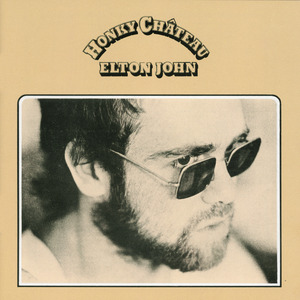
Produced by Gus Dudgeon at Chateau d’Herouville in France, Rocket Man is the centrepiece of the Honky Chateau album and one of the most enduring songs in Elton John’s extraordinary catalogue.
| Song Title | Rocket Man |
| Artist | Elton John |
| Album | Honky Chateau (1972) |
| Released | 1972 (single) |
| Written By | Elton John, Bernie Taupin |
| Producer | Gus Dudgeon |
| Label | DJM Records (UK), Uni Records (US) |
| Chart Peak | #6 US Billboard Hot 100, #2 UK Singles Chart |
Table of Contents
- What Is Rocket Man About?
- The Vibe: Genre, Mood, and Search Intent
- Behind the Lyrics: The Story of Rocket Man
- Technical Corner: The Gear Behind Rocket Man
- Legacy and Charts: Why Rocket Man Still Matters
- Listener’s Note: A Personal Take on Rocket Man
- Collector’s Corner: Own a Piece of Rock History
- Frequently Asked Questions About Rocket Man
What Is The Song About?
It is a song about the loneliness of a man whose extraordinary job has made him a stranger in his own life.
Bernie Taupin’s lyric strips away the glamour of space travel and replaces it with the mundane reality of a long commute, a man who smokes a joint on the way to work, who misses his wife, and who is not sure the life he has chosen was worth the distance it requires.
The phrase ‘and I think it’s gonna be a long, long time’ is one of the great expressions of resigned isolation in rock music, a line that lands differently every time depending on where the listener is in their own life.
The Vibe: Genre, Mood, and Search Intent
The tune floats on Elton John’s piano and a synthesizer wash that genuinely sounds like outer space, building from a spare opening to a full orchestral arrangement without ever losing the intimate quality that makes the lyric land so hard.
- Genre: Pop Rock, Glam Rock, Soft Rock
- Mood: Melancholy, Wistful, Expansive
- Tempo: Midtempo (~126 BPM)
- Best For: Late-night listening, 1970s pop rock playlists, songs about isolation and longing
- Similar To: Elton John “Tiny Dancer”, David Bowie “Space Oddity”, Neil Young “Heart of Gold”
- Fans Also Search: Elton John discography, Bernie Taupin lyrics, Elton John Honky Chateau album
Behind the Lyrics: The Story
Bernie Taupin wrote the lyric after reading a Ray Bradbury short story collection that inspired the idea of treating space travel as routine work rather than heroic adventure.
The image he developed was of an astronaut as a kind of long-haul truck driver, someone who has a job that takes him far from home but who would rather be watching television with his family than floating in space.
Taupin has described it as being about the kind of loneliness that comes from choosing a life of extraordinary achievement at the cost of ordinary connection.
Elton John set the lyric to a melody that builds from introspective verses toward a swelling, almost orchestral chorus, and producer Gus Dudgeon added synthesizer textures and string arrangements that gave the track its distinctive space-age atmosphere.
The song was released in April 1972 and reached number 2 on the UK Singles Chart and number 6 on the US Billboard Hot 100.
It has remained a permanent fixture of Elton John’s live set and is widely regarded as one of the defining songs of his peak creative period.
Technical Corner: The Gear
It was recorded at Chateau d’Herouville, a residential studio in France that Elton John used for both Honky Chateau and Don’t Shoot Me I’m Only the Piano Player.
The track opens with a synthesizer wash programmed by David Hentschel, who worked closely with Gus Dudgeon to create the sense of weightlessness and vast space that the lyric required.
Elton John’s piano plays the melodic foundation, but the instrument is treated with more restraint than was typical for his playing, creating space for the synthesizer textures.
Dee Murray on bass and Nigel Olsson on drums kept the rhythm section light and understated, allowing the song to breathe rather than driving it with the aggression of a rock rhythm section.
Davey Johnstone’s electric guitar enters gradually as the arrangement builds, adding warmth and a sense of forward motion without dominating the texture.
Gus Dudgeon’s string arrangement in the later sections of the song is deliberately romantic and slightly melancholy, matching the emotional register of Taupin’s lyric with precision.
The overall production creates a sound that is simultaneously intimate and cosmic, a balance that very few recordings of any era have managed as successfully.
Legacy and Charts:
Rocket Man reached number 2 on the UK Singles Chart and number 6 on the US Billboard Hot 100 in 1972, becoming one of Elton John’s signature songs and a cornerstone of his live performances.
It appeared on the Honky Chateau album, which reached number 1 in the US, marking Elton John’s commercial breakthrough as an album artist in America.
The song has been covered and referenced by hundreds of artists across multiple genres and has appeared in films, television programmes, and advertising campaigns for over fifty years.
Its cultural impact includes a famous spoof performance by William Shatner at the Science Fiction Film Awards in 1978, which became a cult classic in its own right.
Elton John performed this classic at his farewell Farewell Yellow Brick Road tour concerts, ensuring it will stand as one of the last songs of his touring career.
Rolling Stone ranked it among the greatest songs ever recorded, and its exploration of loneliness through the lens of space travel has influenced songwriters from David Bowie to Coldplay.
Listener’s Note: A Personal Take
This is one of those songs that I return to at different points in my life and find it has changed meaning without changing a single word.
When I was young it was a science fiction song about a man who goes to space.
Later it became a song about the cost of ambition.
Now it sounds like a meditation on how the choices that define us can also isolate us.
That kind of durability does not happen by accident.
Taupin’s lyric and Elton John’s melody were built to accommodate whatever weight the listener needed to put on them, which is why this tune still feels personal after fifty years.
Watch This Classic
Collector’s Corner: Own a Piece of Rock History
Elton John: Honky Chateau (1972)
Own the album that gave the world Rocket Man. Original DJM and Uni Records pressings and remastered editions available.
Frequently Asked Questions
Who wrote Rocket Man?
It was written by Bernie Taupin (lyrics) and Elton John (music). Taupin has said the lyric was inspired by Ray Bradbury’s short stories and the idea of treating space travel as mundane routine work.
What is this tune about?
The song is about the loneliness of an astronaut who treats space travel as a job rather than an adventure. The lyric, written by Bernie Taupin, explores the cost of an extraordinary career in human terms, focusing on isolation, distance from family, and a longing for ordinary life.
How high did the song chart?
It reached number 2 on the UK Singles Chart and number 6 on the US Billboard Hot 100 in 1972. It was released as a single from the Honky Chateau album, which reached number 1 in the United States.
Who produced it?
This classic song was produced by Gus Dudgeon, who worked with Elton John throughout his peak creative period from the late 1960s through the mid-1970s. Dudgeon’s production approach on this track created the distinctive balance between intimate piano and sweeping orchestral space.
What album is Rocket Man on?
It was released in 1972 on Honky Chateau, Elton John’s fifth studio album, recorded at Chateau d’Herouville in France. The album reached number 1 in the United States and is considered one of his finest records.
What inspired Rocket Man?
Bernie Taupin has said the lyric was inspired partly by Ray Bradbury’s short story collection The Illustrated Man and the idea of treating space travel as routine work. The concept of an astronaut as a kind of working-class commuter gave the song its distinctive emotional angle.
Has this song been covered by other artists?
Yes, it has been covered extensively, with notable versions by Kate Bush and various artists in pop and country. It is also famous for William Shatner’s spoken-word performance at the 1978 Science Fiction Film Awards, which became a cult classic.
Is this tune still performed live?
Yes, it has been a permanent fixture of Elton John’s live set throughout his career and was featured prominently in his Farewell Yellow Brick Road tour, which concluded his touring career.
You Might Also Like
Elton John: Tiny Dancer (1971)
Recorded a year before, Tiny Dancer shares its blend of romantic poetry and orchestral rock production, and together the two songs represent Elton John and Bernie Taupin at the peak of their early creative partnership.
David Bowie: Ziggy Stardust (1972)
Released the same year as this timeless classic, Ziggy Stardust shares its interest in science fiction imagery and the mythology of the outsider, making the two songs perfect companions in any exploration of 1972 rock.
Neil Young: Heart of Gold (1972)
Another 1972 classic built on quiet introspection and a searching melody, Heart of Gold shares Rocket Man’s melancholy and its ability to say something universal through a personal and specific image.
Decades on, Rocket Man by Elton John endures as one of the greatest songs in classic rock history, a recording that has outlasted trends and generations to remain as vital and exciting as the day it was made.