

Lola by The Kinks is one of the most charming and culturally significant singles in British rock history.
Affiliate Disclosure: I am an Amazon affiliate and if you purchase through any amazon links on this site i may earn a small commission at no extra charge to you.
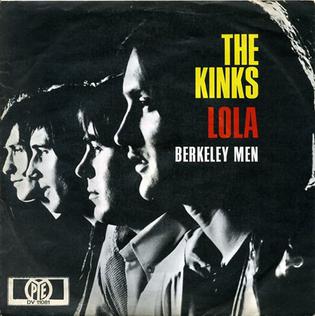
Released on June 5, 1970 on Pye Records, Lola reached number 2 on the UK Singles Chart and number 9 in the United States.
Written and produced by Ray Davies, the single appeared on the album Lola Versus Powerman and the Moneygoround, Part One.
Furthermore, the song came with a behind-the-scenes story as interesting as the song itself.
Indeed, Davies flew back from an American tour specifically to re-record the chorus after the BBC banned it for mentioning a brand name.
| Song Title | Lola |
|---|---|
| Artist | The Kinks |
| Album | Lola Versus Powerman and the Moneygoround, Part One (1970) |
| Released | June 5, 1970 |
| Genre | Rock, Glam Rock |
| Label | Pye Records (UK) / Reprise Records (US) |
| Writer | Ray Davies |
| Producer | Ray Davies |
| Peak Chart | #2 UK / #9 US |
- What Is the Song About?
- The Vibe: Genre, Mood, and Feel
- Behind the Lyrics
- How It Was Made: The Sound and Production
- Legacy and Charts: Impact and Endurance
- A Listener’s Note
- Watch the Official Video
- Collector’s Corner
- Frequently Asked Questions
What Is the Song About?
Lola tells the story of a young man’s encounter with a cross-dressing figure in a London club.
He meets Lola in Soho, dances with her, and gradually realizes that Lola is not quite what she appears to be.
However, the song does not treat this realization as a problem.
The young man is confused but not repelled.
Notably, the song handles a genuinely unusual subject for pop music in 1970 with complete warmth and humor.
Davies wrote the lyric as a story of acceptance and gentle bewilderment rather than shock or judgment.
Furthermore, the recording resolves with the young man accepting the situation and enjoying the encounter.
The final lines show him grateful for the experience rather than troubled by it.
As a result, the recording manages to be progressive in its attitudes while remaining entirely approachable.
The song never lectures or moralizes about the subject it depicts.
The Vibe: Genre, Mood, and Feel
Lola sits within the British rock tradition of the late 1960s and early 1970s.
The arrangement is melodic and mid-tempo, carried primarily by acoustic guitar and Ray Davies’s vocal.
Moreover, the mood throughout is warm and gently comic.
There is no darkness in the performance despite the unconventional subject matter.
In particular, Davies’s vocal delivery is conversational rather than theatrical.
He tells the story the way someone would tell it to a friend.
The electric guitar and rhythm section add energy without changing the intimate character of the recording.
Similarly, the chorus is designed to invite singing along.
The melody of the chorus is simple enough to learn on a first hearing.
The result is a recording that feels both personal and communal at the same time.
Behind the Lyrics
Ray Davies drew on a real encounter for the lyric of Lola.
The central character was inspired by an experience at a nightclub that Davies or someone close to him had in London.
However, the specifics of the origin are less important than the sensitivity Davies brought to the writing.
He could have written it as a comic embarrassment or as a piece of social commentary.
Instead, he wrote it as a love story of sorts.
Furthermore, the song treats its central character with genuine affection rather than condescension.
The character herself is drawn with more warmth than the narrative strictly required.
In addition, the writing reflects Davies’s longstanding interest in British social life in all its variety and strangeness.
Lola captures a particular corner of London that most pop songs ignored entirely.
Consequently, the song has an authenticity that its commercial polish never quite manages to obscure.
How It Was Made: The Sound and Production
Ray Davies produced the recording at Morgan Studios and Pye Studios in London during early 1970.
The recording process was interrupted by a notable controversy.
In addition, the original version of Lola contained the words “Coca-Cola” in the chorus.
The BBC refused to broadcast the recording under its policy against advertising specific commercial products.
Additionally, Davies was on tour in the United States when the ban was announced.
He flew back to London specifically to re-record the chorus, replacing “Coca-Cola” with “cherry cola.”
The revised version was cleared for broadcast and released as planned.
Meanwhile, the rest of the recording remained as originally produced.
The acoustic guitar foundation gives the track a warmth that the electric elements build upon rather than replace.
The final mix captures the lightness and charm that Davies intended from the beginning.
Legacy and Charts: Impact and Endurance
Lola reached number 2 on the UK Singles Chart in 1970 and number 9 on the US Billboard Hot 100.
Those chart positions represent a commercial peak for The Kinks in both markets.
However, the song’s cultural significance extends far beyond its chart performance.
Lola became one of the first mainstream rock songs to address gender and sexuality with openness and warmth.
Furthermore, the song has been cited by artists across multiple generations as an influence on how they approached unconventional subject matter.
In particular, the song demonstrated that a pop single could handle a complex human situation without simplifying or sensationalizing it.
The recording has been covered by dozens of artists and appeared in numerous films and television productions.
As a result, the recording is now recognized as one of the essential British rock singles of the era.
Rolling Stone magazine has consistently ranked it among the greatest songs ever recorded.
The song endures because the qualities Ray Davies brought to it, warmth, humor, and genuine acceptance, never go out of fashion.
A Listener’s Note
The opening acoustic guitar figure of Lola establishes the song’s relaxed, conversational tone immediately.
Davies’s vocal enters without preamble and begins the story directly.
Moreover, the chorus of Lola rewards singing along, which is exactly what Davies designed it to do.
The recording’s simplicity is its greatest technical achievement.
Watch the Official Video
Watch The Kinks performing Lola in this official video:
Collector’s Corner
Original Pye Records pressings of the Lola single from 1970 are sought after by British rock collectors.
In particular, UK first pressings with the original Pye label design in strong condition are the most valued.
Similarly, original vinyl pressings of Lola Versus Powerman give collectors the full context of where the single belongs in The Kinks’ later career.
You Might Also Like
Cat Stevens’s farewell to a departing lover combined genuine tenderness with honest acknowledgment of the world’s difficulty, a song that resonated with every generation facing the end of something they valued.
Derek and the Dominos’ seven-minute declaration of desperate love combined Eric Clapton’s raw guitar with Duane Allman’s slide playing and a piano coda of extraordinary beauty.
Sweet’s combination of Chinnichap’s pop craftsmanship and genuine hard rock energy produced one of the most physically exhilarating glam rock singles, a recording that has never lost its impact.
Frequently Asked Questions
What is Lola about?
Lola tells the story of a young man who meets a cross-dressing figure at a club in Soho, London. He dances with her, falls for her, and gradually realizes she is not quite what she appears to be. Rather than treating this as a problem, the song handles the encounter with warmth and humor. Lola ends with the young man accepting the situation and finding himself glad of the experience, making it one of the earliest mainstream pop songs to treat gender nonconformity with genuine affection.
Why did Ray Davies fly back from America to re-record it?
The original version of Lola mentioned “Coca-Cola” by name in the chorus. The BBC refused to broadcast the song under its policy against advertising specific commercial products on air. Davies was in the middle of a US tour when the ban was announced. He flew back to London, re-recorded the chorus replacing “Coca-Cola” with “cherry cola,” and then returned to America to continue the tour. The revised version was cleared for broadcast and released on schedule.
Who wrote and produced the recording?
Lola was written and produced entirely by Ray Davies. Davies handled the production at Morgan Studios and Pye Studios in London during early 1970. His approach to the production matched the song’s intimate, conversational character, keeping the acoustic guitar foundation prominent and building the fuller arrangement around it rather than on top of it.
How did Lola chart?
Lola reached number 2 on the UK Singles Chart in 1970 and number 9 on the US Billboard Hot 100. The song represented one of The Kinks’ biggest commercial successes in both markets during a period when the band had struggled for mainstream traction. The chart performance helped establish the group’s continued relevance at the start of the 1970s.
Was the song controversial when released?
Lola was controversial primarily because of the BBC’s commercial product ban, not because of its subject matter. The song’s treatment of gender nonconformity was relatively understated, and the warmth of the performance defused potential objections. Most listeners responded to the charm of the storytelling rather than the specifics of what was being described. The song reached the top three in both the UK and US without significant protest.
What album is the song from?
Lola appears on Lola Versus Powerman and the Moneygoround, Part One, released on Pye Records in November 1970. The album is a concept record examining the music industry from the perspective of a new artist navigating its commercial pressures. Lola was the album’s lead single and its most commercially successful moment. The album is now regarded as one of The Kinks’ finest recordings.
How did Lola influence later music?
Lola demonstrated that a mainstream pop single could address gender and sexuality with openness and warmth and still reach a mass audience. Artists in subsequent decades who wanted to write about unconventional subjects found in Lola a model for how to do so without provoking hostility. The song’s combination of humor, warmth, and genuine acceptance became a template for handling sensitive subject matter in popular music without either sensationalizing or sanitizing it.
Why does Lola endure as a classic?
Lola endures because Ray Davies wrote it with qualities that do not age. The warmth toward the central character, the humor of the storytelling, and the invitation to sing along in the chorus are as effective today as they were in 1970. Additionally, Lola has become more rather than less relevant as cultural conversations about gender have broadened. A song that treated its subject with acceptance in 1970 feels prescient rather than dated in the current era.
The song endures because warmth, humor, and acceptance never go out of style.