

Superstition by Stevie Wonder is one of the most irresistible grooves in the history of popular music.
Affiliate Disclosure: I am an Amazon affiliate and if you purchase through any amazon links on this site i may earn a small commission at no extra charge to you.
Released on October 24, 1972 on Tamla Records, Superstition reached number 1 on the US Billboard Hot 100.
Written and produced by Stevie Wonder, the song appeared on the landmark album Talking Book.
Furthermore, Superstition announced a new creative phase for Wonder that would define the most celebrated period of his career.
Indeed, few recordings of the 1970s achieve the same combination of rhythmic drive and emotional conviction.
| Song Title | Superstition |
|---|---|
| Artist | Stevie Wonder |
| Album | Talking Book (1972) |
| Released | October 24, 1972 |
| Genre | Funk, Soul, R&B |
| Label | Tamla (Motown) |
| Writer | Stevie Wonder |
| Producer | Stevie Wonder |
| Peak Chart | #1 US Billboard Hot 100 / #11 UK |
- What Is the Song About?
- The Vibe: Genre, Mood, and Feel
- Behind the Lyrics
- How It Was Made: The Sound and Production
- Legacy and Charts: Impact and Endurance
- A Listener’s Note
- Watch the Official Video
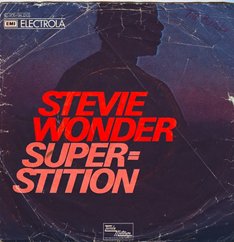
- Collector’s Corner
- Frequently Asked Questions
What Is the Song About?
Superstition addresses the danger of believing in omens and superstitious rituals instead of trusting your own mind.
Wonder wrote the lyric as a warning.
However, the song is not a lecture.
The groove underneath the message is so powerful that the warning arrives as a celebration.
Notably, this tune connects magical thinking to larger patterns of oppression and self-limitation.
Wonder suggests that superstitious belief holds people back from taking control of their circumstances.
Furthermore, the recording addresses this idea without condescension.
The lyric is direct but never unkind.
As a result, it works simultaneously as a funk track and as a piece of social commentary.
Both functions reinforce each other throughout the recording.
The Vibe: Genre, Mood, and Feel
Superstition sits at the intersection of funk, soul, and hard rock.
The clavinet riff at the beginning is one of the most instantly recognizable sounds in popular music.
Moreover, the rhythm has a physical insistence that is almost impossible to resist.
The drums and bass lock together with perfect precision.
In particular, the horn arrangement builds the intensity of the groove rather than simply decorating it.
The mood throughout is forceful and celebratory at the same time.
There is no ambivalence in the performance.
Similarly, the vocal delivery communicates complete conviction from the first line.
Wonder does not question his message.
The result is a recording that makes its argument through pure rhythmic authority rather than logic.
Behind the Lyrics
Wonder wrote it while sitting at a drum kit during a session at Electric Lady Studios in New York.
The groove came first and the lyric followed.
However, the thematic content reflects ideas Wonder had been developing throughout his renegotiation of his Motown contract.
He wanted to make music that engaged seriously with the world rather than simply providing entertainment.
Furthermore, the song carried a message that was relevant to Wonder’s own community.
The lyric spoke directly to patterns of thought he observed around him.
In addition, Superstition was originally offered to guitarist Jeff Beck.
Wonder had worked with Beck and offered him the song as a gesture of collaboration.
However, Wonder released the track first when his single was completed ahead of schedule.
Consequently, the track became one of Wonder’s biggest hits before Beck’s version appeared.
How It Was Made: The Sound and Production
Superstition was written and produced entirely by Stevie Wonder.
Wonder played most of the instruments himself.
In addition, he programmed the distinctive clavinet riff that drives the entire track.
The clavinet is an electric keyboard instrument with a sharp, percussive attack that suits funk perfectly.
Additionally, the drum pattern on Superstition was recorded first and everything else was built around it.
Wonder wanted Superstition to feel as though it originated in the body rather than the mind.
The recording sessions at Electric Lady Studios gave Wonder the creative freedom his earlier Motown work had not allowed.
Meanwhile, the horn parts on Superstition were arranged to land like punches rather than to provide melody.
Motown released it as the lead single from Talking Book in October 1972.
The production philosophy, where rhythm dominates everything else, became a template for funk music throughout the decade.
Legacy and Charts: Impact and Endurance
Superstition reached number 1 on the US Billboard Hot 100 in January 1973.
It reached number 11 on the UK Singles Chart.
However, chart position only partially describes what the recording achieved.
The recording won Grammy Awards for Best Rhythm and Blues Song and Best R&B Vocal Performance in 1974.
Furthermore, the song demonstrated that Stevie Wonder could operate as a completely self-sufficient creative artist.
In particular, this recording proved that writing, performing, and producing your own material could yield both artistic and commercial success simultaneously.
The song has been sampled, covered, and referenced by artists across every genre since its release.
As a result, Superstition is now recognized as one of the foundational recordings of 1970s soul and funk.
Rolling Stone magazine has consistently ranked it among the greatest songs ever recorded.
Superstition remains as immediate and physically compelling today as it was when Wonder first laid down the drum pattern in 1972.
A Listener’s Note
The opening two bars of Superstition contain one of the great rhythmic statements in popular music.
The clavinet enters alone and establishes everything that follows.
Moreover, the song rewards listening at high volume.
The lower frequencies of the arrangement, which can be lost on smaller speakers, give the track its full physical impact.
Watch the Official Video
Watch Stevie Wonder performing Superstition in this official video:
Collector’s Corner
Original Tamla Records pressings of the Superstition single from 1972 are consistently sought after by soul and funk collectors.
In particular, US pressings with the original Tamla label design carry the sonic character of the original analog master.
Similarly, original vinyl pressings of Talking Book reward collectors who want to hear Superstition in the context Stevie Wonder intended.
You Might Also Like
Chicago’s combination of driving rock guitar and precision brass arrangement produced one of the most physically compelling recordings of the early 1970s, a song that never stops feeling urgent.
Ringo Starr’s most successful solo single combined a simple melody with a lyric about loss and memory that reached listeners across generations with its honest simplicity.
Sly Stone’s meditation on the difficulty of keeping a family together combined a minimal groove with a lyric of unusual emotional restraint, becoming one of the defining soul recordings of the early 1970s.
Frequently Asked Questions
What is Superstition about?
Superstition warns against the danger of placing faith in omens and superstitious rituals instead of taking control of your own life. Wonder frames the message as a direct address to someone he cares about. The lyric suggests that superstitious belief is a form of self-limitation, holding people back from trusting their own ability to shape their circumstances. Superstition delivers this message over a funk groove of such physical power that the warning feels like a liberation rather than a lecture.
Who wrote and produced the recording?
The song was written and produced entirely by Stevie Wonder. He also played most of the instruments on the recording, including the clavinet, drums, and keyboards. Superstition was created during the period when Wonder had renegotiated his Motown contract to give himself full creative control, and the recording demonstrates exactly what that freedom allowed him to achieve.
Was it originally written for someone else?
Yes. Wonder originally offered the song to guitarist Jeff Beck, with whom he had collaborated. Beck recorded the song for his album Beck, Bogert and Appice. However, Motown released Wonder’s own version as a single ahead of schedule, meaning Superstition became a major hit under Wonder’s name before Beck’s version appeared. Beck’s recording was later released but could not match the commercial success of the original.
How did Superstition chart?
The single reached number 1 on the US Billboard Hot 100 in January 1973 and peaked at number 11 on the UK Singles Chart. The song won Grammy Awards for Best Rhythm and Blues Song and Best R&B Vocal Performance in 1974. It was one of the best-selling singles of 1972 and 1973 and helped establish Talking Book as a landmark album.
What is the instrument in the opening riff?
The distinctive opening riff of Superstition is played on a clavinet, an electric keyboard instrument that produces a sharp, percussive attack well-suited to funk. Wonder played the clavinet himself throughout the recording. The clavinet sound became closely associated with Wonder’s work during his peak creative period and influenced funk and soul recordings throughout the 1970s.
What album is the song from?
Superstition is the opening track and lead single from Talking Book, Stevie Wonder’s fifteenth studio album, released on Tamla Records in November 1972. Talking Book marked the beginning of Wonder’s most celebrated creative period and is considered one of the essential soul and funk albums of the decade. Superstition’s success as a single helped establish the album as a commercial and critical landmark.
How did the song influence later music?
The recording established a production template that influenced funk and soul music throughout the 1970s and beyond. Wonder’s approach of building everything around a drum pattern and clavinet groove became a model for artists across genres. The recording has been sampled extensively in hip-hop and electronic music. Furthermore, Superstition demonstrated that an artist writing, producing, and performing their own material could achieve complete creative and commercial success without compromise.
Why does Superstition endure as a classic?
Superstition endures because the groove is physically irresistible and the message has not dated. Superstitious thinking remains a force in human behavior, and Wonder’s warning about its consequences is as relevant now as it was in 1972. Additionally, the technical achievement of the recording, with Wonder performing nearly every element himself, continues to impress musicians who understand what it required. The clavinet riff alone is one of the great instrumental moments in popular music.
Superstition is timeless because the groove never tires and the warning never loses its truth.