

The Born to Run song by Bruce Springsteen is one of the most ambitious recordings in rock history.
Affiliate Disclosure: I am an Amazon affiliate and if you purchase through any amazon links on this site i may earn a small commission at no extra charge to you.
Released on August 25, 1975, it became the title track of Springsteen’s third studio album.
The single reached number 23 on the US Billboard Hot 100.
More importantly, it established Springsteen as one of the defining voices of American rock.
Written and produced by Bruce Springsteen and Mike Appel, the Born to Run song took over fourteen months to complete.
Indeed, Springsteen laid down as many as eleven guitar tracks to achieve the right sound.
| Song Title | Born to Run |
|---|---|
| Artist | Bruce Springsteen |
| Album | Born to Run (1975) |
| Released | August 25, 1975 |
| Genre | Rock, Heartland Rock, Baroque Rock |
| Label | Columbia Records |
| Writer | Bruce Springsteen |
| Producer | Bruce Springsteen, Mike Appel |
| Peak Chart | #23 US Billboard Hot 100 |
- What Is the Song About?
- The Vibe: Genre, Mood, and Feel
- Behind the Lyrics
- How It Was Made: The Sound and Production
- Legacy and Charts: Impact and Endurance
- A Listener’s Note
- Watch the Official Video
- Collector’s Corner
- Frequently Asked Questions
What Is The Born to Run Song About?
The song is about escape and the desperate need to transcend the limits of where you come from.
The Born to Run song follows two young people, Wendy and the singer, trying to leave their town behind together.
However, the lyric is more than a simple escape story.
It captures a particular American feeling of being trapped between a life you want and one that keeps closing in.
Springsteen wrote about characters who feel the town as a physical weight on their backs.
Notably, the song never loses its warmth despite that desperation.
The love story at its center gives the urgency somewhere to go.
As a result, the feeling the Born to Run song generates is not just anxiety but also hope.
The open highway is both a real place and a symbol of possibility.
For millions of listeners, the song named something they already felt but had never heard expressed so directly.
The Vibe: Genre, Mood, and Feel
The Born to Run song sits at the intersection of rock, soul, and orchestral pop.
Springsteen drew heavily on Phil Spector’s Wall of Sound production approach.
Furthermore, the song reflects the cinematic ambition of Roy Orbison’s recordings.
The mood is urgent and emotionally generous at the same time.
There is a quality of physical momentum throughout the recording.
Indeed, the drums and guitars push forward without ever letting the listener settle.
Clarence Clemons’s saxophone adds a warmth that prevents the urgency from becoming oppressive.
The result is a sound that feels both enormous and personal.
Listeners often describe the experience of hearing it as a kind of release.
That combination of scale and intimacy is what separates the recording from its many imitators.
Behind the Lyrics
Springsteen conceived this title while touring Tennessee in late 1973.
He began writing on guitar but eventually finished the composition on piano.
Moreover, the piano became the album’s primary instrument throughout.
The lyric borrows vocabulary from 1950s rock and roll, particularly from Chuck Berry and Eddie Cochran.
However, Springsteen filtered that vocabulary through a literary sensibility closer to Bob Dylan.
The characters Wendy and Terry feel like real people rather than rock song archetypes.
Springsteen gave them specific desires and specific fears.
In addition, the closing lines open the song outward from a love story into something approaching a manifesto.
The famous phrase “tramps like us, baby we were born to run” functions as a battle cry.
It connects the personal story to something universal about youth and restlessness.
How It Was Made: The Sound and Production
The recording sessions began in January 1974 at 914 Sound Studios in Blauvelt, New York.
They continued until August 1974, spanning over fourteen months of intense work.
Springsteen laid down as many as eleven guitar tracks for a single moment in the Born to Run song.
Additionally, he used a glockenspiel to add a shimmering texture to the Wall of Sound arrangement.
Producer Mike Appel worked with Springsteen throughout, helping to shape the dense sonic layers.
The original backing track was recorded on May 21, 1974.
Furthermore, Springsteen added lead vocals on June 26, 1974.
The Born to Run song was circulated to progressive rock radio in November 1974, generating anticipation before the album release.
Clarence Clemons recorded his saxophone parts in a single remarkable session.
The final mix captured both the grandeur of the arrangement and the vulnerability of the performance.
Legacy and Charts: Impact and Endurance
The single peaked at number 23 on the US Billboard Hot 100 in 1975.
However, chart position alone does not capture what the Born to Run song achieved.
Music critic Jon Landau famously declared he had seen “the future of rock and roll” after watching Springsteen perform.
That statement helped change the public perception of Springsteen almost overnight.
As a result, Springsteen appeared simultaneously on the covers of Time and Newsweek in October 1975.
The album became one of the best-selling records of 1975.
Furthermore, it established the template for heartland rock that would define much of the following decade.
Artists from Tom Petty to Bob Seger acknowledged its influence on their own work.
In 2004, Rolling Stone magazine ranked the Born to Run song as the 21st greatest tune of all time.
The recording has appeared in films, sporting events, and political campaigns consistently for nearly fifty years.
A Listener’s Note
The opening guitar figure of the Born to Run song is one of the most recognizable sounds in rock music.
Those first few notes create an immediate sense of momentum and scale.
Moreover, the song rewards close listening at every level of volume.
The details of the arrangement, such as the glockenspiel and the layered guitars, become more apparent with familiarity.
Watch the Official Video
Watch Bruce Springsteen performing Born to Run in this official video:
Collector’s Corner
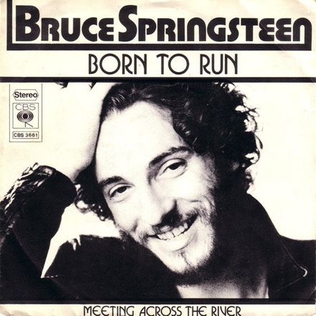
Original pressings of the Born to Run song on Columbia Records are highly sought after.
In particular, copies with the original picture sleeves in strong condition are consistently valuable.
Similarly, early pressings of the album on Columbia carry a warmth that later reissues do not always replicate.
You Might Also Like
Bob Seger’s meditation on adolescent nostalgia became the defining heartland rock anthem, a song about memory told with enough honesty that every generation of listeners finds themselves in it.
Neil Young’s only US number one combined sparse Nashville production with a lyric about searching for authenticity, a song that became the defining statement of the early 1970s singer-songwriter era.
Derek and the Dominos’ seven-minute declaration of desperate love combined Eric Clapton’s raw guitar with Duane Allman’s slide playing and a piano coda of extraordinary beauty.
Frequently Asked Questions
What is the Born to Run song about?
Born to Run is about two young people trying to escape the limitations of their town and build a life on their own terms. The lyric combines a love story with a broader statement about American restlessness, using the open road as a symbol of freedom and possibility. It draws on the tradition of 1950s rock and roll while pushing that vocabulary toward something more literary and emotionally complex.
How long did it take to record?
The recording of Born to Run song took over fourteen months. Sessions began in January 1974 at 914 Sound Studios in Blauvelt, New York, and continued through August 1974. Springsteen laid down as many as eleven guitar tracks for certain passages, reflecting a level of perfectionism that was unusual even by the standards of the time.
Who produced the recording?
Born to Run was produced by Bruce Springsteen and Mike Appel. The production drew heavily on Phil Spector’s Wall of Sound approach, layering multiple guitar tracks, keyboards, and orchestral elements to create a sound of enormous scale. Clarence Clemons’s saxophone was an essential part of the arrangement and gave the recording its emotional warmth.
How did the Born to Run song chart?
The single reached number 23 on the US Billboard Hot 100. However, its impact extended far beyond the chart position. The song helped launch Springsteen onto the covers of both Time and Newsweek in October 1975, a level of media attention that transformed his career almost overnight.
What instruments are used on the Born to Run song?
The recording features multiple guitar tracks, piano, bass, drums, glockenspiel, and Clarence Clemons’s tenor saxophone. Springsteen used piano as the primary compositional instrument throughout the album. The glockenspiel adds a shimmering texture that reinforces the cinematic quality of the Wall of Sound arrangement.
What album is the song from?
This is the title track from Springsteen’s third studio album, released on Columbia Records in August 1975. The album is widely considered one of the essential recordings of the 1970s and established the template for heartland rock that influenced American popular music throughout the following decade.
Why is the Born to Run song so significant?
The song is significant because it achieved something rare: genuine emotional ambition matched by technical execution. It combined the scale of Phil Spector’s Wall of Sound with Springsteen’s literary approach to working-class American experience, demonstrating that rock music could be both enormous and intimate at the same time. Rolling Stone magazine ranked it 21st on its list of the greatest songs of all time.
Why does the song endure as a classic?
Born to Run endures because the feeling it describes, the need to escape and find something better, does not age. Every generation finds its own version of that desperation. Furthermore, the recording’s technical achievement remains remarkable: the Wall of Sound production, the layered guitars, and Clarence Clemons’s saxophone create something that sounds as immediate today as it did in 1975.
The Born to Run song is timeless because it captures something that never stops being true: the feeling of standing at the edge of your life and choosing to move forward anyway.