

Photograph by Ringo Starr is the song that proved the most naturally gifted drummer in rock could carry a number one hit on the strength of his voice alone, a co-write with George Harrison that became Ringo’s greatest commercial achievement as a solo artist.
Affiliate Disclosure: I am an Amazon affiliate and if you purchase through any amazon links on this site i may earn a small commission at no extra charge to you.
Released in September 1973 and taken from the album Ringo, Photograph reached number one on the US Billboard Hot 100 in November 1973, where it stayed for one week, and also topped the charts in Canada and Australia while peaking at number 8 in the UK.
Photograph was produced by Richard Perry at Sunset Sound in Los Angeles during sessions that brought together a remarkable gathering of musicians, making the Photograph recording one of the most star-studded single sessions of the early 1970s.
The emotional directness of Photograph connects with listeners in a way that Ringo’s more comedic material never quite matched, which is why the song remains the definitive statement of his solo career and the one that audiences return to most reliably.
| Song Title | Photograph |
|---|---|
| Artist | Ringo Starr |
| Album | Ringo (1973) |
| Released | September 24, 1973 |
| Genre | Rock, Pop Rock, Soft Rock |
| Label | Apple Records |
| Writers | Ringo Starr, George Harrison |
| Producer | Richard Perry |
| Peak Chart | #1 US Billboard Hot 100, #1 Canada, #1 Australia, #8 UK |
- What Is the Song About?
- The Vibe: Genre, Mood, and Feel
- Behind the Lyrics
- How It Was Made: The Sound and Production
- Legacy and Charts: Impact and Endurance
- A Listener’s Note
- Watch the Official Video
- Collector’s Corner
- Frequently Asked Questions
What Is the Song About?
Photograph is a song about longing for someone who is no longer present, the particular ache of having only an image to hold onto when the person themselves is gone.
The lyric of Photograph frames this absence through the central image of looking at a picture: the photograph is all that remains of the connection, a reminder of something real that can no longer be reached.
There is grief in Photograph, but it is not the sharp grief of sudden loss: it is the slower, more persistent kind that comes from distance or estrangement, the kind that surfaces when you find an old picture and remember what used to be.
What makes Photograph unusual among early 1970s soft rock is the restraint of its emotional expression: the singer does not dramatize the feeling but simply states it, and that understatement makes the Photograph lyric more affecting than a more theatrical treatment would have been.
The person in the Photograph is never described in detail, which is part of what makes the song so universal: any listener who has experienced absence can supply their own version of the face in the Photograph.
Photograph functions as both a specific memory and a general statement about the way images preserve what time takes away, which is one reason it has retained its emotional resonance across generations of listeners.
For Ringo, performing Photograph after George Harrison’s death in 2001 gave the song a new dimension: what had been a love song became an elegy, and the image of the Photograph became a direct reference to the pictures of a friend and creative partner now gone.
The Photograph lyric is one of the most genuinely moving pieces of writing associated with any of the former Beatles, a concise and honest expression of something most people have felt but few have captured so precisely.
The Vibe: Genre, Mood, and Feel
The recording sits in a space between rock and soft pop, a song with enough warmth and melody to reach mainstream pop listeners while retaining the weight and directness that makes it feel like something more than a commercial product.
The mood is melancholic but not defeated: there is acceptance in the performance, the sense that the person singing has lived with this absence long enough to have found a way to carry it.
Richard Perry’s production gives the track a lush, carefully arranged sound that was characteristic of the early 1970s: strings, layered guitars, and the kind of sonic warmth that made records of this period feel genuinely comforting even when the subject matter was sad.
Ringo’s voice is an unlikely instrument for this kind of emotional ballad, rougher and less conventionally beautiful than the voices typically associated with soft rock, and it is precisely that roughness that makes Photograph work: the song sounds lived-in rather than performed.
The arrangement is unhurried, allowing each section to settle before moving forward, which gives the listener time to absorb the lyric and feel its weight rather than being rushed past it.
The guitar work adds texture without ever competing with the vocal, maintaining a supporting role that keeps the focus where it needs to be: on the feeling that the lyric is trying to communicate.
For listeners encountering Photograph for the first time through classic rock radio, the immediate impression is often the quality of the melody: it is one of those songs that lodges itself in the memory on first hearing and does not let go.
Behind the Lyrics
Photograph was co-written by Ringo Starr and George Harrison during a period when both men were navigating the aftermath of the Beatles’ dissolution and establishing themselves as solo artists of genuine substance.
Harrison is generally credited with contributing substantially to the lyric, and his influence is visible in the song’s restraint and precision: the same quality of understatement that marks his own best solo work appears in the Photograph writing.
The central image of Photograph, the act of looking at a picture of someone you can no longer reach, draws on a universal experience while giving it specificity through the particular way the lyric frames the feeling.
Writing the song together in the context of what both men had been through with the Beatles gave the song an additional layer of meaning that neither would have stated explicitly: the pictures they each carried of that era were also images of something irretrievably past.
The lyric avoids sentimentality not by being cold but by being precise: it says exactly what it means, uses no unnecessary imagery, and trusts that the feeling it is describing is recognizable enough not to require elaboration.
For a song about absence, Photograph is notably present-tense in its language: the singer is looking at the image now, feeling the absence now, making the experience immediate rather than historical and the lyric feel live rather than recollected.
The economy of the writing is one of the reasons Photograph has held up so well: a more elaborate treatment of the same subject would have dated faster, while the simplicity of the lyric keeps it accessible to each new generation that encounters it.
What Harrison and Starr created together in Photograph was something neither had fully achieved alone: a song that was simultaneously personal and universal, specific in its image and open in its emotional invitation to the listener.
How It Was Made: The Sound and Production
Photograph was recorded during the sessions for the Ringo album at Sunset Sound in Los Angeles in 1973, with Richard Perry presiding over a production that brought together an astonishing range of talent.
The sessions attracted contributions from all three other former Beatles: John Lennon, Paul McCartney, and George Harrison each appeared on different tracks, though Harrison was most prominent among the contributors.
The instrumental lineup included musicians who had worked extensively with both the Beatles and the broader rock community of the early 1970s, and the warmth of the performances reflects the relaxed, collaborative spirit of the sessions.
Perry’s production approach was to create a sound that was rich without being cluttered, layering the arrangement carefully so that each element contributed to the overall warmth without obscuring the vocal or the core emotional content of the Photograph lyric.
The string arrangement on Photograph gives the track its particular emotional softness, providing a cushion of sound beneath Ringo’s vocal that amplifies the feeling of vulnerability without sentimentalizing it.
The guitar work throughout the recording is precise and restrained, providing melodic interest and textural support while maintaining the focus on Ringo’s voice as the emotional center of the performance.
Perry had already established himself as one of the most reliable hit producers in rock by the time of the sessions, and his instinct for what a song needed to reach the broadest possible audience is evident in the commercial polish of the final recording.
The result is a record that sounds as carefully made as any pop production of its era while retaining enough warmth and human texture to feel personal rather than manufactured, which is the rare quality that gives Photograph its enduring appeal.
Legacy and Charts: Impact and Endurance
Photograph reached number one on the US Billboard Hot 100 in November 1973, giving Ringo his only American number one single and confirming his status as a genuine solo star rather than simply a former Beatle trading on nostalgia.
The chart performance was replicated in Canada and Australia, where it also topped the charts, and the UK peak of number 8 added to a global commercial success that was remarkable for any artist but particularly significant for a drummer making his way as a frontman.
The success of Photograph opened a door for Ringo that few former members of massively successful bands had been able to walk through: the ability to be taken seriously on his own terms, defined by a new song rather than by the group that preceded it.
Photograph has remained a fixture on classic rock radio since its release, one of those tracks whose combination of melodic strength and emotional directness ensures it never falls out of rotation regardless of how many decades pass.
The personal dimension that the song acquired following George Harrison’s death in 2001 gave the song a second life in popular consciousness, with Ringo’s performances of it in subsequent years carrying an additional weight that transformed the recording’s meaning for many listeners.
For anyone assembling a profile of the solo careers of the former Beatles, Photograph is an essential entry: the track that makes the case most clearly that Ringo was more than a supporting player, that his musical instincts extended beyond the drum kit into genuine songcraft.
Its influence on subsequent soft rock and adult contemporary music was subtle but real, demonstrating that a melancholic ballad built around a simple central image and delivered with understatement could achieve both commercial success and emotional longevity.
Photograph continues to appear in films, television programmes, and retrospectives about the early 1970s rock era, each appearance introducing it to new listeners who then discover it has been part of the classic rock landscape for their entire lives without their having registered it consciously.
A Listener’s Note
First-time listeners are often struck by how accessible Photograph is: it demands very little, offers immediate melody, and communicates its emotional content without requiring any particular knowledge of Ringo Starr or the Beatles.
The song rewards return listening because the arrangement reveals more with familiarity: the precision of Perry’s production, the restraint of the guitar work, and the careful placement of the strings all become more apparent with each hearing.
What keeps Photograph in regular rotation after five decades is the combination of a genuinely memorable melody, a lyric that captures a universal feeling with complete accuracy, and a performance that makes the whole thing feel personal rather than calculated.
The recording is exactly as long as it needs to be, making its point completely and stepping aside without overstaying its welcome.
Watch the Official Video
Watch Ringo Starr performing Photograph in this official video:
Collector’s Corner
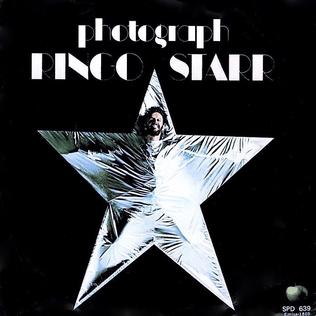
Original pressings of the Photograph single on Apple Records, the label founded by the Beatles, are the primary collector’s item for fans of the recording in its physical format.
The Apple label pressing with its distinctive apple logo on both sides is particularly sought after by Beatles-related collectors, who value it as part of the extended Apple Records discography.
International pressings on various national licensee labels, and the UK Apple pressing differs in both sleeve design and label printing from the American version, making both territories interesting to completist collectors.
Original copies of the Ringo album on Apple Records, which provides the full context in which Photograph was originally released, are also valued by collectors, particularly pressings with original inner sleeves and inserts intact.
You Might Also Like
Paul McCartney’s live recording of this song, originally written for Linda McCartney, became one of the defining post-Beatles solo moments of the decade, demonstrating the full emotional range of his songwriting.
Badfinger’s most successful single, produced by George Harrison, stands as one of the most emotionally transparent recordings to emerge from the Apple Records era and from the Lennon-McCartney shadow.
Joe Cocker’s definitive recording of this Billy Preston composition reached number 5 in the US and remains the most direct and emotionally honest expression of admiration in his entire catalog.
Frequently Asked Questions
What is Photograph about?
Photograph is about the longing that comes from having only an image of someone who is no longer present, the particular kind of absence where a picture is all that remains of a real connection. The lyric uses the act of looking at a picture as a way to express the feeling of missing someone deeply.
Who wrote Photograph?
Photograph was co-written by Ringo Starr and George Harrison, two former Beatles who collaborated on the song during the sessions for the Ringo album in 1973. Harrison is credited with contributing substantially to the lyric, and his characteristic restraint and precision are visible throughout the writing.
Who produced Photograph?
Photograph was produced by Richard Perry, who oversaw the Ringo album sessions at Sunset Sound in Los Angeles. Perry’s production gave the recording its characteristic warmth and commercial polish while retaining the emotional intimacy that the Photograph lyric required.
How did Photograph perform on the charts?
Photograph reached number one on the US Billboard Hot 100 in November 1973, staying at the top for one week. It also reached number one in Canada and Australia, and peaked at number 8 in the UK, making it Ringo Starr’s most successful solo single in terms of chart performance.
What album is Photograph from?
Photograph appears on Ringo, Ringo Starr’s third studio solo album, released in November 1973 on Apple Records. The album was notable for featuring contributions from all three other former Beatles on various tracks, making the Ringo sessions an informal and partial Beatles reunion.
Did George Harrison play on Photograph?
George Harrison co-wrote Photograph and contributed to its recording sessions. As co-author of the song, his involvement with the Photograph project was the most substantial of any former Beatle on the album, and his influence on the lyric’s restrained, precise quality is clearly audible.
Has the meaning of Photograph changed over time?
The meaning of Photograph deepened considerably after George Harrison’s death in November 2001. When Ringo performs Photograph in concert, what began as a love song about romantic longing became an elegy for his closest friend and creative partner, adding a layer of meaning to the Photograph lyric that was not part of its original context.
Why does Photograph endure as a classic?
Photograph endures because it captures a universal experience of longing and loss with complete emotional honesty and communicates it through a melody that is immediately accessible and impossible to forget. The combination of a simple, precise lyric, a memorable tune, and a genuinely felt performance makes Photograph impossible to improve upon or replace.
Photograph endures as the defining moment of Ringo Starr’s solo career not because it is the most technically accomplished recording associated with him, but because it is the most honest: a song about what images are actually for, which is holding onto what time and distance have taken away.