

You Are So Beautiful by Joe Cocker is the recording that gave the world’s most heartfelt tribute to human beauty a voice capable of matching its emotional scale, turning a song written by Billy Preston and Bruce Fisher into the defining moment of Cocker’s career.
Affiliate Disclosure: I am an Amazon affiliate and if you purchase through any amazon links on this site i may earn a small commission at no extra charge to you.
Released in 1974 on the album I Can Stand a Little Rain and as a single in early 1975, the song reached number 5 on the US Billboard Hot 100 and number 4 in Canada, becoming the highest-charting solo hit of Cocker’s career.
Recorded in 1973 at The Village Recorder in Los Angeles with Jim Price as producer, the recording captures something almost impossibly simple: one voice, an unhurried arrangement, and three minutes of complete sincerity.
The song endures because it is genuinely one of the most direct expressions of adoration in popular music, and Cocker’s vocal performance gives those feelings a weight and credibility that makes it feel earned rather than sentimental.
| Song Title | You Are So Beautiful |
|---|---|
| Artist | Joe Cocker |
| Album | I Can Stand a Little Rain (1974) |
| Released | 1974 (album); 1975 (single) |
| Genre | Soul, Soft Rock, AOR |
| Label | A&M Records |
| Writers | Billy Preston, Bruce Fisher |
| Producer | Jim Price |
| Peak Chart | #5 US Billboard Hot 100, #4 Canada |
- What Is the Song About?
- The Vibe: Genre, Mood, and Feel
- Behind the Lyrics
- How It Was Made: The Sound and Production
- Legacy and Charts: Impact and Endurance
- A Listener’s Note
- Watch the Official Video
- Collector’s Corner
- Frequently Asked Questions
What Is the Song About?
The song is one of the most uncomplicated love songs in popular music: it says exactly what it means, which is that the person being addressed is beautiful beyond adequate description, and that this beauty inspires a feeling of deep gratitude.
The lyric does not build a story or develop a narrative: it exists entirely in the present tense of the feeling, the immediate experience of looking at someone and being overwhelmed by what you see.
The phrase “You Are So Beautiful to me” recurs throughout the song with slight variations, and each repetition adds emphasis rather than diminishing through familiarity, because Cocker’s delivery makes every instance feel fresh and genuine.
The line that reaches most directly into the emotional content is “you’re everything I hoped for,” which goes beyond physical beauty to encompass the whole of what someone means to another person: everything they wanted, everything they needed.
The writing does not try to be clever or surprising: it commits entirely to its one idea and executes it with complete sincerity, which is both its most vulnerable quality and its greatest strength.
For listeners who have been in the state the song describes, the experience of hearing it is one of recognition: it captures a feeling that is genuinely difficult to express and makes it sound both universal and personal simultaneously.
The song works equally as a romantic expression and as something more general: a statement of gratitude for the presence of someone who matters, which is why it appears at weddings, funerals, and in contexts where people need to say something true without finding words of their own.
The recording earns its place in the standard repertoire not through musical complexity but through emotional honesty, the rarest and most valuable quality in popular song.
The Vibe: Genre, Mood, and Feel
The track sits at the intersection of soul and soft rock, a song that could only have been recorded in the 1970s, when the production aesthetic allowed this kind of emotional directness without tipping into the irony that a later era might have imposed.
The mood is one of reverence: the arrangement gives the lyric room to breathe, never crowding Cocker’s vocal with elements that might distract from the feeling he is communicating.
The tempo is deliberate and unhurried, which is exactly right for a song whose subject demands the listener’s full attention: rushing it would destroy what makes it work.
Jim Price’s production creates a warm, enveloping sound that supports rather than competes with the vocal, using strings and subtle instrumental layers to add emotional depth without overwhelming the essential simplicity of the performance.
The overall feel is one of complete emotional exposure: Cocker holds nothing back, and the arrangement trusts that vulnerability to carry the song without any additional reinforcement.
For listeners who associate Joe Cocker primarily with his more intense, ragged performances, the relative restraint of this recording can be surprising: it demonstrates a different dimension of his musicianship, the ability to be fully present in a song without dominating it.
The song occupies the rare position of being genuinely moving without being manipulative, achieving its emotional effect through honesty rather than through calculated sentimental devices.
Behind the Lyrics
You Are So Beautiful was written by Billy Preston and Bruce Fisher, with some accounts crediting Dennis Wilson of the Beach Boys with contributing to the lyric, though Wilson was never officially credited.
Preston reportedly wrote the song during a period of intense personal and spiritual feeling, and the lyric reflects that origin: it has the quality of something spoken from a state of genuine overflow rather than constructed as a professional piece of songwriting.
When Cocker chose it for I Can Stand a Little Rain, he was selecting a song that matched the emotional register of everything he did best: direct, unguarded, completely committed to the feeling being expressed.
The decision to record it relatively simply, without the more elaborate production that might have been applied to a potential hit single, reflects an understanding of what the song needed: it needed to be left alone enough that the vocal could do all the necessary work.
The recording was not released as a single immediately: it appeared first on the album in 1974 and became a single only in early 1975, by which point the album had built enough of an audience that the song’s potential was clear.
The lyric achieves something genuinely difficult: it says “you are beautiful” in a way that feels specific and personal rather than generic, because the performance gives the words a texture that generic sentiment cannot replicate.
Preston’s gift as a writer was for distilling large feelings into the simplest possible language, and this song is the clearest demonstration of that quality: three words that, delivered with complete conviction, can carry the weight of an entire relationship.
For Cocker, the song became the vehicle through which audiences who had known him through his more intense work encountered a completely different and equally authentic side of his artistry.
How It Was Made: The Sound and Production
The recording was made at The Village Recorder in Los Angeles in 1973, with Jim Price serving as producer for the sessions that became I Can Stand a Little Rain.
Price had worked as a session musician and arranger before moving into production, and his background informed the approach he took with the session: the arrangement is carefully crafted to seem effortless, each element chosen to support the vocal without calling attention to itself.
The string arrangement is one of the most important production decisions on the track: it adds emotional depth and warmth without becoming saccharine, maintaining the directness that the lyric demands.
Cocker’s vocal was recorded in a way that captured the natural quality of his voice without over-processing it, preserving the graininess and human imperfection that makes his performances so emotionally affecting.
The piano work contributes a restrained, hymn-like quality that suits the reverent emotional character of the performance, grounding the arrangement in something solid beneath the strings and vocal.
The production creates a sense of space around the vocal that allows each word to land with its full weight, never filling in the gaps where silence might otherwise let the listener absorb what they are hearing.
Price’s instinct throughout the session was to serve the song and the performance rather than to impose a producer’s identity on the recording, a discipline that produced one of the most emotionally transparent performances of the decade.
The result sounds exactly like what it is: a genuine performance captured faithfully, which is the highest compliment you can pay to any production.
Legacy and Charts: Impact and Endurance
The single reached number 5 on the US Billboard Hot 100 in the spring of 1975, making it the highest-charting solo recording of Joe Cocker’s entire career and confirming his status as one of the most powerful interpreters of popular song working in any genre.
The release reached number 4 in Canada and performed well in several European markets, establishing it as an international success that crossed the genre boundaries between soul, soft rock, and adult contemporary.
The song has been covered by an extraordinary range of artists in the decades since Cocker’s recording, from acts working in soul and R&B to country performers and pop artists, each drawn to it by the combination of simplicity and emotional depth.
The recording has appeared in films, television programmes, and advertising consistently since its release, each new context confirming its status as a piece of music that communicates reliably across different audiences and settings.
For Joe Cocker, the commercial success was a turning point that gave him a new relationship with mainstream audiences, demonstrating that the intensity of his live performances and more aggressive recordings coexisted with the capacity for complete emotional openness.
The song appears in virtually every survey of the most beloved romantic songs in pop music history, and it continues to be requested more than almost any other ballad at events where people want music that expresses genuine feeling without complications.
The recording has outlasted most of the music released in its era not because it is technically sophisticated but because it is genuinely true: it captures a real human feeling with complete accuracy and delivers it in a form that anyone can receive.
Cocker’s version effectively closed the song to further definitive recording: it is difficult to imagine how any interpretation could add to or improve upon what he achieved in those three minutes at The Village Recorder.
A Listener’s Note
First-time listeners often find themselves surprised by how directly the song affects them: it bypasses the usual defenses and lands immediately, without preamble or qualification.
The restraint of the arrangement becomes more apparent with repeated listening: the more you hear it, the more you notice how much is not there, how much space Price left around Cocker’s vocal to allow the words room to work.
What keeps the recording in circulation across decades is its combination of simplicity and emotional depth, the sense that everything about it is exactly what it needs to be and nothing more.
The song asks nothing of the listener except attention, and in return it offers one of the most complete expressions of admiration and gratitude in the entire popular music catalog.
Watch the Official Video
Watch Joe Cocker performing You Are So Beautiful in this official video:
Collector’s Corner
Original pressings of the single on A&M Records are the primary collector’s items for fans of the recording in its original physical format, with clean copies of the 7-inch particularly sought after.
The original A&M pressing of I Can Stand a Little Rain, the album on which the song first appeared, is valued by collectors who prefer the full album context and the original artwork and liner notes.
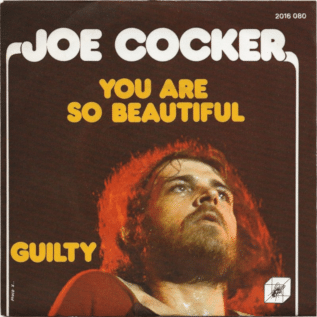
International single pressings on various A&M national labels carry different sleeve designs and in some cases different B-sides, making them of interest to completist collectors building a full picture of how the song was released around the world.
Promotional copies marked “DJ Copy” or “Not for Sale” are particularly prized, as these were the copies distributed to radio stations that helped build the song’s chart success.
You Might Also Like
Nazareth’s recording of this Boudleaux Bryant song transformed it into one of the most powerful rock ballads of the 1970s, topping the charts in Norway for 14 weeks and reaching number 8 in the US.
Bad Company’s second US top-ten hit demonstrated that the band could deliver a slow-burn ballad with the same authority as their harder rock material, built on Paul Rodgers’s unparalleled vocal control.
Peter Frampton’s live recording from Frampton Comes Alive introduced the talk box guitar effect to millions of listeners and became one of the best-selling live albums in rock history.
Frequently Asked Questions
What is the song about?
You Are So Beautiful is a direct expression of adoration, a song that tells the person being addressed they are beautiful beyond description and that their beauty inspires deep gratitude. It is one of the most uncomplicated and emotionally honest love songs in popular music.
Who wrote the song?
You Are So Beautiful was written by Billy Preston and Bruce Fisher, with some accounts suggesting Dennis Wilson of the Beach Boys contributed to the lyric, though Wilson was never officially credited. Preston reportedly wrote the song during a period of intense personal and spiritual feeling.
Who produced the recording?
You Are So Beautiful was produced by Jim Price, who recorded the sessions at The Village Recorder in Los Angeles in 1973. Price’s production approach was to serve the song and Cocker’s vocal rather than impose a producer’s identity on the recording.
How did the song perform on the charts?
You Are So Beautiful reached number 5 on the US Billboard Hot 100 in spring 1975, making it the highest-charting solo single of Joe Cocker’s career. It also reached number 4 in Canada and performed well in several European markets.
What album is the recording from?
You Are So Beautiful appears on I Can Stand a Little Rain, Joe Cocker’s fifth studio album, released in 1974 on A&M Records. The song appeared first on the album before being released as a single in early 1975.
Did Dennis Wilson co-write the lyrics?
Dennis Wilson of the Beach Boys is sometimes credited informally with contributing to the lyrics of You Are So Beautiful, but the official writing credit belongs to Billy Preston and Bruce Fisher. Wilson was present during some of the song’s development but was never given an official co-writing credit.
What makes Joe Cocker’s vocal on this song so distinctive?
Joe Cocker’s vocal on this recording is distinctive because of the raw emotional honesty he brings to the performance, the combination of power and vulnerability that makes every phrase sound genuinely felt rather than performed. His natural graininess and the unhurried commitment of his delivery give the simple lyric a weight it could not carry with a more polished voice.
Why does the song endure as a classic?
You Are So Beautiful endures because it captures one of the most universal human feelings with complete accuracy and delivers it through a vocal performance that makes the emotion feel immediate and real rather than recorded and packaged. The combination of simplicity, sincerity, and a voice uniquely suited to the material makes it impossible to replace or improve upon.
You Are So Beautiful endures not because it is complicated or surprising but because it is true, a recording that captures one of the simplest and most important human feelings and delivers it with a sincerity that time has not diminished.