

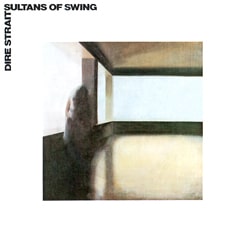
Sultans of Swing by Dire Straits is one of the most distinctive debut singles in rock history, a track whose fingerpicked guitar riff, narrative lyric, and understated production introduced Mark Knopfler to the world as a guitarist and songwriter of extraordinary originality.
Affiliate Disclosure: I am an Amazon affiliate and if you purchase through any amazon links on this site i may earn a small commission at no extra charge to you.
Written after Knopfler watched a jazz band play to an almost empty pub in Deptford, London on a rainy night, Sultans of Swing was recorded at Basing Street Studios in February 1978 and produced by Muff Winwood.
The song was first brought to public attention by DJ Charlie Gillett, who played a demo on his BBC Radio London show “Honky Tonk” in 1977, generating enough listener interest to secure the band a record deal with Vertigo Records.
The track reached #8 on the UK Singles Chart and #4 on the US Billboard Hot 100, and its extended guitar solo, played on Knopfler’s 1961 Fender Stratocaster without a plectrum, remains one of the most celebrated in classic rock.
The Sultans of Swing recording established Dire Straits as one of the most important new bands of the late 1970s and demonstrated that rock guitar could be both technically sophisticated and emotionally restrained, entirely counter to the prevailing trends of the era.
| Song Title | Sultans of Swing |
| Artist | Dire Straits |
| Album | Dire Straits (1978) |
| Released | May 1978 (UK), January 1979 (US) |
| Written By | Mark Knopfler |
| Producer | Muff Winwood |
| Label | Vertigo Records (UK), Warner Bros. Records (US) |
| Chart Peak | #8 UK Singles Chart, #4 US Billboard Hot 100 |
What Is the Song About?
Sultans of Swing is a song about a group of jazz musicians playing to a near-empty pub on a rainy night in south London, performing with complete commitment and musicianly pride regardless of the size or enthusiasm of the audience.
Knopfler wrote the lyric after watching a band called the Sultans of Swing perform in a Deptford pub where only a handful of people were present, and what struck him was the contrast between the quality of the playing and the indifference of the audience.
The song celebrates the idea of musical dedication for its own sake, the idea that real musicians play because they must, because the music demands it, regardless of commercial recognition or audience response.
The narrator moves through the scene with a documentary eye, observing the musicians, the handful of listeners, the weather outside, and the collision of different musical worlds in one cramped London pub, before delivering the closing tribute to the band’s complete, unselfconscious commitment to their craft.
The Vibe: Genre, Mood, and Search Intent
The recording opens with Knopfler’s clean-toned fingerpicked guitar riff, instantly recognisable and immediately different from the power-chord rock and punk that dominated British radio in 1978.
The arrangement is built around Knopfler’s guitar work throughout, with Pick Withers‘s restrained drumming and John Illsley‘s bass providing support without competing for attention.
- Genre: Classic Rock, Pub Rock, Roots Rock
- Mood: Observational, Understated, Celebratory
- Tempo: Mid-tempo rock (~120 BPM)
- Best For: Classic rock playlists, guitar enthusiasts, 1970s rock collections
- Similar To: Rod Stewart “Maggie May”, Eagles “Hotel California” (long guitar solo)
- Fans Also Search: Mark Knopfler guitar style, Dire Straits debut album, 1961 Fender Stratocaster
Behind the Lyrics: The Song’s Story
Knopfler has described the evening in the Deptford pub as one of those moments of creative clarity where the subject matter arrived fully formed: the jazz band, the empty venue, the rain, and the musicians’ complete indifference to the commercial realities of their situation.
The title Sultans of Swing was the actual name of the band he watched that night, a cheerful, slightly grandiose self-description that the lyric both honours and gently satirises.
According to the Wikipedia entry on the song, the song was originally recorded as a demo in 1977 and played by Charlie Gillett on BBC Radio London before the band had a record deal, generating immediate listener interest and BBC session invitations.
The decision to record the studio version in a single session at Basing Street Studios gave the final recording the same spontaneous quality as the demo that had attracted attention: Muff Winwood’s production approach preserved rather than polished the raw energy of the band’s live performance.
For listeners exploring the roots of British pub rock and its influence on the sound of the late 1970s, the track belongs alongside recordings by Dr. Feelgood and Brinsley Schwarz as one of the definitive statements of the genre’s values.
Technical Corner: Gear and Production
Knopfler’s choice to play without a plectrum, using his fingers directly on the strings, gives his guitar sound a warmth and attack that is immediately distinguishable from the harder-edged tone of pick-playing, and it became the sonic signature of the Dire Straits sound.
The 1961 Fender Stratocaster he used for the recording has become one of the most celebrated guitars in rock history, its aged pickups and worn fretboard contributing to the distinctive mid-range richness of his tone throughout the track.
David Knopfler‘s rhythm guitar work provides the harmonic foundation without cluttering the arrangement, leaving space for his brother’s lead lines to breathe and develop across the song’s nearly six-minute running time.
Muff Winwood’s production decision to avoid any significant reverb or effects on the guitar tracks, recording them essentially dry, gives the finished mix a directness and intimacy that suits the pub-scene narrative perfectly.
The extended guitar solo that closes the track was recorded in the studio without prior arrangement: Knopfler improvised it in the moment, and the spontaneous quality of the playing is audible in every phrase.
Legacy and Charts: Impact and Endurance
Sultans of Swing reached #8 on the UK Singles Chart and #4 on the US Billboard Hot 100 in 1979, making it one of the most successful debut singles by a British rock band of the era and establishing Dire Straits as an international act almost immediately.
The track’s success was particularly notable given that it offered almost everything that late-1970s commercial radio was not: understated production, a jazz-referencing lyric, fingerpicked guitar rather than power chords, and a running time nearly double the standard radio edit length.
Knopfler’s guitar playing on the recording influenced a generation of guitarists who found in his approach an alternative to the dominant blues-rock and heavy metal styles of the period, and the fingerpicking technique he demonstrated has been studied and replicated by players worldwide.
The Sultans of Swing recording has appeared consistently on “greatest rock songs” and “greatest guitar tracks” lists across multiple decades, and its reputation has grown rather than diminished with the passage of time.
It stands as one of the most assured debut recordings in the history of rock, a track that arrived fully formed and has never needed reinterpretation or reissue to maintain its place in the canon.
Listener’s Note: A Personal Take
The opening guitar riff is one of those moments in popular music that announces a new and fully realised artistic voice: there is nothing tentative about the playing, and from the first note it is clear that something genuinely different is happening.
Knopfler’s vocal delivery matches the guitar in its restraint: he sings the lyric conversationally, without drama or affectation, and the understatement makes the final tribute to the musicians, “and the Sultans, yeah the Sultans play Creole”, land with unexpected emotional weight.
The extended guitar solo is one of the great moments in rock guitar, not because of its technical difficulty but because of its melodic intelligence: every phrase says something, develops something, and resolves something, with no wasteful exhibitionism.
The production’s refusal to glamourise or inflate the material is itself a creative choice of considerable sophistication: by keeping everything understated, Muff Winwood and Knopfler created a recording that trusts the listener to hear what is actually there rather than being told how to respond.
It is a record that improves with every listen because its rewards are entirely in the details, a guitar phrase here, a drum fill there, a vocal inflection that captures exactly the right tone of affectionate observation.
Watch: The Official Music Video
Watch Dire Straits performing the song in this official video:
Collector’s Corner: Own a Piece of Rock History
Dire Straits: Dire Straits (1978)
Own the landmark debut album that launched one of the most distinctive rock careers of the late 1970s and 1980s.
Original Vertigo Records pressings, remastered editions, and vinyl available.
Frequently Asked Questions
What is Sultans of Swing about?
The song is about a jazz band playing to a nearly empty pub in south London on a rainy night. Knopfler wrote it after watching a real group called the Sultans of Swing perform with complete dedication regardless of the size of the audience, and the lyric celebrates musical commitment for its own sake.
Who wrote the song?
The song was written solely by Mark Knopfler. He composed it after an evening in a Deptford pub watching a jazz band play to a nearly empty room, and the lyric arrived largely complete from that single experience.
How did the song first reach the public?
DJ Charlie Gillett played a demo version on his BBC Radio London show “Honky Tonk” in 1977. The listener response was immediate and enthusiastic enough to generate BBC session invitations and eventually a record deal with Vertigo Records for the band.
What guitar did Knopfler use on the recording?
Knopfler played a 1961 Fender Stratocaster without a plectrum, using his fingers directly on the strings. The fingerpicking technique and the aged pickups of the vintage guitar combine to create the warm, distinctive tone that defines the recording.
Who produced Sultans of Swing?
The recording was produced by Muff Winwood at Basing Street Studios in February 1978. Winwood’s approach was deliberately understated: he recorded the guitars essentially dry, without reverb or effects, preserving the live quality of the band’s performance.
How did the track chart?
The single reached #8 on the UK Singles Chart upon its original release in May 1978, and then #4 on the US Billboard Hot 100 in early 1979 after the debut album became a US hit. Both chart positions were remarkable for a debut single with an unconventional sound and near-six-minute running time.
What are the members of Dire Straits on the recording?
The recording features Mark Knopfler on lead guitar and vocals, David Knopfler on rhythm guitar, John Illsley on bass, and Pick Withers on drums. This was the original four-piece lineup that recorded the debut album.
What album is the song from?
The track is from Dire Straits’ self-titled debut album, released on Vertigo Records in June 1978. The album reached #5 in the UK and #2 on the US Billboard 200, establishing the band as an international act and launching one of the most successful rock careers of the following decade.
You May Also Like
Rod Stewart: Maggie May (1971)
A British rock classic built on understated acoustic folk guitar and a nakedly autobiographical lyric, sharing the same commitment to musical directness and emotional honesty.
Free: All Right Now (1970)
A British hard rock landmark built around a guitar riff of comparable simplicity and power, recorded with the same commitment to directness and authenticity over studio polish.
The Cars: Just What I Needed (1978)
A 1978 debut single from the same year, sharing the same era and the same commitment to a clean, economical guitar sound at the centre of a tightly arranged rock track.
Nearly five decades after its release, Sultans of Swing retains every degree of the musical intelligence and understated originality that made it one of the most distinctive debut singles of the late 1970s, and its guitar work remains a masterclass in how much a single instrument can say when the player trusts melody and restraint over volume and speed.