

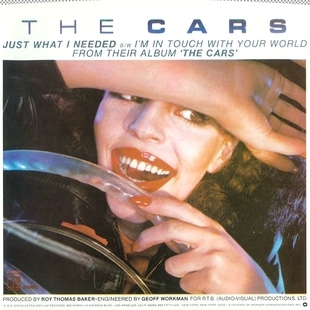
Just What I Needed by The Cars is the debut single that announced one of the most commercially successful American rock bands of the late 1970s and early 1980s, a track whose clean production, melodic economy, and cool detachment introduced a new template for arena-ready new wave pop rock.
Affiliate Disclosure: I am an Amazon affiliate and if you purchase through any amazon links on this site i may earn a small commission at no extra charge to you.
Written by Ric Ocasek and sung by bassist Benjamin Orr, the track was recorded at AIR Studios in London in February 1978 and produced by Roy Thomas Baker, whose previous work included Queen’s A Night at the Opera.
Just What I Needed reached #27 on the US Billboard Hot 100 upon its release in the summer of 1978, a modest chart position that belied its enormous impact on album-oriented radio and its role in launching The Cars’ multi-platinum debut.
The track’s combination of synthesiser textures, clean guitar lines, and Orr’s detached vocal delivery created a sound that sat at the intersection of classic rock and new wave, appealing simultaneously to both audiences and defining The Cars’ commercial position for the decade to come.
The track remains one of the most-played recordings from The Cars’ catalogue and a defining recording of the late 1970s transition between classic rock and the new wave era.
| Song Title | Just What I Needed |
| Artist | The Cars |
| Album | The Cars (1978) |
| Released | June 1978 |
| Written By | Ric Ocasek |
| Lead Vocals | Benjamin Orr |
| Producer | Roy Thomas Baker |
| Label | Elektra Records |
| Chart Peak | #27 US Billboard Hot 100 |
What Is the Song About?
The track is a love song built on cool detachment, in which the narrator expresses desire for someone not in spite of their emotional unavailability but because of it, the very fact that she does not think or feel in the usual ways is presented as exactly what the narrator requires.
Ocasek’s lyric operates on the surface level as a straightforward expression of attraction, but its emotional logic is more ambiguous: the narrator seems to be describing a relationship that suits him precisely because it makes no demands on him.
The song’s detached, slightly ironic tone is entirely consistent with The Cars’ broader aesthetic — an approach that borrowed the emotional vocabulary of rock and pop while maintaining an intellectual distance from the sentimentality that usually accompanied it.
Benjamin Orr’s vocal delivery is crucial to the lyric’s effect: sung with warmth but without urgency, he makes the narrator’s cool certainty seem entirely natural rather than calculated, and the result is a track that feels simultaneously intimate and aloof.
The Vibe: Genre, Mood, and Search Intent
The track opens with Elliot Easton‘s clean, ringing guitar riff — immediately recognisable and immediately different from the dominant hard rock sounds of 1978.
Greg Hawkes‘s synthesiser work runs throughout the track, adding a texture that bridges the gap between classic rock guitar and the electronic sounds that would define the following decade.
- Genre: New Wave, Power Pop, Classic Rock
- Mood: Cool, Detached, Confidently Romantic
- Tempo: Mid-tempo rock (~130 BPM)
- Best For: Late 1970s rock playlists, new wave collections, power pop deep dives
- Similar To: Dire Straits “Sultans of Swing”, Cheap Trick “I Want You to Want Me”
- Fans Also Search: The Cars debut album, Benjamin Orr vocals, Ric Ocasek songwriting
Behind the Lyrics: The Song’s Story
Ocasek wrote the song as part of the batch of songs that became The Cars’ debut album, a collection that the band developed through extensive live performance in Boston before taking it into the studio.
The decision to have Orr rather than Ocasek sing the track was commercially astute: Orr’s smoother, more conventionally appealing vocal made the song more accessible to radio audiences than Ocasek’s more eccentric delivery would have done.
According to the Wikipedia entry on Just What I Needed, Roy Thomas Baker was chosen as producer specifically because his work with Queen demonstrated an ability to create dense, layered productions that retained clarity and commercial appeal.
The recording at AIR Studios in London was part of the band’s first professional studio experience, and Baker’s production approach, clean, precise, and deliberately modern, was a significant departure from the more organic rock sounds that had dominated American radio through the mid-1970s.
For listeners exploring the transition between classic rock and the new wave era, the track belongs alongside Blondie‘s early work and Elvis Costello‘s debut recordings as one of the key documents of that creative moment.
Technical Corner: Gear and Production
Roy Thomas Baker’s production approach on the recording was characterised by precision and clarity: he used close-miking techniques and minimal reverb to create a dry, clean sound that emphasised the interplay between the guitar, synthesiser, and rhythm section.
Easton’s guitar work throughout the track is a model of restrained effectiveness: the opening riff establishes the sonic character immediately, and his fills and solo work throughout the track develop without overloading the arrangement.
David Robinson‘s drumming provides the precise rhythmic foundation that gives the track its forward momentum, his patterns tight and unshowy in a way that perfectly suits the song’s controlled emotional temperature.
Hawkes’s synthesiser textures are integrated into the arrangement rather than placed on top of it, giving the track a unity of sound that makes it feel of a piece rather than a rock band with electronic additions.
The AIR Studios facility, then only a few years old and among the most technically advanced recording environments in the world, gave Baker the tools to realise his precise sonic vision for the album.
Legacy and Charts: Impact and Endurance
Just What I Needed reached #27 on the US Billboard Hot 100, a chart position that significantly understated its impact: the track became a staple of album-oriented rock radio, receiving substantially more airplay than its single chart position suggested.
The debut album from which it was drawn reached #18 on the US Billboard 200 and was eventually certified six-times platinum, making it one of the most commercially successful debut albums in American rock history.
The track’s influence on American new wave and power pop was considerable: its demonstration that synthesisers could be integrated into a guitar-based rock sound without compromising commercial appeal opened a path that dozens of bands followed in the early 1980s.
The recording has retained its place on classic rock radio for more than four decades, and its combination of melodic directness and sonic precision continues to sound fresh rather than dated.
It stands as one of the defining recordings of the late 1970s transition period and one of the most influential debut singles in American rock history.
Listener’s Note: A Personal Take
The opening guitar riff is one of those deceptively simple figures that reveals more complexity on repeated listening: it sounds inevitable in retrospect but was entirely new in 1978, and the way it locks in with Hawkes’s synthesiser line creates a textural richness that the spare arrangement does nothing to advertise.
Orr’s vocal is the performance that makes the track work emotionally: the words could have been sung with more urgency or more sentimentality, but his cool delivery gives the narrator’s certainty a credibility that a more emotional approach would have undermined.
Baker’s production has aged remarkably well: the clean, dry sound that might have seemed clinical in 1978 now sounds simply precise, and the clarity of the mix allows every element of the arrangement to be heard on its own terms.
The guitar solo is one of the most economical in classic rock — no note is there for exhibition, every phrase says something about the song, and the whole thing is over before it has outstayed its welcome.
It is a record that rewards the kind of attention that Ocasek and Baker clearly put into making it: careful listening reveals layers of craft that its effortless surface entirely conceals.
Watch: The Official Music Video
Watch The Cars performing the song in this official video:
Collector’s Corner: Own a Piece of Rock History
The Cars: The Cars (1978)
Own the six-times platinum debut that launched one of the most commercially successful American rock careers of the late 1970s and 1980s.
Original Elektra Records pressings, remastered editions, and vinyl available.
Frequently Asked Questions
Who sang Just What I Needed?
The song was sung by Benjamin Orr, the bassist of The Cars, rather than by songwriter Ric Ocasek. Orr’s smoother vocal style made the track more immediately accessible to radio audiences, and his delivery is considered one of the defining elements of the recording.
Who wrote the song?
The song was written by Ric Ocasek, the lead guitarist and primary songwriter of The Cars. Ocasek wrote the majority of the band’s debut album material, including this track, which was developed through live performance in Boston before the studio recording in London.
Where was Just What I Needed recorded?
The track was recorded at AIR Studios in London in February 1978. AIR Studios was founded by George Martin and was among the most technically advanced recording facilities in the world at the time, giving producer Roy Thomas Baker the tools he needed for his precise sonic vision.
Who produced the recording?
The recording was produced by Roy Thomas Baker, who was known for his work with Queen on albums including A Night at the Opera. Baker’s clean, precise production approach gave The Cars’ debut album a modern, commercial sound that distinguished it from the more organic American rock productions of the mid-1970s.
How did the track chart?
The single reached #27 on the US Billboard Hot 100, a chart position that understated its real impact. The track became a staple of album-oriented rock radio and helped drive The Cars’ debut album to six-times platinum certification, making it one of the most commercially successful debut albums in American rock history.
What is distinctive about the sound of the recording?
The track is notable for its integration of synthesiser textures with a guitar-based rock sound, its clean and precise production, and Benjamin Orr’s cool, detached vocal delivery. The combination created a sound that bridged classic rock and new wave, appealing to audiences of both genres simultaneously.
What album is the song from?
Just What I Needed is from The Cars’ self-titled debut album, released on Elektra Records in June 1978. The album reached #18 on the US Billboard 200 and was certified six-times platinum, establishing The Cars as one of the most commercially significant new American rock bands of the late 1970s.
Who are the members of The Cars on the recording?
The recording features Ric Ocasek on rhythm guitar and backing vocals, Benjamin Orr on bass and lead vocals, Elliot Easton on lead guitar, Greg Hawkes on keyboards and synthesisers, and David Robinson on drums. This was the classic lineup that recorded all of The Cars’ major albums.
You May Also Like
Dire Straits: Sultans of Swing (1978)
Another landmark debut single from 1978, sharing the same era and the same commitment to clean guitar work and understated production over the harder rock sounds of the period.
Cheap Trick: I Want You to Want Me (1977)
A power pop classic from the same era that shares the same melodic directness and the same ability to combine rock energy with an instantly memorable hook.
Rod Stewart: Maggie May (1971)
A British rock classic that shares the same commitment to a strong lead vocal at the centre of a carefully crafted arrangement, and the same ability to make something complex sound effortless.
More than four decades after its release, Just What I Needed retains every degree of the cool precision and melodic directness that made it one of the most distinctive debut singles of 1978, and its combination of guitar and synthesiser remains a blueprint for how to bridge the gap between rock tradition and new sonic territory.