

Dream Weaver by Gary Wright is one of the most distinctive and atmospheric records of the mid-1970s, a pioneering all-keyboard rock track that peaked at #2 on the US Billboard Hot 100 in early 1976 and defined the sound of a synthesizer-driven era.
Affiliate Disclosure: I am an Amazon affiliate and if you purchase through any amazon links on this site i may earn a small commission at no extra charge to you.
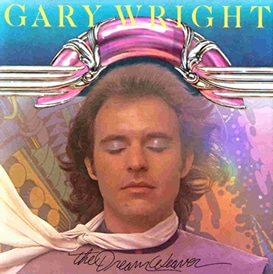
Written and produced by Wright himself, Dream Weaver appeared on his 1975 album The Dream Weaver, a record he made without any guitars, using instead a combination of Moog synthesizers, ARP String Ensemble, Hammond organ, Fender Rhodes electric piano, and Hohner Clavinet.
Wright’s collaborators on the album included keyboardist David Foster and drummer Jim Keltner, whose contributions helped shape the track’s floating, almost weightless groove that made Dream Weaver unlike anything else on rock radio in 1975 and 1976.
Dream Weaver sold over one million copies in the United States and was certified Gold by the RIAA in March 1976, confirming that its cosmic, synthesizer-led approach had found a mass audience.
Before forming his solo career, Wright had been a member of the British blues rock band Spooky Tooth, and the confidence and discipline he brought to Dream Weaver reflected years of professional experience that gave the track a sophistication beneath its ethereal surface.
| Song Title | Dream Weaver |
| Artist | Gary Wright |
| Album | The Dream Weaver (1975) |
| Release Year | 1975 |
| Written By | Gary Wright |
| Producer | Gary Wright |
| Label | Warner Bros. Records |
| Chart Peak | #2 US Billboard Hot 100, #1 Cash Box |
Table of Contents
What Is the Song About?
Dream Weaver is about transcendence and the aspiration to move beyond ordinary waking consciousness into something lighter, freer, and more luminous.
The lyric describes a journey guided by a guiding figure who leads the narrator out of the heaviness of the everyday world and into the starlit expanse of the inner sky.
Wright’s composition drew on his interest in Eastern spirituality and meditation, and the song’s imagery of flying through the sky and leaving behind the constraints of the physical world reflects a genuinely held spiritual perspective rather than a merely fashionable adoption of mystical vocabulary.
The music perfectly matches the lyric’s aspiration: The music sounds like exactly what it describes, a floating, weightless experience that seems to dissolve the boundaries between waking and dreaming.
The Vibe: Genre, Mood, and Search Intent
The track opens with that immediately recognizable synthesizer figure, a rising arpeggio that signals the track’s cosmic intentions within the first few seconds and has been embedded in popular culture ever since.
The production sits in the zone where soft rock meets electronic experimentation, sharing the era’s taste for lush, textured sounds while doing something genuinely new with the synthesizer’s capacity for other-worldly atmosphere.
- Genre: Soft Rock, Synthesizer Rock, New Age Rock
- Mood: Ethereal, Contemplative, Uplifting
- Tempo: Flowing mid-tempo (~88 BPM)
- Best For: Late-night driving playlists, 1970s synthesizer rock collections, cosmic rock deep dives
- Similar To: Alan Parsons Project, Manfred Mann’s Earth Band
- Fans Also Search: Gary Wright discography, Love Is Alive, 1970s keyboard rock
Behind the Lyrics: The Song’s Story
Gary Wright conceived the album after years of searching for a sound that matched his spiritual and musical vision, a vision that had been developing since his days with Spooky Tooth.
The decision to record entirely without guitars was radical for 1975: rock music was still fundamentally a guitar-centred form, and Wright’s choice to build this track and the entire album on keyboards alone was a genuine creative risk.
Wright booked Sound Labs studio in Los Angeles in spring 1975 and assembled a small group of musicians who shared his commitment to the keyboard-only approach, creating this record in an atmosphere of focused creative experimentation.
According to the Wikipedia entry on the song, the track was released as the first single from the album in December 1975 and began its climb up the charts, eventually spending three weeks at #2 on the Billboard Hot 100 in early 1976.
For listeners interested in the history of keyboard-driven rock, Dream Weaver stands alongside the work of The Alan Parsons Project as a defining example of the era’s ambition to build rock music from electronic and keyboard textures alone.
Technical Corner: Gear and Production
Gary Wright built this track on a foundation of Moog synthesizers, using the instrument’s voltage-controlled oscillators and filters to create the floating, arpeggiated figures that define the track’s sound.
The ARP String Ensemble provided the lush, sustained pad sounds that give the track its sense of harmonic depth and warmth, sitting beneath the more active Moog figures and creating the sense of space the track required.
David Foster’s keyboard contributions added harmonic sophistication and textural variety, helping Wright develop the arrangement beyond what any single player could achieve while maintaining the album’s no-guitars concept.
Jim Keltner’s drumming gives the track its rhythmic foundation without drawing attention to itself: the drums sit low in the mix, providing the pulse that keeps the track grounded without disturbing its floating quality.
Engineer Jay Lewis’s recording of this track was critical to the track’s success: the challenge of making a keyboard-dominated rock record sound warm rather than cold required careful choices about how to capture the instruments, and the result is a production that has aged remarkably well.
Legacy and Charts: Impact and Endurance
Dream Weaver peaked at #2 on the US Billboard Hot 100 in early 1976, spending three weeks at that position, and simultaneously reached #1 on the Cash Box singles chart.
The Dream Weaver album reached #7 on the Billboard 200 and was certified double Platinum, an extraordinary commercial achievement for an all-keyboard rock record that broke several established conventions of the form.
The enduring cultural life of the track owes much to its appearance in the 1992 film Wayne’s World, where it was used in a memorable scene that introduced the track to a new generation of listeners who had not encountered it in its original context.
Wright’s pioneering use of the Moog synthesizer as a lead instrument on this track influenced numerous keyboard players and producers who came after him, and the track’s sound can be heard as a precursor to the synthesizer-driven pop and rock of the late 1970s and early 1980s.
Dream Weaver remains one of the most immediately recognizable tracks of the entire decade, a song whose opening notes are enough to transport the listener directly back to the cosmic, keyboard-saturated world of mid-1970s rock.
Listener’s Note: A Personal Take
Dream Weaver is one of those tracks that transports me somewhere specific the moment I hear it: not a place exactly, but a quality of consciousness, a sense of floating and lightness that the music itself seems to produce rather than merely describe.
The genius of the track is that it does exactly what its title promises: Dream Weaver sounds like a dream woven in real time, and that quality is not an accident but the result of extremely careful choices about tone, texture, and arrangement.
Gary Wright’s voice on the recording has a clarity and openness that matches the music’s aspirations, never pushing too hard, always letting the synthesizer environment support and surround him rather than fighting it.
There are very few tracks from any era that manage to sound simultaneously like popular music and like something that has transcended the category of popular music, and This song is one of them.
It is a record that improves with attention, revealing new details of the keyboard work and the production with each careful listen.
Watch: The Official Music Video
Collector’s Corner: Own a Piece of Rock History
Gary Wright: The Dream Weaver (1975)
Own the all-keyboard rock album that launched a pioneering synthesizer classic.
Original Warner Bros. pressings, remastered editions, and vinyl available.
Frequently Asked Questions
Who wrote the song?
The song was written and produced by Gary Wright. It appeared on his 1975 album of the same name on Warner Bros. Records. Wright wrote all the songs on the album, which was notable for being recorded entirely without guitars.
What does the song title mean?
The song describes a guide or spiritual figure who leads the narrator beyond ordinary consciousness and into a state of transcendence. Wright drew on his interest in Eastern spirituality and meditation when writing the lyric, and this guiding figure of the title who facilitates the journey from the heavy material world into the lightness of the inner sky.
Were there really no guitars on this track?
Correct. The album was recorded entirely without guitars. Gary Wright played Moog synthesizers, Hammond organ, Fender Rhodes electric piano, ARP String Ensemble, Hohner Clavinet, and other keyboard instruments. The only exception on the entire album was a single guitar part on the track Power of Love, played by Ronnie Montrose.
How did the song chart?
Dream Weaver peaked at #2 on the US Billboard Hot 100 in early 1976, spending three weeks at that position. It also reached #1 on the Cash Box singles chart. The album reached #7 on the Billboard 200 and was certified double Platinum.
Why is it famous from Wayne’s World?
The track was used in a memorable scene in the 1992 film Wayne’s World, where it played over a fantasy sequence involving the character Cassandra. The placement introduced the track to a new generation and significantly increased its cultural profile, bringing younger listeners to a song that was already nearly twenty years old.
What band was Gary Wright in before his solo career?
Before his solo career, Gary Wright was a member of Spooky Tooth, a British blues rock band active from 1967 to 1974. The band achieved considerable critical respect and cult following in Britain and influenced several subsequent rock acts. Wright’s time with Spooky Tooth gave him the musical discipline and experience that underpinned the more experimental work on this record and The Dream Weaver album.
Did Gary Wright have other hits?
Yes. Gary Wright scored a second major hit with Love Is Alive, which also appeared on The Dream Weaver album and peaked at #2 on the Billboard Hot 100 in 1976. Both Dream Weaver and Love Is Alive remain his most celebrated and commercially successful recordings.
Who else played on the track?
The Dream Weaver album featured David Foster and Bobby Lyle on keyboards alongside Gary Wright, with Jim Keltner and Andy Newmark on drums. The entirely keyboard and drums-based approach meant the track had an unusually focused sound that contributed greatly to the track’s distinctive atmosphere.
You Might Also Like
Manfred Mann’s Earth Band: Blinded by the Light (1976)
A fellow 1976 keyboard-rich rock classic that shares the same synthesis of rock energy and electronic texture, and its ambition to take mainstream rock music somewhere genuinely new.
Supertramp: Dreamer (1974)
A keyboard-led classic from a year before this track, sharing the same mid-1970s British rock sensibility and the same conviction that keyboards could carry the emotional weight that rock music demands.
Styx: Renegade (1978)
A classic rock track that shares the same cosmic ambition and its era’s belief that synthesizers and keyboards could give rock music a new kind of grandeur and scale.
Nearly fifty years after its release, The track retains every quality that made it a near-number-one record in 1976: a timeless, floating sensation that sets it apart from almost everything else in the classic rock catalogue.