

Without You by Harry Nilsson is one of the most emotionally devastating ballads in the history of popular music, a song that spent four weeks at #1 on the US Billboard Hot 100 in early 1972 and has never lost a degree of its heartbreaking power.
Affiliate Disclosure: I am an Amazon affiliate and if you purchase through any amazon links on this site i may earn a small commission at no extra charge to you.
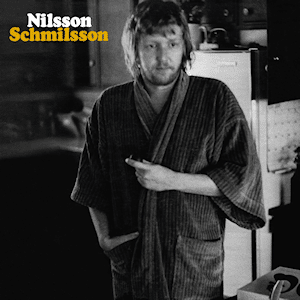
Written by Pete Ham and Tom Evans of Welsh rock group Badfinger, Without You had first appeared on Badfinger’s 1970 album No Dice, but it was Nilsson’s version, produced by Richard Perry for his 1971 album Nilsson Schmilsson, that became the definitive recording.
Nilsson’s ability to inhabit the emotional extremity of Without You, from the whispered vulnerability of the verses to the raw abandon of the chorus, gave the song a dimension that few vocalists could have achieved.
Without You also reached #1 on the UK Singles Chart, making it one of the few recordings of the era to simultaneously top both the American and British charts.
It remains one of the most covered songs in pop music history, with versions by artists ranging from Mariah Carey to Tom Jones, yet none has surpassed the heartbreak and conviction of Nilsson’s original.
| Song Title | Without You |
| Artist | Harry Nilsson |
| Album | Nilsson Schmilsson (1971) |
| Release Year | 1971 |
| Written By | Pete Ham, Tom Evans (Badfinger) |
| Producer | Richard Perry |
| Label | RCA Records |
| Chart Peak | #1 US Billboard Hot 100 (4 weeks), #1 UK Singles Chart |
Table of Contents
What Is the Song About?
This song is about the absolute impossibility of continuing to exist without someone you love.
The lyric moves through dependency, desperation, and finally a kind of annihilating grief, building to the confession that life itself cannot be sustained without the presence of the person being addressed.
Ham and Evans wrote it as a deeply personal expression of romantic loss, and the universality of that loss is precisely why the song has resonated with audiences across every decade since its release.
Nilsson understood instinctively that the recording required not just vocal technique but a willingness to be emotionally exposed in a way that most pop performances avoid, and his recording is a masterclass in that kind of artistic courage.
The Vibe: Genre, Mood, and Search Intent
The track opens with a piano figure of aching simplicity before Nilsson’s voice enters, understated at first, building through the verse to the chorus where the full emotional weight of the lyric is finally released.
The production sits at the intersection of pop ballad and rock, giving the track a fullness and grandeur that supports its emotional ambition without overwhelming the intimacy at its core.
- Genre: Pop Rock, Soft Rock, Ballad
- Mood: Devastating, Vulnerable, Cathartic
- Tempo: Slow ballad (~60 BPM)
- Best For: Heartbreak playlists, 1970s pop rock collections, classic ballad deep dives
- Similar To: Rod Stewart “Maggie May”, Rolling Stones “Angie”
- Fans Also Search: Harry Nilsson discography, Badfinger original version, Mariah Carey Without You cover
Behind the Lyrics: The Song’s Story
Pete Ham and Tom Evans of Badfinger wrote the song in 1970, and it appeared on the band’s album No Dice the same year, where it attracted little attention compared to the other tracks.
Nilsson discovered the Badfinger version and was so struck by the song that he insisted on recording it for Nilsson Schmilsson despite initially struggling to find an arrangement that felt right.
Producer Richard Perry recognized that the song needed an orchestral treatment to match its emotional scale, and the string arrangement he commissioned gave the track the sweep and weight that transformed it from a well-crafted pop song into something approaching a genuinely operatic statement.
According to the Wikipedia entry on Without You, Nilsson’s version debuted on the Billboard Hot 100 in December 1971 and spent four weeks at number one beginning in February 1972, becoming one of the defining recordings of the year.
For listeners exploring the emotional range of early 1970s pop rock, Without You belongs alongside Rod Stewart’s Maggie May as an example of the era’s willingness to let feeling rather than formula drive a song to the top of the charts.
Technical Corner: Gear and Production
Richard Perry built the arrangement around a central tension between intimacy and scale: Nilsson’s voice needed to feel exposed and personal even as the orchestration grew to fill the track’s emotional demands.
The string arrangement is one of the most effective in early 1970s pop production, rising slowly through the verses and arriving at full force only when the chorus needs it most, creating a dynamic shape that mirrors the lyric’s own emotional arc.
Nilsson recorded the track with the kind of vocal commitment that requires multiple takes and a willingness to leave technical imperfections in place if the emotional truth demands it, and Perry was wise enough to recognize when a take had the right feeling regardless of its flaws.
The piano part, which frames the track from beginning to end, was recorded with a warmth and presence that gives the track its intimate quality even at its most orchestrally grand moments.
The overall production represents Perry at the height of his craft: every element serves the emotional argument of the song, and nothing has been added that the song does not need.
Legacy and Charts: Impact and Endurance
Without You spent four weeks at #1 on the US Billboard Hot 100 and simultaneously reached #1 on the UK Singles Chart, making Nilsson one of the rare acts to simultaneously top both charts with the same recording.
The song won the Grammy Award for Best Male Pop Vocal Performance in 1973, a recognition of the extraordinary quality of Nilsson’s performance and the song’s extraordinary impact on the year it was released.
Without You has been covered more than any other Nilsson song, with Mariah Carey’s 1994 version reaching #1 in multiple countries and introducing the song to a new generation, but Nilsson’s original remains the standard against which all other versions are measured.
The song’s ongoing cultural presence speaks to the universality of what it expresses: the feeling of absolute dependency on another person is one that crosses every generational and cultural boundary.
It stands today as one of the defining recordings of the early 1970s and one of the greatest ballads in the history of popular music, a song that has never once lost its power to move listeners to their emotional core.
Listener’s Note: A Personal Take
This is one of those songs I find difficult to listen to casually: it demands a kind of attention and emotional availability that lighter music does not.
Nilsson’s voice on the recording is so fully committed that listening feels almost voyeuristic, as if you are witnessing something genuinely private rather than a commercial recording.
The moment when the chorus hits for the first time is one of the great dynamic arrivals in all of pop music, a transition so perfectly prepared by what comes before it that the emotional impact is almost physical.
Richard Perry’s production decision to build the orchestration slowly was exactly right: by the time the full arrangement arrives, the listener has been primed to feel its weight as something earned rather than imposed.
This is not a comfortable song, but it is an honest one, and that honesty is precisely what makes it last.
Watch: The Official Music Video
Collector’s Corner: Own a Piece of Rock History
Harry Nilsson: Nilsson Schmilsson (1971)
Own the album that contains one of the greatest ballads in pop history.
Original RCA pressings, remastered editions, and vinyl available.
Frequently Asked Questions
Who wrote this song?
The song was written by Pete Ham and Tom Evans of Welsh rock group Badfinger. It first appeared on Badfinger’s 1970 album No Dice. Harry Nilsson covered it for his 1971 album Nilsson Schmilsson and his version became the definitive recording, reaching #1 in both the US and UK.
Did Harry Nilsson write it?
No. The song was written by Pete Ham and Tom Evans of Badfinger. Nilsson discovered their version and chose to record it for Nilsson Schmilsson, producing the performance that most people know today. Nilsson’s cover became far more famous than the original Badfinger recording.
How long did it stay at number one?
The song spent four consecutive weeks at #1 on the US Billboard Hot 100 beginning in February 1972. It also reached #1 on the UK Singles Chart, making Harry Nilsson one of the rare acts to simultaneously top both charts with the same recording.
Who produced the Harry Nilsson version?
It was produced by Richard Perry for the album Nilsson Schmilsson, released on RCA Records in 1971. Perry’s orchestral arrangement and his sensitivity to Nilsson’s vocal style were central to making the recording the definitive version of the song.
Has Without You won any awards?
Yes. Harry Nilsson won the Grammy Award for Best Male Pop Vocal Performance in 1973 for this recording, recognising the exceptional quality of his performance on the recording and the song’s enormous impact during the year of its release.
Who else has recorded Without You?
Without You has been covered by hundreds of artists. The most commercially successful cover is Mariah Carey’s 1994 version, which reached #1 in multiple countries and introduced the song to a new generation. Tom Jones, Air Supply, and many others have also recorded their own versions.
What album is Without You on?
Harry Nilsson’s version appears on Nilsson Schmilsson, his sixth studio album, released on RCA Records in 1971. The album reached #3 on the US Billboard 200 and is widely considered his masterwork, containing this song alongside several other strong songs.
What is Harry Nilsson known for besides Without You?
Harry Nilsson is known for Everybody’s Talkin’ (from the Midnight Cowboy soundtrack), Jump into the Fire, and the concept album The Point. He was also a close friend of John Lennon and Ringo Starr and was widely admired by fellow musicians for his extraordinary voice and songwriting talent.
You Might Also Like
Rolling Stones: Angie (1973)
A fellow early 1970s ballad that shares the same emotional directness and its willingness to let vulnerability drive a rock recording, delivered with the Stones’ characteristic combination of rawness and polish.
Elton John: Tiny Dancer (1971)
Another 1971 masterwork that shares the same gift for building emotional scale through careful orchestration and a vocal performance that gives everything the song demands.
The Hollies: He Ain’t Heavy, He’s My Brother (1969)
A classic that shares the same orchestral grandeur and its gift for taking a simple emotional truth and building it into something that feels genuinely large and important.
More than fifty years after its release, Without You retains every volt of the emotional charge that made it a number-one record on two continents, a song whose power to devastate its listeners has never once diminished.