

Procol Harum Conquistador stands as one of the most extraordinary live recordings in classic rock history, a sweeping orchestral performance recorded with the Edmonton Symphony Orchestra in 1971 that became a worldwide hit when released as a single in 1972.
Affiliate Disclosure: I am an Amazon affiliate and if you purchase through any amazon links on this site i may earn a small commission at no extra charge to you.
Written by Gary Brooker (music) and Keith Reid (lyrics), this tune originally appeared on Procol Harum’s 1967 debut album, but it was the live orchestral version, produced by Chris Thomas, that elevated the song to a different dimension entirely.
The recording was captured at the Jubilee Auditorium in Edmonton, Alberta, Canada on 18 November 1971, and the combination of the band’s rock power and the orchestra’s sweep gave the song a cinematic grandeur that the original studio recording could not quite achieve.
This single reached #16 on the US Billboard Hot 100 and #22 on the UK Singles Chart in 1972, making it one of the most successful classical-rock crossover singles of the era.
Few rock songs have made the journey from album deep cut to symphonic hit with such complete success, and its endurance in the years since speaks to the timeless power of Brooker and Reid’s songwriting.
| Song Title | Conquistador |
| Artist | Procol Harum |
| Album | Live: In Concert with the Edmonton Symphony Orchestra (1972) |
| Release Year | 1972 (single); original recording 1971 |
| Written By | Gary Brooker (music), Keith Reid (lyrics) |
| Producer | Chris Thomas |
| Label | A&M Records |
| Chart Peak | #16 US Billboard Hot 100, #22 UK Singles Chart |
Table of Contents
What Is the Song About?
Procol Harum Conquistador is a meditation on a fallen warrior figure, a Spanish conqueror remembered not for glory but for the dust and silence that followed his campaigns.
Keith Reid’s lyric inverts the heroic conquistador myth entirely: instead of triumph, the song describes a hollow soldier in rusted armour, his banners tattered, his cause forgotten.
The narrator addresses the theme directly, with a tone of rueful compassion rather than mockery, mourning the gap between the heroic self-image the conqueror carried and the indifferent reality of history.
It is one of the most sophisticated pieces of historical commentary in 1970s rock, delivered with the elegance that Reid and Brooker consistently brought to their best work.
The Vibe: Genre, Mood, and Search Intent
The orchestral version of the song opens with a majestic string introduction that sets a mood of spacious melancholy before Brooker’s voice enters with the first lines of Reid’s lyric.
The track moves through passages of quiet reflection and moments of full orchestral and rock band majesty, creating a dynamic range that no studio recording could easily replicate.
- Genre: Progressive Rock, Orchestral Rock, Art Rock
- Mood: Majestic, Elegiac, Triumphant
- Tempo: Stately mid-tempo
- Best For: Progressive rock playlists, orchestral rock deep dives, early 1970s art rock collections
- Similar To: Moody Blues orchestral work, Elton John “Tiny Dancer”
- Fans Also Search: Procol Harum Whiter Shade of Pale, Edmonton Symphony Orchestra album, Chris Thomas productions
Behind the Lyrics: The Song’s Story
The original studio version of this song appeared on Procol Harum’s self-titled debut album in 1967, written at a time when the band was establishing the literary, art-rock sensibility that would define their entire career.
Reid’s lyric drew on the Spanish conquest of the Americas as a metaphor for all human ambition that ultimately amounts to nothing, a theme he articulated with the controlled, almost classical precision that marked his best writing.
The decision to perform the song with a full symphony orchestra came during the band’s 1971 North American tour, when they collaborated with the Edmonton Symphony Orchestra on a concert that producer Chris Thomas flew in from Britain to document.
According to the Wikipedia entry on Conquistador, the live setting transformed the song’s scale dramatically, with the orchestral arrangement giving the track a grandeur that the original studio version had only hinted at.
For listeners exploring the more ambitious end of early 1970s rock, Procol Harum Conquistador belongs alongside Argent’s Hold Your Head Up as an example of the era’s belief that rock music could carry the emotional weight of any serious art form.
Technical Corner: Gear and Production
Chris Thomas produced the Edmonton Symphony Orchestra concert recording, bringing to this recording session the technical precision he had developed on recordings for the Beatles, Roxy Music, and other major acts of the era.
The challenge of recording a rock band with a full symphony orchestra live was considerable: balancing the natural acoustic weight of the orchestra against the amplified presence of the band required careful microphone placement and real-time mixing decisions.
Gary Brooker’s Hammond organ playing sits at the heart of the arrangement, providing the connecting tissue between the orchestral and rock elements and giving the track its characteristic combination of weight and warmth.
The string arrangements were written specifically for the Edmonton Symphony performances, and their integration with the band’s existing parts was sophisticated enough that the two sonic worlds merged rather than competing.
The result was a live recording with a production quality that rivals many studio albums of the period, a tribute to Thomas’s expertise and the musicians’ collective focus.
Legacy and Charts: Impact and Endurance
The live version reached #16 on the US Billboard Hot 100 and #22 on the UK Singles Chart, becoming by far Procol Harum’s biggest international commercial success since A Whiter Shade of Pale in 1967.
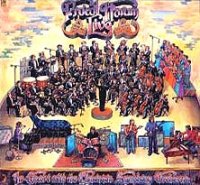
The accompanying album, Procol Harum Live: In Concert with the Edmonton Symphony Orchestra, reached #5 on the Billboard 200 album chart, a remarkable showing for a progressive rock act.
Procol Harum Conquistador success demonstrated that the barriers between rock and classical music were more permeable than the music industry had assumed, encouraging other artists and orchestras to explore similar collaborations through the 1970s.
The song has remained a central part of Procol Harum’s legacy and is frequently cited alongside A Whiter Shade of Pale as the defining statement of the band’s artistic ambition.
It stands today as one of the essential recordings of the early 1970s symphonic rock movement, a moment when the meeting of two musical worlds produced something neither could have achieved alone.
Listener’s Note: A Personal Take
There is a particular quality to the recording that I find myself returning to repeatedly: the feeling that the music is genuinely breathing, that the orchestra and the band are listening to each other in real time.
Live recordings often have a quality of captured energy that studio recordings cannot fully replicate, and this tune benefits from this in every measure.
Gary Brooker’s voice carries the lyric with a seriousness that never tips into pomposity: he sounds genuinely moved by Reid’s meditation on ambition and its aftermath.
The climactic moments of the recording, when the full orchestra and band arrive together, have a physical impact that is almost impossible to hear without feeling something shift in the chest.
It is one of the great live recordings in rock history, and this tune deserves to be heard by anyone who has not yet encountered it.
Watch: The Official Music Video
Collector’s Corner: Own a Piece of Rock History
Procol Harum: Live in Concert with the Edmonton Symphony Orchestra (1972)
Own the album that gave Conquistador its full orchestral glory.
Original A&M pressings, remastered editions, and vinyl available.
Frequently Asked Questions
Who wrote Conquistador?
Conquistador was written by Gary Brooker (music) and Keith Reid (lyrics), the founding creative partnership of Procol Harum. It first appeared on their 1967 self-titled debut album before the live orchestral version became a hit in 1972.
What is the song about?
Conquistador addresses the figure of a Spanish conquistador, a fallen, forgotten warrior whose banners are tattered and whose campaigns have faded into history. Keith Reid uses this image to meditate on human ambition and the way history ultimately reduces even the most aggressive self-assertion to dust and silence.
Why is the live version so famous?
The live version of Conquistador, recorded with the Edmonton Symphony Orchestra in 1971 and released in 1972, transformed the original studio song into a sweeping orchestral rock masterpiece. The combination of the band’s power and the orchestra’s grandeur gave it a scale that connected with a far wider audience than the 1967 original had reached.
How did this song chart?
Conquistador reached #16 on the US Billboard Hot 100 and #22 on the UK Singles Chart in 1972. The accompanying live album reached #5 on the Billboard 200, making Conquistador one of Procol Harum’s greatest commercial successes.
Who produced the Conquistador recording?
The Conquistador recording was produced by Chris Thomas, who flew from Britain specifically to supervise the Edmonton concert. Thomas had previously produced Procol Harum’s albums Home and Broken Barricades.
Did Procol Harum record other songs with the Edmonton Symphony Orchestra?
Yes. The entire concert was released as the album Procol Harum Live: In Concert with the Edmonton Symphony Orchestra (1972), including orchestral versions of A Whiter Shade of Pale and Conquistador among other songs, with the Conquistador single becoming the most commercially successful track.
What was the original 1967 version like?
The original Conquistador from Procol Harum’s 1967 debut album was a more stripped-down performance without orchestral accompaniment. It showcased the same Gary Brooker and Keith Reid songwriting but in a rawer, more direct rock arrangement that gave the track a different, more intimate character than the live version that became famous five years later.
What other songs is Procol Harum known for?
Procol Harum is best known for A Whiter Shade of Pale (1967), which reached #1 in the UK and became one of the most recognised songs of the decade. Other notable recordings include Homburg (1967), A Salty Dog (1969), and Conquistador (1972). The band is considered one of the founding acts of progressive and art rock.
You Might Also Like
Elton John: Tiny Dancer (1971)
A fellow early 1970s rock masterwork that shares Conquistador’s gift for transforming literary craft and emotional weight into something overwhelming on first listen.
Deep Purple: Smoke on the Water (1972)
Another 1972 British rock landmark that shared the same year as the Conquistador hit while representing a completely different but equally powerful approach to the era’s possibilities.
Neil Young: Old Man (1972)
A meditation on time and human experience that shares Conquistador’s reflective, literary sensibility and its willingness to use rock music as a vehicle for genuine emotional depth.
More than fifty years after the Edmonton concert, Procol Harum Conquistador retains every note of the power and vision that made the recording a landmark, a song that will be listened to and marvelled at for as long as people care about the intersection of rock music and orchestral ambition.