

Rock and Roll Hoochie Koo by Rick Derringer is one of the most instantly recognizable hard rock riffs of the 1970s, a track built on a guitar figure of such direct, electric intensity that it announced its arrival on radio before the vocals had even begun.
Affiliate Disclosure: I am an Amazon affiliate and if you purchase through any amazon links on this site i may earn a small commission at no extra charge to you.
Derringer wrote Rock and Roll Hoochie Koo in the late 1960s, and it first appeared on the 1970 Johnny Winter album Johnny Winter And, where Winter’s blistering performance gave the track its first major showcase.
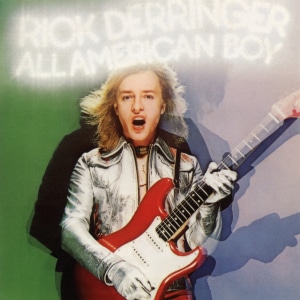
It was Derringer’s own solo version, produced by Bill Szymczyk and Derringer himself at Caribou Ranch in Nederland, Colorado, and released on his 1973 debut solo album All American Boy, that became the definitive recording.
The solo version reached #23 on the US Billboard Hot 100 in 1974, making it Derringer’s highest-charting solo single and confirming his standing as one of the era’s most gifted rock guitarists.
Decades of radio play, a famous placement in Dazed and Confused (1993), and a fresh generation of listeners introduced via Stranger Things Season 4 (2022) have kept Rock and Roll Hoochie Koo in constant cultural circulation ever since.
| Song Title | Rock and Roll Hoochie Koo |
| Artist | Rick Derringer |
| Album | All American Boy (1973) |
| Release Year | 1973 (solo); originally recorded 1970 |
| Written By | Rick Derringer |
| Producer | Bill Szymczyk and Rick Derringer |
| Label | Blue Sky Records |
| Chart Peak | #23 US Billboard Hot 100, #11 Canada |
Table of Contents
What Is Rock and Roll Hoochie Koo About?
Rock and Roll Hoochie Koo is a statement of pure rock and roll identity, a song that fuses the attitude of hard rock with the looseness of the blues to produce something that belongs entirely to neither tradition and completely to both.
The title itself is a coalescence of two musical worlds: the rock and roll Derringer had been performing since his teenage years with The McCoys, and the “hoochie koo” of traditional blues slang, a phrase evoking the physicality and abandon that the best rock and roll demands from its players and its audience.
There is no complicated lyrical narrative here: the song is its riff, its forward drive, and its invitation to give in entirely to the music, which Derringer understood was as much a statement as anything more elaborate could have been.
The simplicity is the point, and the track delivers on the promise of its title with a directness that few songs of the era matched.
The Vibe: Genre, Mood, and Search Intent
Rock and Roll Hoochie Koo opens with one of the most famous guitar introductions in 1970s rock, a repeated, hammer-on riff that locks the listener in before the first word is sung, and the momentum never lets up across the song’s entire running time.
The production by Bill Szymczyk captures the band with a presence and punch that gives the recording a sound closer to a great live performance than a polished studio exercise.
- Genre: Hard Rock, Blues Rock, Classic Rock
- Mood: Driving, Energetic, Rebellious
- Tempo: Up-tempo rock (~140 BPM)
- Best For: Hard rock playlists, 1970s guitar rock collections, classic rock driving mixes
- Similar To: Free “All Right Now”, Edgar Winter Group “Frankenstein”
- Fans Also Search: Rick Derringer discography, Johnny Winter version, All American Boy album
Behind the Lyrics: The Song’s Story
Derringer wrote the song when he was still known as Rick Zehringer, the teenage guitarist who had fronted The McCoys to a #1 hit in 1965 with Hang On Sloopy.
When he joined forces with Johnny Winter in the late 1960s, Derringer brought his new composition to Winter, who was reportedly skeptical about its commercial prospects but agreed to record it, and the resulting track appeared on the Winter And album in 1970.
For his own solo debut, Derringer decided to reclaim the song and record a definitive version with producer Bill Szymczyk at Caribou Ranch, the high-altitude Colorado studio that would also host sessions by the Eagles, Joe Walsh, and many others through the decade.
According to the Wikipedia entry on the song, Derringer performed multiple instruments on the recording himself, playing guitar, bass, and tambourine alongside lead vocals, with backing vocalists including Bobby Caldwell, Carl Hall, Lani Groves, and Tasha Thomas contributing to the track’s exuberant atmosphere.
For listeners tracing the roots of early 1970s hard rock, this track belongs alongside Edgar Winter Group’s Frankenstein as a landmark of the era’s commitment to guitar-driven rock built on blues foundations.
Technical Corner: Gear and Production
Bill Szymczyk was among the most technically accomplished rock producers of the 1970s, and his work on the All American Boy sessions reflected his understanding of how to capture a guitar-centred rock sound with maximum impact and minimum sterility.
The centrepiece of Rock and Roll Hoochie Koo is Derringer’s guitar work, which combines the hammer-on technique of the opening riff with rhythm playing of considerable drive and a solo that demonstrates both his blues education and his instinct for rock-and-roll directness.
Caribou Ranch, located at altitude in the Colorado Rockies, had a particular sound quality that several producers and artists noted during this period: the thin air and the physical environment seemed to produce recordings with an unusual clarity and urgency.
Derringer’s decision to play bass on the recording as well as guitar gave him complete control over the rhythmic foundation of the track and allowed him to lock the bass part to the guitar riff in a way that a separate bassist might not have achieved with the same precision.
The backing vocals, provided by a group of session singers that included the experienced Bobby Caldwell, add a gospel-tinged fullness to the chorus that gives the track a communal energy to balance Derringer’s more individual guitar showcase.
Legacy and Charts: Impact and Endurance
Rock and Roll Hoochie Koo reached #23 on the US Billboard Hot 100 in 1974 and #11 on the Canadian RPM chart, giving Derringer a commercial foothold as a solo artist that matched the critical respect he had earned from his work with Johnny Winter and the Edgar Winter Group.
The track became a staple of classic rock radio through the late 1970s and into the 1980s, its guitar-first directness making it a natural fit for radio formats built around hard rock audience preferences.
Its placement in Richard Linklater’s Dazed and Confused (1993) introduced the song to a generation that had been born after its original chart run, and its prominent use in Stranger Things Season 4 (2022) produced the same effect for an even later audience.
The song’s durability across these different cultural moments speaks to how completely Derringer captured something essential about the spirit of early 1970s hard rock: an uncomplicated intensity that has never gone out of fashion for listeners who love guitar-driven rock.
Rock and Roll Hoochie Koo remains one of the defining recordings of the era’s guitar rock tradition, a track that carries the whole argument for the form in three and a half minutes of focused musical conviction.
Listener’s Note: A Personal Take
The opening riff is one of those rare moments in rock music where the identity of a recording is established before the rhythm section has even joined: from the first two notes, Rock and Roll Hoochie Koo tells you exactly what it is and exactly what it wants from you.
There is no mystery to the track’s appeal, and that transparency is precisely its strength: it makes no pretensions, promises nothing it cannot deliver, and delivers everything it promises with a commitment that is impossible to resist.
Derringer’s guitar playing throughout is a masterclass in the difference between technical display and musical communication: every note is in service of the song’s energy rather than his own virtuosity, and the result is a recording that sounds better at high volume than almost anything else from the period.
The backing vocalists lift the chorus into something genuinely communal, turning what might have been a solitary guitar statement into something that sounds like a party everyone has been invited to.
It is a record that rewards full commitment from the listener, and anyone who has heard it at the right volume in the right moment will understand immediately why it has never left the classic rock catalogue.
Watch: The Official Music Video
Collector’s Corner: Own a Piece of Rock History
Rick Derringer: All American Boy (1973)
Own the debut solo album that delivered one of the 1970s greatest hard rock performances.
Original Blue Sky pressings, remastered editions, and vinyl available.
Frequently Asked Questions
Who wrote Rock and Roll Hoochie Koo?
Rock and Roll Hoochie Koo was written by Rick Derringer, originally when he was still known as Rick Zehringer. He wrote the song in the late 1960s and it was first recorded by Johnny Winter for the 1970 album Johnny Winter And before Derringer recorded his own definitive version for All American Boy in 1973.
What does Hoochie Koo mean?
Hoochie Koo is a phrase rooted in blues and boogie-woogie slang, evoking physical energy, dancing, and the abandon of good-time music. Derringer combined rock and roll with this blues expression to create a title that perfectly captured the dual musical identity of the song, which sits at the intersection of hard rock attitude and blues looseness.
Did Johnny Winter record Rock and Roll Hoochie Koo first?
Yes. Johnny Winter recorded the original version of the song for his 1970 album Johnny Winter And, which Derringer was also working on as a producer and collaborator. Derringer recorded his own solo version three years later for All American Boy (1973), and that version became the more widely known recording.
Where was the All American Boy album recorded?
The All American Boy album was recorded at Caribou Ranch in Nederland, Colorado, a high-altitude studio that was a popular recording location through the 1970s for artists including the Eagles, Joe Walsh, and Elton John. The studio was known for the distinctive clarity and energy it brought to hard rock recordings.
How high did Rock and Roll Hoochie Koo chart?
Rick Derringer’s solo version reached #23 on the US Billboard Hot 100 in 1974 and #11 on the Canadian RPM singles chart. It was his highest-charting solo single and established his commercial viability as a solo artist following his work as a producer and sideman for the Winter brothers.
What films and TV shows has Rock and Roll Hoochie Koo appeared in?
The song appears in Richard Linklater’s acclaimed 1993 film Dazed and Confused, which introduced it to a new generation of listeners. It was also featured prominently in Stranger Things Season 4 (2022), where its placement produced another surge of discovery among younger audiences.
What band was Rick Derringer in before his solo career?
Rick Derringer (born Rick Zehringer) was the lead guitarist and vocalist for The McCoys, who reached #1 on the US Billboard Hot 100 in 1965 with Hang On Sloopy. After The McCoys, he became a close collaborator with Johnny Winter and then his brother Edgar Winter before launching his solo career in 1973.
Who produced the Rick Derringer version?
The All American Boy album was produced by Bill Szymczyk and Rick Derringer. Szymczyk was one of the most respected rock producers of the era, known for his work with the Eagles, Joe Walsh, and B.B. King. Derringer also played guitar, bass, and tambourine on the track himself.
You Might Also Like
Edgar Winter Group: Frankenstein (1973)
A fellow 1973 hard rock landmark that shares the same guitar-forward intensity and its era’s conviction that instrumental virtuosity and rock energy could drive a track to the very top of the charts.
Free: All Right Now (1970)
A British blues rock classic that shares the same economy of means and the same absolute confidence in the power of a great riff to carry an entire song without any additional embellishment.
Aerosmith: Sweet Emotion (1975)
A mid-1970s hard rock track from the American band that most completely absorbed the blues-rock DNA that Derringer and his contemporaries had established, and turned it into something both new and unmistakably classic.
More than fifty years after its first release, the opening riff of Rock and Roll Hoochie Koo remains one of the most electrically charged moments in the classic rock catalogue, a statement of guitar-driven intent that has never required revision or explanation.