

The Edgar Winter Group Frankenstein is one of the most audacious instrumental rock tracks ever recorded, a shape-shifting six-minute synthesizer workout that reached #1 on the US Billboard Hot 100 in May 1973 and permanently altered what rock music believed it could do.
Affiliate Disclosure: I am an Amazon affiliate and if you purchase through any amazon links on this site i may earn a small commission at no extra charge to you.
Edgar Winter and his group built the track from several different instrumental jams recorded across multiple sessions, splicing the pieces together using tape editing in a way that inspired its monster-movie name.
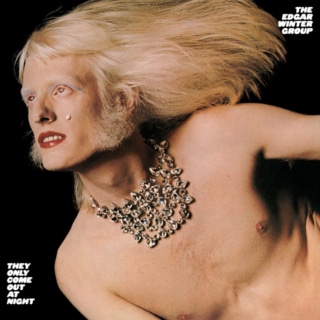
Produced by Rick Derringer, the recording appeared on the 1972 album They Only Come Out at Night on Epic Records, alongside the band’s other major hit Free Ride.
The lineup featured Dan Hartman on bass and guitar, Ronnie Montrose on guitar, and Chuck Ruff on drums, with Edgar Winter handling the ARP 2600 synthesizer, keyboards, marimba, and saxophone.
Frankenstein topped the charts despite being nearly twice the length of a typical pop single, a remarkable achievement that demonstrated rock audiences’ appetite for extended instrumental experimentation.
It remains one of the defining synthesizer rock records of the decade and a landmark in the history of electronic music’s relationship with mainstream rock.
| Song Title | Frankenstein |
| Artist | The Edgar Winter Group |
| Album | They Only Come Out at Night (1972) |
| Release Year | 1973 (single) |
| Written By | Edgar Winter |
| Producer | Rick Derringer |
| Label | Epic Records |
| Chart Peak | #1 US Billboard Hot 100 |
Table of Contents
- What Is Frankenstein About?
- The Vibe: Genre, Mood, and Search Intent
- Behind the Music: The Story of Frankenstein
- Technical Corner: The Gear Behind Frankenstein
- Legacy and Charts: Why Frankenstein Still Matters
- Listener’s Note: A Personal Take on Frankenstein
- Collector’s Corner: Own a Piece of Rock History
- Frequently Asked Questions About Frankenstein
What Is Frankenstein About?
Frankenstein is a purely instrumental track with no lyrics, so its meaning lies entirely in the music itself: a dramatic journey through multiple distinct moods, tempos, and textures sewn together by tape editing and performed with extraordinary technical skill.
The monster-movie title refers not to the music’s content but to its creation: band members named it Frankenstein because the track was assembled from different recorded fragments, stitched together like the creature in Mary Shelley’s novel.
As an experience, the track moves from menacing to euphoric to chaotic and back, functioning as a kind of sonic adventure story without words.
The Vibe: Genre, Mood, and Search Intent
The recording opens with a dark synthesizer figure before exploding into a driving rock groove, immediately announcing itself as something unlike anything else on rock radio in 1973.
It covers more musical ground in six minutes than most bands managed in entire albums, shifting between funk, hard rock, prog, and electronic experimentation without ever losing its forward momentum.
- Genre: Hard Rock, Synthesizer Rock, Progressive Rock
- Mood: Ferocious, Expansive, Electrifying
- Tempo: Variable, primarily driving uptempo (~130 BPM in main section)
- Best For: Instrumental rock playlists, synthesizer history deep dives, 1970s rock explorations
- Similar To: Mountain “Mississippi Queen”, Grand Funk Railroad “We’re an American Band”
- Fans Also Search: Edgar Winter discography, ARP synthesizer rock, They Only Come Out at Night album
Behind the Music: The Story of Frankenstein
The track evolved from extended instrumental jams the band played during live performances and rehearsals, with different sections developing independently before anyone conceived of combining them.
According to the song’s Wikipedia entry, the editing process of splicing the tape sections together gave the track its name: the assembled creature of disparate parts, stitched into a single living thing.
Edgar Winter played the ARP 2600 synthesizer as the lead voice throughout, using the instrument’s raw, unprocessed sound rather than the smoother, pad-like tones that would become more common in synthesizer rock later in the decade.
Rick Derringer’s production decision to release the full six-minute version rather than edit it for radio was a deliberate gamble that paid off enormously, as FM radio programmers embraced the track’s length as a feature rather than a barrier.
For listeners tracing the history of rock guitar through the early 1970s, Frankenstein connects directly to the tradition of raw, electric virtuosity documented on Mountain’s Mississippi Queen, both tracks sharing an appetite for volume and intensity that defined hard rock at its most elemental.
Technical Corner: The Gear Behind Frankenstein
Edgar Winter played an ARP 2600 semi-modular synthesizer, a patched, hands-on instrument that required real-time physical manipulation rather than preset programming, giving his performance a visceral immediacy that few synthesizer recordings of the era matched.
The ARP 2600’s signal path runs through voltage-controlled oscillators, filters, and amplifiers that Winter manipulated live during the recording, producing the track’s characteristic sweeping filter effects and abrupt tonal shifts.
Ronnie Montrose played through a Marshall stack on the recording, providing the heavy guitar crunch that grounds the track’s more experimental synthesizer moments in classic rock physicality.
Rick Derringer’s production philosophy for the session was to capture the band’s live energy rather than taming it, using relatively close mic placement and minimal signal processing to preserve the raw impact of the performances.
The tape editing that assembled the final track was done with surgical precision, yet the joins are deliberately audible in places, adding to the assembled-creature quality that gives the recording its unique, almost cinematic sense of drama.
Legacy and Charts: Why Frankenstein Still Matters
The single topped the US Billboard Hot 100 for one week in May 1973, becoming one of the most commercially successful instrumental rock tracks in chart history and one of only a handful of instrumentals to reach #1 in the rock era.
The album They Only Come Out at Night reached #3 on the Billboard 200, making Edgar Winter one of the rare artists to have both an album and a single chart at the top of their respective charts simultaneously.
Frankenstein’s influence on synthesizer rock, electronic rock, and progressive hard rock over the subsequent decades has been substantial, cited by numerous keyboard players and composers as a formative listening experience.
The track demonstrated that a purely instrumental performance, with no vocal hook and a running time that pushed the boundaries of what radio would broadcast, could still connect with mainstream audiences at the highest level.
It remains a landmark in the history of rock music’s relationship with electronic instruments, predating the synthesizer-driven sounds of the late 1970s and early 1980s by a crucial half-decade.
Listener’s Note: A Personal Take on Frankenstein
The first time I heard Frankenstein at full volume, I understood immediately why it reached number one.
There is a physical quality to the recording that transfers through even modest speakers: the synthesizer has a presence and weight that feels bodily rather than merely sonic, and the drumming locks in with a ferocity that demands a physical response.
What consistently surprises me on repeated listening is how logical the track’s structure feels despite its assembled nature.
The transitions between sections make emotional sense even though they were not composed as a unified piece: each shift feels earned rather than arbitrary, which is a tribute both to Winter’s instincts and to Derringer’s editing judgment.
This is a track that sounds completely contemporary fifty years after it was made, which is the best possible evidence of its greatness.
Watch: Frankenstein by The Edgar Winter Group
Collector’s Corner: Own a Piece of Rock History
The Edgar Winter Group: They Only Come Out at Night (1972)
Own the album that contains one of rock’s greatest instrumentals.
Original Epic pressings, remastered editions, and vinyl available.
Frequently Asked Questions About Frankenstein
Why is the song called Frankenstein?
Frankenstein was named by the band because the track was assembled from different recorded jam sessions using tape editing, stitched together like the creature in Mary Shelley’s novel. The name refers to the creation process, not the content of the music.
Does Frankenstein have any lyrics?
No. Frankenstein is a purely instrumental track with no lyrics or vocals. Its entire emotional and dramatic content is conveyed through the interplay between Edgar Winter’s synthesizer, the guitar, bass, and drums.
What synthesizer did Edgar Winter use?
Edgar Winter played an ARP 2600 semi-modular synthesizer on Frankenstein. He was among the first rock performers to play a synthesizer while strapped around his neck and moving around the stage, making his live performances visually as well as musically striking.
Did Frankenstein reach #1?
Yes. Frankenstein reached #1 on the US Billboard Hot 100 for one week in May 1973, making it one of the most successful instrumental rock recordings in chart history and a landmark in mainstream acceptance of synthesizer-based rock music.
Who produced Frankenstein?
Frankenstein was produced by Rick Derringer, who also played guitar on several Edgar Winter Group recordings. Derringer’s decision to release the full six-minute version rather than editing it for radio was central to the track’s success with FM programmers.
What album is Frankenstein on?
Frankenstein appears on They Only Come Out at Night, the debut album by The Edgar Winter Group, released on Epic Records in November 1972. The album also contains the hit Free Ride and reached #3 on the Billboard 200.
Who were the other members of the Edgar Winter Group?
The lineup on They Only Come Out at Night included Edgar Winter on keyboards and synthesizer, Dan Hartman on bass and guitar, Ronnie Montrose on guitar, and Chuck Ruff on drums. Rick Derringer also contributed as producer and occasional guitarist.
How long is the original version of Frankenstein?
The original album version of Frankenstein runs approximately 7 minutes and 25 seconds. The single release was edited down to around 4 minutes and 40 seconds. Both versions topped the charts, with FM radio playing the full album cut extensively.
You Might Also Like
Mountain: Mississippi Queen (1970)
A hard rock instrumental showcase that shares Frankenstein’s appetite for volume, technical virtuosity, and sheer physical impact, representing the raw power of early 1970s American rock.
Grand Funk Railroad: We’re an American Band (1973)
A fellow 1973 hard rock anthem that shares the Edgar Winter Group’s blue-collar American rock energy and their gift for turning a simple, driving groove into something irresistible.
Blue Oyster Cult: (Don’t Fear) The Reaper (1976)
Another hard rock track with a dramatic, cinematic quality and an air of dark theatricality that connects to the monster-movie spirit that gave Frankenstein its name and character.
Half a century after it topped the charts, The Edgar Winter Group Frankenstein retains every volt of its original electrical charge, a rock landmark that defined what a synthesizer could do in the hands of a true musician.