

I Wouldn’t Want to Be Like You by The Alan Parsons Project is one of the most sophisticated pop singles to emerge from the progressive rock world of 1977, a biting commentary on social conformity wrapped inside a groove that sits halfway between disco, funk, and art rock.
Affiliate Disclosure: I am an Amazon affiliate and if you purchase through any amazon links on this site i may earn a small commission at no extra charge to you.
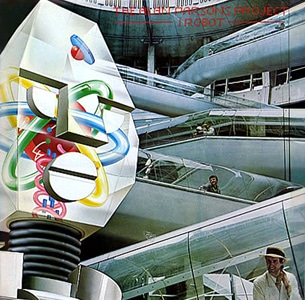
Written by Alan Parsons and Eric Woolfson, the track was released as the lead single from the group’s second album I Robot on Arista Records in 1977.
The lead vocal was handled by Lenny Zakatek, whose delivery brings a controlled edge of contempt to the song’s dismissal of the conformist life.
I Wouldn’t Want to Be Like You peaked at #36 on the US Billboard Hot 100 and #22 in Canada, making it the most commercially successful track from the I Robot album as a standalone single.
Produced by Alan Parsons with his characteristic attention to sonic detail, the song demonstrates the Project’s unique ability to embed genuinely subversive ideas inside radio-friendly arrangements.
Decades later, this track retains all of its sardonic wit and musical precision, standing as one of the finest examples of what the duo accomplished during their peak years.
| Song Title | I Wouldn’t Want to Be Like You |
| Artist | The Alan Parsons Project |
| Album | I Robot (1977) |
| Release Year | 1977 |
| Written By | Alan Parsons, Eric Woolfson |
| Producer | Alan Parsons |
| Label | Arista Records |
| Chart Peak | #36 US Billboard Hot 100, #22 Canada |
Table of Contents
What Is I Wouldn’t Want to Be Like You About?
I Wouldn’t Want to Be Like You is a sharp rejection of social conformity, with the narrator addressing someone who has sacrificed individuality for status, comfort, and the approval of others.
The title functions as a cold, measured statement of contempt: the narrator has observed the conformist’s life and found it hollow, not envied.
Woolfson and Parsons frame this critique with a groove-based arrangement that makes the dismissal feel elegant rather than bitter.
The Vibe: Genre, Mood, and Search Intent
The recording opens with a funky, clipped guitar figure before the bass locks in and the arrangement reveals itself as something more complex than standard pop.
It occupies a precise intersection of progressive rock ambition and danceable pop production, a combination the Alan Parsons Project pursued more consistently than almost any other act of the era.
- Genre: Art Rock, Progressive Pop, Classic Rock
- Mood: Sardonic, Cool, Sophisticated
- Tempo: Funky mid-tempo (~108 BPM)
- Best For: Prog rock playlists, late-night listening, art rock deep dives
- Similar To: Steely Dan “Reelin’ In the Years“, 10cc “I’m Not in Love”
- Fans Also Search: Alan Parsons Project discography, I Robot album, Eric Woolfson songs
Behind the Lyrics : The Story
Woolfson reportedly wrote the lyric from the perspective of someone who has simply stopped caring what society expects of them, looking at the conformist majority with a mixture of pity and genuine disinterest rather than anger.
The I Robot album was conceived as a loose adaptation of Isaac Asimov’s robot fiction, though the thematic connection is atmospheric rather than literal, with the album exploring questions of artificial intelligence, identity, and what it means to be human.
The I Robot album is widely regarded as the Alan Parsons Project’s artistic peak, and this track was selected as the lead single specifically because its groove and directness offered the most immediate entry point into its themes.
The song’s critique of conformity resonated with late-1970s listeners navigating the tensions between the counterculture legacy of the 1960s and the more materially focused culture that followed.
For listeners exploring the full range of 1977 progressive rock, the track pairs naturally with Styx’s Come Sail Away as a demonstration of how the genre could encompass both grand orchestral ambition and cool, funk-influenced minimalism.
Technical Corner: The Gear and Production
Alan Parsons produced the session at Abbey Road Studios in London, the facility where he had worked as a recording engineer on albums including The Beatles’ Abbey Road and Pink Floyd’s The Dark Side of the Moon.
His engineering background informed every production decision: the separation between instruments in the mix is unusually precise, each element occupying its own defined space without crowding the others.
The rhythm guitar part uses a tight, percussive attack achieved by palm-muting and picking close to the bridge, creating the clipped, angular feel that drives the track’s groove forward.
Parsons used the recording console at Abbey Road almost as an instrument itself, applying subtle compression and EQ choices that give the track a density and warmth unusual for pop recordings of the period.
The bass line, played with a smooth, round tone that contrasts with the guitar’s attack, creates a push-pull dynamic that is central to why the arrangement feels simultaneously cool and propulsive.
Legacy and Charts: Impact and Endurance
I Wouldn’t Want to Be Like You reached #36 on the US Billboard Hot 100 and #22 in Canada in 1977, performing respectably for a progressive rock act releasing an art-song about social conformity as a pop single.
The I Robot album itself has endured far beyond its chart performance, consistently appearing on lists of the greatest progressive rock albums of the decade and continuing to attract new listeners.
The song’s themes have remained strikingly contemporary, its commentary on the pressures of social conformity finding new resonance with each generation that encounters it.
I Wouldn’t Want to Be Like You appears regularly on curated classic rock and art rock playlists, benefiting from streaming algorithms that connect listeners exploring the sophisticated end of 1970s pop production.
The Alan Parsons Project’s reputation has grown considerably since the late 1990s as a generation of producers and musicians acknowledged the technical sophistication of Parsons’ work as a formative influence.
Listener’s Note: A Personal Take
The first time I heard I Wouldn’t Want to Be Like You properly, without treating it as background music, I was struck by how much restraint it contains.
Parsons and Woolfson had the material to make something much louder and more demonstrative, but instead they chose cool precision over dramatic statement.
Zakatek’s vocal performance is a masterclass in understatement: he never oversells the contempt in the lyric, which makes it land much harder than a more theatrical delivery would.
The production is the kind you can only fully hear through good headphones, where Parsons’ spatial decisions reveal themselves as a carefully constructed environment rather than a flat stereo image.
This is music that rewards attention, and attention is exactly what it consistently receives from anyone who takes the time to truly listen.
Watch: The Official Music Video
Collector’s Corner: Own a Piece of Rock History
The Alan Parsons Project: I Robot (1977)
Own the album that contains this prog rock classic.
Original Arista pressings, remastered editions, and vinyl available.
Frequently Asked Questions
Who wrote this song?
I Wouldn’t Want to Be Like You was written by Alan Parsons and Eric Woolfson, the two principals of The Alan Parsons Project. It was released as the lead single from their 1977 album I Robot on Arista Records.
What is the song about?
The song is a critique of social conformity and the hollowness of a life lived for status and approval. The narrator addresses someone who has surrendered their individuality for social acceptance, expressing not envy but cool disdain.
Who sang on this track?
Lead vocals on the track were performed by Lenny Zakatek, a session vocalist who appeared on several Alan Parsons Project recordings. The Alan Parsons Project frequently used different vocalists across their albums rather than a single lead singer.
What album is I Wouldn’t Want to Be Like You from?
The song appears on I Robot, the second studio album by The Alan Parsons Project, released on Arista Records in July 1977. The album was loosely inspired by Isaac Asimov’s robot fiction and is widely regarded as the group’s artistic peak.
Where was I Wouldn’t Want to Be Like You recorded?
I Wouldn’t Want to Be Like You was recorded at Abbey Road Studios in London, where Alan Parsons had previously worked as a recording engineer on The Beatles’ Abbey Road and Pink Floyd’s The Dark Side of the Moon. His intimate knowledge of the facility informed the recording’s exceptional sonic quality.
How did the single chart?
The single reached #36 on the US Billboard Hot 100 and #22 in Canada in 1977. While not a top-ten hit, it established The Alan Parsons Project as a credible commercial act and helped the I Robot album reach a wide audience.
Is The Alan Parsons Project a band?
The Alan Parsons Project was primarily a studio project led by Alan Parsons as producer and engineer and Eric Woolfson as composer and lyricist. They used a rotating cast of session musicians and vocalists on their albums rather than a fixed band lineup.
What other hits did The Alan Parsons Project have?
The Alan Parsons Project’s other notable hits include “Eye in the Sky” (1982, #3 US), “Games People Play” (1980), and “Time” (1980). Eye in the Sky remains their highest-charting US single.
You Might Also Like
Steely Dan: Reelin’ In the Years (1972)
Like the Alan Parsons Project, Steely Dan combined sardonic lyrics, jazz-influenced musicianship, and obsessive studio craft into some of the most sophisticated rock of the era.
Styx: Come Sail Away (1977)
Also from 1977, Come Sail Away represents the grandest ambitions of progressive pop at its most commercially successful, pairing orchestral sweep with arena rock energy.
Supertramp: The Logical Song (1979)
Another sophisticated art rock commentary on conformity and social expectation, The Logical Song shares this track’s themes of individuality under pressure and its crisp, layered production.
More than four decades on, I Wouldn’t Want to Be Like You stands as a testament to what Alan Parsons and Eric Woolfson accomplished at their peak, a song that remains as musically refined and thematically pointed as the day it was recorded.