
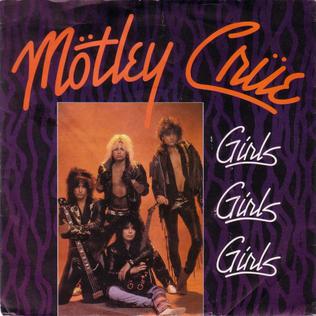
Girls, Girls, Girls: Mötley Crüe’s Anthem That Owned 1987
Affiliate Disclosure: I am an Amazon affiliate and if you purchase through any amazon links on this site i may earn a small commission at no extra charge to you.
Quick Navigation
Girls, Girls, Girls arrived in May 1987 with a guitar riff that hit radio like a wrecking ball, and hard rock has measured itself against that standard ever since.
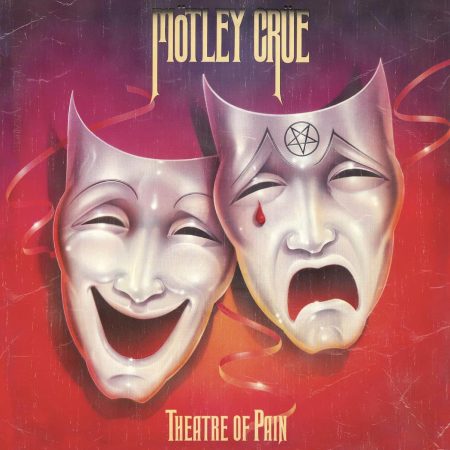
Mötley Crüe had every reason not to be here at this point: a near-fatal tour, a drunk-driving tragedy, a clinical death in a hotel room, and an album in Theatre of Pain that critics called a creative stumble.
They came back with Girls, Girls, Girls, and in doing so they reset what everyone expected from the loudest band in America.
If you were anywhere near a rock radio station in the summer of 1987, you know exactly where you were the first time you heard that opening riff.
What Girls, Girls, Girls Is Really About
Girls, Girls, Girls is a road song dressed in neon light and cheap perfume, and it makes no apology for either.
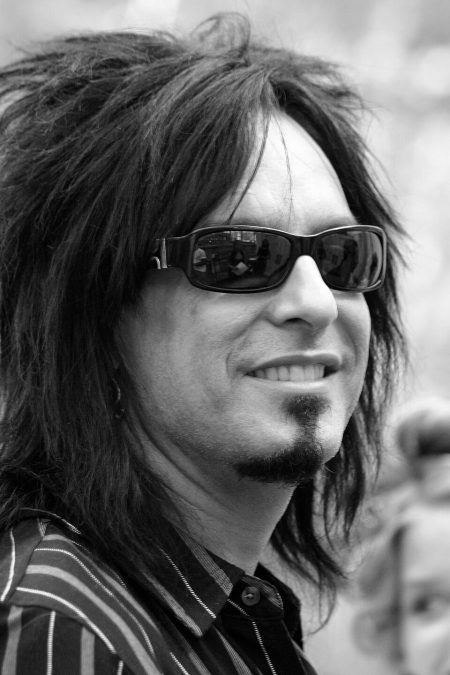
Nikki Sixx wrote the track as a direct tribute to the strip clubs that provided company during the band’s endless touring cycles across North America.
Part of the inspiration came from a club in Nashville called Déjà Vu, where Sixx found both the hook and the attitude that made the song land the way it did.
There is no hidden metaphor inside the lyric, and Mötley Crüe never pretended otherwise.
The track operates as a celebration with the volume turned all the way up, and that directness is precisely what made it connect with millions of listeners in 1987.
Rock radio in 1987 wanted something that felt honest about the life the musicians were actually living, and this song delivered that without blinking.
Vince Neil’s vocal delivery sits somewhere between a shout and a sneer, which is exactly where the track required it to be.
The lyrics are simple, the hooks are immediate, and it says everything it needs to say inside four minutes.
The Making of Girls, Girls, Girls in 1987
Producer Bruce Fairbairn took over from Tom Werman for this record, and the change brought a precision to the sessions that changed the sound of the band.
Fairbairn would go on to produce Aerosmith’s Permanent Vacation and Pump, but in 1987 his focus was on making Mötley Crüe the tightest version of themselves they had ever been.
The recording took place at Little Mountain Sound Studios in Vancouver, and the sessions moved quickly compared to earlier records.
Mick Mars (read his full biography) built the central riff using a drop-D tuning that gave the track its low-slung, dragging weight.
That riff is deceptively simple, and its simplicity is the reason it worked on radio the instant programmers cued it up.
Tommy Lee (see his full story) opened the song with a drum pattern that became one of the most imitated intros in 1980s hard rock within weeks of the single dropping.
Nikki Sixx tracked his bass line directly beneath the guitar riff, locking together the tight rhythmic pocket that gives the single its unstoppable forward momentum.
Fairbairn kept the mix aggressive and dry, resisting the reverb-heavy tendencies of mid-1980s rock production, and the result sounds fresh in a way that many records from that year do not.
How Girls, Girls, Girls Hit Number Two
Girls, Girls, Girls debuted in May 1987 and climbed the Billboard Hot 100 to peak at number two, the highest single chart position the band had reached at that point in their career.
The album of the same name matched that achievement, sitting at number two on the Billboard 200 for multiple weeks.
Radio stations picked up the single immediately because it filled a specific space that no other act was occupying at that exact moment in 1987.
The track was harder than pop metal, more melodic than thrash, and immediate enough to survive the kind of repeated rotation that kills weaker songs inside two weeks.
MTV scheduled the video in heavy rotation by midsummer, and the combination of radio airplay and video exposure pushed the band into a commercial tier they had not reached before.
By the time fall arrived, the song had sold millions of copies and become the defining soundtrack of that particular season in American rock music.
The tour that followed sold out arenas across the country, placing Mötley Crüe alongside the biggest acts in the world at that moment.
Mötley Crüe at Their Absolute Peak
The full story of Mötley Crüe reads like a catalog of every disaster a rock band can survive, which is what makes 1987 so remarkable.
This was the year the band finally controlled their own narrative rather than having it written by their worst decisions.
Vince Neil (read about his recent comeback) was performing at the height of his vocal range and physical presence during this period, and arena audiences responded to every show with the kind of energy that only happens when a band is genuinely at its best.
The internal tensions that would eventually force dramatic lineup changes were not yet visible from the audience’s perspective.
The fractures that would later produce the Mick Mars split and the Nikki Sixx dispute were nowhere in sight in 1987.
In that moment, Mötley Crüe was the loudest, most dangerous, and most commercially successful rock band operating in America.
The Girls, Girls, Girls era was the peak of that version of the band, and most of the people who were in those arenas knew they were watching something they would be telling people about for the rest of their lives.
The Music Video for Girls, Girls, Girls
Director Wayne Isham filmed the music video at the Seventh Veil club on Sunset Strip in Hollywood, a venue that had already become a landmark of the scene the song was celebrating.
Isham shot the band performing inside the club while dancers worked the floor around them, and the camera work captured exactly the energy that the recording projected.
The clip placed the viewer inside the world the song described rather than asking them to imagine it from the outside.
MTV initially put the video into late-night rotation because of the content of the footage.
By August, it had forced its way into daytime play regardless, because the audience demand was too loud to keep scheduling around.
The video locked in the song’s identity permanently as an anthem of the Sunset Strip lifestyle that Mötley Crüe had spent five years building into their entire brand.
Every frame reinforced the lyric, and the combination of video and radio play is what pushed the album over two million units in the United States.
The Girls, Girls, Girls Album
The Girls, Girls, Girls album arrived as the band’s fourth studio record and proved that Mötley Crüe could shift into a higher gear after the relative softness of the Theatre of Pain cycle.
Beyond the title track, the album contained Wild Side, which showed the band reaching for something with sharper political edges, and Dancing on Glass, which pushed their rhythm section to the front of the mix.
Girls, Girls, Girls the single remained the centerpiece of every interview, every radio appearance, and every live set because it contained the most direct statement of what this band stood for in 1987.
The official band page at motley.com still lists this record as one of the defining albums in the catalog.
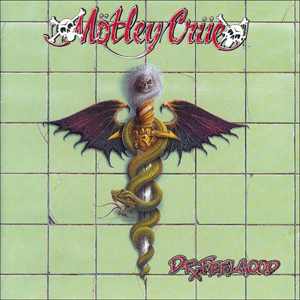
The commercial success of that era gave the band the foundation they needed to produce Dr. Feelgood two years later, the album that would become their all-time commercial peak.
Without this record succeeding the way it did, Fairbairn would not have come back for Dr. Feelgood, and the trajectory of the band’s career through the early 1990s would have looked very different.
Why Girls, Girls, Girls Still Works in 2026
Girls, Girls, Girls has never left Mötley Crüe’s live set for more than a single tour cycle in nearly four decades.
When the band launched the 2026 Carnival of Sins tour, the song anchored the second half of the set with the same weight it has always carried.
The band’s appearance on American Idol introduced the track to an audience that discovered Mötley Crüe through streaming playlists rather than FM radio.
John 5 (full biography) performs the Mick Mars riff live with the same drop-D attack that made the original recording hit the way it did, and the song loses nothing in the translation.
A riff this direct does not need a specific decade to feel relevant because it was built entirely on honest instinct rather than trend-following.
Fans who were not alive when the song charted treat it with the same reverence as those who heard it on AM radio driving home from school in the summer of 1987.
Songs that last this long always have the same quality at their core: they say one thing, they say it without apology, and they say it better than anything else playing on the radio that day.
Girls, Girls, Girls is still that song.
Watch Girls, Girls, Girls Now
The official music video below captures Mötley Crüe at their 1987 peak, before the larger arenas and the larger controversies arrived to reshape everything.
Turn the volume up and let Girls, Girls, Girls do what it has always done: hit harder than anything else on the playlist.
Own the Girls, Girls, Girls Album
The record that put Mötley Crüe at number two and set the stage for Dr. Feelgood is available on Amazon.