Robin Zander: The Voice That Built Cheap Trick
Robin Zander has been one of the most reliable and consistently undervalued rock voices in the business since Cheap Trick first stepped onto a stage in Rockford, Illinois, in the mid-1970s.
He is the kind of vocalist who makes what he does look easy, which is exactly why it took the mainstream a long time to give him the credit he had already been earning every night in front of an audience.
Cheap Trick sold out arenas in Japan before most American rock fans had heard of them, and when the domestic breakthrough finally arrived, it arrived on the back of a live record that captured Robin Zander at his most electric.
The band around him was extraordinary, but the voice was the thing that made someone who had never seen them before stop what they were doing and pay attention.
That voice has been performing, recording, and commanding stages for more than fifty years, and it is still doing all three.
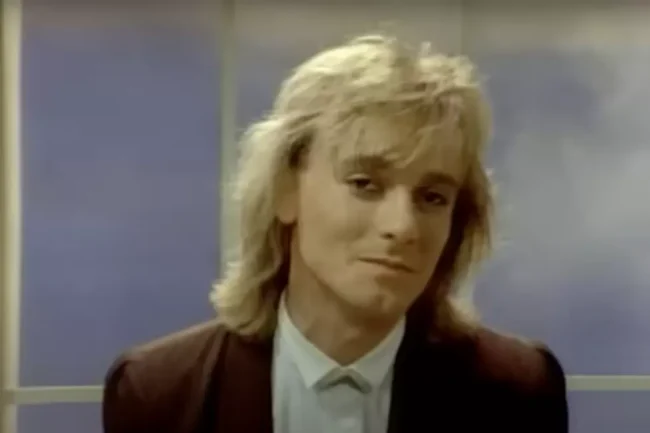
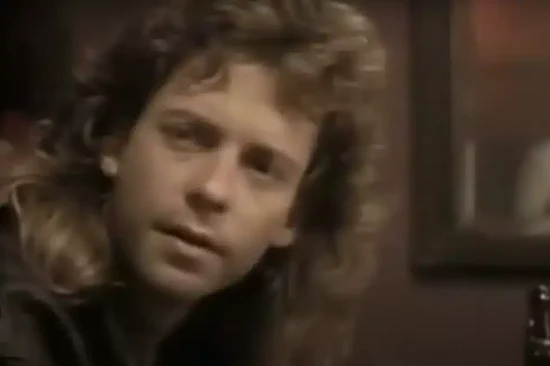
Photo: YouTube / @CheapTrick
Quick Navigation
- Robin Zander Before the Stage
- Cheap Trick Forms in Rockford
- Robin Zander and the Art of the Hook
- I Want You to Want Me: The Song That Changed Everything
- Live at Budokan: The Record That Made Them Global
- The Voice of Robin Zander: Range, Control, Character
- Surrender and the Songs That Defined an Era
- The Flame and the Billboard Number One
- The Solo Album from Robin Zander
- Cheap Trick’s Influence on Two Generations of Rock
- The Rock and Roll Hall of Fame Moment
- Robin Zander on Tour in 2026
- Watch Robin Zander Reveal His Favorite Cheap Trick Song
- The Legacy That Keeps Playing
Robin Zander Before the Stage
Robin Zander was born Robin Taylor Zander on January 23, 1953, in Loves Park, Illinois, a small city directly adjacent to Rockford that would eventually become ground zero for one of rock’s most beloved bands.
He grew up inside the British Invasion, absorbing the Beatles, the Kinks, the Hollies, and the Move with the intensity of someone who understood, even as a teenager, that this was the standard he wanted to reach.
Those influences never left Robin Zander, and they explain why Cheap Trick always had a melodic sophistication that set them apart from the purely riff-driven bands of the same era.
He taught himself to sing by listening to records and then replicating what he heard, matching the phrasing and the emotional delivery of vocalists who had no idea a kid in Illinois was studying them like a textbook.
By the time he was in his late teens, Robin Zander had a voice that was already more developed than most adults who had been performing for years.
Rockford gave him the context, the drive, and eventually the band.
Did You Know?
Before the classic Cheap Trick lineup with Robin Zander and Bun E. Carlos came together, Rick Nielsen and Tom Petersson were in a band called Fuse, which released one album in 1969. Fuse was a hard rock act with a very different sound from what Cheap Trick would become. When Nielsen and Petersson began building the lineup that would eventually include Zander and Carlos, they were essentially starting over — and the results justified every decision they made. If you want to trace that evolution in sound, the Cheap Trick In Color album on Amazon is the place to hear where it all crystallized.
Cheap Trick Forms in Rockford
Cheap Trick as the world came to know them took shape around 1974 and 1975, when Robin Zander joined the lineup that already included Rick Nielsen and Tom Petersson, with Bun E. Carlos arriving on drums shortly after.
The contrast between the members was immediately striking and immediately deliberate: Nielsen, with his eccentric costumes and five-neck guitars, occupied one visual world, while Robin Zander, with his conventional good looks and commanding presence, occupied another.
That contrast gave the band a visual personality that made them impossible to categorize by the standards of the era.
They were too melodic for the metal crowd, too hard-edged for the pop crowd, and too weird for anyone who wanted their rock straightforward.
Cheap Trick did not try to resolve that tension — they built a career on it, and the combination of Nielsen’s compositional instincts and the voice at the center of the mix made everything work.
The band spent years on the road in the mid-1970s, building an audience one venue at a time and developing the tight live chemistry that would eventually be captured on tape in Tokyo.
Robin Zander and the Art of the Hook
What Robin Zander brought to every Cheap Trick recording was a gift for finding the emotional center of a lyric and delivering it in a way that made it stick.
The hook in a Cheap Trick song is almost always a vocal hook, built around a melody that Robin Zander would find inside the arrangement and then sharpen until it was inescapable.
He had an instinct for dynamics: knowing when to hold back, when to push, when to let the note linger and when to cut it clean.
Those decisions are what separate a vocalist who can sing the notes from one who can make you remember them a week later.
Cheap Trick under Robin Zander put the melody first in a way that only a handful of hard rock bands have ever managed, and that priority is why their songs have stayed on the radio for five decades without sounding dated.
The songs landed because the voice made them land, and Robin Zander made it look effortless every time.
I Want You to Want Me: The Song That Changed Everything
The song appeared on the 1977 album In Color in its original studio form, and it was a good record — but it was not yet the song it would become.
I Want You to Want Me needed a crowd, needed an arena, needed the feedback loop between the band and ten thousand people who already knew every word, to reveal what it actually was.
The live version recorded at Budokan in 1978 gave it all of that, and the result was a rock song so perfectly constructed that it became the template for what a pop-rock hit was supposed to feel like.
The chorus is one of the most transparently simple and emotionally effective things in the rock catalog, a direct declaration that requires no interpretation and allows no distance.
You either feel it or you do not, and most people feel it immediately and completely.
That is not an accident of songwriting — that is what happens when the right vocalist finds the right song and executes it without a single wasted syllable.
Live at Budokan: The Record That Made Them Global
Cheap Trick traveled to Japan in 1978 for a two-night stand at the Nippon Budokan in Tokyo, and what they found there was an audience that already knew every song by heart and treated the band with a scale of enthusiasm that had not yet materialized in their home country.
The recording of those nights became Live at Budokan, a record that was released in Japan in 1978 to satisfy the immediate demand and then released in the United States in 1979 after it became an import phenomenon.
Epic Records had initially resisted the domestic release, unconvinced that a live album from a band still building its American profile would find an audience.
They were wrong, spectacularly so: the record went platinum, launched I Want You to Want Me into the mainstream, and established Cheap Trick as one of the most exciting live acts in rock.
What the album captured, above everything else, was the sound of Robin Zander performing at a level that only happens when the room is fully alive and the band is locked in completely.
It remains one of the essential live documents of the era.
The Voice of Robin Zander: Range, Control, Character
Most rock vocalists find their lane and stay in it, because that is what survival in a long career demands.
Robin Zander never accepted that constraint.
His range allowed him to move between the kind of raw, aggressive delivery that a hard rock chorus required and the kind of restrained, emotionally precise approach that a power ballad demanded, sometimes within the same song.
The control came from the classical training that had been part of his foundation since childhood, but the character, the thing that made any Robin Zander vocal recognizable in the first five seconds, came from somewhere that training does not touch.
He had a timbre that was both warm and urgent at the same time, a combination that is genuinely rare in any genre and almost nonexistent in rock.
Producers who worked with Cheap Trick consistently noted that Robin Zander was the easiest kind of vocalist to record: he came in, he knew exactly what the song needed, and he delivered it without the trial and error that most singers require.
That efficiency is a form of craft that does not get enough attention in the conversation around great rock voices.
Did You Know?
Cheap Trick holds a Guinness World Record for longest concert, having performed for over 24 hours at the Rockford Hard Rock Casino in 2009. Robin Zander was on stage for much of that run, cycling through the band’s catalog in a way that demonstrated both the depth of their songwriting and the extraordinary endurance of everyone involved. The feat stood as a testament to how seriously the band takes the relationship between themselves and their audience, even after decades of performing.
Surrender and the Songs That Defined an Era
Surrender arrived in 1978 on the Heaven Tonight album, written by Rick Nielsen, and it became one of the defining songs of the period, a track built around a lyric that was simultaneously funny and genuinely anthemic.
The chorus, with its repeated declaration that “surrender” is not always what it appears to be, gave audiences something they could shout in unison while actually making a point about the complexity of giving in.
Dream Police followed in 1979 as the title track of the next album, and it extended Cheap Trick’s run of songs that operated on multiple levels at once.
These records placed Cheap Trick at the center of a moment in rock where commercial success and artistic ambition were not considered mutually exclusive, where a band could write genuinely weird songs and have them played on AM radio alongside the most straightforward pop of the era.
The voice that carried all of it through every radio speaker and every arena PA system was the same one every night.
The Flame and the Billboard Number One
The commercial peak of Cheap Trick came in 1988, a decade after their breakthrough, with The Flame, a ballad that reached number one on the Billboard Hot 100 and confirmed that the band still had the ability to find a mass audience on their own terms.
The song was written by Bob Mitchell and Nick Graham, outside the band’s internal songwriting process, which made it unusual in the Cheap Trick catalog.
Rick Nielsen initially had reservations about the direction, but the performance that the recording captured made the argument for itself.
What the song needed was a vocal that could carry the emotional weight of a genuine power ballad without sliding into melodrama, and that is precisely what it received.
The number one position brought Cheap Trick an audience that had perhaps not followed them since their late-1970s peak, and it introduced the band to a new generation of listeners who would discover the back catalog through the hit.
The Solo Album from Robin Zander
In 1993, Robin Zander stepped outside the Cheap Trick context and released a self-titled solo album on Capitol Records that gave listeners a view of his vocal range uncoupled from the band’s specific aesthetic.
The record drew on the same melodic sensibility that informed everything Robin Zander had recorded with Cheap Trick, but it explored territory that the band’s sound did not always allow.
Critical reception recognized the quality of the performances even as the album found a more limited commercial footprint than his work with the band.
The project was not a departure in the sense of someone running from their established identity — it was more like a conversation between Robin Zander and a set of songs that had always existed somewhere outside the Cheap Trick universe.
It demonstrated that the vocal ability which had made Cheap Trick’s records work was not dependent on the band’s specific context, that it was a fully portable instrument capable of making any well-constructed song sound like it had been written for that voice.
Classic Rock Magazine has covered the way Robin Zander has approached longevity in the industry, and the solo record fits into that larger narrative of an artist who has always pushed outward rather than settling into repetition.
Cheap Trick’s Influence on Two Generations of Rock
Kurt Cobain cited Cheap Trick as one of the bands that shaped Nirvana’s approach to melodic construction, and the connection is audible to anyone who listens to both catalogs with attention.
Billy Corgan of the Smashing Pumpkins has spoken about Cheap Trick as a direct influence on how his band approached the relationship between hard rock dynamics and pop melody.
Fountains of Wayne, Weezer, and a generation of power pop acts that emerged in the 1990s and 2000s all drew from the well that Cheap Trick had been filling since the mid-1970s.
The influence runs through the production approach, the song structures, and the specific commitment to the hook as the organizing principle of a rock track.
But it also runs through the vocal model that Robin Zander established: a voice that is unambiguously rock but is also capable of the kind of melodic precision that pop music demands.
That combination is what younger artists heard and what they tried to replicate, rarely achieving it completely but getting closer each time they tried.
Did You Know?
Robin Zander’s son, Robin Taylor Zander Jr., has performed on stage with Cheap Trick as a drummer at select shows, including some during the band’s ongoing live run. It makes the Zander family one of the rare rock dynasties where the next generation has already proven capable of holding a place in the same band. The elder Zander has spoken warmly about his son’s ability, noting that watching him perform from the front of the stage offered a genuinely different perspective on the music they share. You can find a birthday tribute to Robin Zander capturing fan appreciation for everything the family has contributed to rock.
The Rock and Roll Hall of Fame Moment
Cheap Trick was inducted into the Rock and Roll Hall of Fame in 2016, a recognition that arrived later than many observers felt it should have but arrived with the full weight of an institution acknowledging a career that had been too large to overlook indefinitely.
Robin Zander took the stage at the ceremony with the graciousness and the humor that had always characterized his public presence, and the performance that followed reminded anyone who needed reminding exactly why the induction was warranted.
The band played with the same focus and energy that had defined their live performances for four decades, and the moment was one of those rare Hall ceremonies where the performance itself made the case more powerfully than any speech could.
For Robin Zander, the induction represented a formal acknowledgment of something that audiences in Japan had understood since 1978: that Cheap Trick was not a cult band that deserved to be bigger, but a great band that had always been exactly as big as the music demanded.
He accepted the honor with the kind of perspective that only comes from someone who has been doing the work long enough to know that the work was always the point.
Robin Zander on Tour in 2026
Cheap Trick announced a summer 2026 co-headline tour with ZZ Top, bringing Robin Zander and his bandmates to audiences alongside one of rock’s most iconic trios.
The pairing made immediate sense: two bands from the same general era, both still performing at a level that younger acts struggle to match, both with catalogs deep enough to fill any setlist twice over.
You can find Cheap Trick’s full 2026 tour schedule and the ZZ Top 2026 tour dates to plan your attendance.
ZZ Top will bring their own history to the summer run, including songs like Sharp Dressed Man, which gives the tour a combined catalog of classic rock material that few joint bills could match.
After the summer dates conclude, Cheap Trick will continue with their own headlining shows through September, giving audiences the full band experience without a support act.
Read More: The Oldest Rockers on Tour This Summer
Watch Robin Zander Reveal His Favorite Cheap Trick Song
The clip below captures Robin Zander in conversation about the song from the Cheap Trick catalog that means the most to him personally — an honest, unguarded answer that reveals something genuine about his relationship to the music.
Follow Robin Zander on Instagram for updates from the road and the studio.
The Legacy That Keeps Playing
Fifty years into a career that began in the clubs of Rockford, Illinois, Robin Zander is still doing the thing he was always built to do.
The voice has not retreated behind production tricks or carefully managed expectations — it has continued to show up and do the work, night after night, the same way it did when the band was loading their own gear into venues that did not yet know who they were.
The catalog that Robin Zander built with Cheap Trick across five decades of recording is one of the most consistently rewarding bodies of work in mainstream rock, not because it chased trends but because it never needed to.
Every generation of new listeners who finds I Want You to Want Me or Surrender or The Flame goes looking for the source, discovers the full catalog, and understands why artists they already love named Cheap Trick as an influence.
That cycle does not stop, because the music does not give it a reason to stop.
Robin Zander is the voice at the center of all of it, and that voice is still singing.
Affiliate Disclosure: This post contains affiliate links. If you purchase through them, we may earn a small commission at no extra cost to you.
If you want the essential Cheap Trick in your collection, Cheap Trick At Budokan on Amazon is where to start.