
Michael McDonald: Voice Behind the Doobie Brothers
Michael McDonald walked into the Doobie Brothers in 1975 and quietly changed the direction of one of rock’s most beloved bands without anyone fully understanding what was happening until it was already done.
The band had built their reputation on a driving country-rock sound, a tight live act, and a catalog that had already produced major hits before he arrived.
What Michael McDonald brought was something none of that had prepared anyone for: a voice so steeped in soul and gospel feeling that the moment it was placed at the center of the Doobie Brothers sound, the band became something entirely new.
It was not a hostile takeover and it was not a conscious reinvention — it was simply what happens when the right voice finds the right band at exactly the right moment.
More than five decades later, Michael McDonald is still that voice, and the music he made across that span is still playing.
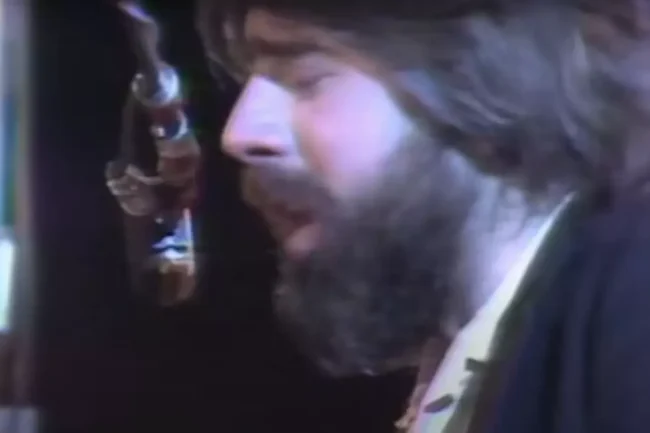
Photo: YouTube / @TheDoobieBrothers
Quick Navigation
- Michael McDonald Before the Spotlight
- Steely Dan and the Education of a Vocalist
- Michael McDonald Joins the Doobie Brothers
- Takin’ It to the Streets: A Band Transformed
- What a Fool Believes: The Grammy That Changed Everything
- The Voice of Michael McDonald: Blue-Eyed Soul Defined
- Leaving the Doobie Brothers: What Comes Next
- The Solo Years from Michael McDonald
- Ya Mo B There, On My Own, and the Grammy Runs
- Michael McDonald and the Rock and Roll Hall of Fame
- The Oneness Tour 2026: Doobie Brothers Meet Santana
- Watch Michael McDonald: The Voice That Defined a Generation
- The Legacy That Keeps Singing
Michael McDonald Before the Spotlight
Michael McDonald was born on February 12, 1952, in St. Louis, Missouri, and grew up surrounded by the Motown and soul music that defined the city’s radio landscape in the 1960s.
The voices he absorbed early, from Marvin Gaye to Curtis Mayfield to the full catalog of Stax and Atlantic soul artists, formed the foundation of everything Michael McDonald would later do with his own voice.
He moved to Los Angeles in the early 1970s to pursue a career in music, arriving at a moment when the session world and the emerging soft rock scene were creating opportunities for a vocalist who could do more than just hold a melody.
McDonald could find the harmony inside a chord progression that most singers could not hear, and he could deliver it with a conviction that studio producers recognized as exactly what they needed.
The connections he made during those early Los Angeles years would lead him first to one of the most demanding musical environments of the decade and then to the band that would make him a household name.
Did You Know?
Warren G and Nate Dogg sampled Michael McDonald’s 1982 hit “I Keep Forgettin’ (Every Time You’re Near)” for their 1994 West Coast rap classic “Regulate,” which became one of the best-selling singles of the decade. The sample introduced McDonald to an entirely new generation of listeners who then went searching for the original and discovered the full catalog waiting for them. If you want to hear where “Regulate” came from, Michael McDonald’s debut solo album on Amazon has the original in its full glory.
Steely Dan and the Education of a Vocalist
Before the Doobie Brothers, Michael McDonald spent time as a touring keyboardist and vocalist with Steely Dan, working under Walter Becker and Donald Fagen during their early touring years in 1973 and 1974.
Steely Dan was a band with standards that most musicians found genuinely difficult to meet: Becker and Fagen demanded harmonic sophistication, rhythmic precision, and a studio sensibility that treated every note as a decision rather than an accident.
McDonald absorbed all of it.
The experience sharpened his understanding of what a backing vocal could do inside a complex arrangement, and it gave him a discipline that would later allow him to construct the kind of layered harmonies that became one of the Doobie Brothers’ most recognizable sonic signatures.
Steely Dan rarely toured extensively, which meant the engagement was limited in duration but not in impact.
By the time Michael McDonald walked into the Doobie Brothers camp, he had already been educated by two of the most demanding musical intellects in the business.
Michael McDonald Joins the Doobie Brothers
In 1975, founding Doobie Brothers vocalist and guitarist Tom Johnston was forced off the road due to serious health problems, and the band needed someone who could step in immediately without disrupting a touring schedule that was already locked in.
McDonald was recommended, auditioned, and joined in a process that was more emergency solution than calculated recruitment, but what happened next was anything but temporary.
The Doobie Brothers before Michael McDonald had built their following on tracks like Black Water and the momentum of several years of relentless touring — a catalog defined by country-tinged rock and a loose, road-worn energy.
What McDonald brought to that context was a completely different sensibility: chord progressions rooted in soul and gospel, a keyboard approach that thickened the harmonic texture of every song, and a voice that had never learned how to hold back.
The rest of the band adapted to him rather than asking him to conform to what they had been, and the resulting chemistry produced a run of albums that stands as one of the strongest in 1970s rock.
Takin’ It to the Streets: A Band Transformed
The 1976 album Takin’ It to the Streets was the first full record to reflect what Michael McDonald had brought to the Doobie Brothers, and the title track made the transformation immediately audible.
The early Doobie Brothers built their sound on raw energy and straightforward rock arrangements, but Takin’ It to the Streets operated in a completely different register.
The chord structures were richer, the production more layered, and the vocal performances more explicitly influenced by soul and gospel than anything the band had previously released.
McDonald wrote the title track and sang it with the kind of authority that comes from someone who has been waiting for exactly this platform.
The album confirmed that the new direction was not a temporary adjustment but a genuine shift in the band’s identity, and it set the stage for the commercial and critical peak that was still two years away.
What a Fool Believes: The Grammy That Changed Everything
In 1979, the Doobie Brothers released “What a Fool Believes,” a song co-written by Michael McDonald and Kenny Loggins that became one of the defining pop-rock records of the decade.
McDonald and Loggins wrote the song together as neighbors in California, working at the piano through the specific kind of creative ease that happens when two musicians find an immediate shared language.
The track reached number one on the Billboard Hot 100 and won Grammy Awards for both Record of the Year and Song of the Year at the 1980 ceremony.
Two Grammy wins for a single song is significant by any standard, but what made the achievement more remarkable was that it came from a band that had already been commercially successful without being considered part of the prestige tier of the era.
For Michael McDonald specifically, the Grammys confirmed that the songwriting instincts he had been developing since his Los Angeles session days were operating at the highest level the industry recognized.
The song remains in heavy rotation on classic rock and soft rock radio formats more than four decades after its release, which is as clear a measure of staying power as any chart position.
Did You Know?
“What a Fool Believes” was co-written by Michael McDonald and Kenny Loggins as neighbors in California, but Loggins chose not to record it for his own album at the time. Instead, the Doobie Brothers recorded the version that became a double Grammy winner. Loggins later released his own recording, but McDonald’s reading with the Doobies is the one that defined the song permanently. The two went on to collaborate further, including on Loggins’ hit “Whenever I Call You Friend,” keeping one of rock’s most productive neighborly creative partnerships going well past that initial breakthrough.
The Voice of Michael McDonald: Blue-Eyed Soul Defined
There are voices in rock that you recognize in three seconds and none of the others sound remotely like them.
The voice of Michael McDonald is in that category, and it has been there since the first moment it appeared on a Doobie Brothers record.
It is a warm baritone with a rough edge that carries the weight of gospel and soul without ever tipping into imitation of either.
What makes it distinctive is the way Michael McDonald controls the emotional temperature of a phrase: he can build from something almost conversational to something that fills a stadium, and the transition never feels forced because the urgency was always there underneath.
That approach defined what critics began calling blue-eyed soul in the late 1970s, a category that acknowledged the debt white vocalists like McDonald owed to Black American musical traditions while recognizing that the best of them had genuinely internalized those influences rather than simply borrowed the surface.
The voice also carried an inherent sadness, a quality that made even the most straightforward pop songs feel like they were about something more than they appeared to be on the surface.
That quality is not teachable.
Leaving the Doobie Brothers: What Comes Next
The Doobie Brothers disbanded in 1982 after years of touring and recording had worn down the internal chemistry that had made them one of the most consistent acts of the 1970s.
For Michael McDonald, the end of the band was not a crisis but an opportunity: he had been writing songs throughout his time with the Doobies that did not fit their collective identity, and now there was nothing stopping him from recording them.
The transition from band member to solo artist is one that most rock careers do not survive with commercial momentum intact, but McDonald had built enough goodwill and enough recognition of his voice specifically that the shift came with a built-in audience.
He had also spent the Doobie Brothers years establishing himself as a songwriter capable of operating at the top of the commercial market, and that reputation carried considerable weight with labels and producers who were deciding what to bet on next.
The Solo Years from Michael McDonald
The first major statement from Michael McDonald as a solo artist came in 1982 with the release of “I Keep Forgettin’ (Every Time You’re Near),” a track that moved directly from the Doobie Brothers’ blue-eyed soul foundation into pure R&B territory.
The album “If That’s What It Takes,” released the same year, confirmed that what Michael McDonald had in mind for his solo career was not a retreat to safer ground but an expansion into the musical terrain he had always been most drawn to.
The record found an audience immediately, and the combination of the hit single and the critical recognition established him as a solo presence capable of operating independently of the band he had redefined.
What followed was a run of collaborations and solo recordings that demonstrated both the range and the consistency of everything Michael McDonald had developed across the Doobie Brothers years.
Ya Mo B There, On My Own, and the Grammy Runs
“Ya Mo B There,” the 1984 collaboration between Michael McDonald and James Ingram, won the Grammy Award for Best R&B Performance by a Duo or Group with Vocals at the 1985 ceremony.
The song brought together two vocalists whose individual strengths were complementary in a way that the recording made immediately obvious, and the Grammy confirmed what radio audiences had already decided: the track was something special.
Two years later, “On My Own,” recorded with Patti LaBelle, reached number one on the Billboard Hot 100 and brought McDonald back to the top of the chart through a combination of vocal chemistry and a melody that radio programmers could not resist.
“Sweet Freedom,” from the 1986 film Running Scared, extended the commercial run and demonstrated that Michael McDonald had become one of the most reliable sources of pop-soul material in the business.
The Motown tribute albums that followed years later, released in 2003 and 2006, were a natural landing point for a voice that had always been shaped by the Detroit sound — he covered the catalog he had grown up listening to and made it feel like a homecoming rather than a nostalgia project.
Did You Know?
Michael McDonald married singer Amy Holland in 1983. Holland charted with the Capitol Records single “How Do I Survive” in 1980 and also sang backing vocals on a number of recordings during that period. The two have been married for more than forty years and have two children together. Their partnership is one of the longer-lasting in the music industry, built on a shared foundation in music that has kept them connected through decades of changing commercial landscapes. You can hear what brought them together by exploring Michael McDonald’s Motown tribute albums on Amazon.
Michael McDonald and the Rock and Roll Hall of Fame
The Doobie Brothers were inducted into the Rock and Roll Hall of Fame in 2020, a recognition that arrived later than many observers felt it should have but arrived with the full weight of an institution acknowledging a career that had simply been too significant to overlook indefinitely.
For Michael McDonald, the induction represented a formal acknowledgment of what the band had accomplished specifically during his tenure: the Grammy wins, the chart-topping records, and the transformation of the Doobie Brothers from a beloved road act into one of the defining pop-rock outfits of the late 1970s.
The ceremony recognized all of the band’s eras, but the music that most clearly made the case for Hall of Fame status was the music recorded with Michael McDonald at the center of it.
You can find further reading on current honorees and their place in rock history at the 2026 Musician Hall of Fame inductees, which continues the conversation about who belongs and why.
The Oneness Tour 2026: Doobie Brothers Meet Santana
In the summer of 2026, the Doobie Brothers and Santana announced a co-headline tour under the name the Oneness Tour, with dates beginning in mid-June and running through the end of August.
The pairing placed two of classic rock’s most enduring acts on the same bill, a combination that offered audiences the full sweep of a period in American rock that produced music that has not dated despite everything that has come since.
The full details for the Oneness Tour 2026 include dates, venues, and ticketing information for those planning to attend.
Santana brings their own catalog to the summer run, including songs like Smooth, one of the most successful rock crossover hits in history, alongside decades of material that demonstrates why Carlos Santana remains one of the most distinctive guitarists of any era.
For Michael McDonald, the Oneness Tour represents another chapter in a performing career that has outlasted the commercial peaks of the 1970s and 1980s while maintaining the vocal standard that made those peaks possible.
You can check Michael McDonald’s official tour page for the most current schedule and ticket availability.
Follow the band on Facebook and Instagram for real-time updates from the road.
Watch Michael McDonald: The Voice That Defined a Generation
The video below captures Michael McDonald in performance, demonstrating the voice and the presence that have made him one of the most compelling live performers in rock for more than fifty years.
You can also watch Michael McDonald performing Heard It Through the Grapevine on Facebook for another view of what that voice does to a classic.
Stay connected through the official Michael McDonald website for news, music, and everything coming next.
The Legacy That Keeps Singing
When you look at what Michael McDonald has actually built across more than fifty years of performing and recording, the word that keeps presenting itself is not “influence” — though the influence is genuinely enormous — but “endurance.”
The voice that walked into the Doobie Brothers in 1975 is still the same voice, recognizable within seconds, carrying the same weight and the same emotional urgency that made it impossible to ignore from the first time it came through a car radio on a highway somewhere in America.
The Grammy wins, the platinum records, the Hall of Fame induction, the collaborations with artists across soul, R&B, and pop — these are the external markers of a career that was always driven by something internal: a genuine need to sing, and a voice capable of making that need feel universal.
Younger artists have sampled Michael McDonald, covered Michael McDonald, cited Michael McDonald as a formative listening experience, and still find in the catalog something that newer production cannot replicate.
That catalog keeps growing, and Michael McDonald keeps singing — and as long as that continues, the legacy has nowhere to go but forward.
Affiliate Disclosure: This post contains affiliate links. If you purchase through them, we may earn a small commission at no extra cost to you.
If you want the essential Michael McDonald in your collection, Minute by Minute on Amazon is where to start.