Jack Blades: The Complete Biography of Night Ranger’s Front Man
Jack Blades has been one of rock music’s most reliable front men since the early 1980s, and the story of how he built that reputation runs through two of the most commercially successful rock acts of the decade.
He co-founded Night Ranger and spent the better part of the 1980s putting songs on the radio that other bands could only envy.
When Night Ranger’s first run wound down, he helped assemble a supergroup that produced one of the biggest rock ballads of 1990.
The resume covers four decades of recording and touring, and the work ethic behind it has never slowed.
What follows is the full story of one of classic rock’s most underrated performers, told from the beginning to the present day.
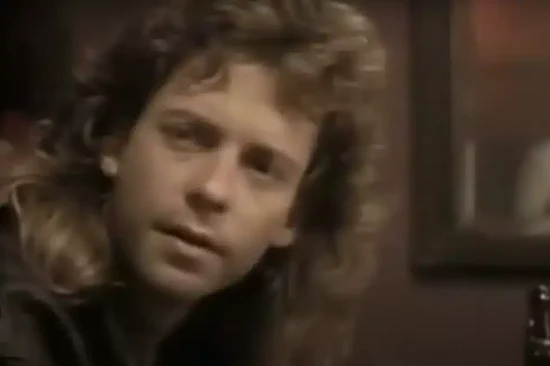
Image credit: YouTube / @NightRangerOfficial
Quick Navigation
- Jack Blades: From Tulsa to the Stage
- How Night Ranger Got Started in San Francisco
- Jack Blades and Night Ranger’s First Breakthrough
- Sister Christian and the Hits That Defined 1984
- Jack Blades Helps Form the Damn Yankees
- High Enough and What Made the Damn Yankees Click
- Jack Blades and Tommy Shaw: The Shaw Blades Project
- Night Ranger Breaks Up and Gets Back Together
- Jack Blades as a Songwriter Beyond Night Ranger
- Jack Blades and Night Ranger in the Modern Era
- Watch Jack Blades Perform Live
- Connect With Jack Blades
Jack Blades: From Tulsa to the Stage
Jack Blades was born on April 24, 1954, in Tulsa, Oklahoma, and grew up in Sacramento, California, where he developed an ear for music early on.
Sacramento’s music scene in the 1970s was active enough to give young players opportunities, and he took full advantage.
He learned bass as a teenager and quickly discovered that he could sing while playing, a combination that would become his calling card throughout his career.
The ability to carry a lead vocal while holding down a bass line is rarer than it sounds, and developing both skills at once shaped how he approached every band he joined.
By the mid-1970s, Jack Blades was performing in local groups and building the kind of stage instincts that classrooms could never teach.
He had the presence and the voice to front a band, and it was only a matter of time before the right situation came together.
The path led eventually to San Francisco, where he connected with the musicians who would become Night Ranger and permanently alter the trajectory of his career.
How Night Ranger Got Started in San Francisco
Night Ranger grew out of a group called Rubicon, a San Francisco-based rock act that released records in the late 1970s and gave Blades his first major label experience.
When Rubicon disbanded, the core players regrouped and expanded, eventually settling on the lineup that would take the Night Ranger name to arenas.
The band that formed alongside Blades included lead guitarist Brad Gillis, rhythm guitarist Jeff Watson, drummer and vocalist Kelly Keagy, and keyboardist Alan Fitzgerald.
Gillis brought serious credentials, having toured with Ozzy Osbourne as a fill-in guitarist before Night Ranger became his full focus.
The group signed with Camel Records and released their debut album Dawn Patrol in 1982, which established their sound: melodic hard rock built on twin lead guitars, layered keyboards, and two singers capable of trading verses or harmonizing without seams.
Having both Blades and Keagy as legitimate lead vocalists gave Night Ranger a flexibility that most rock bands simply did not have.
Dawn Patrol made enough noise on radio to get the band a slot on larger tours, and the foundation for everything that followed was in place.
Did You Know?
Before Night Ranger, Jack Blades played bass in the Bay Area rock band Rubicon, which recorded for 20th Century Records. The group charted in 1978 with “I’m Gonna Take Care of Everything” and developed a cult following on the California club circuit. That early experience of managing bass duties alongside lead vocal responsibilities became the template for everything he would bring to Night Ranger.
Jack Blades and Night Ranger’s First Breakthrough
Jack Blades stepped into a different commercial level with the band’s second album, Midnight Madness, released in 1983.
The album went platinum and put Night Ranger on MTV at a moment when that mattered more than almost anything else a rock band could do.
“(You Can Still) Rock in America” became the track that introduced the band to a national audience, pairing an explosive guitar intro with a chorus designed to survive repeated airplay without losing any of its energy.
“Don’t Tell Me You Love Me” had already given the band radio traction from their debut, but Midnight Madness was the record that turned them from a regional act into a genuine national draw.
Jack Blades handled the majority of the bass-and-vocal duties on the album’s harder tracks, while Keagy anchored the more anthemic material from behind the drum kit.
The chemistry between the two singers gave Night Ranger a range that most of their contemporaries could not match, and Midnight Madness was where that advantage became fully visible.
The band spent most of 1983 and into 1984 on the road, and every night the set got tighter.
Sister Christian and the Hits That Defined 1984
Night Ranger returned in 1984 with 7 Wishes and produced the song that most people associate with the band to this day.
“Sister Christian” was written by drummer Kelly Keagy about his younger sister Christine, and it reached number five on the Billboard Hot 100, the highest chart position the band ever achieved with a single.
The song’s piano-driven opening and anthemic chorus were unlike anything else on rock radio in 1984, and radio programmers responded by putting it into rotation almost immediately.
7 Wishes also contained “When You Close Your Eyes” and “Sentimental Street,” which gave the band additional chart entries and confirmed that Midnight Madness was not a one-album run.
Night Ranger appeared on the same landscape as every major hard rock act of the mid-1980s and consistently delivered albums that sold.
The combination of melody, twin guitars, and two singers gave them a commercial profile that even critics who dismissed the era’s harder acts were willing to acknowledge.
By the mid-1980s, Night Ranger was selling out theaters and headlining arenas in markets across the United States and Japan.
Did You Know?
“Sister Christian” reached a new generation of listeners in 1997 when director Paul Thomas Anderson used it in a pivotal scene in the film Boogie Nights. The sequence, in which the song plays on a car stereo during a tense drug deal that turns violent, became one of the most discussed uses of a classic rock track in modern cinema. The exposure sent the song back onto radio playlists and introduced Night Ranger to an audience that had not been born when the song first charted.
Jack Blades Helps Form the Damn Yankees
By 1989, Night Ranger had released four studio albums and was in the process of an internal restructuring that would eventually lead to a breakup.
It was during this period that Jack Blades received a call that would lead to one of the more unexpected supergroup formations of the era.
Ted Nugent had been looking for a way to create a band that could blend his heavy rock attack with a commercial melodic sensibility he acknowledged his solo records sometimes lacked.
Tommy Shaw of Styx was the third piece of the equation, and drummer Michael Cartellone completed the lineup.
Jack Blades brought to the Damn Yankees the same quality he had always brought to Night Ranger: a bass player who could hold the bottom while simultaneously delivering a lead vocal that carried the song.
The self-titled debut album arrived in 1990 and went platinum in the United States, driven by a combination of Nugent’s guitar presence and the melodic polish that Blades and Shaw brought to the songwriting.
The group had chemistry that no one fully expected before they recorded together, and the debut album was the proof.
High Enough and What Made the Damn Yankees Click
“High Enough” was the single that defined the Damn Yankees in 1990, reaching number three on the Billboard Hot 100 and number one on the Mainstream Rock chart.
The song is a slow-burn ballad anchored by Blades and Shaw trading verses before rising to a chorus that neither man would have reached alone.
The vocal interplay between the two was the heart of the track and the reason it connected with radio programmers across formats, not just rock stations.
“Coming of Age” followed as a second single and performed well, but “High Enough” remained the song that defined what the Damn Yankees were capable of.
The group’s second album, Don’t Tread, arrived in 1992 and sold internationally, though it did not replicate the debut’s commercial peak.
What the two-album run demonstrated was that Jack Blades could move between Night Ranger’s melodic rock and the heavier format Nugent brought to the Damn Yankees without losing anything in the translation.
Versatility is a quality that gets undervalued in rock, and Blades had it in abundance.
Did You Know?
The Damn Yankees sold a combined total of more than four million records worldwide during their original run from 1990 to 1993. Their self-titled debut was certified platinum in the United States, and Don’t Tread also moved units internationally, making them one of the most commercially effective supergroups of the era. Jack Blades shared lead vocal duties with Tommy Shaw across both records, giving the group a melodic depth that separated them from heavier contemporaries.
Jack Blades and Tommy Shaw: The Shaw Blades Project
After the Damn Yankees wound down in the early 1990s, Jack Blades and Tommy Shaw found that their creative partnership had more to offer than a single supergroup.
The two released a collaborative album called Hallucination in 1995 under the name Shaw Blades, a record that leaned into the melodic rock that both men had always written naturally.
Hallucination produced a cover of Aerosmith’s “Dream On” that received radio attention and reminded listeners that the songwriting chemistry between Blades and Shaw extended well beyond the Damn Yankees format.
The album is one of the more underappreciated records of the mid-1990s, sitting outside the grunge-era conversation but containing some of the strongest melodic rock writing either man produced during that decade.
Jack Blades approached Shaw Blades the same way he had approached every project: with a focus on the song first and the commercial angle second.
That approach had worked consistently since Night Ranger’s debut, and it worked again on Hallucination, even if the record found a smaller audience than the two men had collectively reached in the preceding decade.
The creative partnership between Blades and Shaw remains one of the more productive in classic rock history, spanning multiple formats over more than thirty years.
Night Ranger Breaks Up and Gets Back Together
Night Ranger officially disbanded in 1989 after the release of their fifth studio album Man in Motion, and the break lasted for the better part of a decade.
The original lineup reunited in 1996 and has been active in various configurations ever since, releasing new studio albums and maintaining a touring schedule that has kept them in front of audiences across three generations of rock fans.
The reunion gave the band a second commercial wind, with later albums like High Road (2014) and Don’t Let Up (2017) showing the group could produce new material that stood alongside their catalog rather than simply coasting on nostalgia.
The live set on any given Night Ranger tour includes the hits fans expect alongside tracks from newer records, and the band has built a reputation for delivering those shows at a professional level that younger rock acts often cannot match.
The reunion also put Blades back in regular contact with Kelly Keagy, Brad Gillis, Jeff Watson, and Alan Fitzgerald, and the chemistry that had produced the band’s best work in the 1980s proved durable.
Some bands come back and feel like they are going through the motions; Night Ranger’s return felt like people who actually wanted to be in the same room again.
Jack Blades as a Songwriter Beyond Night Ranger
Jack Blades has worked as a songwriter and collaborator throughout his career, contributing to projects outside Night Ranger and the Damn Yankees whenever the right situation presented itself.
His approach to songwriting centers on melody and economy: the hook needs to arrive before the listener’s attention has time to wander, and every lyric needs to earn its place in the song.
That philosophy produced hits in multiple formats across multiple decades, which is a level of songwriting consistency that relatively few rock artists manage to maintain.
The classic rock community that Blades moved through during the 1980s and 1990s was built on personal connections formed on tour, in studios, and at industry events, and those connections have continued to generate creative opportunities throughout his career.
Fellow classic rock vocalist John Corabi, whose story runs through a similar period of the rock world, has spoken in interviews about the tight-knit nature of that community and how artists from that era continue to support each other’s work, including through social media channels like Corabi’s Facebook page.
Jack Blades has built a catalog that rewards listeners who dig past the obvious hits, and the deeper cuts often show a more sophisticated sense of arrangement than the radio singles might suggest.
The breadth of the work, from hard rock to power ballads to collaborative projects, is the most accurate reflection of what kind of songwriter he actually is.
Jack Blades and Night Ranger in the Modern Era
Night Ranger continues to tour and record, and Jack Blades remains the engine at the center of the band’s live performances.
The band’s catalog holds up well in a live setting because the songs were built around strong arrangements rather than studio production tricks, and the material sounds as direct on a stage in 2026 as it did in an arena in 1984.
Jack Blades has described in recent interviews his belief that the audience’s connection to the music is what sustains a band over decades, and Night Ranger’s ticket sales support that assessment.
The band plays to multi-generational audiences at this point, including fans who discovered them through streaming and younger listeners who have never seen rock presented the way Night Ranger presents it.
The later studio albums demonstrate that Night Ranger is not resting on their catalog, and the same ambition that produced Midnight Madness in 1983 is visible in the production choices on more recent records.
Blades has maintained his voice across decades of touring through a combination of disciplined stage craft and an approach to vocal delivery that avoids the kind of excess that shortens other singers’ careers.
The track record speaks clearly: Night Ranger has outlasted most of the bands that shared their commercial moment, and Jack Blades is the primary reason why.
Watch Jack Blades Perform Live
The video below captures the energy and professionalism that have made Jack Blades one of classic rock’s most dependable live performers across four decades.
Watch this performance and you understand immediately why the songs have lasted: they work because the person delivering them believes every word.
Connect With Jack Blades
Jack Blades keeps an active presence across several social media and music platforms, where he regularly connects with Night Ranger fans and shares updates on shows and recordings.
- Facebook: @JackBlades
- Instagram: @jackblades
- X (Twitter): @JackBlades
- YouTube Music: #jackblades
- Wikipedia: Jack Blades
Explore Jack Blades and Night Ranger on Amazon
From Midnight Madness to the Damn Yankees catalog, the music of Jack Blades spans four decades of essential rock.