Dont Go Away Mad: Motley Crue’s 1990 Power Ballad
Dont Go Away Mad gave Motley Crue their third Top 20 hit from the Dr. Feelgood album in 1990 and arrived as the most restrained, emotionally specific moment in a commercial cycle that had opened at full volume.
Kickstart My Heart and the title track had already defined the album as the dominant hard rock release of 1989.
This was the ballad that closed the cycle with something different.
Where the earlier singles announced themselves at maximum volume, this one began quietly and built its case over time.
You already knew how loud Motley Crue could play.
This was the track that showed how much they could leave unsaid.
Quick Navigation
- Dont Go Away Mad: The Song That Showed Another Side
- The Dr. Feelgood Album and How It Set the Stage
- How Nikki Sixx and Tommy Lee Wrote the Song
- Dont Go Away Mad as a Single in 1990
- Vince Neil and the Vocal That Made It Real
- The Music Video and Its Run on MTV
- Dont Go Away Mad and Its Place in the Catalog
- Watch Dont Go Away Mad Now
Dont Go Away Mad: The Song That Showed Another Side
Dont Go Away Mad opens with acoustic guitar, and that single choice sets it apart from everything else on the record.
There is no motorcycle engine, no crashing riff, no declaration of intent in the first measure.
The song enters quietly and earns its way toward volume over several bars.
The lyric is addressed to someone at the end of a relationship, written from frustrated acceptance rather than grief.
The singer is not asking anyone to stay.
He is asking, with barely concealed impatience, that whoever is leaving do so without creating a scene.
That specific emotional register, the polite request with real irritation underneath it, is what makes the song memorable rather than forgettable.
A more conventional band would have written the sentimental version.
Motley Crue wrote the honest one.
The Dr. Feelgood Album and How It Set the Stage
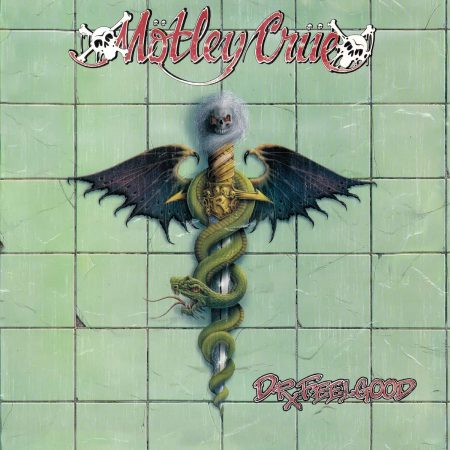
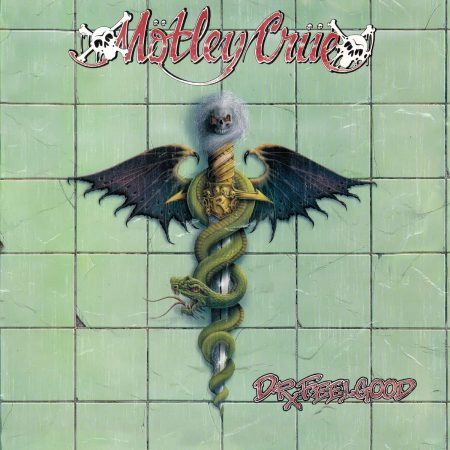
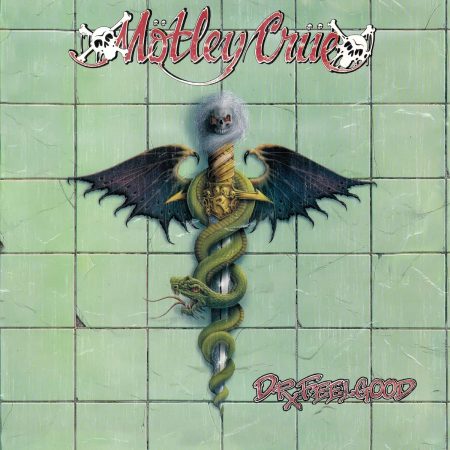
The Dr. Feelgood album arrived on September 1, 1989, debuted at number one on the Billboard 200, and sold more than six million copies in the United States.
Bob Rock produced the record, and his approach pushed the band toward a discipline and precision their earlier albums had reached for without fully achieving.
It was the product of four musicians who had gone through sobriety and come out the other side with something to prove and the technical ability to prove it.
The result was the commercial and creative peak of their career.
Singles were sequenced to demonstrate the full range of what the album contained.
Kickstart My Heart established raw power.
The title track established menace.
The third single needed to show something neither of those had shown.
By the time the ballad reached radio in early 1990, the album had already sold millions of copies, and the song had a running start most artists would never experience.
How Nikki Sixx and Tommy Lee Wrote the Song
Nikki Sixx and Tommy Lee wrote the song together, and the collaboration produced a lyric that occupies emotional territory most hard rock declined to visit in 1990.
The song is not a revenge fantasy and not a tearful farewell.
It sits in the frustrated middle ground: the feeling after a relationship reaches its end and the only reasonable request left is that the other person leave with some dignity.
The subtitle Just Go Away tells you exactly where the emotional temperature is sitting.
The full title, Don’t Go Away Mad (Just Go Away), contains both the attempt at civility and the impatience beneath it.
Compressing two contradictory feelings into a single song title is the kind of precision that separates craft from formula.
It is a more sophisticated emotional proposition than most of the band’s earlier output, and it arrived because both writers were working with more clarity than they had managed in years.
Dont Go Away Mad as a Single in 1990
Dont Go Away Mad was released in February 1990 and climbed to number nineteen on the Billboard Hot 100.
On the Billboard Mainstream Rock Tracks chart, it reached number one.
The release came at a moment when the members of Motley Crue were executing with a focus and consistency they had never quite sustained before.
Sobriety had sharpened every part of the band’s output, and the Dr. Feelgood singles were the evidence of that sharpening delivered one chart position at a time.
Reaching number one on the rock chart with a ballad, months after Kickstart My Heart had done the same with something entirely different in tone and approach, confirmed the album was a full-spectrum achievement.
It was not a record built around a single idea.
It was the work of a band that had learned to play across the entire range of what they were capable of producing.
Vince Neil and the Vocal That Made It Real
Vince Neil had a specific skill that made a performance like this possible: the ability to deliver frustration without tipping into contempt, and emotional openness without asking for pity.
He sang the track with his voice positioned slightly forward, close enough to feel immediate, controlled enough to let the lyric work without being oversold.
The verses were kept intimate.
The choruses were delivered with more force, but Neil never let the performance become a demonstration of range.
He kept the vocal in service of the emotion the lyric was describing, which is the decision that distinguishes a true performance from a vocal exercise.
It is one of the most precise and honest deliveries in his entire catalog.
The fact that it was recorded at the commercial peak of the band’s career, surrounded by a record of that scale and ambition, makes it more significant, not less.
The Music Video and Its Run on MTV
Wayne Isham directed the video, and it arrived on MTV with the same production confidence as everything the band released from the Dr. Feelgood cycle.
Isham had become the trusted director for the band’s biggest singles, and his approach here matched the song’s tone: performance footage, atmosphere, and a visual language that framed the emotion without overexplaining it.
MTV rotated the clip through the spring of 1990, keeping the album visible to both the listeners who had already committed to it and the ones encountering it for the first time.
The video did not dramatize the lyric literally.
It trusted the song to hold the audience on its own terms, which was the right choice and one that held up as the video aged alongside the song.
Dont Go Away Mad and Its Place in the Catalog
The power of Dont Go Away Mad within the Motley Crue catalog is the contrast it creates against everything surrounding it.
Place it beside Kickstart My Heart and you have the full range of what the band could produce on a single album.
Those two songs occupy entirely different emotional and sonic territory, and both are executed with complete conviction.
That range is what separates the albums that last from the ones that date.
The Dr. Feelgood record earned its place in the hard rock canon because the band had the ambition to include tracks at both ends of their capability and the skill to make each one feel essential.
The band continues to perform, and their official Motley Crue website has all the current details on upcoming tours and releases.
Watch Dont Go Away Mad Now
The video below captures Dont Go Away Mad as it appeared on MTV in 1990, at the commercial peak of the Dr. Feelgood era.
Affiliate Disclosure: This post contains affiliate links. If you purchase through them, we may earn a small commission at no extra cost to you.
If the Dr. Feelgood album is not yet in your collection, the Dr. Feelgood on Amazon is where Dont Go Away Mad sits alongside Kickstart My Heart, Without You, and the complete 1989 commercial peak.