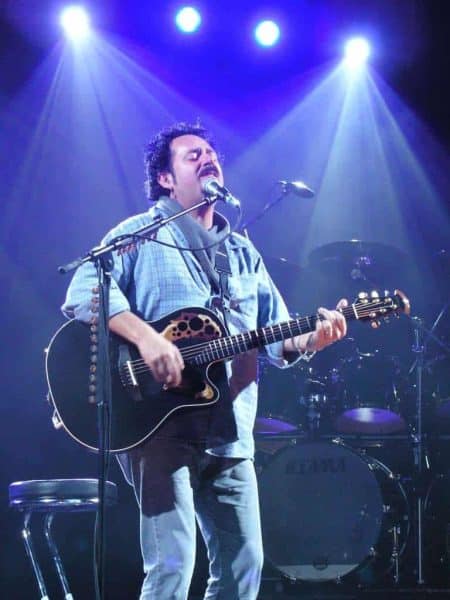
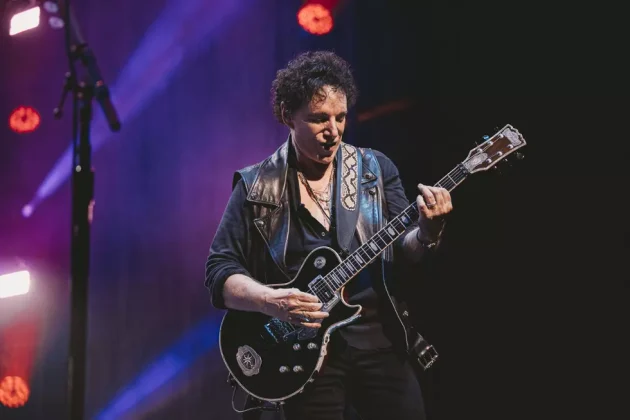
Nils Lofgren has been one of rock and roll’s most essential voices for more than five decades, and his career has never asked permission to go anywhere it wanted to go.
He was playing on Neil Young records as a teenager, fronting his own band before most musicians his age had landed their first real gig, and holding down the lead guitar chair in the E Street Band through some of the most watched rock performances in history.
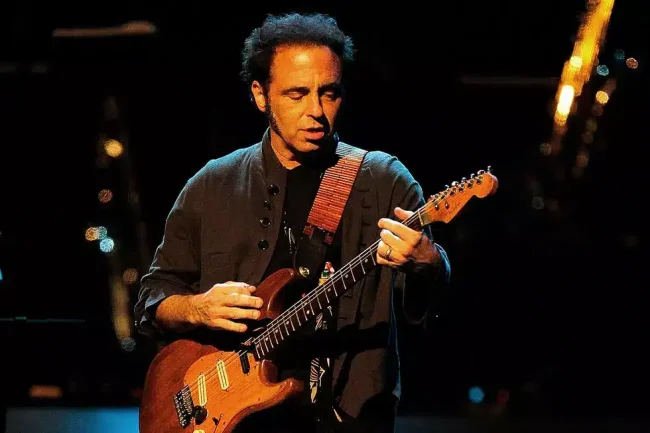
Photo: Gregory Shamus, Getty Images
Affiliate Disclosure: I am an Amazon affiliate and if you purchase through any amazon links on this site i may earn a small commission at no extra charge to you. This helps support classicrockartists.com and allows me to keep providing deep-dive content on the legends of rock. Thank you for your support!
Quick Navigation
- Nils Lofgren: The Early Years in Chicago and Maryland
- From Grin to the Spotlight
- Nils Lofgren and Neil Young: A Partnership That Mattered
- The Solo Albums That Defined His Voice
- Nils Lofgren Joins the E Street Band
- Playing with Bruce Springsteen: The Born in the USA Era
- The Guitar Style That Sets Nils Lofgren Apart
- Nils Lofgren and the Rock and Roll Hall of Fame
- Watch: No Kings No Hate No Fear
- What the Records Tell You About Nils Lofgren
- Nils Lofgren on the Road in 2026
- How to Follow Nils Lofgren Today
This is the story of a musician who has never chased trends, never compromised the things that make his playing identifiable, and never stopped working.
Nils Lofgren remains one of the most compelling reasons to pay attention to live rock and roll, and the story behind that reputation is worth knowing in full.
Nils Lofgren: The Early Years in Chicago and Maryland
Nils Lofgren was born on June 21, 1951, in Chicago, Illinois, and grew up in Rockville, Maryland, where the mid-Atlantic music scene of the late 1960s was beginning to stir.
His first instrument was the accordion, an unusual starting point for someone who would go on to be celebrated as one of rock’s most inventive guitar voices.
He took to music with an immediacy that surprised everyone around him, and the accordion gave way to the guitar with the inevitability of someone finding the instrument they were always supposed to play.
By his early teens, he was writing songs and performing in local bands with a technical fluency that put him well ahead of his peers.
Rockville in the late 1960s was close enough to Washington D.C. to absorb the energy of a city that was politically and culturally charged, and the music that came out of that environment carried a sense of urgency that would stay in his playing for the rest of his career.
The ambition to make music that meant something was not something he developed gradually.
It was there from the beginning, and it shaped every decision he made about what kind of artist he wanted to be.
Did You Know
Nils Lofgren appeared as a session guitarist on Ringo Starr’s 1974 album “Goodnight Vienna,” recording alongside a roster of rock royalty that included John Lennon and Elton John. The album is a deep-cut gem from the solo Beatle catalog that most rock fans have never fully explored. You can pick it up on Amazon, and the Ringo Starr 2026 tour is a reminder of just how active that era’s musicians remain today.
From Grin to the Spotlight
Grin was the band he formed in the Washington D.C. area in the late 1960s, and it became the vehicle through which he first built an audience beyond his local scene.
The band released four albums between 1971 and 1974, combining rock energy with melodic intelligence in ways that earned strong reviews and attracted a devoted following without breaking through commercially.
David Briggs, Neil Young’s longtime producer, heard him play and immediately understood what he was dealing with.
Briggs introduced him to Young, and that introduction changed the course of his career in ways neither could have fully predicted at the time.
Grin eventually disbanded, but the records the band made in those years hold up as artifacts of a period when rock still moved fast enough that a teenager with real talent could find himself in a recording studio before he had finished growing up.
The songwriting and arrangements he developed during the Grin years gave him a foundation that would serve him through every phase of what came next.
The discipline of writing, rehearsing, and recording within a band structure is something that never leaves a musician, and he carried everything Grin taught him directly into the solo records that followed.
Nils Lofgren and Neil Young: A Partnership That Mattered
The working relationship between Nils Lofgren and Neil Young is one of the less discussed and more important creative partnerships in 1970s rock.
Nils Lofgren played piano and guitar on After the Gold Rush in 1970, when he was still a teenager, and the contributions he made to that album placed him in the company of musicians who were already considered among the finest in the business.
After the Gold Rush became one of Young’s most enduring records, and the piano work in particular left a mark on how listeners and musicians understood what the album was doing.
He returned to work with Young on Tonight’s the Night in 1975, an album that was rawer and more nakedly emotional than anything Young had released to that point.
Playing on Tonight’s the Night required a different kind of commitment than studio polish, and he delivered exactly what the sessions needed.
The two men understood each other musically in a way that produced performances that neither would have reached alone, and that chemistry is audible on every track they recorded together.
Young has spoken about those sessions in ways that make clear he trusted Lofgren with material that demanded full emotional honesty, and that trust was not misplaced.
The Solo Albums That Defined His Voice
The self-titled debut album released by Nils Lofgren in 1975 announced a songwriter and performer of real distinction, someone shaped by his work with major artists but who had something entirely his own to say.
That album contained “Keith Don’t Go,” a tribute written in response to rumors that Keith Richards might leave the Rolling Stones, and it became one of the most celebrated songs in his catalog.
“Cry Tough” followed in 1976 and deepened the picture of a musician who could write radio-ready rock without surrendering the directness that made his live performances so compelling.
“I Came to Dance” in 1977 continued that trajectory with a tighter focus on the interplay between his guitar work and the band behind him.
The live album “Night After Night” from 1977 documented what his band sounded like when the studio constraints came off.
The solo career continued through the 1980s and into the 1990s alongside his work with the E Street Band, producing records that found audiences who stayed loyal because the music gave them a reason to.
“Acoustic Live” from 1997 is the solo record that many listeners regard as the definitive statement of what he sounds like when the amplifiers go quiet and the songs have nowhere to hide.
Every song on that album earned its place without the benefit of production, which is the test that only writers who fully trust their material can pass.
Did You Know
Nils Lofgren is well known among live music regulars for performing a backflip off a trampoline while playing guitar, a feat he developed in his early touring years and has continued to do well into his 70s. The move is not a gimmick added for spectacle. It started as a spontaneous expression of the physical energy he brings to every performance and became something audiences expect and look forward to every night. His album Acoustic Live captures what he sounds like when the only thing on stage is the music itself.
Nils Lofgren Joins the E Street Band
In 1984, Nils Lofgren joined the E Street Band when Steven Van Zandt stepped aside to pursue a solo career, and the timing could not have been more significant.
The band was about to begin the Born in the USA tour, one of the largest rock and roll tours in history, and he stepped into the lead guitar role with the composure of someone who had been preparing for exactly this moment without knowing it.
His official E Street Band profile at brucespringsteen.net reflects the weight of that role, but it cannot fully convey the speed with which he made the position his own.
Bruce Springsteen’s catalog, anchored by albums like Born to Run, demanded a guitarist who could serve the songs without crowding them, and Nils Lofgren understood that distinction instinctively.
He plays with authority and restraint in equal measure, which is exactly what the E Street Band requires from the guitar chair.
The transition from solo artist to band member within a unit of this profile is not always smooth for musicians accustomed to controlling their own sound, but he moved into the role with the grace of someone who had always known how to listen.
Playing with Bruce Springsteen: The Born in the USA Era
The Born in the USA tour ran from June 1984 through October 1985 and played to more than five million people across North America, Europe, Japan, and Australia.
He was on stage for all of it, playing in venues that had never seen shows of that scale, night after night, with the kind of consistency that separates the musicians who understand what they are part of from those who are simply along for the experience.
His guitar work on songs like “Bobby Jean” and “No Surrender” gave those recordings a live character that has held up through every replay in the decades since.
The performances captured on video from that era show a musician who is fully present, fully committed, and fully aware that what is happening on that stage belongs to something larger than any individual within it.
That quality of attention is rarer than technical ability, and he has demonstrated it every night he has walked onto a stage with the E Street Band.
The Born in the USA era also established him as a permanent fixture in the band rather than a touring addition, which is a distinction that matters in a group where loyalty and continuity are part of the identity.
Did You Know
“Keith Don’t Go,” one of his most celebrated solo songs, was written as a direct plea to Keith Richards to remain in the Rolling Stones after persistent rumors that Richards was considering leaving the band in the mid-1970s. Richards reportedly heard the song and was moved by it. The story behind the track is a window into the tight-knit world of 1970s rock, where musicians followed each other’s careers with a personal investment that went beyond professional admiration. Richards tells his own side of that era in extraordinary detail in his memoir, Life, which remains one of the most candid accounts of rock history written by anyone who was there for all of it.
The Guitar Style That Sets Nils Lofgren Apart
Nils Lofgren is not a guitarist who plays guitar the way most guitarists play guitar.
He approaches the instrument as one part of a larger musical vocabulary that also includes piano, accordion, pedal steel guitar, and banjo, and the fact that he can move between these instruments without a drop in fluency tells you something important about how he hears music.
His fingerpicking technique on acoustic guitar has a precision that rewards close listening, particularly on stripped-down recordings where every choice is exposed and nothing can be hidden behind production.
His slide guitar work carries an emotional directness that is harder to fake than technical speed, and he has never needed to fake anything in a playing career that stretches back more than fifty years.
The physical dimension of his performances adds another layer to what he brings to a live show.
He plays with his whole body, not as a performance of effort, but because the music appears to move through him in a way that does not allow for stillness.
That quality is not something you develop at practice.
It is something you either have or you do not, and he has had it since the first time anyone who mattered put a microphone in front of him.
Players who have shared stages with him over the years consistently describe the same thing: you know immediately when he is behind you, and the room feels different when he is on.
Nils Lofgren and the Rock and Roll Hall of Fame
In 2014, Nils Lofgren was inducted into the Rock and Roll Hall of Fame as a member of the E Street Band, an honor that reflected three decades of work in one of rock’s most demanding and celebrated roles.
The induction ceremony gave a public shape to what rock music’s most attentive listeners had understood for years: that the E Street Band is as much a collective achievement as it is a vehicle for Bruce Springsteen’s vision, and that the musicians within it have earned their place through sustained excellence.
His contribution to that collective achievement is embedded in the recordings and the live performances the band produced from 1984 onward.
The RRHOF induction also served as a marker for the arc of a career that had already produced a significant body of solo work, influential collaborations with Neil Young, and a live reputation that had been building since the Grin years.
Being inducted alongside the rest of the E Street Band is not a diminishment of what he accomplished as a solo artist.
It is a recognition that the role he played within that band was large enough to stand as its own achievement, separate from and in addition to everything he built under his own name.
Watch: No Kings No Hate No Fear
The video below features Nils Lofgren performing “No Kings No Hate No Fear,” a song that carries the directness and conviction that has defined his best solo work across five decades.
It is the kind of performance that reminds you why live music still matters when it is made by someone who means every note.
What the Records Tell You About Nils Lofgren
A discography that spans more than fifty years and moves between solo records, collaborative recordings, and work as a band member does not have a simple entry point, but he has made the catalog accessible for anyone willing to spend the time.
Start with the 1975 self-titled debut, which establishes the voice and the sensibility that everything else flows from.
Move to “Acoustic Live” for the version of him that strips away everything except the songs and the playing.
Then go to the Neil Young collaborations: After the Gold Rush for the context of how it all started, and Tonight’s the Night for how far that partnership was willing to go emotionally.
The E Street Band recordings fill in the rest of the picture: the scale of the performances he was part of, the consistency across decades of shows, and the way his playing fits into an ensemble built around one of rock’s most demanding catalogs.
What the records tell you about Nils Lofgren, taken together, is that he has never been content to occupy a lane and stay in it.
The full catalog on his YouTube channel gives any new listener a strong starting point before committing to the deep catalog.
Nils Lofgren on the Road in 2026
Bruce Springsteen’s belatedly announced run of 2026 shows brought Nils Lofgren and the rest of the E Street Band back on the road in the spring, with dates scheduled to continue through the edge of summer.
The 2026 run marks another chapter in a partnership that has now extended across four decades, and the performances have shown none of the diminishment that time tends to bring to bands of this vintage.
He arrives at every show with the same physical and musical commitment that characterized the Born in the USA dates in 1984 and the reunion tours that followed in subsequent decades.
The 2026 lineup also includes Tom Morello, who has been bringing his own guitar voice to the E Street Band on recent dates, adding another dimension to a lineup that was already formidable.
Watching Nils Lofgren hold down the guitar chair alongside Morello while remaining the consistent, grounding presence he has been in the band for more than forty years is a reminder of how rare this kind of sustained contribution actually is in rock and roll.
The 2026 tour is one of the clearest arguments available for seeing this band live if you have not yet done so.
How to Follow Nils Lofgren Today
The official home for everything he is doing in music is at nilslofgren.com, where tour information, new releases, and updates are kept current.
On Instagram, his account at @realnilslofgren offers a direct look at life on the road and in the studio.
The fan community gathered on Facebook at facebook.com/nilslofgrenfans is one of the more active artist fan pages in classic rock and provides a space where longtime listeners share memories alongside newer ones discovering the catalog for the first time.
For ongoing coverage of artists across the classic rock spectrum, the full roster of biographies and features is available at classicrockartists.com/category/artists.
Affiliate Disclosure: This post contains affiliate links. If you purchase through them, we may earn a small commission at no extra cost to you.
The complete Nils Lofgren catalog, including vinyl, CD, and merchandise, is available on Amazon, and whether you are coming to him for the first time or returning to records you already know, the body of work that Nils Lofgren has built over fifty years will reward every hour you put into it.