
Rob Halford: The Metal God, the Voice, and Fifty Years
Rob Halford did not invent heavy metal, but he gave it a voice that no one who came before him had imagined and no one who came after has been able to fully replicate.
For more than fifty years, the singer from Walsall, England, has stood at the center of one of the most consistent and physically demanding careers in all of rock music.
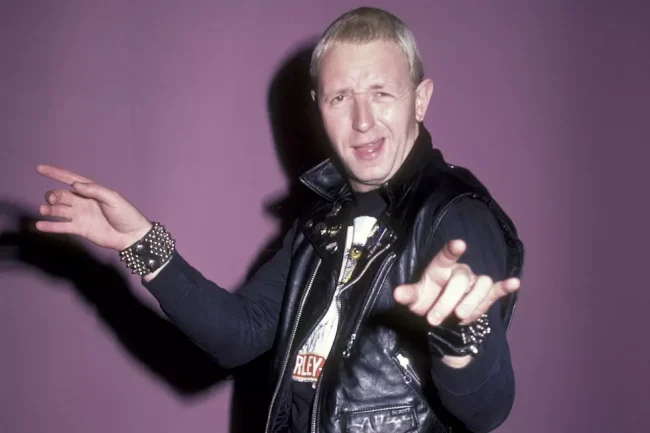
Photo: Ron Galella Collection, Getty Images
Quick Navigation
- Rob Halford: Walsall, England, and the Making of a Metal God
- Judas Priest and the Rise of British Heavy Metal
- Rob Halford and the Voice That Could Not Be Contained
- British Steel: The Album That Changed the Metal World
- Rob Halford Leaves Judas Priest: Fight, Two, and Solo Work
- Coming Out, Staying In, and Redefining What Rock Could Be
- Rob Halford Returns to Judas Priest in 2003
- Painkiller and the Peak of the Metal Machine
- Watch: Rob Halford on Getting Sober
- Rob Halford on Stage: Why Every Night Is a Statement
- Rob Halford and Judas Priest in 2024 and 2026
- The Songs That Define a Career
- How to Follow Rob Halford Today
This is a career built on raw power, artistic risk, and the kind of personal honesty that most public figures spend their lives avoiding.
Rob Halford has never been easy to put in a box, and the music has always reflected exactly that.
Rob Halford: Walsall, England, and the Making of a Metal God
Rob Halford was born Robert John Arthur Halford on August 25, 1951, in Sutton Coldfield, Warwickshire, and grew up in Walsall in the West Midlands of England.
The industrial landscape of the West Midlands in the 1950s and 1960s was a world of factories, furnaces, and the particular kind of working-class toughness that shaped the music that came out of that region for decades.
Halford absorbed that environment completely, and the weight of it shows up in everything from his vocal approach to the imagery he would later bring to the Judas Priest stage.
He discovered early that his voice was unlike anything around him, capable of ranges and textures that most singers could not reach even with years of formal training.
The theatricality that would later define his stage persona was also present from the start, shaped partly by a teenage interest in dramatic performance and the stagecraft of performers he admired.
He carried those instincts directly into Judas Priest when the opportunity arrived, and the band was never the same after he walked through the door.
Did You Know
Before music took over, Rob Halford worked as a glass engraver at a factory in the West Midlands and also put in time at a local cinema, where his love of dramatic presentation and large-scale imagery began to take shape. Those years gave him a perspective on work and endurance that informs the relentless touring schedule he has maintained across five decades in rock. His autobiography Confess covers this period in vivid detail and stands as one of the most candid memoirs ever written by a major rock artist.
Judas Priest and the Rise of British Heavy Metal
Judas Priest had already been a functioning band for several years when Rob Halford joined as their vocalist in 1973, and his arrival fundamentally changed the ceiling of what the band could achieve.
The chemistry between Halford and twin guitarists Glenn Tipton and K.K. Downing created a dynamic that would define the New Wave of British Heavy Metal and set the template for a generation of bands that followed.
The early albums, including Rocka Rolla in 1974 and the more assured Sad Wings of Destiny in 1976, established Judas Priest as a band capable of something no one had quite heard before: precision, power, and a vocalist who could ride both without compromising either.
The 1976 track Victim of Changes is the clearest early statement of what Rob Halford and Judas Priest were capable of together, a seven-minute demonstration of vocal and instrumental range that left no doubt about the band’s ambition.
By the late 1970s, Judas Priest had become one of the defining forces in British rock, and Rob Halford was the face and voice the world attached to that identity.
Rob Halford and the Voice That Could Not Be Contained
Rob Halford’s vocal range is the thing that most people reach for when they try to explain what separates him from every other heavy metal singer, and it is a fair place to start, but it is also only part of the story.
He can hit notes at the extreme upper register of the male vocal range with a power and precision that most trained singers could not sustain for a full set, let alone night after night across a world tour.
The scream he deploys on songs like “Painkiller” and “The Hellion” is not a trick or a studio effect.
It is a genuine instrument, controlled and directed with the same deliberateness a classical tenor brings to an aria.
But Rob Halford is also a capable and nuanced mid-range singer, and the moments when he pulls back from the upper register to deliver a quieter, more direct lyric are often where the emotional weight of a Judas Priest song actually lands.
He understands dynamics in a way that many metal vocalists do not, and that understanding is what makes listening to a full Judas Priest album a different experience from a greatest hits playlist.
The voice is the story, but the intelligence behind the voice is what makes the story worth following.
British Steel: The Album That Changed the Metal World
British Steel, released in 1980, is the Judas Priest record that crossed from the underground into the mainstream without losing a single thing that made the band dangerous.
“Breaking the Law” and “Living After Midnight” became radio staples that introduced Rob Halford’s voice to audiences who had never heard a heavy metal record, and the album sold in numbers the band had not previously approached.
The track Breaking the Law remains one of the most recognizable riffs in all of rock, and the video that accompanied its release gave the band a visual identity that matched the sonic one Halford had been building since 1973.
British Steel is the album that proved a metal band could be commercially massive without diluting the music, and Rob Halford’s performances on it are the primary reason that proof holds.
The follow-up period through Screaming for Vengeance in 1982 and Defenders of the Faith in 1984 kept the band at the top of the metal world, and Halford’s voice grew sharper and more controlled with each record.
Rob Halford Leaves Judas Priest: Fight, Two, and Solo Work
Rob Halford parted ways with Judas Priest in 1992 after nearly two decades with the band, a separation that sent shockwaves through the metal world and raised genuine questions about what either party could accomplish without the other.
His answer came in the form of Fight, a band that leaned into a heavier and more aggressive sound than Judas Priest had pursued, releasing “War of Words” in 1993 to an audience that wanted to hear what Halford could do without the constraints of an established band identity.
Two followed in 1998, a project that pushed further into industrial and electronic textures, demonstrating the range of his musical curiosity at a point in his life when he had more freedom to experiment than at any previous moment in his career.
The Halford solo project, launched in 2000 with the album “Resurrection,” brought him back to the sound most closely associated with his years in Judas Priest and reminded anyone who had been following from a distance exactly what they had missed.
“Resurrection” received strong reviews and strong sales, and it demonstrated that Rob Halford’s voice had not diminished but had simply been pointed in different directions for a few years.
Did You Know
The leather and studs visual identity that became the uniform of heavy metal worldwide was largely invented by Rob Halford when he began wearing motorcycle gear on stage in 1978, culminating in his famous entrance at a major festival where he rode a Harley-Davidson motorcycle directly onto the stage. The image was not calculated. He had always been drawn to motorcycle culture and simply brought himself onto the stage, and what felt personal to him became the defining visual language of an entire genre. You can hear the album that matched that moment on vinyl: Hell Bent for Leather is available on Amazon and holds up as one of the band’s most direct and powerful records.
Coming Out, Staying In, and Redefining What Rock Could Be
In 1998, Rob Halford publicly came out as gay in an interview, becoming one of the first major rock artists to do so at a time when the metal world had not had that conversation in any meaningful way.
The disclosure was significant not because it changed who Halford was but because it closed a distance between his public persona and his private life that had cost him something personal over many years.
The response from the metal community was more supportive than many observers expected, in part because Halford had already earned the trust of his audience through decades of music that made no concessions to anyone’s expectations.
He has spoken since about the weight that came off when the truth became public, and the directness with which he has discussed his sobriety and his relationships has given him a credibility beyond the music that few rock artists of his generation have achieved.
The honesty that defines his best performances is the same honesty that defines his public life, and the two things have always been connected.
Rob Halford Returns to Judas Priest in 2003
Rob Halford rejoined Judas Priest in 2003, and the reunion landed with the kind of inevitability that made the decade they had spent apart feel like the wrong chapter of a story that was always going to end this way.
The tour that followed the reunion placed Rob Halford back in front of arenas full of people who had waited years for exactly this, and the shows delivered everything the most optimistic version of a Judas Priest reunion could have promised.
The band released “Angel of Retribution” in 2005 as the first studio album with Halford since 1990’s “Painkiller,” and the record confirmed that the reunion was creative as well as commercial.
For the live show during this period, you can see exactly what the reunion era sounded like at Judas Priest in concert, which captures the energy of a band that had come back together with something to prove.
Rob Halford’s return to Judas Priest is one of the cleaner reunion stories in rock, in the sense that it produced genuinely good music rather than simply allowing both parties to cash in on a nostalgia audience.
Painkiller and the Peak of the Metal Machine
Painkiller, released in 1990, is the album that many Judas Priest listeners point to as the band’s most fully realized statement, a record where everything, the production, the performances, the songwriting, arrived at the same peak simultaneously.
The title track opens with a drum assault from Scott Travis that lasts nearly a minute before the guitars arrive, and when Rob Halford’s voice enters, the effect is of something arriving from outside the normal parameters of rock music.
The vocal performance on “Painkiller” remains one of the most referenced in heavy metal history, the standard against which new metal vocalists are measured whether they acknowledge it or not.
“A Touch of Evil” on the same album demonstrated the other side of what Halford could do: a slower, more atmospheric piece where his control of dynamics produced something that owed more to classic rock balladry than to the speed metal of the title track.
Painkiller was also the last Judas Priest album before the split, which gave it a retrospective significance that neither the band nor the audience fully understood until Halford was gone.
Watch: Rob Halford on Getting Sober
The video below features Rob Halford speaking candidly about his sobriety, a subject he has addressed with the same directness he brings to everything else in his public life.
It is a valuable piece of context for anyone who wants to understand the full picture of who he is beyond the stage persona.
Rob Halford on Stage: Why Every Night Is a Statement
Rob Halford has been performing live for more than fifty years, and the physical demands of what he does on stage have not diminished the way most observers assume they must after this long.
He still commands a stage with a presence that is equal parts theatricality and genuine menace, leather-clad and lit from angles that have been calibrated to make him look like exactly what the music requires.
The Alice Cooper and Judas Priest co-headline tour is one of the more memorable pairings in recent rock history, and you can get a full picture of that run at alice-cooper-judas-priest-tour.
Halford brings to every live performance the conviction that this is the only show that matters tonight, regardless of how many shows have come before it or how many are scheduled after.
That conviction is visible in video from his earliest performances with Judas Priest in the mid-1970s and equally visible in footage from last year, which is either the mark of exceptional discipline or of someone for whom the performance is not a job but an expression of who they actually are.
Rob Halford has always seemed to be in the second category, which is the only category that produces fifty years of genuine commitment at this level.
Rob Halford and Judas Priest in 2024 and 2026
Rob Halford and Judas Priest made a statement in 2024 that went beyond music: the band tied for fourth-most shows played across all of rock for the year, a figure that placed them alongside acts decades younger and with far fewer miles on the odometer.
The 2024 “Invincible Shield” album, the band’s nineteenth studio record, gave the touring push a new piece of music to anchor, and the response from both critics and audiences confirmed that Judas Priest in 2024 was not operating on nostalgia alone.
That pace has not slowed, with concerts set through September 2026, including the joint touring with Alice Cooper in 2026 that has given rock fans one of the more compelling double-bill packages in recent years.
Rob Halford at 74 is playing shows, hitting notes, and commanding rooms in ways that genuinely defy the standard expectations attached to that age in rock music.
The machine built by Judas Priest over fifty years is still running at full speed, and Rob Halford is still the engine at the center of it.
The Songs That Define a Career
The catalog that Rob Halford has built with Judas Priest and under his own name contains some of the most identifiable moments in the history of rock music.
“Breaking the Law” introduced his voice to a mainstream audience that metal had not previously reached.
“You’ve Got Another Thing Comin'” from 1982 became one of the most played songs in rock radio history.
“Painkiller” established a standard for metal vocal performance that has shaped every conversation about the genre’s possibilities since its release in 1990.
“Electric Eye,” “Screaming for Vengeance,” “Living After Midnight,” and “Victim of Changes” fill in the picture of a musician who has consistently delivered at the highest level across radically different tempos, moods, and production styles.
The solo work adds another layer: “Resurrection” and the records that followed it show what Rob Halford sounds like when he is working strictly from his own creative instinct, without the collaborative pressure of one of rock’s most famous ensembles.
Every piece of it rewards listening.
Did You Know
Rob Halford’s autobiography “Confess,” published in 2020, became a New York Times bestseller, making him one of the very few heavy metal musicians to achieve that distinction in nonfiction. The book covers his childhood in Walsall, the Judas Priest years, his sobriety, and his life with full candor and no airbrushing. It is widely regarded as one of the best rock memoirs ever written. You can find it on Amazon and it is worth reading whether you are a longtime fan or coming to his story for the first time.
How to Follow Rob Halford Today
Rob Halford’s music, news, and tour information are gathered on his YouTube music channel, which is one of the better places to start if you are new to the catalog or want a quick overview of the full range of what he has recorded.
On Facebook, the official page at facebook.com/robhalfordlegacy provides regular updates on shows, releases, and appearances.
On Instagram, @robhalfordlegacy covers the road and the moments between shows with the kind of access that his audience has always appreciated.
For ongoing coverage of artists across the classic rock and metal spectrum, the full roster of biographies and profiles is at classicrockartists.com/category/artists.
Affiliate Disclosure: This post contains affiliate links. If you purchase through them, we may earn a small commission at no extra cost to you.
The full Judas Priest catalog, including vinyl pressings, CDs, and official merchandise, is on Amazon, and fifty years of music built by Rob Halford and his band is waiting for anyone who has not yet heard what they actually made.